
Armin Lear Press
Armin Lear Press is home to award-winning editorial and design talent.
View Rights Portal
Armin Lear Press is home to award-winning editorial and design talent.
View Rights Portal

In an age when engraving and photography were making artistic images available to a much wider public, artists were able to influence public attitudes more powerfully than ever before. This book examines works of art on military themes in relation to ruling-class ideologies about the army, war and the empire. The first part of the book is devoted to a chronological survey of battle painting, integrated with a study of contemporary military and political history. The chapters link the debate over the status and importance of battle painting to contemporary debates over the role of the army and its function at home and abroad. The second part discusses the intersection of ideologies about the army and military art, but is concerned with an examination of genre representations of soldiers. Another important theme which runs through the book is the relation of English to French military art. During the first eighty years of the period under review France was the cynosure of military artists, the school against which British critics measured their own, and the place from which innovations were imported and modified. In every generation after Waterloo battle painters visited France and often trained there. The book shows that military art, or the 'absence' of it, was one of the ways in which nationalist commentators articulated Britain's moral superiority. The final theme which underlies much of the book is the shifts which took place in the perception of heroes and hero-worship.

 Trusted Partner
Democratizing AI offers a powerful rethinking of how artificial intelligence should be governed. Challenging the dominance of tech elites in shaping AI's future, Zimmermann argues that AI deployment is a political act-one that must be subject to democratic control. She proposes a practical "playbook" for reclaiming agenda-setting power through civic participation, public ownership, and institutional reform. Engaging with leading critics, Zimmermann defends a risk-sensitive proceduralist approach while acknowledging the deeper structural challenges posed by capitalism, inequality, and democratic fatigue. This book is a call to action: to resist learned helplessness, confront techno-authoritarianism, and shape AI's trajectory in line with democratic values. Thoughtful, urgent, and visionary, the book is essential reading for anyone concerned with the future of technology and democracy.
Trusted Partner

A Vision of Battlements is the first novel by the writer and composer Anthony Burgess, who was born in Manchester in 1917. Set in Gibraltar during the Second World War, the book follows the fortunes of Richard Ennis, an army sergeant and incipient composer who dreams of composing great music and building a new cultural world after the end of the war. Following the example of his literary hero, James Joyce, Burgess takes the structure of his book from Virgil's Aeneid. The result is, like Joyce's Ulysses, a comic rewriting of a classical epic, whose critique of the Army and the postwar settlement is sharp and assured. The Irwell Edition is the first publication of Burgess's forgotten masterpiece since 1965. This new edition includes an introduction and notes by Andrew Biswell, author of a prize-winning biography of Anthony Burgess.
Trusted Partner

Popular television drama: critical perspectives' is a collection of essays examining landmark programmes of the last forty years, from 'Doctor Who' to 'The Office', and from 'The Demon Headmaster' to 'Queer As Folk'. Contributions from prominent academics focus on the full range of popular genres, from sitcoms to science fiction, gothic horror and children's drama, and challenge received wisdom by reconsidering how British television drama can be analysed. Each section is preceded by an introduction in which the editors discuss how the essays address existing problems in the field and also suggest new directions for study. The book is split into three sections, addressing the enduring appeal of popular genres, the notion of 'quality' in television drama, and analysing a range of programmes past and present. Popular television drama: critical perspectives will be of interest to students and researchers in many academic disciplines that study television drama. Its breadth and focus on popular programmes will also appeal to those interested in the shows themselves.
Trusted Partner

What is it like to live next door to a British Army base? England's military heartland provides an eye-opening account of the sprawling military presence on Salisbury Plain, drawing on a wide range of voices from both sides of the divide. Targeted for expansion under government plans to reorganise the UK's global defence estate, the Salisbury 'super garrison' offers a unique opportunity to explore the impact of the military footprint in a particular place. But this is no ordinary environment: as well as being the world-famous site of Stonehenge, the grasslands of Salisbury Plain are home to rare plants and wildlife. How does the army take responsibility for conserving this unique landscape as it trains young men and women to use lethal weapons? Are its claims that its presence is a positive for the environment anything more than propaganda? This book investigates these questions against the backdrop of a historic landscape inscribed with the legacy of perpetual war.
Trusted Partner

A considered investigation of a long-standing army base's impact on the British countryside. What is it like to live next door to a British Army base? Beyond the barracks provides an eye-opening account of the sprawling military presence on Salisbury Plain, drawing on a wide range of voices from both sides of the divide. Targeted for expansion under government plans to reorganise the UK's global defence estate, the Salisbury 'super garrison' offers a unique opportunity to explore the impact of the military footprint in a particular place. But this is no ordinary environment: as well as being the world-famous site of Stonehenge, the grasslands of Salisbury Plain are home to rare plants and wildlife. How does the army take responsibility for conserving this unique landscape as it trains young men and women to use lethal weapons? Are its claims that its presence is a positive for the environment anything more than propaganda? Beyond the barracks investigates these questions against the backdrop of a historic landscape inscribed with the legacy of perpetual war.
Trusted Partner
Trusted Partner
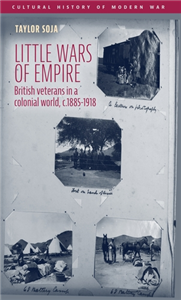
Little Wars of Empire is a group biography of British veterans who experienced multiple wars across the British empire. Throughout the nineteenth century, Britain was constantly at war in its colonies, defending against anti-colonial resistance or trying to expand its influence. The veterans of these wars did not disappear once they were over, and many of them went on to later experience World War I. By using personal sources such as letters, diaries, and photograph albums, this book works to show how colonial violence and British military history depend upon one another, and argues that colonial war fundamentally shaped the British experience of empire. This was true for all kinds of British veterans, from British Army soldiers and officers to nurses and military families, whose experiences demonstrate the central place of colonial violence to British life.
Trusted Partner

This sourcebook collects together for the first time in English the major documents relating to the life and contemporary reputation of Joan of Arc. Also known as La Pucelle, she led a French Army against the English in 1429, arguably turning the course of the war in favour of the French king Charles VII. The fact that she achieved all of this when just a seventeen-year-old peasant girl highlights the magnitude of her achievements and also opens up other ways of looking at her story. For many, Joan represents the voice of ordinary people in the fifteenth century; the victims of high politics and warfare that devastated France. Her story ended tragically in 1431 when she was put on trial for heresy and sorcery by an ecclesiastical court and was burned at the stake. This book shows how the trial, which was organised by her enemies, provides an important window into late medieval attitudes towards religion and gender, as Joan was effectively persecuted by the established Church for her supposedly non-conformist views on spirituality and the role of women. Presented within a contextual and critical framework, this book encourages scholars and students to rethink this remarkable story. It will be invaluable reading for those working in the fields of medieval society and heresy, as well as the Hundred Years' War.
Trusted Partner

»Osnos erzählt die bewegende Geschichte düsterer Zeiten mit einer Menschlichkeit, die Hoffnung auf etwas Besseres verspricht.« Michael J. Sandel Nach zehn Jahren als Korrespondent im Nahen Osten und in China zieht Evan Osnos 2013 zurück in die USA. Doch das Land, in das er heimkehrt, ist kaum wiederzuerkennen. Chancengleichheit, Rechtsstaatlichkeit, der Glaube an die Macht der Wahrheit – die fundamentalen Prinzipien der ältesten Demokratie der Welt scheinen ihre Selbstverständlichkeit eingebüßt zu haben. 2016 wird Donald Trump zum Präsidenten gewählt, vier Jahre später stürmen seine Unterstützer das Kapitol. Aus den vereinigten sind die gespaltenen Staaten von Amerika geworden. Evan Osnos hat diese Entwicklungen über Jahre beobachtet. Er versucht zu verstehen und zu erklären: warum im reichen Greenwich an der Ostküste, wo er aufgewachsen ist, aus gemäßigten Konservativen eingefleischte Trump-Anhänger wurden. Wie sich in Clarksburg, West Virginia, wo er seinen ersten Job bei einer Zeitung annahm, die Opioid-Krise zur nationalen Katastrophe ausweiten konnte. Und was die Ursachen sind für den Rassismus, die Waffengewalt und die Ungleichheit in Chicago, wo er selbst zu einem gefragten Journalisten aufstieg. Aus eindringlichen Porträts entsteht eine große Erzählung, die vom 11. September 2001 bis zum 6. Januar 2021 reicht. Der Pulitzer-Preisträger zeichnet nach, wie die USA den moralischen Kompass verloren, der einst aus einer Vereinigung von Staaten die Vereinigten Staaten machte.
Trusted Partner
Trusted Partner
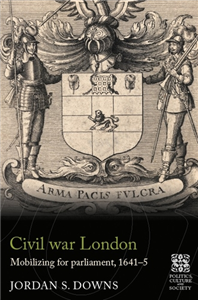
This book looks at London's provision of financial and military support for parliament's war against King Charles I. It explores for the first time a series of episodic, circumstantial and unique mobilisations that spanned from late 1641 to early 1645 and which ultimately led to the establishment of the New Model Army. Based on research from two-dozen archives, Civil war London charts the successes and failures of efforts to move London's vast resources and in the process poses a number of challenges to longstanding notions about the capital's 'parliamentarian' makeup. It reveals interactions between London's Corporation, parochial communities and livery companies, between preachers and parishioners and between agitators, propagandists and common people. Within these tangled webs of political engagement reside the untold stories of the movement of money and men, but also of parliament's eventual success in the English Civil War.
Trusted Partner
William T. Vollmann, Träger des renommierten National Book Award und in den USA längst ein Star, erforscht »in seiner ausufernden, faszinierenden Prosa« die menschliche Existenz, schonungslos, erfahrungshungrig und mit »unübertroffenem Einfühlungsvermögen« (FAZ). In seiner neuen literarischen Reportage widmet er sich nun einem nationalen Mythos: dem Hobo – Held und Opfer des American Dream. Der auf Güterzügen reisende Tramp ist spätestens seit der Great Depression, als Tausende von Wanderarbeitern durch das Land zogen, Teil des amerikanischen Imaginären. Woody Guthrie und Bob Dylan haben ihn besungen, Mark Twain, Jack London und Ernest Hemingway setzten ihm in ihren Büchern Denkmäler. Vollmann, selbst ein Getriebener, kennt die unstillbare Sehnsucht nach dem freien Leben und macht sich auf den Weg, die Realität hinter dem geschichtlichen, politischen und literarischen Vermächtnis zu erkunden. Mit seinem Kumpel Steve erklimmt er Güterwaggons und reist kreuz und quer durch den amerikanischen Westen; er beschreibt die wilde Schönheit der Landschaft und den Nervenkitzel des illegalen Reisens, interviewt Hobos und gibt sich Rechenschaft über den Wunsch, seiner bürgerlichen Existenz zu entfliehen. Aus Vollmanns Impressionen und Reflexionen entsteht so ein transitorisches Nachtbild der heutigen USA – der Träume, Alpträume und Begierden einer Nation, deren wichtigstes Gut einmal die Freiheit ihrer Bürger war.
Trusted Partner
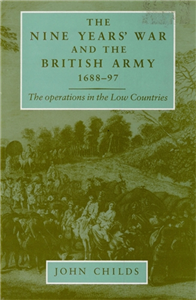
Between 1689 and 1697 the British army fought as a member of the Grand Alliance against Louis XIV. Despite the military and political significance of the European conflict, this book is the first historical investigation for over a century dealing with the operations of the principal campaigns in the Low Countries. John Childs begins his comprehensive study by exploring the diplomatic origins of the Nine Years' War. Leading on from this political background, the author then focuses on the detailed organisation of the British, Dutch and other allied armies and the conduct of the operations. The specific campaigns are also examined and in particular the author looks at the strategic and tactical role played by the British. This campaign and operational study of the British army will be of interest to both specialist and general military historians, as well as to political historians. ;
Trusted Partner
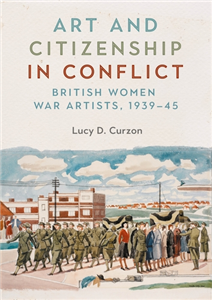
Art and Citizenship in Conflict examines the work of women war artists in order to highlight the complexity of citizenship and gender in Britain during the Second World War. Evelyn Dunbar, Mary Kessell, Ethel Gabain, Stella Schmolle, and Laura Knight, among others, were commissioned by the War Artists' Advisory Committee (WAAC) to document the millions of women who took up sometimes unconventional roles-in agriculture, the auxiliary services, and manufacturing, among others-to support the British war effort. Indeed, their prints, drawings, and paintings were part of a broader scheme to uphold morale and promote much-needed citizen involvement on the home front. While there is growing interest, the importance of their remit in the history of the Second World War and the quality of their artistry have nonetheless not yet secured them a significant place in scholarship. Art and Citizenship in Conflict seeks to amend this gap while also broadening approaches to the study of war itself.
Trusted Partner

Beiträge zum Begriff der Kultur. Die antike Klassik und der Literat. Die Funktion der Kritik. Die gesellschaftliche Funktion der (Deutsch von Gerhard Hensel). Gedanken nach Lambeth. (Deutsch von Helmut Viebrock). Religion und Literatur. (Deutsch von Ursula Clemen). Katholizismus und die Ordnung unter den Völkern. (Deutsch von Karl Klein). Vergil und die christliche Welt. (Deutsch von Nora Wydenbruck). Der Humanismus Irving Babbitts. (Deutsch von Ursula Clemen). Nachgedanken zum Humanismus. (Deutsch von Günter H. Lenz). Moderne Erziehung und humanistische Bildung. (Deutsch von Nora Wydenbruck). (Deutsch von Günter H. Lenz). Was ist ein Klassiker?. (Deutsch von W.E. Süskind). Die Ziele der Erziehung. (Deutsch von Helmut Viebrock). Tradition und individuelle Begabung. (Deutsch von Hans Hennecke). Der vollkommene Kritiker. (Deutsch von Mechthild und Armin Paul Frank). (Deutsch von H.H. Schaeder). Der Nutzen der Dichtung und der Nutzen der Kritik. (Deutsch von Ulrich Keller). Was ist geringere Dichtung?. (Deutsch von Mechthild und Armin Paul Frank). Dichtung. (Deutsch von Nikolaus Hortmann). Die Literatur der Politik. (Deutsch von Wilhelm Hortmann). Die Grenzen der Literaturkritik. (Deutsch von Ursula Clemen). Der Kritiker kritisch betrachtet. (Deutsch von Mechthild und Armin Paul Frank).
Trusted Partner
At a time of heightened international interest in the colonial dimensions of museum collections, Dividing the Spoils provides new perspectives on the motivations and circumstances whereby collections were appropriated and acquired during colonial military service. Combining approaches from the fields of material anthropology, imperial and military history, this book argues for a deeper examination of these collections within a range of intercultural histories that include alliance, diplomacy, curiosity and enquiry, as well as expropriation and cultural hegemony. As museums across Europe reckon with the post-colonial legacies of their collections, Dividing the Spoils explores how the amassing of objects was understood and governed in British military culture, and considers how objects functioned in museum collections thereafter, suggesting new avenues for sustained investigation in a controversial, contested field.
Trusted Partner
For imperialists, the concept of guardian is specifically to the armed forces that kept watch on the frontiers and in the heartlands of imperial territories. Large parts of Asia and Africa, and the islands of the Pacific and the Caribbean were imperial possessions. This book discusses how military requirements and North Indian military culture, shaped the cantonments and considers the problems posed by venereal diseases and alcohol, and the sanitary strategies pursued to combat them. The trans-border Pathan tribes remained an insistent problem in Indian defence between 1849 and 1947. The book examines the process by which the Dutch elite recruited military allies, and the contribution of Indonesian soldiers to the actual fighting. The idea of naval guardianship as expressed in the campaign against the South Pacific labour trade is examined. The book reveals the extent of military influence of the Schutztruppen on the political developments in the German protectorates in German South-West Africa and German East Africa. The U.S. Army, charged with defending the Pacific possessions of the Philippines and Hawaii, encountered a predicament similar to that of the mythological Cerberus. The regimentation of military families linked access to women with reliable service, and enabled the King's African Rifles to inspire a high level of discipline in its African soldiers, askaris. The book explains the political and military pressures which drove successive French governments to widen the scope of French military operations in Algeria between 1954 and 1958. It also explores gender issues and African colonial armies.
Trusted Partner
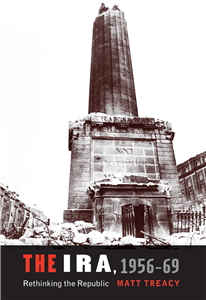
While there have been many books written about the IRA since 1916, comparatively little attention has been paid to the organisation during the 1960s, despite the fact that the internal divisions culminating in the 1969 split are often seen as key to the conflict which erupted that year. This book, newly available in paperback, redresses that vacuum and through an exhaustive survey of internal and official sources, as well as interviews with key IRA members, provides a unique and fascinating insight into radical Republican politics which will be of interest to those interested in Irish history and politics. The author looks at the root of the divisions which centred on conflicting attitudes within the IRA on armed struggle, electoral participation and socialism. He argues that while the IRA did not consciously plan the northern 'Troubles', the internal debate of the 1960s had implications for what happened in 1969.



