
Daniel Goleman - Foreign Audio
Please contact anaban@gmail.com for information
View Rights Portal


The Vietnam idea examines how Vietnam became a potent symbol for global movements fighting colonialism, racism, and imperialism during the American War and its aftermath. Rather than focusing on Vietnam as a place, Brynn Hatton explores how artists and activists around the world used the idea of 'Vietnam' to express political identification and solidarity through posters, films, protest actions, exhibitions, and conceptual art. Drawing on international archives, the book reveals how diverse visual works helped shape the political imagination of the global left, and continue to influence how we see identity, conflict, and solidarity today.

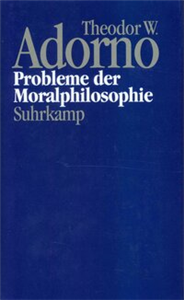
"Mit den » Probleme der Moralphilosophie« liegt die dritte von 15 Vorlesungen Adornos vor, die als Tonband-Transkriptionen vollständig erhalten blieben. »Der grundlegende Gedanke ist der, daß das gesprochene lebendige Wort zurückantwortet, daß die Rede ›Rede und Antwort steht‹ und eingeht auf den spezifischen Menschen, an den sie gerichtet ist, während das geschriebene Wort alle Menschen gleich anblickt, nicht zu differenzieren vermag, auf jede Frage stumm bleibt, sich nicht verändert.« (Vorlesung vom 19. Dezember 1956; Theodor W. Adorno Archiv, Vo 1344) Adorno, der sich als Vertreter einer ›letzten‹ Philosophie verstand, handelt konsequent auch vom Ende der Moralphilosophie, von ihren Grenzen. Er hat in der Vorlesung von 1963, die vor allem an Kant orientiert war, nur mehr die Aporien der Moral thematisch gemacht."
 Trusted Partner
Trusted Partner
Trusted Partner
Trusted Partner
Trusted Partner
Trusted Partner
Trusted Partner

 Trusted Partner
Trusted Partner
Trusted Partner
Trusted Partner
Trusted Partner
Trusted Partner
Trusted Partner

 Trusted Partner
Trusted Partner
Trusted Partner


Goethe kannte das niederdeutsche Volksbuch von Reinke de vos; ihm folgt sein satirisches Versepos Reineke Fuchs von 1793. Die Parodie auf die spätmittelalterliche Feudalordnung verwandelte Goethe in eine Parodie auf seine eigene, von revolutionären Umbrüchen gekennzeichnete Gegenwart. Die Fabel vom Fuchs, der durch Klugheit und List, durch elegante Rhetorik und überredungskunst die anderen Tiere besiegt, hat viele Schriftsteller zu Nachahmungen und Neudichtungen veranlaßt. Die Wirkungsgeschichte dauert bis heute an. Der Maler Johann Heinrich Wilhelm Tischbein (1751 – 1829) hat eine brillante, farbenfrohe Illustrationsfolge zum Werk seines Freundes gestaltet. Doch nicht nur bildkünstlerisch, sondern auch literarisch hat er sich mit dem Reineke Fuchs auseinandergesetzt. Er entwarf einen »Anti-Reineke-Fuchs«, eine verblüffend gegenläufig konzipierte Fabel, in der er die Füchse mit ihrer übergroßen Schläue in die eigene Schlinge gehen und das intrigante Spiel verlieren läßt.
Trusted Partner

 Trusted Partner
Trusted Partner
Trusted Partner
Trusted Partner
Trusted Partner



