
IBA (International Book Agency)
Italian Literary Agency promoting publishers and authors around the world.Exchange of ideas (and of foreign rights) are welcome!
View Rights Portal
Italian Literary Agency promoting publishers and authors around the world.Exchange of ideas (and of foreign rights) are welcome!
View Rights Portal
We came up with an idea to boost children with low English vocabulary at a very young age, most of out books are in English language our prime topics are Numbers, Opposites, fruites and vegetables, vehicles and etc. Our main target audience are children form the age of 1-5.
View Rights Portal


 Trusted Partner
 Trusted Partner

In defence of councillors is an unashamed defence of local representative democracy and of those elected to serve as councillors from the often ill-informed, ill-judged and inaccurate criticism made by the media, government and public, of councillors' personal, political and professional roles. By using qualitative research from a number of related projects, the book examines the roles, functions and responsibilities of councillors and the expectations placed upon them by citizens, communities and government. It also examines the impact council membership has on other facets of the councillor's life. The book examines how councillors develop strategies to overcome the constraints and restrictions on their office so as to be able to govern their communities, balance their political and public life and democratise and hold to account a vast array of unelected bodies that spend public money and develop public policy without the electoral mandate and legitimacy held by our councillors.
Trusted Partner
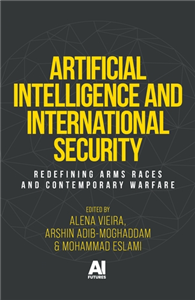
As artificial intelligence continues to transform modern warfare, the rapid development of AI-driven weaponry presents profound ethical, legal, and security challenges. Artificial Intelligence and International Security: Redefining Arms Races and Contemporary Warfare offers a critical examination of this emerging arms race, exploring issues of arms control, international law, diplomacy, and long-term security. Bringing together expert perspectives, this volume assesses the risks and implications of autonomous weapon systems while proposing solutions to ensure ethical AI deployment. Through a comprehensive analysis of this urgent issue, it seeks to contribute to global debates and inform policies that foster peace, stability, and the responsible use of AI in warfare.
Trusted Partner

Drawing on recently released documents and private papers, this is the first book-length study to examine the intimate relationship between the Attlee government and Britain's intelligence and security services at the start of the Cold War. Often praised for the formation of the modern-day 'welfare state', Attlee's government also played a significant, if little understood, role in combating communism at home and overseas, often in the face of vocal, sustained opposition from its own backbenches. This book tells the story of Attlee's Cold War. From Whitehall vetting to secret operations in Eastern Europe and the fallout of Soviet atomic espionage on both sides of the Atlantic, it provides a fresh interpretation of the Attlee government, making it essential reading for anyone interested in the Labour Party, intelligence, security and Britain's foreign and defence policy at the start of the Cold War.
Trusted Partner
Since the mid-2000s, the harsh reality of call centre employment for a generation of young workers in Portugal has been impossible to ignore. With its endless rows of small cubicles, where human agents endure repetitive telephone conversations with abusive clients under invasive modes of technological surveillance, discipline and control, call centre work remains a striking symbol of labour precarity, a condition particularly associated with the neoliberal generational disenchantment that 'each generation does better than its predecessor'. This book describes the emergence of a regime of disciplined agency in the Portuguese call centre sector. Examining the ascendancy of call centres as icons of precarity in contemporary Portugal, this book argues that call centre labour constitutes a new form of commodification of the labouring subject. De Matos argues that call centres represent an advanced system of non-manual labour power exploitation, due to the underestimation of human creativity that lies at the centre of the regimented structures of call centre labour. Call centres can only guarantee profit maintenance, de Matos argues, through the commodification of the human agency arising from the operators' moral, relational and social embedded agentive linguistic interventions of creative improvisation, decision-making, problem-solving and ethical evaluation.
Trusted Partner
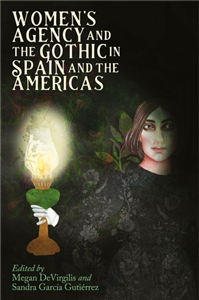
This volume has emerged to fulfill two main purposes: Primarily, to constitute the first collaborative work that traces the relationship between the Gothic and Women in Spain and the Americas, but also, to surpass the term 'Female Gothic,' coined by Ellen Moers, by transferring the focus towards women and their agency as writers, readers and characters. This volume functions as a manifesto per se to open new avenues into understanding how women have interacted with the Gothic between the nineteenth and twenty-first centuries in Spain and the Americas. The question, we determine, is not simply about identity, but rather about agency. We define women's agency as the total capacity of characters, authors and readers to act freely within a social framework in relation to gothic texts. In our exploration of authorship, we reject the claim that the Gothic is a simplistic literary genre, instead sustaining that the plasticity of the Gothic has enabled it to survive for centuries; by shifting from a genre to a mode, it has surpassed literary forms and invaded all kinds of media: from film to music and merchandise such as clothing and pop culture collectables, fostering an authentic goth fandom.
Trusted Partner
Trusted Partner
 Trusted Partner

This book is an in-depth examination of the relations between Ireland and the former East Germany between the end of the Second World War and the fall of the Berlin Wall. It explores political, diplomatic, economic, media and cultural issues. The long and tortuous process of establishing diplomatic relations is unique in the annals of diplomatic history. Central in this study are the activities of the Stasi. They show how and where East German intelligence obtained information on Ireland and Northern Ireland and also what kind of information was gathered. A particularly interesting aspect of the book is the monitoring of the activities of the Irish Republican Army and the Irish National Liberation Army and their campaigns against the British army in West Germany. The Stasi had infiltrated West German security services and knew about Irish suspects and their contacts with West German terrorist groups. East German Intelligence and Ireland, 1949-90 makes an original contribution to diplomatic, intelligence, terrorist and Cold War studies. ;
Trusted Partner

This book is an in-depth examination of the relations between Ireland and the former East Germany between the end of the Second World War and the fall of the Berlin Wall. It explores political, diplomatic, economic, media and cultural issues. The long and tortuous process of establishing diplomatic relations is unique in the annals of diplomatic history. Central in this study are the activities of the Stasi. They show how and where East German intelligence obtained information on Ireland and Northern Ireland and also what kind of information was gathered. A particularly interesting aspect of the book is the monitoring of the activities of the Irish Republican Army and the Irish National Liberation Army and their campaigns against the British army in West Germany. The Stasi had infiltrated West German security services and knew about Irish suspects and their contacts with West German terrorist groups. East German Intelligence and Ireland, 1949-90 makes an original contribution to diplomatic, intelligence, terrorist and Cold War studies.
Trusted Partner
The moral problem of authority is the challenge of reconciling legitimate authority (the right to rule) with the demands of freedom and rationality. In this book, I argue that authority can have legitimacy, but when it does it generates a moral dilemma, where the obligation to obey comes at some cost to freedom and reason. Hence, not only do I depart from the views of those who insist that authority can never have legitimacy, but also those who maintain that insofar as authority is legitimate it simply satisfies the demands of freedom or rationality. My focus here will be on both what it is that justifies authority (in particular focusing on membership, and the goods of membership) as well what type of reason an authoritative directive is, how it can come into conflict with others reasons, and how those conflicts are resolved.
Trusted Partner

Why adopt a poststructural lens for the reading of the military strategy of national missile defence (NMD)? No doubt, when contemplating an attack on US territory by intercontinental ballistic missiles, consulting Michel Foucault and critical international relations theory scholars may not seem the obvious route to take. The answer to this lies in another question: why has there been so much interest and continuous investment in NMD deployment when there is such ambiguity surrounding the status of threat to which it responds, controversy over its technological feasibility and concern about its cost? Posed in this manner, the question cannot be answered on its own terms - the terms given in official accounts of NMD that justify the system's significance on the basis of strategic feasibility studies and conventional threat predictions guided by worst-case scenarios. Instead, this book argues that the preferences leading to NMD deployment must be understood as satisfying requirements beyond strategic approaches and issues. In turning towards the interpretative modes of inquiry provided by critical social theory and poststructuralism, this book contests the conventional wisdom about NMD and suggests reading the strategy in terms of US identity. Presented as an analysis of discourses on threats to national security, around which the need for NMD deployment is predominantly framed, this book is an effort to let the two fields of critical international relations theory and US foreign policy speak directly to each other. It seeks to do so by showing how the concept of identity can be harnessed to an analysis of a contemporary military-strategic practice. ;
Trusted Partner
Trusted Partner
An Apology for Poetry (or The Defence of Poesy), by the celebrated soldier-poet Sir Philip Sidney, is the most important work of literary theory published in the Renaissance. The new introduction and notes include a wealth of new information and new readings drawing on recent developments in Renassance Studies. Unfamiliar words and phrases are glossed, classical and other references explained, and difficult passages analysed in detail. The first separate edition of Sidney's seminal text to be published for more than a decade. Since 1965 Geoffrey Shepherd's edition of the Apology has been the standard, and this revision of Shepherd's edition, with a new introduction and extensive notes, is designed to introduce Sidney's best-known work to a new generation of readers at the beginning. ;
Trusted Partner

In defence of councillors is an unashamed defence of local representative democracy and of those elected to serve as councillors from the often ill-informed, ill-judged and inaccurate criticism made by the media, government and public, of councillors' personal, political and professional roles. By using qualitative research from a number of related projects, the book examines the roles, functions and responsibilities of councillors and the expectations placed upon them by citizens, communities and government. It also examines the impact council membership has on other facets of the councillor's life. The book examines how councillors develop strategies to overcome the constraints and restrictions on their office so as to be able to govern their communities, balance their political and public life and democratise and hold to account a vast array of unelected bodies that spend public money and develop public policy without the electoral mandate and legitimacy held by our councillors. ;
Trusted Partner


Mit schönem Farbschnitt in der Erstauflage – Lieferung je nach Verfügbarkeit Auf dem Platz gewinnt er jedes Spiel. Aber kann er auch ihr Herz gewinnen? Als die Eltern der 20-jährigen Payton bei einem tragischen Unfall ums Leben kommen, bricht für sie eine Welt zusammen. Da sie die Schulden für ihr Elternhaus in Tennessee nicht abbezahlen kann, zieht sie in das Poolhaus ihres Onkels nach Cape Coral in Florida. Ein Albtraum für die mehrgewichtige Musikstudentin. Zwischen oberflächlichen Models und durchtrainierten College-Sportlern versucht Payton, mit ihrer Trauer fertig zu werden. Und mit den Gefühlen, die Cameron, der Quarterback der Cape Coral Tigers, in ihr auslöst … Bestseller-Autorin Mimi Heeger nimmt Leser*innen ab 16 Jahren in diesem bewegenden New-Adult-Roman mit auf eine emotionale Reise in Paytons Welt – eine Welt voller Trauer, Bodyshaming, Oberflächlichkeiten und der Suche nach sich selbst. Aber auch eine Welt voller Sommer, Sonnenschein und glitzerndem Meer. Lass dich mitreißen von der zarten Slow-Burn-Romance, die sich entwickelt und die Paytons Leben für immer verändern wird. Break through my Defense: Ein Sommer voller Tragödien, Touchdowns und der großen Liebe Voller Gefühle: Ein bewegender New-Adult-Roman für Leser*innen ab 16 Jahren. Spannung und Liebe: Die mitreißende Sports Romance mit dem Trope Enemies-to-Lovers fesselt von der ersten bis zur letzten Seite. Starke Protagonistin: Eine inspirierende Geschichte über Bodyshaming, Selbstfindung, die Kraft der Liebe und die Überwindung von Trauer. Genial ausgestattet in der Erstauflage: Softcover mit Klappen, trendig illustriertem Buchschnitt und coolem Lesezeichen zum Abtrennen.
Trusted Partner
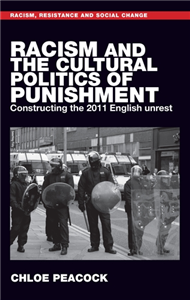
Justifying (in)justice reveals how processes of ignorance are vital to legitimising punitive and discriminatory criminal justice policy and practices. Focusing on the state's startlingly harsh response to the English 'riots' of 2011, the book draws together unique insights from interviews with prosecutors, sentencers, defence lawyers and policymakers at the heart of the response, alongside analysis of media and political debates. Peacock explores the forms of unknowing that were mobilised to justify and normalise the harsh and inequitable punishment of the 'rioters', from amnesia about police racism and Britain's long history of unrest, to widespread denial about the violence of the prison system. Looking to recent events in Britain and beyond, the book offers timely insight into the cultural processes underpinning the punitive systems that disproportionately harm marginalised and racially minoritised communities.
Trusted Partner



