
Association des éditeurs des Hauts de France
High quality titles from a selection of French independent publishers
View Rights Portal
High quality titles from a selection of French independent publishers
View Rights Portal
Publishing House specialized in Graphic Novels and cinema books. We've Biographies set in WWII and Spanish Civil War, Fantasy graphic novels and humour
View Rights Portal

Design Thinking: Solve problems together, user-centered and iterative, develop innovations and have fun doing so! - Practical cards for innovation project work with change of perspective- Consistently customer-oriented and iterative- Targeted use of the maps in project planning and implementation with Design Thinking- Pragmatic, compact and wonderfully descriptive- Suitable for the most diverse questions or problems- With folding poster for targeted use of maps in project planning and decorative at the workplace- From the authors "Design Thinking Quick Start


Design and the Modern Magazine provides a thematically arranged set of essays that examine the changing character of the magazine as an important aspect of cultural life from the late nineteenth century until today. In doing so it offers some of the first detailed case-studies of individual titles and analyses how design decisions are made alongside editorial, commercial and technical considerations. The book suggests ways to understand the magazine as a designed object. Among the more significant titles considered are Woman's Home Companion, Design, Woman and Vogue. While largely drawing from British and American sources, the book also covers the impact of modern design ideas from Europe on such publications. The essays present new and original scholarship on the subject and will be of use to students and teachers working on a wide range of art and design history, and literature studies courses. ;
 Trusted Partner

This groundbreaking volume brings together scholars from across the globe to discuss the infrastructure, energy, housing, safety and sustainability of African cities, as seen through local narratives of residents. Drawing on a variety of fields and extensive first-hand research, the contributions offer a fresh perspective on some of the most pressing issues confronting urban Africa in the twenty-first century. At a time when the future of the region as a whole will be determined in large part by its cities, the implications of these developments are profound. With case studies from cities in Ethiopia, Kenya, Malawi, Niger, Nigeria, South Africa and Tanzania, this volume explores how the rapid growth of African cities is reconfiguring the relationship between urban social life and its built forms. While the most visible transformations in cities today can be seen as infrastructural, these manifestations are cultural as well as material, reflecting the different ways in which the city is rationalised, economised and governed. How can we 'see like a city' in twenty-first-century Africa, understanding the urban present to shape its future? This is the central question posed throughout this volume, with a practical focus on how academics, local decision makers and international practitioners can collaborate to meet the challenge of rapid growth, environmental pressures and resource gaps.
Trusted Partner
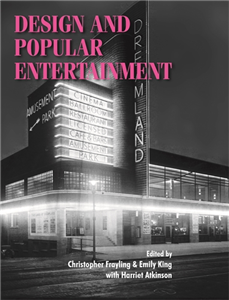
Design and Popular Entertainment offers a selection of nine essays that examine the range of design for popular entertainment, from theatre and film, to television and radio. Investigating entertainment design from the late nineteenth century to the 1960s, the book is divided into two sections. The first addresses the 'hardware' of popular entertainment, in other words the objects through which images, sound and performance are transmitted. The second explores the construction of cinematic and televisual imagery and the design of objects for the screen, the 'software' of entertainment. In so doing it offers important insights into this little explored aspect of design. Topics covered by the collection include the design of theatrical lighting and stage sets, cinema and radio design, the representation of designers within film, and the relationship between design and television. The book's concentration on the 1950s and 1960s reflects the profound changes in modes of entertainment that took place during that period, in particular the spread of television, which not only attracted a huge popular audience but also stimulated experimental designing approaches and thinking. With particular focus on the way that both the objects and the construction of entertainment have altered audience's experience, the essays present a novel approach to the subject. This book will be of particular interest to students and teachers working in design and cultural history as well as film and theatre studies. ;
Trusted Partner


‘We will not stop demonstrating,’ writes Franziska Wessel in a guest column in the Berliner Zeitung. Franziska is pursuing a goal. Decisive measures must finally be taken to protect the climate. While that is not happening she spends every Friday on the streets, gives interviews and puts pressure on politicians. But climate change isn’t the only thing threatening our future. There is so much suffering, injustice and destruction in the world. Something must be done about it. And as a climate activist, Franziska knows exactly how to be active. Together with her father, the journalist and author, Günther Wessel, she explains: How do I start a petition? How do I organise a campaign? How does lobbying work? So that everyone knows how they can make things happen.
Trusted Partner
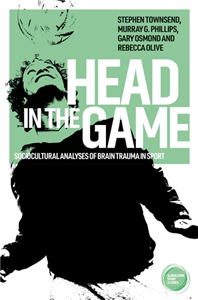
Head in the game brings together international scholars from multiple humanities, social science, and scientific disciplines to critically examine one of the most vexing issues in global sport: concussion. It argues that science and medicine alone cannot solve the concussion crisis: sociocultural factors must also be considered. This edited collection draws attention to the ways that social, cultural, historical, political, literary, philosophical, and legal factors have shaped the concussion crisis in sport. Head in the game is essential reading for those who want to understand how the concussion crisis came to be, and provides guidance for developing ethical and evidence-based solutions in the future.
Trusted Partner

This work explores the idea of the Celt and the definition of the so-called "Celtic Fringe" over the last 300 years. It is an in-depth study of the literary and cultural representation of Ireland, Scotland and Wales over this period, and is based on a wide-ranging grasp of issues of national identity and state formation. The idea of the Celt and Celticism is once again highly fashionable. Is there such a common Celtic heritage? What is the place of the "Celtic Fringe" in British identity? Pittock begins by assessing the term "Celtic" itself, by questioning its validity, going on to examine its historic uses and heroic notions of Scotland's past. The Celtic Revival of the late 19th century is examined in detail together with its impact on Irish nationalism. Pittock asks how far the "Celtic" experience in Britain can be described as a colonial one, and examines the importance of the Celtic languages in preserving a sense of identity. Contemporary issues such as the literary language of the Troubles in Northern Ireland and the growth of modern Scottish nationalism are also considered. ;
Trusted Partner
Trusted Partner


The situation in our society is precarious. The ecological shocks are omnipresent. The mere continuation of our lifestyles fixated on expansion and self-development has long since reached its limits. As if intoxicated by ourselves, we consume our world voraciously and without restraint. We need moderation and frugality that lead us out of the ecological and social dead ends and hold both the individual and Politics to account. We are by no means powerless and are perfectly capable of leading a life that offers prospects for a humane future. However, our idea of freedom needs urgent correction. For this endeavour to succeed, we need the courage to face reality and the willingness, in a spirit of solidarity, to say goodbye to a false life and join the alliance of renunciation and freedom. Then we will be free – differently and better.
Trusted Partner

 Trusted Partner

 Trusted Partner

The dream of the ideal city is as old as the city itself. Since real cities often develop chaotically, the idea of perfecting them, even tearing them down if necessary, and rebuilding them according to the prevailing patterns of thought is an obvious one. The latest manifestation of this utopia is the smart city - the intelligent city, packed with the latest technology and extensively digitised. But will air taxis and hyperloops, ubiquitous sensors, access control systems and data-driven management really make the city of the future a better place to live? Are they the answer to the enormous challenges facing today's fast-growing metropolises? Or will the supposed administrative paradise ultimately mutate into a digital juggernaut?
Trusted Partner

Touting informal settlements or informality in general as illegal, crime-ridden, unsafe, filthy, chaotic, and formal developments as legal, orderly or safe, and so forth has not solved anything and informality as a way of life or an economic reality lingers and grows. Demystifying informal urban design and planning delves deeper into this conundrum and seeks to debunk some common misguided perceptions about it. Borrowing popular philosophical and political analogies from Isaiah Berlin and Gregory Treverton and others, it encourages urban designers and planners to become multitaskers like foxes rather than hedgehogs who can do one thing right. The book ends with some general takeaways on assuming more proactive roles in informal urban design issues and avoiding two potential pitfalls while interacting with them.
Trusted Partner

The present volume emerges from a practice-based research that focuses on experiences of migration and border crossing during what are perceived as existential 'turning points' by the protagonists themselves. It recognizes the fundamental role that imagination plays in people's perceptions of reality, in their decisions and actions, and finally in the way they narrate their experiences. As a consequence, it makes a stance for ethnographic practice to include more creative and collaborative methodologies in order to explore such intangible and unstructured realms of existence. In particular, this ethnography developed theoretically and methodologically in close collaboration with a group of Egyptian men who crossed the Mediterranean Sea in search of better living opportunities in Italy, by engaging them through a range of the co-creative processes such as theatre improvisations, storytelling practices, collaborative filmmaking and participatory animation.
Trusted Partner


Mörderische Machtspiele im Elite-Internat. Back to "Night School" Wenn du an einen der sichersten Orte der Welt gebracht wirst und sie dich trotzdem finden… Gray, die Tochter der Premierministerin, wird zu ihrem Schutz nach Cimmeria, einem Eliteinternat, gebracht. Es dauert jedoch nicht lange, bis ihre Feinde sie aufgespürt haben. Wird Gray fliehen oder sich der Gefahr stellen? Ungekürzt gelesen von Leonie Landa
Trusted Partner

An archaeology of innovation is the first monograph-length investigation of innovation and the innovation process from an archaeological perspective. It interrogates the idea of innovation that permeates our popular media and our political and scientific discourse, setting this against the long-term perspective that only archaeology can offer. Case studies span the entire breadth of human history, from our earliest hominin ancestors to the contemporary world. The book argues that the present narrow focus on pushing the adoption of technical innovations ignores the complex interplay of social, technological and environmental systems that underlies truly innovative societies; the inherent connections between new technologies, technologists and social structure that give them meaning and make them valuable; and the significance and value of conservative social practices that lead to the frequent rejection of innovations.
Trusted Partner


Take Some Time Out! The headline grabs Liv’s attention as she browses, depressed, through the job ads. Although she’s only 22 and just starting out in journalism, a recent disastrous interview cost her a new job. The ad sounds like a dream come true: someone needs a house-sitter to mind a lighthouse on the Irish coast for six months! Taking time out is exactly what Liv needs to clear her head and recharge her batteries. She sends off her application and a few weeks later finds herself standing in front of her new home. Next to a good-looking Irishman who makes her heart beat faster. She doesn’t know it yet, but he’ll break her heart, too… 16+ years The beginning of a unique romance trilogy about three young women, a lighthouse and love. All titles can be read separately. Rousing characters and a fine dry humor For all fans of Mona Kasten, Laura Kneidl and Colleen Hoover! More than 60.000 copies of this series were sold!
Trusted Partner


People’s lives and careers are becoming ever more unpredictable. The “life-design paradigm” described in detail in this handbook helps counselors and others meet people’s increasing need to develop and manage their own lives and careers. Life-design interventions, suited to a wide variety of cultural settings, help individuals become actors in their own lives and careers by activating, stimulating, and developing their personal resources. This handbook first addresses life-design theory, then shows how to apply life designing to different age groups and with more at-risk people, and looks at how to train life-design counselors. Target Group: Counsellors, coaches, career and vocational advisors.
Trusted Partner

 Trusted Partner


