
EDGE Science Fiction and Fantasy Publishing
Livres Canada Books
View Rights Portal
 Trusted Partner

Chile is Guest of Honour at Frankfurter Buchmesse 2027. At the Chilean organiser’s invitation, an open call was conducted among Chilean publishers to find out which titles they would recommend for translation. This is the result. The Chilean Ministry of Foreign Affairs supports the translation and production of Chilean books through the programmeTranslating Chile. Next call for all languages 2026-2027: November 2025 More information:https://www.dirac.gob.cl/open-call-2026-for-translating-chilean-literature
View Rights Portal
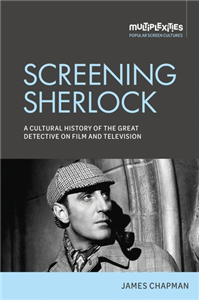
Screening Sherlock is the first book-length academic study of the film and television career of the most famous detective in fiction. Chapman explores the contexts, adaptation strategies and critical reception of Sherlock Holmes (and Dr Watson) on film and television in Britain and the United States. The book includes case studies of such famous Holmes impersonators as William Gillette, Basil Rathbone, Peter Cushing, Jeremy Brett and Benedict Cumberbatch, as well as charting a path through many lesser-known productions. From early cinema to the Hollywood studio system, and from heritage drama to contemporary postmodern television, Screening Sherlock is an indispensible work for all aficionados of Arthur Conan Doyle's consulting detective of Baker Street.

Sara Paretsky is known for her influential V.I. Warshawski series, which transformed the masculine hard-boiled detective formula into a vehicle for feminist values. But Paretsky does more than this. Her novels also illustrate the extent to which detective fiction acts as a literature of trauma, allowing Paretsky to address the politics of agency in ways that go beyond the personal, for trauma always has a social and a political dimension. Paretsky's work also exploits the way detective fiction mirrors the writing of history. Here, Paretsky uses the form to expose the partiality of historical accounts - whether they be personal, institutional, or national - that authorise 'forgetting' of a particularly insidious kind. Significantly, all these issues are explored within the framework of the traditional hard-boiled detective novel. As a result, Paretsky's achievement forces us to acknowledge the deeply subversive potential of detective fiction.
Trusted Partner

Tattoos in crime and detective narratives examines representations of the tattoo and tattooing in literature, television and film, from two periods of tattoo renaissance (1851-1914, and c1955 to present). It makes an original contribution to understandings of crime and detective genre and the ways in which tattoos act as a mimetic device that marks and remarks these narratives in complex ways. With a focus on tattooing as a bodily narrative, the book incorporates the critical perspectives of posthumanism, spatiality, postcolonialism, embodiment and gender studies. The grouped essays examine the first tattoo renaissance, the rebirth of the tattoo in contemporary culture through literature, children's literature, film and television. The collection has a broad appeal, and will be of interest to all literature and media scholars, but in particular those with an interest in crime and detective narratives and skin studies.
Trusted Partner
From the author of The Family Tree Detective, this guide provides the amateur genealogist or family historian with the skills to research the distribution and history of a surname. Colin Rogers uses a sample of 100 names, many of them common, to follow the migration of people through the centuries. Each of the 100 names is mapped since the Doomsday book in 1086. For those whose name is not among the sample, the book shows how to find out where namesakes live now, how they moved around the country through time, and how the name originated from a placename, a nickname or an occupation. Colin Rogers finishes this work by showing how the distribution of surnames can be studied irrespective of the size of the surrounding population, and reaches some interesting conclusions about which names are more reliable guides to migration since the 14th century. ;
Trusted Partner
Any reader who has ever visited Asia knows that the great bulk of Western-language fiction about Asian cultures turns on stereotypes. This book, a collection of essays, explores the problem of entering Asian societies through Western fiction, since this is the major port of entry for most school children, university students and most adults. In the thirteenth century, serious attempts were made to understand Asian literature for its own sake. Hau Kioou Choaan, a typical Chinese novel, was quite different from the wild and magical pseudo-Oriental tales. European perceptions of the Muslim world are centuries old, originating in medieval Christendom's encounter with Islam in the age of the Crusades. There is explicit and sustained criticism of medieval mores and values in Scott's novels set in the Middle Ages, and this is to be true of much English-language historical fiction of the nineteenth and early twentieth centuries. Even mediocre novels take on momentary importance because of the pervasive power of India. The awesome, remote and inaccessible Himalayas inevitably became for Western writers an idealised setting for novels of magic, romance and high adventure, and for travellers' tales that read like fiction. Chinese fictions flourish in many guises. Most contemporary Hong Kong fiction reinforced corrupt mandarins, barbaric punishments and heathens. Of the novels about Japan published after 1945, two may serve to frame a discussion of Japanese behaviour as it could be observed (or imagined) by prisoners of war: Black Fountains and Three Bamboos.
Trusted Partner
This timely in-depth study of award-winning Kate Atkinson's work provides a welcome comprehensive overview of the novels, play and short stories. It explores the major themes and aesthetic concerns in her fiction. Combining close analysis and literary contextualisation, it situates her multi-faceted work in terms of a hybridisation of genres and innovative narrative strategies to evoke contemporary issues and well as the past. Chapters offer insights into each major publication (from Behind the Scenes at the Museum to Big Sky, the latest instalment in the Brodie sequence, through the celebrated Life After Life and subsequent re-imaginings of the war) in relation to the key concerns of Atkinson's fiction, including self-narrativisation, history, memory and women's lives.
Trusted Partner

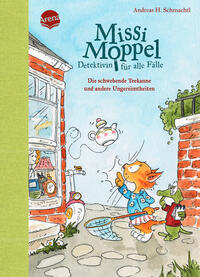
The master detective is after a cunning thief who steals colourful, random objects like Leonardo da Vinci’s paintbrush or antique sugar bowls. During a visit to Grandpa Pots, she uncovers the secret of Ghost Island and solves the puzzle of the floating teapot in Mr Goldrand’s junk shop. Only the nasty blackmailing letters from the mysterious “Magpie” present her with a seemingly insoluble mystery. Someone is testing the powers of the great investigator to their very limit…Will she be able to crack even this case? 15 original detective stories told in masterly fashion by the Spiegel bestselling author Andreas H. Schmachtl.
Trusted Partner
Penny politics offers a new way to read early Victorian popular fiction such as Jack Sheppard, Sweeney Todd, and The Mysteries of London. It locates forms of radical discourse in the popular literature that emerged simultaneously with Brittan's longest and most significant people's movement. It listens for echoes of Chartist fiction in popular fiction. The book rethinks the relationship between the popular and political, understanding that radical politics had popular appeal and that the lines separating a genuine radicalism from commercial success are complicated and never absolute. With archival work into Newgate calendars and Chartist periodicals, as well as media history and culture, it brings together histories of the popular and political so as to rewrite the radical canon.
Trusted Partner

What's going on in London? A mass breakout of prisoners, an attack on a hotel and a bank robbery - all that happens within a short while. Sherlock Holmes draws a rapid deduction: This cannot be an accident. He already has a theory what and most of all who is behind it. Remains to find out how his arch enemy managed to do that. But Sherlock is on his tracks because the thieves and their leader have left their fingerprints ...
Trusted Partner

The long-awaited fourth edition of this best-selling manual continues to offer up-to-date guidance both to newcomers and to the more experienced, on how to make best use of the labyrinth of genealogical sources in England and Wales. It takes into account recent, and even some future, changes to the civil registration system, and incorporates many of the vast sources newly available on the internet. There is also a substantial bibliography for those who discover that their ancestors migrated from other countries. New appendices provide research into underregistration of birth and death, and hitherto unpublished details from the 1915 and 1939 National Registers. The family tree detective remains an indispensible source of information on how to locate births, marriages and deaths, and alternative strategies if those searches fail. Dr Colin D. Rogers is a Fellow of the Society of Genealogists, a member of AGRA (the Association of Genealogists and Researchers in Archives), and was for thirty years the Hon. General Editor of the Lancashire Parish Register Society. He runs a consultancy helping banks and solicitors to identify and locate beneficiaries. ;
Trusted Partner

Through the Fiction of Phebe Gibbes places this prolific, newly recovered English writer at the centre of the revolutionary period. Gibbes's novels mark the struggles of women for agency in an expanding British empire, from the Seven Years' War to revolutions in American, Haiti and France. With Gibbes as a nexus in a lineage of women writers from Aphra Behn to Jane Austen, Kathryn S. Freeman offers a valuable perspective on the 'long eighteenth century', with Gibbes' own evolution mirroring that of the larger period. The study traces the development of Gibbes' authorial voice from satire to irony through a range of female characters subverting patriarchal oppression. Freeman guides the reader through patterns of narrative voice, concerns with gender and sexuality, and elements of wordplay through detailed discussion of five novels representing Gibbes' evolving representation of a subversive female subjectivity.
Trusted Partner
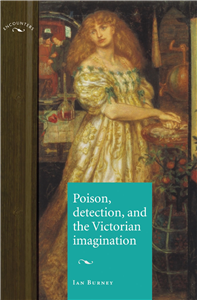
This fascinating book looks at the phenomenon of murder and poisoning in the nineteenth century. Focusing on the case of William Palmer, a medical doctor who in 1856 was convicted of murder by poisoning, it examines how his case baffled toxicologists, doctors, detectives and judges. The investigation commences with an overview of the practice of toxicology in the Victorian era, and goes on to explore the demands imposed by legal testimony on scientific work to convict criminals. In addressing Palmer's trial, Burney focuses on the testimony of Alfred Swaine Taylor, a leading expert on poisons, and integrates the medical, legal and literary evidence to make sense of the trial itself and the sinister place of poison in wider Victorian society. Ian Burney has produced an exemplary work of cultural history, mixing a keen understanding of the contemporary social and cultural landscape with the scientific and medical history of the period. ;
Trusted Partner
Trusted Partner

The short fiction that flourished in nineteenth-century France has attracted relatively little critical attention compared with the novel. This study focuses on some key stories by major authors of contes and nouvelles from the late 1820s to the 1890s, taking as a starting-point, aspects of narrative technique as a way of exploring not just characteristic strategies of short fiction, but also the ends to which they were put: recurrent themes, and the vision of mankind. Each chapter looks in some detail at three or four stories, referring briefly to other tales for illustration. The underlying point that emerges from this study is that the interest of a tale lies in the telling, not the events. ;
Trusted Partner

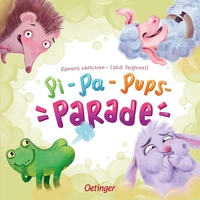
Pups-Alarm! Puuuuuups! Was war das denn für ein Geräusch? Und was stinkt hier so? Wie peinlich, die Eule hat gepupst… Aber müssen wir das nicht alle mal? Kaum umgeblättert, muss ein Tier nach dem anderen pupsen: Grille, Frosch, Adler, Igel und Hase - dem Schaf entfährt sogar ein lauter Rülpser. Am Ende der Geschichte kommt der ansteckende Pups wieder bei der Eule an und das Pupsbuch geht von vorne los. Ein lustiges Pappbilderbuch für Kinder ab 2 Jahren rund ums Furzen und Rülpsen. Mit seinen witzigen Reimen lädt es zum Mitsprechen, Nachahmen der Pupsgeräusche und vor allem zum Lachen ein. Ganz nebenbei unterstützt es Kleinkinder dabei, sich vor einer ganz normalen Sache nicht zu schämen. Pi-Pa-Pups-Parade - ein tierisch lustiges Pupsbuch Zum Schieflachen: Die Lieblingsthemen Pupsen, Furzen und Rülpsen für Kinder ab 2 Jahren, humorvoll inszeniert. Tierisch witzig: Eine freche Geschichte mit kurzen Reimen und lustigen Illustrationen. Geniales Konzept: Zum Immer-wieder-von-vorn-Lesen, ganz ohne Sound und Schnickschnack. Geprüfte Qualität: Das Buch unterliegt strengen Sicherheitsanforderungen und regelmäßigen Kontrollen nach europäischer Spielzeugsicherheitsrichtlinie. Die Pi-Pa-Pups-Parade ist ein lustiges Pappbilderbuch, das Eltern und Kinder ab 2 Jahren viel Spaß macht. Die freche Geschichte mit den kurzen Reimen kann immer wieder von vorne gelesen werden und zeigt: Pupsen, furzen und rülpsen ist ganz normal und kann richtig witzig sein!
Trusted Partner
 Trusted Partner


Marcus Hammerschmitt schreibt Science-fiction-Erzählungen, die technologische Phantasie, psychologische Einsicht, Lust am gedanklichen Experiment und poetische Erfindungskraft vereinen. Wie Herbert W. Franke oder Peter Schattschneider basiert er seine Geschichten auf einer soliden Grundlage, entwickelt seine Szenarios und Fabeln spielerisch, verknüpft sie aber dramatisch mit den größeren Problemen von Ökologie einerseits und den Zweifeln und inneren Konflikten des einzelnen andererseits.
Trusted Partner
 Trusted Partner
Trusted Partner
Trusted Partner


Dein Deutsch-Lernkrimi zum Miträtseln Ganz nach seinem großen Vorbild löst Sherlock Schultz jeden Fall … zumindest wünscht er sich das. Zum Glück ist seine Nichte Tine stets an seiner Seite, denn sie ist eine echte Rätselknackerin! Bei Kuchen hört der Spaß auf! Als sich Sherlock Schultz eines von Bäcker Butters berühmten Schokotörtis gönnen will, muss er mit Erschrecken feststellen, dass es völlig versalzen ist. Bah! Wer steckt bloß dahinter? Sofort nehmen Sherlock und Tine die Ermittlungen auf. Ein Fall von größter Wichtigkeit! Rätsel dich durch die Geschichte und löse den Fall! Leseförderung und Stärkung des Textverständnisses Orientiert an den Lehrplänen der 2. Klasse Selbstkontrolle durch Lösungen am Ende Bereit für deinen nächsten Einsatz? Mit einer spannenden Krimigeschichte , farbigen Illustrationen und spaßigen Rätseln wird mit diesem Lernkrimi das Wissen aus dem Deutschunterricht aus der 2. Klasse spielerisch vertieft und die Konzentration und das Textverständnis von Kindern ab 7 Jahren gefördert. Die Erstlesegeschichte um den witzigen Möchtegerndetektiven Sherlock Schultz und seine Nichte Tine fördert die Lesekompetenz , die Kombinationsfähigkeit und bietet dabei jede Menge Abwechslung .


