
Your Search Results


-
Promoted Content
-
Promoted Content
-
 Trusted Partner

 Humanities & Social SciencesApril 2025
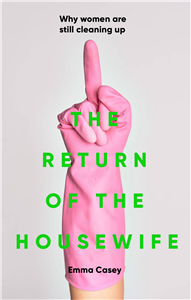
The return of the housewife
Why women are still cleaning up
by Emma Casey
An illuminating look at the world of cleanfluencers that asks why the burden of housework still falls on women. Housework is good for you. Housework sparks joy. Housework is beautiful. Housework is glamorous. Housework is key to a happy family. Housework shows that you care. Housework is women's work. Social media is flooded with images of the perfect home. TikTok and Instagram 'cleanfluencers' produce endless photos and videos of women cleaning, tidying and putting things right. Figures such as Marie Kondo and Mrs Hinch have placed housework, with its promise of a life of love and contentment, at the centre of self-care and positive thinking. And yet housework remains one of the world's most unequal institutions. Women, especially poorer women and women of colour, do most low-paid and unpaid domestic labour. In The return of the housewife, Emma Casey asks why these inequalities matter and why they persist after a century of dramatic advances in women's rights. She offers a powerful call to challenge the prevailing myths around housework and the 'naturally competent' woman homemaker.
-
Trusted Partner
-
Trusted Partner
 Humanities & Social SciencesJune 2021
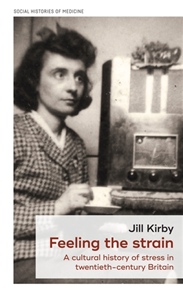
Feeling the strain
A cultural history of stress in twentieth-century Britain
by Jill Kirby
Examining the popular discourse of nerves and stress, this book provides a historical account of how ordinary Britons understood, explained and coped with the pressures and strains of daily life during the twentieth century. It traces the popular, vernacular discourse of stress, illuminating not just how stress was known, but the ways in which that knowledge was produced. Taking a cultural approach, the book focuses on contemporary popular understandings, revealing continuity of ideas about work, mental health, status, gender and individual weakness, as well as the changing socio-economic contexts that enabled stress to become a ubiquitous condition of everyday life by the end of the century. With accounts from sufferers, families and colleagues it also offers insight into self-help literature, the meanings of work and changing dynamics of domestic life, delivering a complementary perspective to medical histories of stress.
-
Trusted Partner
 Humanities & Social SciencesFebruary 2017
Servants of the empire
The Irish in Punjab 1881–1921
by Patrick O'Leary, Andrew Thompson, John M. MacKenzie
Punjab, 'the pride of British India', attracted the cream of the Indian Civil Service, many of the most influential of whom were Irish. Some of these men, along with Irish viceroys, were inspired by their Irish backgrounds to ensure security of tenure for the Punjabi peasant, besides developing vast irrigation schemes which resulted in the province becoming India's most affluent. But similar inspiration contributed to the severity of measures taken against Indian nationalist dissent, culminating in the Amritsar massacre which so catastrophically transformed politics on the sub-continent. Setting the experiences of Irish public servants in Punjab in the context of the Irish diaspora and of linked agrarian problems in Ireland and India, this book descrides the beneficial effects the Irish had on the prosperity of India's most volatile province. Alongside the baleful contribution of some towards a growing Indian antipathy towards British rule. Links are established between policies pursued by Irishmen of the Victorian era and current happenings on the Pakistan-Afghan border and in Punjab.
-
Trusted Partner
-
Trusted Partner
 Humanities & Social SciencesJanuary 2024
Dog politics
Species stories and the animal sciences
by Mariam Motamedi Fraser
Do dogs belong with humans? Scientific accounts of dogs' 'species story,' in which contemporary dog-human relations are naturalised with reference to dogs' evolutionary becoming, suggest that they do. Dog politics dissects this story. This book offers a rich empirical analysis and critique of the development and consolidation of dogs' species story in science, asking what evidence exists to support it, and what practical consequences, for dogs, follow from it. It explores how this story is woven into broader scientific shifts in understandings of species, animals, and animal behaviours, and how such shifts were informed by and informed transformative political events, including slavery and colonialism, the Second World War and its aftermath, and the emergence of anti-racist movements in the twentieth and twenty-first centuries. The book pays particular attention to how species-thinking bears on 'race,' racism, and individuals.
-
Trusted Partner
-
Trusted Partner
-
Trusted Partner
 Literary studies: c 1500 to c 1800July 2013
Domestic life and domestic tragedy in early modern England
by Catherine Richardson
-
Trusted Partner
 Humanities & Social SciencesMarch 2014
The domestic, moral and political economies of post-Celtic Tiger Ireland
What rough beast?
by Kieran Keohane, Rob Kitchin, Carmen Kuhling
This book provides an analysis of neo-liberal political economics implemented in Ireland and the deleterious consequences of that model in terms of polarised social inequalities, impoverished public services and fiscal vulnerability as they appear in central social policy domains - health, housing and education in particular. Tracing the argument into the domains where the institutions are sustained and reproduced, this book examines the movement of modern economics away from its original concern with the household and anthropologically universal deep human needs to care for the vulnerable - the sick, children and the elderly - and to maintain inter-generational solidarity. The authors argue that the financialisation of social relations undermines the foundations of civilisation and opens up a marketised barbarism. Civic catastrophes of violent conflict and authoritarian liberalism are here illustrated as aspects of the 'rough beast' that slouches in when things are falling apart and people become prey to new forms of domination. ;
-
Trusted Partner
 MedicineJanuary 2025
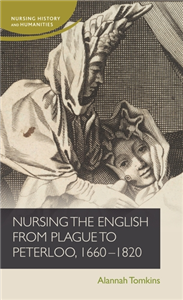
Nursing the English from plague to Peterloo, 1665-1820
by Alannah Tomkins
This book studies the negative stereotypes around the women who worked as sick nurses in this period and contrasts them with the lived experience of both domestic and institutional nursing staff. Furthermore, it integrates nursing by men into the broader history of care as a constant if little-recognised presence. It finds that women and men undertook caring work to the best of their ability, and often performed well, despite multiple threats to nurse reputations on the grounds of gender norms and social status. Chapters consider nursing in the home, in general hospitals, in specialist institutions like the Royal Chelsea Hospital and asylums, plus during wartime, illuminated by multiple accounts of individual nurses. In these settings, it employs the sociological concept of 'dirty work' to contextualise the challenges to nurses and nursing identities.
-
Trusted Partner
 Humanities & Social SciencesMarch 2026
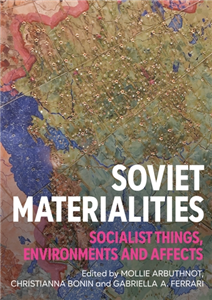
Soviet materialities
Socialist things, environments and affects
by Mollie Arbuthnot, Christianna Bonin, Gabriella Ferrari
Soviet materialities explores how material transforms our understanding of Soviet culture, from the textures of domestic space in 1960s apartment blocks to Gulag labour on the Moscow canal, and from avant-garde literary theory in the 1920s to conceptual art under perestroika. It starts from the ethos that the material world shapes people and society. Taking a material approach-or a range of material approaches-can therefore illuminate aspects of the cultural production and lived experiences of Soviet socialism that are not reflected in other kinds of historical records. This edited volume brings cutting-edge research by emerging scholars together with the established voices who have broken the ground in this sub-field over the last twenty years and promises to make a major intervention in the study of Soviet history and culture.
-
Trusted Partner
 The ArtsJune 2017
Gothic television
by Helen Wheatley
Gothic television is the first full length study of the Gothic released on British and US television. An historical account, the book combines detailed archival research with analyses of key programmes, from Mystery and Imagination and Dark Shadows, to The Woman in White and Twin Peaks, and uncovers an aspect of television drama history which has, until now, remained critically unexplored. While some have seen television as too literal or homely a medium to successfully present Gothic fictions, Gothic television argues that the genre, in its many guises, is, and has always been, well-suited to television as a domestic medium, given the genre's obsessions with haunted houses and troubled families. This book will be of interest to lecturers and students across a number of disciplines including television studies, Gothic studies, and adaptation studies, as well as to the general reader with an interest in the Gothic, and in the history of television drama.
-
Trusted Partner
 Humanities & Social SciencesMarch 2017
Engendering whiteness
White women and colonialism in Barbados and North Carolina, 1627–1865
by Cecily Jones
Engendering whiteness represents a comparative analysis of the complex interweaving of race, gender, social class and sexuality in defining the contours of white women's lives in Barbados and North Carolina during the era of slavery. Despite their gendered subordination, their social location within the dominant white group afforded all white women a range of privileges. Hence, their whiteness, as much as their gender, shaped these women's social identities and material realities. Crucially, as the biological reproducers of whiteness, and hence the symbolic and literal embodiment and bearers of the state of freedom, they were critical to the maintenance and reproduction of the cultural boundaries of 'whiteness', and consequently the subjects of patriarchal measures to limit and control their social and sexual freedoms. Engendering whiteness draws on a wide variety of sources including property deeds, wills, court transcripts, and interrogates the ways in which white women could be simultaneously socially positioned within plantation societies as both agents and as victims. It also reveals the strategies deployed by elite and poor white women in these societies to resist their gendered subordination, to challenge the ideological and social constraints that sought to restrict their lives to the private domestic sphere, to protect the limited rights afforded to them, to secure independent livelihoods, and to create meaningful existences. A fascinating study that with be welcomed by historians of imperialism as well as scholars of gender history and women's studies.
-
Trusted Partner
-
Trusted Partner
 Literature & Literary StudiesNovember 2019
Household knowledges in late-medieval England and France
by Glenn D. Burger, Rory G. Critten, Anke Bernau
-
Trusted Partner
 Literature & Literary StudiesJuly 2021
Making home
Orphanhood, kinship and cultural memory in contemporary American novels
by Maria Holmgren Troy, Elizabeth Kella, Helena Wahlstrom, Maria Holmgren Troy
Making home explores the figure of the orphan child in a broad selection of contemporary US novels by popular and critically acclaimed authors Barbara Kingsolver, Linda Hogan, Leslie Marmon Silko, Marilynne Robinson, Michael Cunningham, Jonathan Safran Foer, John Irving, Kaye Gibbons, Octavia Butler, Jewelle Gomez and Toni Morrison. The orphan child is a continuous presence in US literature, not only in children's books and nineteenth-century texts, but also in a variety of genres of contemporary fiction for adults. Making home examines the meanings of this figure in the contexts of American literary history, social history and ideologies of family, race and nation. It argues that contemporary orphan characters function as links to literary history and national mythologies, even as they may also serve to critique the limits of literary history, as well as the limits of familial and national belonging.
-
Trusted Partner
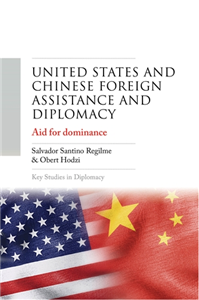 Humanities & Social SciencesJanuary 2026
United States and Chinese foreign assistance and diplomacy
Aid for dominance
by Salvador Santino Regilme, Obert Hodzi
Aid for Dominance addresses the analytic weaknesses of mainstream analysis of foreign aid, which often focuses on its material dimensions. The book underscores the constitutive relationship between foreign aid as a material resource and the diplomatic discourses and practices that constitute complex bilateral relations between donor and recipient states. Written by two leading scholars of contemporary United States and Chinese foreign policies in the Global South, Aid for Dominance offers a pioneering, theoretically conscious, and empirically rich account of the two great powers' grand strategies in the global development sector. By deploying a multidisciplinary and comparative analysis, this book draws from a wide range of evidentiary materials from primary sources, including data from fieldwork interviews, government documents, local and international newspapers, speeches by high-ranking government officials and diplomats, and secondary data from scholarly publications and policy papers.



