Your Search Results

      • Affirm Press

        Affirm Press is an independent publisher in Melbourne, Australia, dedicated to publishing great stories, big ideas, and the most engaging local and international authors. Our children's list was shortlisted for the 2020 BOP Bologna Best Children’s Publisher of the Year award.

        View Rights Portal
      • Trusted Partner

        Dressler

        Dressler rights portal

        View Rights Portal
      • Trusted Partner
        The Arts
        March 2026

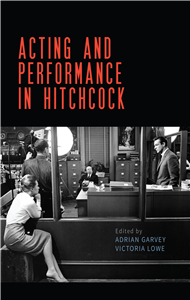
        Acting and performance in Hitchcock

        by Adrian Garvey, Victoria Lowe

        Hitchcock's professed disdain for actors is belied by the extraordinary range and depth of performances featured in his films. It might even be argued that many stars gave their richest and most complex performances in his work. Hitchcock's films are also imbued with the theme of performance, as when his fugitive men and errant women assume fragile new identities and move between roles. Actors and other performers also often feature as characters. However, the exhaustive academic literature on Hitchcock has to date produced surprisingly little work about acting and performance in his films. The collection includes contributions from a range of leading scholars on Hitchcock, performance, stardom, and British Cinema, including Charles Barr, David Greven, Mark Glancy, Lucy Bolton, Lawrence Napper and Michael Williams, and an interview with leading composers/accompanists Neil Brand and Stephen Horne on scoring performance in Silent Hitchcock.

      • Trusted Partner
        Literature & Literary Studies
        December 2020

        The Blunt Affair

        by Jonathan Bolton

      • Trusted Partner
        1987

        Künstliche Intelligenz

        Von den Grenzen der Denkmaschine und dem Wert der Intuition. (rororo computer)

        by Dreyfus, Hubert L; Dreyfus, Stuart E

      • Trusted Partner
        Genocide & ethnic cleansing
        May 2017

        Destruction and human remains

        Disposal and concealment in genocide and mass violence

        by Series edited by Jean-Marc Dreyfus, Élisabeth Anstett. Edited by Élisabeth Anstett, Jean-Marc Dreyfus

        Destruction and human remains investigates a crucial question frequently neglected in academic debate in the fields of mass violence and genocide studies: what is done to the bodies of the victims after they are killed? In the context of mass violence, death does not constitute the end of the executors' work. Their victims' remains are often treated and manipulated in very specific ways, amounting in some cases to true social engineering, often with remarkable ingenuity. To address these seldom-documented phenomena, this volume includes chapters based on extensive primary and archival research to explore why, how and by whom these acts have been committed through recent history. Interdisciplinary in scope, Destruction and human remains will appeal to readers interested in the history and implications of genocide and mass violence, including researchers in anthropology, sociology, history, politics and modern warfare.

      • Trusted Partner
        Humanities & Social Sciences
        December 2014

        Human remains and mass violence

        Methodological approaches

        by Jean-Marc Dreyfus, Élisabeth Anstett, Jean-Marc Dreyfus, Élisabeth Anstett

        This book outlines for the first time in a single volume the theoretical and methodological tools for a study of human remains resulting from episodes of mass violence and genocide. Despite the highly innovative and contemporary research into both mass violence and the body, the most significant consequence of conflict - the corpse - remains absent from the scope of existing research. Why have human remains hitherto remained absent from our investigation, and how do historians, anthropologists and legal scholars, including specialists in criminology and political science, confront these difficult issues? By drawing on international case studies including genocides in Rwanda, the Khmer Rouge, Argentina, Russia and the context of post-World War II Europe, this ground-breaking edited collection opens new avenues of research. Multidisciplinary in scope, this volume will appeal to readers interested in an understanding of mass violence's aftermath, including researchers in history, anthropology, sociology, law, politics and modern warfare. ;

      • Trusted Partner
      • Trusted Partner
      • Trusted Partner
        Humanities & Social Sciences
        March 2017

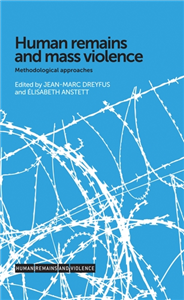
        Human remains and mass violence

        Methodological approaches

        by Jean-Marc Dreyfus, Jean-Marc Dreyfus, Élisabeth Anstett, Élisabeth Anstett

        This book outlines for the first time in a single volume the theoretical and methodological tools for a study of human remains resulting from episodes of mass violence and genocide. Despite the highly innovative and contemporary research into both mass violence and the body, the most significant consequence of conflict - the corpse - remains absent from the scope of existing research. Why have human remains hitherto remained absent from our investigation, and how do historians, anthropologists and legal scholars, including specialists in criminology and political science, confront these difficult issues? By drawing on international case studies including genocides in Rwanda, the Khmer Rouge, Argentina, Russia and the context of post-World War II Europe, this ground-breaking edited collection opens new avenues of research. Multidisciplinary in scope, this volume will appeal to readers interested in an understanding of mass violence's aftermath, including researchers in history, anthropology, sociology, law, politics and modern warfare. The research program leading to this publication has received funding from the European Research Council under the European Union's Seventh Framework Programme (FP/2007-2013) / ERC Grant Agreement n° 283-617.

      • Trusted Partner
        July 1979

        Nana

        by Emile Zola, Renate Sendler-Peters, Erich Marx, Erich Marx

        Émile Zola wurde am 2. April 1840 als Sohn eines italienischen Ingenieurs in Paris geboren und wuchs in Aix-en-Provence auf. Nachdem er das Abitur nicht bestanden hatte, war er zunächst als Hilfsarbeiter in einem Hafen tätig, gelangte schließlich aber zu einer Anstellung im Verlag Hachette. Ab 1865 konnte er als Journalist und Kunstkritiker Fuß fassen. Im Zuge der Affäre Alfred Dreyfus verfaßte er einen offenen Brief gegen dessen Verurteilung und mußte in der Folge für ein Jahr ins Exil nach England gehen. Zola gilt mit seinem Hauptwerk, dem zwanzigbändigen Romanzyklus Les Rougon-Macquart, als bedeutendster europäischer Autor des Naturalismus. Er starb am 29. September 1902.

      • Trusted Partner
        September 1983

        Germinal

        by Emile Zola, Renate Sendler-Peters, Armin Schwarz

        Émile Zola wurde am 2. April 1840 als Sohn eines italienischen Ingenieurs in Paris geboren und wuchs in Aix-en-Provence auf. Nachdem er das Abitur nicht bestanden hatte, war er zunächst als Hilfsarbeiter in einem Hafen tätig, gelangte schließlich aber zu einer Anstellung im Verlag Hachette. Ab 1865 konnte er als Journalist und Kunstkritiker Fuß fassen. Im Zuge der Affäre Alfred Dreyfus verfaßte er einen offenen Brief gegen dessen Verurteilung und mußte in der Folge für ein Jahr ins Exil nach England gehen. Zola gilt mit seinem Hauptwerk, dem zwanzigbändigen Romanzyklus Les Rougon-Macquart, als bedeutendster europäischer Autor des Naturalismus. Er starb am 29. September 1902.

      • Trusted Partner
        Sociology: death & dying
        May 2017

        Human remains and identification

        Mass violence, genocide, and the ‘forensic turn’

        by Series edited by Jean-Marc Dreyfus, Élisabeth Anstett. Edited by Élisabeth Anstett, Jean-Marc Dreyfus

        Human remains and identification presents a pioneering investigation into the practices and methodologies used in the search for and exhumation of dead bodies resulting from mass violence. Previously absent from forensic debate, social scientists and historians here confront historical and contemporary exhumations with the application of social context to create an innovative and interdisciplinary dialogue, enlightening the political, social and legal aspects of mass crime and its aftermaths. Through a ground-breaking selection of international case studies, Human remains and identification argues that the emergence of new technologies to facilitate the identification of dead bodies has led to a "forensic turn", normalising exhumations as a method of dealing with human remains en masse. However, are these exhumations always made for legitimate reasons? Multidisciplinary in scope, this book will appeal to readers interested in understanding this crucial phase of mass violence's aftermath, including researchers in history, anthropology, sociology, forensic science, law, politics and modern warfare. The research program leading to this publication has received funding from the European Research Council under the European Union's Seventh Framework Programme (FP/2007-2013) / ERC Grant Agreement n° 283-617.

      • Trusted Partner
        November 1983

        Lesen und Schreiben

        Zweite Publikation der Marcel Proust Gesellschaft

        by Volker Roloff, Edgar Mass, Horst Lederer, Christiane Röhrbein, Edgar Mass

        Vorwort I Basis und Kontext des Schreibens Jürgen Ritte: Les écrivains à venir - Zur Rezeption der Zeitgenossen bei Proust Ulrich Meier: Proust und die Avantgarde Peter V. Zima: Psyche und Gesellschaft bei Proust - Zur Synthese von psychoanalytischen und soziologischen Methoden Horst Lederer: Kreatives Schreiben. Zur Psychologie der literarischen Ästhetik Ursula Link-Heer: Zwischen Ödipus und Anti-Ödipus. Bemerkungen zur psychoanalytischen Lektüre Prousts II Die Genese des Werkes Joseph Jurt: Politisches Handeln und ästhetische Transposition. Proust und die Dreyfus-Affäre Bernd Spillner: Prousts Stil zwischen Tradition und Kreation Bernard Brun: Warum Marcel Prousts Roman neu herausgeben? Henri Bonnet: Die Niederlagen des Marcel Proust III Für eine kreative Hermeneutik Luzius Keller: Literaturtheorie und immanente Ästhetik im Werke Marcel Prousts Dirk Kocks: Die Bildhauerei als Metapher in der Recherche. Zur Parallelisierung von Kreationsprozessen der Kunst und des Lebens bei Proust Volker Roloff: Lesen als »déchiffrement« - zur Buchmetaphorik und Hermeneutik bei Novalis und Proust Wolfgang Killen: Deutsche Proust-Bibliographie 1979-1982 Abkürzungen Namenregister

      • Trusted Partner
      • Trusted Partner
        March 2022

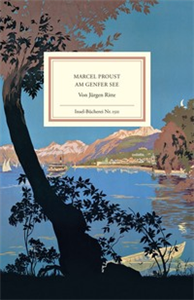
        Marcel Proust am Genfer See

        by Jürgen Ritte

        Im September/Oktober 1899 verbringt Marcel Proust sechs Wochen in Évian am Genfer See und führt dort ein intensives gesellschaftliches Leben: Besuche in den prachtvollen Villen des internationalen Adels rund um den See, zahlreiche Ausflüge, Vergnügungen und lange Debatten (die Frankreich spaltende Dreyfus-Affäre ist allgemeines Salongespräch). Noch notiert Proust Impressionen, Skizzen, Aperçus, von denen er nicht ahnt, dass er sie Jahre später wieder aufnehmen wird, wenn er sich endlich an die Redaktion der Suche nach der verlorenen Zeit begibt. Bis zum Jahre 1905 kehrt Proust – was bislang wenig bekannt war – immer wieder an den Lac Léman zurück. Der See wird zu einem seiner Schreib- und Sehnsuchtsorte. Évian, Thonon, Maugny, Coppet, Genf und der Montblanc: Jürgen Ritte hat Prousts Orte besucht und begibt sich auf eine literarische und kulturgeschichtliche Entdeckungsreise an den exklusiven Urlaubszielen der französischen Schweiz.

      • Trusted Partner
        August 2012

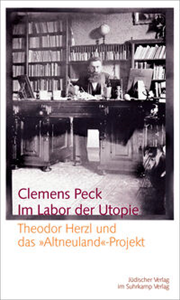
        Im Labor der Utopie

        Theodor Herzl und das "Altneuland"-Projekt

        by Clemens Peck

        Theodor Herzl, geboren 1860 in Budapest, schrieb mit »Der Judenstaat« (1896) die entscheidende Abhandlung für die Gründung eines autonomen jüdischen Staatswesens. Das Buch war eine Abwehrreaktion gegen den in Europa sich verschärfenden Antisemitismus, den Herzl besonders als Paris-Korrespondent während der Dreyfus-Affäre erleben musste. Sechs Jahre später erschien sein Roman »Altneuland«, in dem er seine Ideen eines jüdischen Staates in Palästina literarisierte, reflektierte und modifizierte. Herzl schrieb die Utopie, »um zu zeigen, dass es keine ist«. In seinem Buch geht es nicht um Literatur oder Politik – es geht um beides gleichermaßen. Es changiert zwischen Roman und Leben, Imagination und Realisierung. Clemens Peck folgt Herzls Bewegung zwischen diesen beiden Polen – den Experimenten im Labor der Utopie. Er lotet die Leistungen des Romans vor dem Hintergrund des Utopie-Diskurses um 1900 erstmals ausführlich aus und gewinnt neue Einsichten nicht nur über den Roman, sondern auch über die schillernde Person des jüdischen Schriftstellers und Journalisten.

      • Trusted Partner
      • Trusted Partner
        Society & culture: general
        May 2017

        Human remains and mass violence

        Methodological approaches

        by Edited by Jean-Marc Dreyfus, Élisabeth Anstett

        This book outlines for the first time in a single volume the theoretical and methodological tools for a study of human remains resulting from episodes of mass violence and genocide. Despite the highly innovative and contemporary research into both mass violence and the body, the most significant consequence of conflict - the corpse - remains absent from the scope of existing research. Why have human remains hitherto remained absent from our investigation, and how do historians, anthropologists and legal scholars, including specialists in criminology and political science, confront these difficult issues? By drawing on international case studies including genocides in Rwanda, the Khmer Rouge, Argentina, Russia and the context of post-World War II Europe, this ground-breaking edited collection opens new avenues of research. Multidisciplinary in scope, this volume will appeal to readers interested in an understanding of mass violence's aftermath, including researchers in history, anthropology, sociology, law, politics and modern warfare. The research program leading to this publication has received funding from the European Research Council under the European Union's Seventh Framework Programme (FP/2007-2013) / ERC Grant Agreement n° 283-617.

      • Trusted Partner

      Subscribe to our

      newsletter