
DriverWorks Ink
Livres Canada Books
View Rights Portal

This collection brings together studies of popular performance and politics across the nineteenth century, offering a fresh perspective from an archivally grounded research base. It works with the concept that politics is performative and performance is political. The book is organised into three parts in dialogue regarding specific approaches to popular performance and politics. Part I offers a series of conceptual studies using popular culture as an analytical category for social and political history. Part II explores the ways that performance represents and constructs contemporary ideologies of race, nation and empire. Part III investigates the performance techniques of specific politicians - including Robert Peel, Keir Hardie and Henry Hyndman - and analyses the performative elements of collective movements.
 Trusted Partner

A heartfelt case for why the English pub still matters and how we can save it. In Pubs for the people, Amit Singh and Sivamohan Valluvan offer a daring defence of the humble public house, waging battle against those who see the pub only as a poignant symbol of a bygone England. Making a journey into the nation's living room, they blend tales of Singh's father - the founder of London's first 'Desi pub' - with a lively travelogue that carries them from a hipster nightmare in Shoreditch to an izakaya-inspired Eccles pub run by migrants from Hong Kong. Along the way, they take on private equity, yuppie gentrifiers and culture-war blowhards who use the pub as a prop for their rage-baiting patriotism. Life today can seem lonelier, angrier and poorer than it did before. But as Singh and Valluvan show, the pub offers the inviting prospect of a more equal, sociable and comfortably multiracial England.
Trusted Partner


Eating, drinking, nutrition, and mealtimes play a central role in the daily lives of people with physical and mental disabilities. This publication discusses people with multiple disabilities and cognitive impairments, such as dementia, as well as people in a persistent vegetative state. This practical handbook - identifies problems with eating and drinking among people with severe disabilities and outlines their causes - provides comprehensive, practical guidance on working with people with sensory and motor problems, swallowing difficulties, eructation, nausea and malnourishment - presents posture and positioning aids and techniques to encourage drinking, digestion, basal stimulation, and enteral nutrition - integrates interdisciplinary perspectives from education studies, nursing, and therapy, taking the patient’s life story into account, and discusses working with relatives in drawing up a care plan. Target Group: Practicing nurses, disability support workers, rehabilitation nurses and therapists, basal stimulation trainers, and other health care professionals
Trusted Partner

The graphic novel uses expressive, humorousimages to make the topics ofmental health, depression and anxietydisorders in children and young peopleunderstandable. The first part of thenovel tells the story of 16-year-oldNoah.The second part provides informationto better understand mentalprocesses and strategies to deal withchallenges in a self-effective way. Withits preventative programme, “Up andDown” aims to strengthen the resilienceof all young people.
Trusted Partner

Sam Hanna (1903-96), a pioneering filmmaker from Burnley, Lancashire, was dubbed the 'Lowry of filmmaking' by BBC broadcaster Brian Redhead in the 1980s. The well-meant label stuck, even though it misses the variety of Hanna's remarkable output. Hanna's intimate glimpses into the lives of strangers enable us to imagine the possible stories that lie behind the images. Away from mid-century exponents of documentary filmmaking and photography, Hanna shows us humanity and a microcosm of a world in change, where his subjects are caught up in issues far beyond their grasp that we, as onlookers years later, encounter and see afresh. Written and curated by historian Heather Norris Nicholson, Round our way combines stills, essays and archive photography to document Hanna's unique visual record on film, particularly in northern England, but also further afield, during decades of profound change.
Trusted Partner

British culture after Empire is the first collection of its kind to explore the intertwined social, cultural and political aftermath of empire in Britain from 1945 up to and beyond the Brexit referendum of 2016, combining approaches from the fields of history, English and cultural studies. Against those who would deny, downplay or attempt to forget Britain's imperial legacy, the various contributions expose and explore how the British Empire and the consequences of its end continue to shape Britain at the local, national and international level. As an important and urgent intervention in a field of increasing relevance within and beyond the academy, the book offers fresh perspectives on the colonial hangovers in post-colonial Britain from up-and-coming as well as established scholars.
Trusted Partner
Spirits of extraction revisits the troubling history of socially reformist, ostensibly anti-racist, Christianity and its role in the expansion of the extractive industries, British imperialism, and settler colonialism. The book explores key moments in the history of Methodism and the evangelical movement. Colonial fears, and the attempt to 'civilise savages', were crucial to the movement's foundation in eighteenth-century industrialising Bristol, England. Through the culture of the Cornish mining diaspora of the nineteenth century, Methodism enmeshed with all the complexity of race and labour-structures of the British empire. At the same time, in Anishinaabewaki/Upper Canda/Ontario, Methodist missionaries laid the foundation of abusive education and racialised ideas of redemption that both enable and sacralise the mining industry. Through these histories of our present, the book theorises the relation of religion and education to racism, modernity, biopower, extractivism, and the geology of race.
Trusted Partner
Trusted Partner
Trusted Partner
Trusted Partner
History through material culture is a unique, step-by-step guide for students and researchers who wish to use objects as historical sources. Responding to the significant, scholarly interest in historical material culture studies, this book makes clear how students and researchers ready to use these rich material sources can make important, valuable and original contributions to history. Written by two experienced museum practitioners and historians, the book recognises the theoretical and practical challenges of this approach and offers clear advice on methods to get the best out of material culture research. With a focus on the early modern and modern periods, this volume draws on examples from across the world and demonstrates how to use material culture to answer a range of enquiries, including social, economic, gender, cultural and global history.
Trusted Partner
This is a vital new work; the first to take the University of Manchester's Museum as its subject. By setting the museum in its cultural and intellectual contexts, Nature and culture explores twentieth-century collecting and display, and the status of the object in the modern world. Beginning with the origins of the Manchester Museum, accounting for its development as an internationally renowned university museum, and concluding at its major expansion at the turn of the millennium, this book casts new light on the history of museums. How did objects become knowledge? Who encountered museum objects on their way to museums? What happened to collections within the museum? How did visitors use and respond to objects? In answering these questions, Nature and culture illuminates not only the history of one institution, but also contributes to wider discussions in the history of science, cultural history and museology. ;
Trusted Partner

This book focuses on British efforts to suppress the traffic in female slaves destined for Egyptian harems during the late-nineteenth century. It considers this campaign in relation to gender debates in England, and examines the ways in which the assumptions and dominant imperialist discourses of these abolitionists were challenged by the newly-established Muslim communities in England, as well as by English people who converted to or were sympathetic with Islam. While previous scholars have treated antislavery activity in Egypt first and foremost as an extension of earlier efforts to abolish plantation slavery in the New World, this book considers it in terms of encounters with Islam during a period which it argues marked a new departure in Anglo-Muslim relations. This approach illuminates the role of Islam in the creation of English national identities within the global cultural system of the British Empire. This book would appeal to those with an interest in British imperial history; Islam; gender, feminism, and women's studies; slavery and race; the formation of national identities; global processes; Orientalism; and Middle Eastern studies.
Trusted Partner

Accessible, introductory student guide which identifies key feminist approaches to popular culture from the 1960s to the present.. The only introduction to both feminist cultural studies and feminism and popular culture published in the UK.. Presents its information in a reader friendly series of case studies on: women's film romantic fiction soap opera consumption and material culture fashion and beauty proactices youth culture and popular music. Will appeal to students across a wide range of disciplines as a variety of popular cultural forms are discussed. ;
Trusted Partner
 Trusted Partner
 Trusted Partner
Windows for the world explores the display and reception of nineteenth-century British stained glass in a secular exhibition context. International in scope, the book focuses on the global development of stained glass in this period as showcased at, and influenced by, these exhibitions. It recognises those who made and exhibited stained glass and demonstrates the long-lasting impact of the classification and modes of display at these events. A number of exhibits are illustrated in colour and are analysed in relation to stylistic developments, techniques and material innovations, as well as the broader iconographies of nation and empire in the nineteenth century.
Trusted Partner
 Trusted Partner
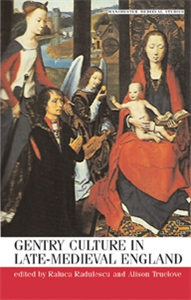
Essays in this fascinating and important collection examine the lifestyles and attitudes of the gentry in late medieval England. They consider the emergence of the gentry as a group distinct from the nobility, and explore the various available routes to gentility. Through surveys of the gentry's military background, administrative and political roles, social behaviour, and education, the reader is provided with an overview of how the group's culture evolved, and how it was disseminated. Studies of the gentry's literacy, creation and use of literature, cultural networks, religious activities and their experiences of music and the visual arts more directly address the practice and expression of this culture, exploring the extent to which the gentry's activities were different from those of the wider population. Joining the editors in contributing essays to this collection is an impressive array of eminent scholars, all specialists in their respective fields: Christine Carpenter, Peter Fleming, Maurice Keen, Philippa Maddern, Nicholas Orme, Tim Shaw, Thomas Tolley and Deborah Youngs. As a whole, the book offers a broad view of gentry culture that explores, reassesses, and sometimes even challenges the idea that members of the gentry cultivated their own distinctive cultural identity. It will appeal to students looking for a comprehensive introduction to late medieval gentry culture, as well as to researchers interested in gentry studies more generally. ;



