Your Search Results

      • Paulinas | Editorial Paulinas Colombia

        Somos una congregación de mujeres consagradas a Dios de la Iglesia Católica, para la evangelización con los medios de comunicación social.Sobre las huellas de Pablo, y con su mismo espíritu dedicamos todas nuestras fuerzas para VIVIR y COMUNICAR a Jesucristo en el areópago de la comunicación.

        View Rights Portal
      • Colmena Editores

        Colmena Editores is an independent Peruvian publishing house based in Lima and founded in 2012. Since its inception, it has prioritized the publication of classic authors.

        View Rights Portal
      • Trusted Partner
        Humanities & Social Sciences
        June 2021

        Crowns and colonies

        European monarchies and overseas empires

        by Robert Aldrich, Cindy McCreery

        Queen Victoria, who also bore the title of Empress of India, had a real and abiding interest in the British Empire, but other European monarchs also ruled over possessions 'beyond the seas'. This collection of original essays explores the connections between monarchy and colonialism, from the old regime empires down to the Commonwealth of today. With case studies drawn from Britain, France, the Netherlands, Germany and Italy, the chapters analyse constitutional questions about the role of the crown in overseas empires, the pomp and pageantry of the monarchy as it transferred to the colonies, and the fate of indigenous sovereigns under European colonial control. Crowns and colonies, with chapters on North America, Asia, Africa and Australasia, provides new perspectives on colonial history, the governance of empire, and the transnational history of monarchies in modern Europe.

      • Trusted Partner
        Humanities & Social Sciences
        July 2003

        De Stijl and Dutch modernism

        by Michael White, Marsha Meskimmon, Shearer West, Tim Barringer

        De Stijl was the title of a magazine founded in the Netherlands in 1917 and is now used to identify the abstract art and functional architecture of its major contributors: Mondrian, Van Doesburg, Van der Leck, Oud, Wils and Rietveld. This book is the first to emphasize the local context of De Stijl and explore its relationship to the distinctive character of Dutch modernism. Examines the connection between debates concerning abstraction in painting and spatiality in architecture and contemporary developments in the fields of urban planning, advertising, interior design and exhibition design. Describes the interaction between the world of mass culture and the fine arts. ;

      • Trusted Partner
        Humanities & Social Sciences
        July 2021

        Photographic subjects

        Monarchy and visual culture in colonial Indonesia

        by Susie Protschky

        Winner of the ASAA mid-career book prize in Asian Studies 2020 and joint winner of the 2020 Royal Studies Journal Book Prize Photographic subjects examines photography at royal celebrations during the reign of Queens Wilhelmina (1898-1948) and Juliana (1948-80), a period spanning the zenith and fall of Dutch rule in Indonesia. It is the first monograph in English on the Dutch monarchy and the Netherlands' modern empire in the age of mass and amateur photography. Photographs forged imperial networks, negotiated relations of recognition and subjecthood between Indonesians and Dutch authorities, and informed cultural modes of citizenship at a time of accelerated colonial expansion and major social change in the East Indies/Indonesia. This book advances methods in the uses of photographs for social and cultural history and provides a new interpretation of Queens Wilhelmina and Juliana as imperial monarchs.

      • Trusted Partner
        Humanities & Social Sciences
        September 2011

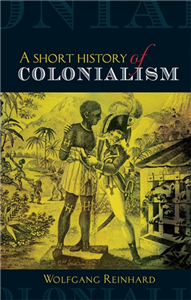
        A short history of colonialism

        by Wolfgang Reinhard

        This well-written and comprehensive book by an outstanding expert provides students of history and the general reader with reliable up-to-date information on an essential part of the history of mankind: the global impact of European colonial expansion from the late Middle Ages to the present. It deals with the discoveries, with Portuguese, Dutch and English trade systems in Asia, with the Spanish, Portuguese, Dutch, French and British Colonies in America, the American plantation economy and the trade in African slaves, with settler colonies in the southern hemisphere, with US-, Russian and Chinese continental imperialism, with western colonial rule in Asia and Africa and the several waves of decolonisation between 1775 and 1989. Twenty-four maps illustrate the narrative. A useful teaching text, it combines traditional and more recent perspectives to produce a final balance sheet of Western colonialism and its global heritage. A carefully selected bibliography encourages further reading. ;

      • Trusted Partner
        Humanities & Social Sciences
        April 2010

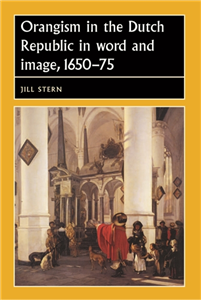
        Orangism in the Dutch Republic in word and image, 1650–75

        by Jill Stern, Joseph Bergin, Penny Roberts, Bill Naphy

        This remarkable study represents a completely original presentation of the language and imagery used by the Orangists in the critical period in the mid-seventeenth century Netherlands as they sought the restoration of the stadholderate in the person of the young prince William III. Stern argues that the Orangists had no desire for the prince to become a monarch, rather that they viewed the stadholderate as an essential component of the Dutch constitution, the Union of Utrecht, and fulfilling a key role as defender of the rights and privileges of the citizenry against an overwheening urban oligarchy. Source material is drawn not only from books and political pamphlets but also from contemporary drama, poetry, portraits, prints, and medals. This enables the author to examine the imagery used by the supporters of the House of Orange, in particular the symbols of rebirth and regeneration which were deployed to propagate the restoration of the stadholderate in the person of William III. ;

      • Trusted Partner
        History of medicine
        May 2017

        Leprosy and colonialism

        Suriname under Dutch rule, 1750–1950

        by Stephen Snelders. Series edited by Professor Keir Waddington

        Leprosy and colonialism investigates the history of leprosy in Suriname within the context of Dutch colonial power and racial conflict, from the plantation economy and the age of slavery to its legacy in the modern colonial state. It explores the relationship between the modern stigmatization and exclusion of people affected with leprosy, and the political tensions and racial fears originating in colonial slave society, exerting their influence until after the decolonization up to the present day. In the book colonial sources are read from shifting perspectives, of the colonial rulers and, 'from below', the ruled. Though leprosy is today a neglected tropical disease, recognizing influences of our colonial heritage in our global management of health and disease, and exploring the perspectives of other cultures are essential in a time in which migration movements make the permeability of boundaries, and transmission of diseases, more common then perhaps ever before.

      • Trusted Partner
        March 2026

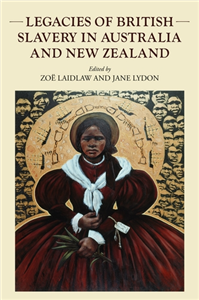
        Legacies of British slavery in Australia and New Zealand

        by Zoë Laidlaw, Jane Lydon

        This book investigates the legacies of British slavery beyond Britain, focusing upon the colonisation of Australia and New Zealand, and explores why this history has been overlooked. After August 1833, when the British Parliament abolished slavery in the British Caribbean, Mauritius and the Cape, the former slave-owners were paid compensation for the loss of their 'property'. New research has begun to show that many beneficiaries had ties to other parts of the British Empire, including the settler colonies of Australia, New Zealand, Canada and South Africa. Through a range of case studies, contributors to this collection trace the movement of people, goods, capital, and practices from the Caribbean to the new Australasian settler colonies. Chapters consider a range of places, people and themes to reveal the varied ways that slavery continued to shape imperial relationships, economic networks, and racial labour regimes after 1833.

      • Trusted Partner
        September 2010

        Amsterdam und zurück

        Roman

        by Marente Moor, Waltraud Hüsmert

        Es ist ein ganzer Haufen Russen, den es zu Beginn der Neunziger in Amsterdam an Land gespült hat. Die Sowjetunion gibt es nicht mehr, die Grenzen sind durchlässiger geworden, aber Heimweh ist trotzdem ein Thema für diese Jungs, denen Puschkin-Büsten und Salzgurken inneren Halt geben, die ihre Tage auf dem pittoresken Rembrandtplein verbringen, wo sie Aquarelle an die Touristen verscherbeln, und ihre Nächte dem Studium des Wodkas widmen. Witali Kirillow ist einer von ihnen, der Mann mit den meergrünen Augen. Längst ist sein Visum abgelaufen, seit dem Tag, an dem er »illegal« wurde, fährt er vorsichtshalber in der Straßenbahn nicht mehr schwarz. Doch das ist nicht das einzige Delikt in Witalis Leben. Acht Jahre zuvor, als Offizier an der sowjetisch-finnischen Grenze, hinderte er einen Kameraden nicht daran, sich in den Westen abzusetzen. Von der Familie gutmütig als »das größte Loch im eisernen Vorhang« verspottet, wurde er von der Armee hart bestraft. Seitdem läßt der Gedanke an den Flüchtling Witali nicht mehr los. Und schließlich, unterstützt von der rasant-energischen Jessie, macht er sich auf, um herauszufinden, was aus ihm geworden ist. Nur zwei, drei Pinselstriche braucht Marente de Moor, um in ihrem Debütroman die unterschiedlichsten Viertel Amsterdams lebendig werden zu lassen und vor allem die russische Szene der Stadt zu porträtieren: lauter Charakterköpfe, die – hochsympathisch und besorgniserregend tiefgründig – ganz nebenbei verhandeln, was Grenze, was Identität, was Heimat bedeutet. »Ein mitreißendes Bild – manchmal herrlich komisch, manchmal voller Nostalgie – von einem ungebärdigen Pulk Russen, die wie Schiffbrüchige in Amsterdam gestrandet sind.« Haarlems Dagblad

      • Trusted Partner
        October 1993

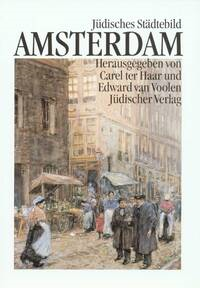
        Jüdisches Städtebild Amsterdam

        by Edward Voolen, Carel Haar, Helga Beuningen

        Dieser Band stellt das jüdische Amsterdam vor. In literarischen Texten, Bildern und Dokumenten wird die Blütezeit des 17. Jahrhunderts laut. Geschildert wird die Zeit der französischen Besatzung von 1795, die jüdische Lebenswelt des 19. Jahrhunderts, die Zeit der deutschen Besetzung der Niederlande 1940, die Deportation und Ermordung der meisten niederländischen Juden. Das gegenwärtige jüdische Leben kommt in literarischen Zeugnissen zu Wort. Die Anthologie literarischer Texte zeigt die deutschsprachige Literatur im holländischen Exil und gibt zugleich eine Übersicht der modernen niederländischen Literatur.

      • Trusted Partner
        Humanities & Social Sciences
        March 2017

        The French empire at War, 1940–1945

        by Martin Thomas

        The French empire at war draws on original research in France and Britain to investigate the history of the divided French empire - the Vichy and the Free French empires - during the Second World War. What emerges is a fascinating story. While it is clear that both the Vichy and Free French colonial authorities were only rarely masters of their own destiny during the war, preservation of limited imperial control served them both in different ways. The Vichy government exploited the empire in an effort to withstand German-Italian pressure for concessions in metropolitan France and it was key to its claim to be more than the mouthpiece of a defeated nation. For Free France too, the empire acquired a political and symbolic importance which far outweighed its material significance to the Gaullist war effort. As the war progressed, the Vichy empire lost ground to that of the Free French, something which has often been attributed to the attraction of the Gaullist mystique and the spirit of resistance in the colonies. In this radical new interpretation, Thomas argues that it was neither of these. The course of the war itself, and the initiatives of the major combatant powers, played the greatest part in the rise of the Gaullist empire and the demise of Vichy colonial control.

      • Trusted Partner
        Humanities & Social Sciences
        March 2017

        Rethinking settler colonialism

        History and memory in Australia, Canada, Aotearoa New Zealand and South Africa

        by Annie Coombes

        Rethinking settler colonialism focuses on the long history of contact between indigenous peoples and the white colonial communities who settled in Australia, Aotearoa New Zealand, Canada and South Africa. It interrogates how histories of colonial settlement have been mythologised, narrated and embodied in public culture in the twentieth century (through monuments, exhibitions and images) and charts some of the vociferous challenges to such histories that have emerged over recent years. Despite a shared familiarity with cultural and political institutions, practices and policies amongst the white settler communities, the distinctiveness which marked these constituencies as variously, 'Australian', 'South African', 'Canadian' or 'New Zealander', was fundamentally contingent upon their relationship to and with the various indigenous communities they encountered. In each of these countries these communities were displaced, marginalised and sometimes subjected to attempted genocide through the colonial process. Recently these groups have renewed their claims for greater political representation and autonomy. The essays and artwork in this book insist that an understanding of the political and cultural institutions and practices which shaped settler-colonial societies in the past can provide important insights into how this legacy of unequal rights can be contested in the present. It will be of interest to those studying the effects of colonial powers on indigenous populations, and the legacies of imperial rule in postcolonial societies.

      • Trusted Partner
        Humanities & Social Sciences
        March 2017

        The French empire between the wars

        Imperialism, politics and society

        by Martin Thomas

        By considering the distinctiveness of the inter-war years as a discrete period of colonial change, this book addresses several larger issues, such as tracing the origins of decolonization in the rise of colonial nationalism, and a re-assessment of the impact of inter-war colonial rebellions in Africa, Syria and Indochina. The book also connects French theories of colonial governance to the lived experience of colonial rule in a period scarred by war and economic dislocation.

      • Trusted Partner
        June 2026

        Little wars of empire

        British veterans in a colonial world, c.1885–1918

        by Taylor Soja

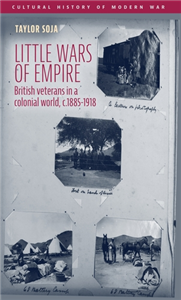
        Little Wars of Empire is a group biography of British veterans who experienced multiple wars across the British empire. Throughout the nineteenth century, Britain was constantly at war in its colonies, defending against anti-colonial resistance or trying to expand its influence. The veterans of these wars did not disappear once they were over, and many of them went on to later experience World War I. By using personal sources such as letters, diaries, and photograph albums, this book works to show how colonial violence and British military history depend upon one another, and argues that colonial war fundamentally shaped the British experience of empire. This was true for all kinds of British veterans, from British Army soldiers and officers to nurses and military families, whose experiences demonstrate the central place of colonial violence to British life.

      • Trusted Partner
        Humanities & Social Sciences
        September 2023

        Missionaries and modernity

        Education in the British Empire, 1830-1910

        by Felicity Jensz

        Many missionary societies established mission schools in the nineteenth century in the British Empire as a means to convert non-Europeans to Christianity. Although the details, differed in various colonial contexts, the driving ideology behind mission schools was that Christian morality was highest form of civilisation needed for non-Europeans to be useful members of colonies under British rule. This comprehensive survey of multi-colonial sites over the long time span clearly describes the missionary paradox that to draw in pupils they needed to provide secular education, but that secular education was seen to lead both to a moral crisis and to anti-British sentiments.

      • Trusted Partner
        Humanities & Social Sciences
        February 2017

        Curating empire

        Museums and the British imperial experience

        by Sarah Longair, John McAleer

        Curating empire explores the diverse roles played by museums and their curators in moulding and representing the British imperial experience. This collection demonstrates how individuals, their curatorial practices, and intellectual and political agendas influenced the development of a variety of museums across the globe. Taken together, these contributions suggest that museums are not just sites for accessing history but need to be considered as historical sites of significance in themselves. Individual essays examine the work of curators in museums in Britain and the colonies, the historical display and interpretation of empire in Britain, and the establishment of 'museum networks' in the British imperial context. Curating empire sheds new light on the relationship between museums, as repositories for objects and cultural institutions for conveying knowledge, and the politics of culture and the formation of identities throughout the British Empire.

      • Trusted Partner
        Humanities & Social Sciences
        August 2025

        Invoking Empire

        Imperial citizenship and Indigenous rights across the British World, 1860–1900

        by Darren Reid

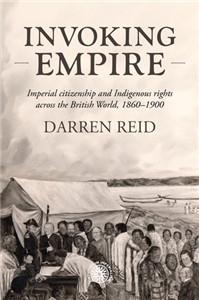
        Invoking Empire examines the histories of Canada, South Africa, Australia, and New Zealand during the transitional decades between 1860-1900, when each gained some degree of self-government yet still remained within the sovereignty of the British Empire. It applies the conceptual framework of imperial citizenship to nine case studies of settlers and Indigenous peoples who lived through these decades to make two main arguments. It argues that colonial subjects adapted imperial citizenship to both support and challenge settler sovereignty, revealing the continuing importance of imperial authority in self-governing settler spaces. It also posits that imperial citizenship was rendered inoperable by a combination of factors in both Britian and the colonies, highlighting the contingency of settler colonialism on imperial governmental structures and challenging teleological assumptions that the rise of settler nation states was an inevitable result of settler self-government.

      • Trusted Partner
        Humanities & Social Sciences
        October 2025

        Entertaining the empire

        London music hall and the export of Britishness

        by Andrew Horrall

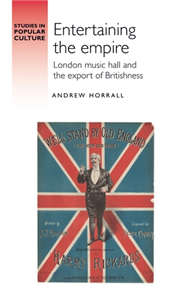
        The stage entertainments known as music hall emerged in mid-Victorian London just as the British began colonising large parts of the world.Settlers recreated this metropolitan popular culture throughout the empire and in places under foreign control. They erected music halls resembling those at home, imported songs and sketches, performed inamateur shows and watched touring professionals. London originals were rewritten as commentaries on local conditions. This activity transformed music hall into a marker of an exclusionary British identity overseas and made colonies look and sound more like Britain. The result was that settlers separated by vast distances were linked by a shared popular culture. The touring circuits and cultural affinities the Victorians created endure to this day.

      • Trusted Partner

      Subscribe to our

      newsletter