
Your Search Results
-

-

emons Verlag
The Cologne-based publishing house Emons was founded by Hermann-Josef Emons in 1984. We now have over 80 regional crime series, taking place in every part of Germany and since 2009 Emons crime novels also take place abroad (Austria, Switzerland, Spain, Italy etc.). Our books were published in over 13 countries, like Japan, Slowenia and Finland. Since 2009 we also publish our 111places (111 Orte) series. This illustrated guidebook series presents cities, regions and even whole countries from a wonderfully different and personal perspective.
View Rights Portal
-
Promoted Content

 MedicineDecember 2016
Emotion-Focused Therapy
A Practitioner’s Guide
by Lars Auszra/ Imke Herrmann/ Leslie S. Greenberg
This title provides a thorough and practical introduction to Emotions-Focused Therapy (EFT). Emotions, central point in EFT, help the patient identify his/her priorities and can be a good starting point for change. This title provides therapists with an overview over the principles and strategies that enable them to work with patients’ emotions in a therapeutic setting and use them to facilitate the changing of behavior. Readers will also find this title to be a rich resource of different techniques, such as empty-chair dialogues as well as suggestions on how to handle typical problems in therapy. Target Group: psychotherapists, specialists for psychiatry and psychotherapy, specialists for psychosomatic medicine and psychotherapy, clinical psychologists, coaches, students and teachers of psychology
-
Promoted Content

 Literature & Literary StudiesJune 2025
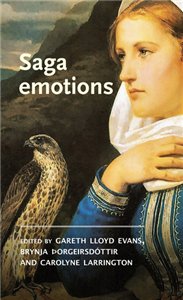
Saga emotions
by Gareth Lloyd Evans, Brynja Þorgeirsdóttir, Carolyne Larrington
Focusing particularly on historically oriented sagas, Saga emotions identifies and examines a range of emotions from across Old Norse-Icelandic saga literature. Each chapter begins with a discrete emotion term, such as reiði (anger), gleði (joy), or the peculiarly Old Norse víghugr (killing-mood), exploring its usages within the broad saga corpus, and focusing on its contextual meanings and narrative purposes. The contributions explore the specifics of the lexical terms used for different emotion states and offer in-depth case studies that consider how various emotions manifest within particular examples of saga literature. The book offers the emotional granularity lacking in current studies of Norse emotion and serves as an essential foundation for future research and study into emotional depiction in Old Norse-Icelandic saga literature.
-
 Trusted Partner
 Humanities & Social SciencesJune 2021
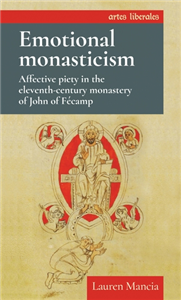
Emotional monasticism
Affective piety in the eleventh-century monastery of John of Fécamp
by Lauren Mancia
Medievalists have long taught that highly emotional Christian devotion, often called 'affective piety', appeared in Europe after the twelfth century and was primarily practiced by communities of mendicants, lay people and women. Emotional monasticism challenges this view. The first study of affective piety in an eleventh-century monastic context, it traces the early history of affective devotion through the life and works of the earliest known writer of emotional prayers, John of Fécamp, abbot of the Norman monastery of Fécamp from 1028-78. Exposing the early medieval monastic roots of later medieval affective piety, the book casts a new light on the devotional life of monks in Europe before the twelfth century and redefines how medievalists should teach the history of Christianity.
-
Trusted Partner
 Literature & Literary StudiesOctober 2025
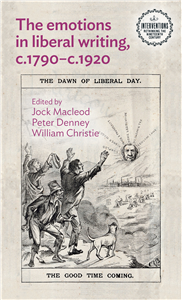
The emotions in liberal writing, c.1790–c.1920
by Jock Macleod, Peter Denney, William Christie
This volume of essays from a selection of distinguished international scholars is the first of its kind to explore in depth the emotional dimensions of liberal writing in Britain over the long nineteenth century. Addressing liberal writing in the public sphere rather than high political or parliamentary liberalism, it comprises a clear, context-setting introduction and eleven substantive chapters. The chapters analyse key texts and figures from the 1790s through to the 1920s and offer several different approaches to the central concern with the emotions and liberalism. These include examining the place of the emotions in the 'good life'; the social and political function of the emotions; emotional rhetoric in liberal writing; and liberal theories of the emotions. Both individually and as a collection, the essays provide an essential foundation for further scholarly work in this emerging field.
-
Trusted Partner

 November 2012
Unveiling Emotions
Sources and Methods for the Study of Emotions in the Greek World
by Herausgegeben von Chaniotis, Angelos
-
Trusted Partner
 Humanities & Social SciencesJune 2019
Emotional monasticism
by Lauren Mancia, T. J. H. McCarthy, Stephen Mossman, Carrie Beneš, Jochen Schenk
-
Trusted Partner
November 2013
Unveiling Emotions. Vol. 2
Emotions in Greece and Rome: Texts, Images, Material Culture
by Herausgegeben von Chaniotis, Angelos; Herausgegeben von Ducrey, Pierre
-
Trusted Partner
Literature & Literary StudiesJanuary 2026
Approaches to emotion in Middle English literature
by Carolyne Larrington
-
Trusted Partner
 Shakespeare studies & criticismMay 2017
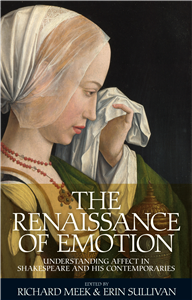
The Renaissance of emotion
Understanding affect in Shakespeare and his contemporaries
by Edited by Richard Meek, Erin Sullivan
This collection of essays offers a major reassessment of the meaning and significance of emotional experience in the work of Shakespeare and his contemporaries. Recent scholarship on early modern emotion has relied on a medical-historical approach, resulting in a picture of emotional experience that stresses the dominance of the material, humoral body. The Renaissance of emotion seeks to redress this balance by examining the ways in which early modern texts explore emotional experience from perspectives other than humoral medicine. The chapters in the book seek to demonstrate how open, creative and agency-ridden the experience and interpretation of emotion could be. Taken individually, the chapters offer much-needed investigations into previously overlooked areas of emotional experience and signification; taken together, they offer a thorough re-evaluation of the cultural priorities and phenomenological principles that shaped the understanding of the emotive self in this period.
-
Trusted Partner
-
Trusted Partner
 Humanities & Social SciencesJune 2022
Affective intimacies
by Marjo Kolehmainen, Kinneret Lahad, Annukka Lahti
This volume provides a novel platform to re-evaluate the notion of open-ended intimacies through the lens of affect theories. Contributors address the embodied, affective and psychic, sensorial and embodied aspects of their ongoing intimate entanglements across various timely phenomena. This fascinating collection asks how the study of affect enables us to rethink intimacies, what affect theories can do to the prevailing notion of intimacy and how do they renew and enrich theories of intimacy in a manner which also considers its normative and violent forms. Lively and thought-provoking, this collection contributes to timely topics across the social sciences, representing multiple disciplines from gender studies, sociology and cultural studies to anthropology and queer studies. By so doing, it advances the value of interdisciplinary perspectives and creative methodologies to understanding affective intimacies.
-
Trusted Partner
 Literature & Literary StudiesApril 2021
Positive emotions in early modern literature and culture
by Cora Fox, Bradley J. Irish, Cassie M. Miura
-
Trusted Partner
 Humanities & Social SciencesMarch 2025
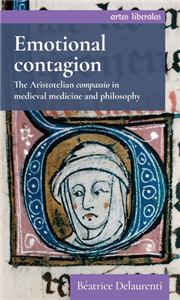
Emotional contagion
The Aristotelian compassio in medieval medicine and philosophy
by Béatrice Delaurenti, Graham Robert Edwards
Yawning makes one yawn, crying makes one cry. In the same way, a shiver, appetite, sexual desire and confidence are transmitted from one person to another. These examples capture the contagion-like dimension of emotion, spreading rapidly among people with tangible behavioural manifestations. Emotional contagion still challenges scientific explanation, and philosophical, scientific and anthropological topics converge around this issue. In Medieval Latin, there is a specific name for this contagion: compassio ('compassion'). Etymologically, 'compassion' means the co-experience of a 'passion', involving an involuntary reaction of the soul or the body imitating the reactions of others. The book investigates how these topics were treated in medieval learned texts, and illuminates the twofold enigma, that of the trajectory of the term compassio, and that of explaining the phenomenon it denoted.
-
Trusted Partner
 May 2009
Emotions- und stigmafokussierte Angehörigenarbeit bei psychotischen Störungen
Ein Behandlungsprogramm
by Vauth, Roland; Bull, Nadine; Schneider, Gerda
-
Trusted Partner
 Humanities & Social Sciences
Meeting Emotional Needs in Intellectual Disability
by Tanja Sappok / Sabine Zepperitz
The book explores in detail how challenging behavior and mental health difficulties in people with ID arise when their basic emotional needs are not being met by those in the environment. Using individually tailored interventions, which complement existing models of care, practitioners can help to facilitate maturational processes and reduce behaviorthat is challenging to others. As a result, the “fit” of a person within his or her individual environment can be improved. Case examples throughout the book illuminate how thisapproach works by targeting interventions towards the person’sstage of emotional development. Target group: For:• clinical psychologists and psychiatrists• occupational therapists• learning disability nurses• speech and language therapists• teachers in special education settings• parents and caregivers
-
Trusted Partner
Literature & Literary StudiesJune 2026
Contemporary Chaucer across the centuries
by Helen Hickey, Anne McKendry, Melissa Raine
This unique and exciting collection, inspired by the scholarship of literary critic Stephanie Trigg, offers cutting-edge responses to the writings of Geoffrey Chaucer for the current critical moment. The chapters are linked by the organic and naturally occurring affinities that emerge from Trigg's ongoing legacy; containing diverse methodological approaches and themes, they engage with Chaucer through ecocriticism, medieval literary and historical criticism, and medievalism. The contributors, trailblazing international specialists in their respective fields, honour Trigg's distinctive and energetic mode of enquiry (the symptomatic long history) and intellectual contribution to the humanities. At the same time, their approaches exemplify shifting trends in Chaucer scholarship. Like Chaucer's pilgrims, these scholars speak to and alongside each other, but their essays are also attentive to 'hearing Chaucer speak' then, now and in the future.
-
Trusted Partner
 Literature & Literary StudiesJanuary 2023
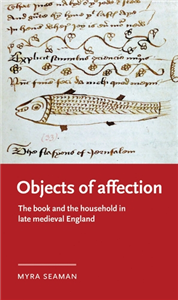
Objects of affection
The book and the household in late medieval England
by Myra Seaman
Objects of affection recovers the emotional attraction of the medieval book through an engagement with a fifteenth-century literary collection known as Oxford, Bodleian Library Manuscript Ashmole 61. Exploring how the inhabitants of the book's pages - human and nonhuman, tangible and intangible - collaborate with its readers then and now, this book addresses the manuscript's material appeal in the ways it binds itself to different cultural, historical and material environments. In doing so it traces the affective literacy training that the manuscript provided its late-medieval English household, whose diverse inhabitants are incorporated into the ecology of the book itself as it fashions spiritually generous and socially mindful household members.
-
Trusted Partner
 Humanities & Social SciencesDecember 2011
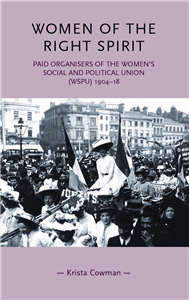
Women of the right spirit
Paid organisers of the Women's Social and Political Union (WSPU), 1904–18
by Krista Cowman, Pamela Sharpe, Penny Summerfield, Lynn Abrams, Cordelia Beattie
This book is the first investigation on how official organizers built and sustained the national militant campaign of the Women's Social and Political Union between 1903 and 1918. Whilst the overall policy of the Union was devised by an ever-decreasing circle of women, centred around the mother-daughter team of Emmeline and Christabel Pankhurst, much of its actual activity, including its more extreme militant actions such as arson, was devised and implemented by these organizers who worked in the provinces and in London. Women of the right spirit reveals organizers to be a diverse bunch of women, whose class backgrounds ranged from the aristocratic to the extremely impoverished. It describes the ways in which they were recruited and deployed, and the work they undertook throughout Britain. The exhausting pace of their itinerant life is revealed as well as the occasions when organizers fell out with their employers or their own branches. Taking the story of the WSPU's workers up to the end of the First World War, it considers what directions they took when votes for women became a reality. The book will appeal to academics, postgraduates and undergraduates with an interest in women's history, as well as a more general readership wishing to understand the extent of support for the votes for women campaign and the mechanisms through which it organized. ;
-
Trusted Partner
 Literature & Literary StudiesNovember 2021
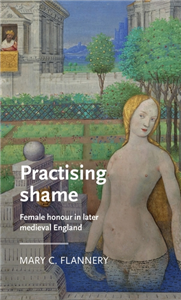
Practising shame
Female honour in later medieval England
by Mary C. Flannery, Anke Bernau, David Matthews
Practicing shame investigates how the literature of medieval England encouraged women to safeguard their honour by cultivating hypervigilance against the possibility of sexual shame. A combination of inward reflection and outward comportment, this practice of 'shamefastness' was believed to reinforce women's chastity of mind and body, and to communicate that chastity to others by means of conventional gestures. The book uncovers the paradoxes and complications that emerged from these emotional practices, as well as the ways in which they were satirised and reappropriated by male authors. Working at the intersection of literary studies, gender studies and the history of emotions, it transforms our understanding of the ethical construction of femininity in the past and provides a new framework for thinking about honourable womanhood now and in the years to come.
-
Trusted Partner
 Humanities & Social SciencesJuly 2025
Cross-border intimacies
Affect and emotions in marriage migration
by Lara Momesso
Since the early 1990s, economic exchanges between China and Taiwan have paved the way to migration across a previously closed border and to social and cultural interactions between the two populations. Despite these broader changes, the unresolved issue of Taiwan sovereignty has tainted not only the relations between the two governments but also the everyday life of those who move across the Taiwan Strait. In this politicised environment, intimate and affective practices linked to cross-border marriage and family formation are never just private. Instead, they are deeply entangled with the emotional and affective processes generated at the macro and meso level of political and social life and revolving around national interests. Tracing the intimate, emotional and affective practices linked to family creation, identity formation and integration with the local and national communities, this ethnographic study offers a subjective, dynamic, and complex picture of what it means to be a mainland spouse in Taiwan.


