2024 Frankfurt Invitation Programme
Have a look at this compilation of titles from independent publishers from Africa, the Arab world, Asia and Latin America.
View Rights Portal Trusted Partner

Have a look at this compilation of titles from independent publishers from Africa, the Arab world, Asia and Latin America.
View Rights Portal
Our passion is to show kids, how colourful and fascinating the world is. There is not only one way to live but so many. We love curious children and we do the books they need to explore the world. So we do travel books for kids and novels for the journey in a hammock.
View Rights Portal

“Well, that’s football for you!” – football-related conventional wisdom when there’s nothing left to explain after a lucky win or unlucky defeat. But Jörg Heinrich, the renowned football journalist, is not satisfied with this platitude. “Woulda, Coulda, Shoulda”: in the 25 essays in this ball-smart book, bursting with esprit and wit, Jörg Heinrich addresses questions and topics that have never even been considered before, never mind answered. Such as: “What if Günter Netzer had not come on as a substitute in 1973?”, or “if Birgit Prinz had aimed better in the 1995 World Cup?”. “What if Mario Basler had been a non-smoker in 1999”, or “if SC Freiburg had fired their coach Christian Streich after relegation in 2015?”.

A football is a moody thing, and the art of mastering it a highly challenging concern. Whether fan or philosopher, football is a fascination, and its various facets are revealed in this anthology with memorable, intelligent and curious contributions. How and with what (human rights-violating) methods did Qatar prepare for the World Cup? Actress Christiane Paul explains why she supports FC Bayern. Herman van Veen explains the difference between Dutch and German football fans, and the report 'Five balls for Angola' takes readers on a journey to football in Africa. A book for dedicated fans and critical football observers.
Trusted Partner


Ein literarischer Begleiter durch das Jahr: Der Insel-Kalender 2024 versammelt wie jedes Jahr Gedanken, Geschichten und Gedichte Hermann Hesses über das Leben und den Wechsel der Jahreszeiten. Mit einem Kalendarium, das Raum bietet für eigene Notizen und neben Geburtstagen wichtiger Autorinnen und Autoren auch die Mondphasen verzeichnet. Im Anhang finden sich ein Übersichtskalender der Jahre 2024 und 2025, eine Tabelle der Schulferien sowie ein Adress- und ein Telefonverzeichnis. Lassen Sie sich von diesem wunderbaren Band durchs Jahr begleiten.
Trusted Partner

Das handliche CalenDarium mit Hermann Hesses farbenfrohen Kleinaquarellen auf den Frontseiten bringt für das Jahr 2024 auf den Rückseiten eine Auswahl von Gedanken des Autors über den Eigensinn: In Prosa und mit farbigen Reproduktionen seiner Aquarelle enthält dieses CalenDarium viel von dem, was die Eigenart und den unverwechselbaren Reiz der zwölf Monate ausmacht.
Trusted Partner
Trusted Partner
Trusted Partner


Hermann Hesses expressionistisch-farbenfrohe Aquarelle sind mittlerweile zu einem begehrten Objekt für Sammler und Kunstfreunde in aller Welt geworden. Aus dem Fundus von mehr als 2000 Bildern, in denen der Autor und Maler seine Tessiner Wahlheimat dargestellt hat, zeigt dieser Kalender dreizehn Aquarelle sowie Stellungnahmen zum Thema Krieg und Frieden.
Trusted Partner

Das handliche CalenDarium mit Hermann Hesses farbenfrohen Kleinaquarellen auf den Frontseiten bringt für das Jahr 2024 auf den Rückseiten eine Auswahl von Gedanken des Autors über den Eigensinn: In Prosa und mit farbigen Reproduktionen seiner Aquarelle enthält dieses CalenDarium viel von dem, was die Eigenart und den unverwechselbaren Reiz der zwölf Monate ausmacht.
Trusted Partner
Trusted Partner
Trusted Partner

The author reveals structural problems and offers solutions – an urgently necessary book, not least with a view to the acute shortage of skilled workers 450,000 migrant workers toll on German construction sites, work in sometimes inhumane conditions in meat factories or as truck drivers, and let’s not forget the hordes of cleaners in German hotels and companies. They are systematically exploited and cheated out of their wages. Sascha Lübbe exposes the octopus-like network of partly criminal companies in a shadowy world where the boundary between the legal and the illegal is blurred. In his evocative book with interviews with those aff ected, he reveals how a parallel system has established itself in the German working world, but also how those affected resist.
Trusted Partner

England and the 1966 World Cup presents a cultural analysis of what is considered a key 'moment of modernity' in the nation's post-war history. Regarded as having an importance beyond its primary sporting purpose, the World Cup in England is examined within the complexity of the cultural, social and political changes that characterised the mid-1960s. Yet, although addressing the importance of non-sport related connections, the book maintains a focus on football, discussing it as a 'cultural form' and presenting an original perspective on the aesthetic accomplishment in football tactics by England's manager, Alf Ramsey. The study considers the World Cup in relation to the cup tradition, England as the World Cup host nation, the England squad and masculinity, the modernism of England's manager Alf Ramsey, design and commercial aspects of the World Cup, a critical engagement within existing academic accounts, and an examination of how England's victory has been remembered and commemorated.
Trusted Partner


15 packende Geschichten für kleine Fußballfans, deren Herz fürs Kicken schlägt. In diesem Sammelband stecken viele spannende Fußball-Abenteuer, kleine und große Geschichten, die zwischen Anpfiff und Elfmeterschießen, zwischen Fußballtraum und Pokalsieg spielen. Benno, der von allen „Superkicker“ genannt wird, muss heute einfach ins Tor treffen, egal wie. Denn das Derby gegen Fortuna Bockshorn ist schon zu oft schlecht für seine Mannschaft ausgegangen. Werden sie es diesmal schaffen zu gewinnen? Mit dem Glücksbringer von Lena könnte es vielleicht klappen. Auch Paul hat für seine Lieblingsmannschaft einen Glücksbringer – so gehört es sich schließlich als echter Fan. Und einige tausend Kilometer weit entfernt hat Samuel ganz andere Sorgen: Soll er erfolgreicher Fußballstar in Europa werden oder lieber zu Hause bei seiner Familie bleiben? Tooor! Die 15 treffsichersten Fußballgeschichten passend zur Fußball-EM 2024 in Deutschland. Du spielst Fußball für dein Leben gern und freust dich schon auf die EM 2024? Dann werden die Fußball-Abenteuer in diesem Sammelband deine Vorfreude noch ein bisschen größer machen. Ob Nachwuchs-Torhüter*in oder Dribbelstar, ob du in der Verteidigung spielst oder zum flinken Sturm zählst – hier findet jeder kleine Fußballfan ab 4 Jahren seine Lieblingsgeschichte. Fast 100 Seiten Fußball-Stories zum Vorlesen und Mitfiebern oder zum ersten Selberlesen. Von Rüdiger Bertram, dem Erfinder der lustigen Comicserien „Coolman und ich“ und „Die Jungs vom S.W.A.P.“.
Trusted Partner
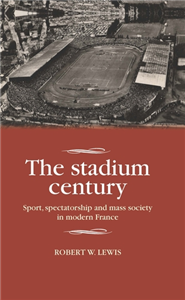
The stadium century traces the history of stadia and mass spectatorship in modern France from the vélodromes of the late nineteenth century to the construction of the Stade de France before the 1998 soccer World Cup. As the book demonstrates, the stadium was at the centre of debates over public health and urban development and proved to be a key space for mobilising the urban crowd for political rallies and spectator sporting events alike. After 1945, the transformed French stadium constituted part of the process of postwar modernisation but also was increasingly connected to global transformations to the spaces and practices of sport. Drawing from a wide range of sources, the stadium century links the histories of French urbanism, mass politics and sport through the stadium in an innovative work that will appeal to historians, students of French history and the history of sport, and general readers alike.
Trusted Partner

In How to be multiple, Helena de Bres - a twin herself - argues that twinhood is a unique lens for examining our place in the world and how we relate to other people. The way we think about twins offers remarkable insights into some of the deepest questions of our existence, from what is a person? to how should we treat one another? Deftly weaving together literary and cultural history, philosophical enquiry and personal experience, de Bres examines such thorny issues as binary thinking, objectification, romantic love and friendship, revealing the limits of our individualistic perspectives. In this illuminating, entertaining book, wittily illustrated by her twin sister, de Bres ultimately suggests that to consider twinhood is to imagine the possibility of a more interconnected, capacious human future.
Trusted Partner
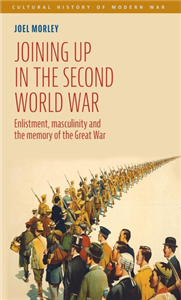
This book connects the First and Second World Wars. It uses oral histories and Mass Observation material to explore men's attitudes to Second World War enlistment and the relationship they perceived between military service and masculinity, and how these were influenced by understandings of the First World War. Locating the cultural legacy of First World War in the subjectivities of men who participated in the Second World War demonstrates the breadth of sources that informed men's understandings of the First World War in interwar Britain. Its cultural legacy was omnipresent and diverse, and informed young men's attitudes and service preferences, but it reinforced Edwardian conceptions of wartime masculinity as often as it undermined them. Two decades after the First World War ended, they remained resilient in the subjective understandings of men who grew up in the Great War's shadow.
Trusted Partner
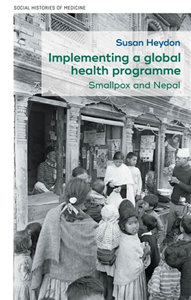
Worldwide eradication of the devastating viral disease of smallpox was devised as a distant global policy, but success depended on implementing a global vaccination programme within nation states. How this was achieved remains relevant and topical for responding to today's global communicable disease challenges. The small and poor Himalayan kingdom of Nepal faced enormous geographical and infrastructure challenges if it was going to succeed in a nationwide vaccination programme. This book acknowledges the key role of the WHO but disrupts the top-down, centre-led standard narrative. Against a background of widespread internal political and social change, Nepal's programme was expanded, effectively decentralised and a vaccination strategy introduced that aligned with people's beliefs. Few foreign personnel were involved.
Trusted Partner
Migration and social policy in a changing world bridges the generally separate fields of social policy and migration studies. This book traces social policy responses to migration from the Industrial Revolution to today's era of globalisation and large-scale migration. Through case studies from across the globe, the book explores key themes including rural-urban migration, social citizenship, welfare internationalism and diasporic care systems. It examines how migrants are included in or excluded from social citizenship in host societies, and how they become providers of welfare services such as health and social care. Moving beyond a methodological nationalist focus, the book investigates migrant incorporation into welfare states through family networks, faith communities, and other informal welfare structures. It combines migrants' experiences with host societies' immigration politics, institutional perspectives and policies to present a comprehensive analysis of the migration-welfare relationship. This volume fills a gap in academic literature and offers policymakers, practitioners and scholars a framework for understanding the interplay between migration and social policy in our changing world.
Trusted Partner

Christian dualism originated in the reign of Constans II (641-68). It was a popular religion, which shared with orthodoxy an acceptance of scriptual authority and apostolic tradition and held a sacramental doctrine of salvation, but understood all these in a radically different way to the Orthodox Church. One of the differences was the strong part demonology played in the belief system. This text traces, through original sources, the origins of dualist Christianity throughout the Byzantine Empire, focusing on the Paulician movement in Armenia and Bogomilism in Bulgaria. It presents not only the theological texts, but puts the movements into their social and political context.
Trusted Partner

Windows for the world explores the display and reception of nineteenth-century British stained glass in a secular exhibition context. International in scope, the book focuses on the global development of stained glass in this period as showcased at, and influenced by, these exhibitions. It recognises those who made and exhibited stained glass and demonstrates the long-lasting impact of the classification and modes of display at these events. A number of exhibits are illustrated in colour and are analysed in relation to stylistic developments, techniques and material innovations, as well as the broader iconographies of nation and empire in the nineteenth century.