
Your Search Results


-
Promoted Content

 The ArtsJuly 2025
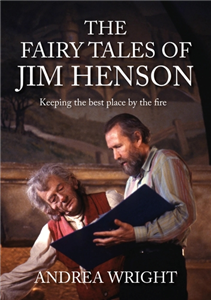
The Fairy Tales of Jim Henson
Keeping the best place by the fire
by Andrea Wright
The Fairy Tales of Jim Henson: The best place by the fire is the first book to specifically consider Henson, best known for the immensely popular The Muppet Show, as an important creator of screen fairy tales. In a chronological overview of Henson's career from the late 1950s to his death in 1990, it explores key themes, artistic practices and innovations that make his contribution to the genre unique. Drawing upon a range of fairy tale scholarship, it also situates Henson's work within the wider context of the genre, specifically its conventions, themes and inherent intertextuality.
-
Promoted Content
-
 Trusted Partner

 Children's & YA
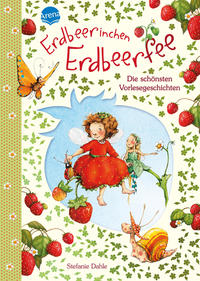
The Strawberry Fairy. The Loveliest Stories to Read Aloud
by Stefanie Dahle
The Strawberry Fairy works her magic again! For this top-quality gift edition, decorated with glitter and foil embossing, the author and illustrator Stefanie Dahle has chosen her own favourite stories from the three books. There is always something going on in the strawberry garden: the little fairy cures the sore throats of the frog choir, helps Don Carlo to win the love of his sweetheart, and enjoys some jolly parties in the garden. Later everyone cuddles up by the fire and makes plans for the spring while drinking a delicious cup of strawberry tea. A book to treasure, and not just for Strawberry Fairy fans.
-
Trusted Partner
 Children's & YA
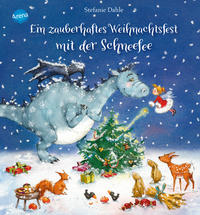
A Magical Christmas with the Snow Fairy
by Stefanie Dahle
Emmo would also like to celebrate Christmas for a change. He’s lucky that his best friend Gwendoline, the Snow Fairy, is there to help him with his preparations. A Christmas tree, presents, delicious biscuits, sweet-smelling baked apples, and of course glittering white snow - all in readiness for the most wonderful Christmas party the Silver Forest has ever seen. With Stefanie Dahle’s enchanting illustrations, this solid, read-aloud picture book will accompany big and little picture-book lovers through a wonderfully harmonious Advent and Christmas.
-
Trusted Partner
-
Trusted Partner
 Humanities & Social SciencesDecember 2025
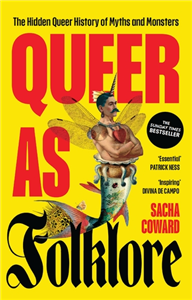
Queer as folklore
The hidden queer history of myths and monsters
by Sacha Coward
A celebration of queer history like you've never seen it before. Queer as folklore travels across centuries and continents to reveal the unsung heroes and villains of storytelling, magic and fantasy. Featuring images from archives, galleries and museums around the world, each chapter investigates the queer history of different mythic and folkloric characters, both old and new. Leaving no headstone unturned, Sacha Coward takes you on a wild ride through the night from ancient Greece to the main stage of RuPaul's Drag Race, visiting cross-dressing pirates, radical fairies and the graves of the 'queerly departed' along the way. Queer communities have often sought refuge in the shadows and created safe spaces in underworlds. But these forgotten narratives tell stories of resilience that deserve to be heard. Join any Pride march and you will see a glorious display of papier-mâché unicorn heads, drag queens in mermaid tails and more fairy wings than you can shake a trident at. These are not just accessories: they are queer symbols with historic roots. To truly understand who queer people are today, we must confront the twisted tales of the past.
-
Trusted Partner
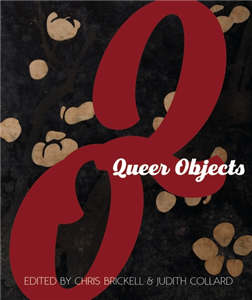 The ArtsSeptember 2019
Queer Objects
by Chris Brickell, Judith Collard
Queer lives give rise to a vast array of objects: the things we fill our houses with, the gifts we share with our friends, the commodities we consume at work and at play, the clothes and accessories we wear, and the analogue and digital technologies we use to communicate with one another. But what makes an object queer? The sixty-three chapters in Queer Objects consider this question in relation to lesbian, gay and transgender communities across time, cultures and space. In this unique international collaboration, well-known and newer writers traverse world history to write about items ranging from ancient Egyptian tomb paintings and Roman artefacts to political placards, snapshots, sex toys and the smartphone. Fabulous, captivating, transgressive.
-
Trusted Partner
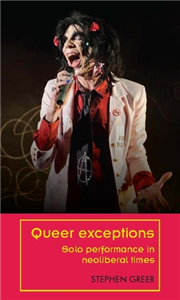 The ArtsMarch 2021
Queer exceptions
Solo performance in neoliberal times
by Stephen Greer
Queer exceptions is a study of contemporary solo performance in the UK and Western Europe that explores the contentious relationship between identity, individuality and neoliberalism. With diverse case studies featuring the work of La Ribot, David Hoyle, Oreet Ashery, Bridget Christie, Tanja Ostojic, Adrian Howells and Nassim Soleimanpour, the book examines the role of singular or 'exceptional' subjects in constructing and challenging assumed notions of communal sociability and togetherness, while drawing fresh insight from the fields of sociology, gender studies and political philosophy to reconsider theatre's attachment to singular lives and experiences. Framed by a detailed exploration of arts festivals as encapsulating the material, entrepreneurial circumstances of contemporary performance-making, this is the first major critical study of solo work since the millennium.
-
Trusted Partner
 Humanities & Social SciencesNovember 2021
De-centering queer theory
Communist sexuality in the flow during and after the Cold War
by Bogdan Popa, Gurminder Bhambra
De-centering queer theory seeks to reorient queer theory to a different conception of bodies and sexuality derived from Eastern European Marxism. The book articulates a contrast between the concept of the productive body, which draws its epistemology from Soviet and avant-garde theorists, and Cold War gender, which is defined as the social construction of the body. The first part of the book concentrates on the theoretical and visual production of Eastern European Marxism, which proposed an alternative version of sexuality to that of western liberalism. In doing so it offers a historical angle to understand the emergence not only of an alternative epistemology, but also of queer theory's vocabulary. The second part of the book provides a Marxist, anti-capitalist archive for queer studies, which often neglects to engage critically with its liberal and Cold War underpinnings.
-
Trusted Partner
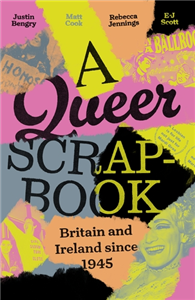 Humanities & Social SciencesJanuary 2026
A queer scrapbook
Britain and Ireland since 1945
by Justin Bengry, Matt Cook, Rebecca Jennings, E-J Scott
A beautifully illustrated compendium of LGBTIQ+ life. A queer scrapbook offers a treasure trove of LGBTIQ+ histories from across Britain and Ireland. Packed with materials, from interviews and newspaper articles to photographs and flyers, the book explores urban, rural and regional queer life since 1945. Commentaries and short essays introduce a changing queer landscape, spotlighting four broad themes: home and family, sex and socialising, arts and culture and politics and activism. The book delves into the meaning and experiences of domesticity and parenting and explores the sometimes unexpected places LGBTIQ+ people met to have fun. It examines the importance of creative work in forming community and identity and shows how people fought injustice and advocated for equal rights. Collecting has been a way for the marginalised to explore and assert identity and community. A queer scrapbook vividly illustrates the diversity of queer and trans lives across the British and Irish isles since the Second World War.
-
Trusted Partner
 Literature & Literary StudiesJanuary 2019
The art of The Faerie Queene
by J. B. Lethbridge, Richard Brown
The Art of The Faerie Queene is the first book centrally focused on the forms and poetic techniques employed by Spenser. It offers a sharp new perspective on Spenser by rereading The Faerie Queene as poetry which is at once absorbing, demanding and experimental. Instead of the traditional conservative model of Spenser as poet, this book presents the poem as radical, edgy and unconventional, thus proposing new ways of understanding the Elizabethan poetic Renaissance. The book moves from the individual words of the poem to metre, rhyme and stanza form onto its larger structures of canto and book. It will be of particular relevance to undergraduates studying Elizabethan poetry, graduate students and scholars of Renaissance poetry, for whom the formal aspect of the poetry has been a topic of growing relevance in recent years.
-
Trusted Partner
 Literature & Literary StudiesJanuary 2021
The art of The Faerie Queene
by Richard Danson Brown
The Art of The Faerie Queene is the first book centrally focused on the forms and poetic techniques employed by Spenser. It offers a sharp new perspective on Spenser by rereading The Faerie Queene as poetry which is at once absorbing, demanding and experimental. Instead of the traditional conservative model of Spenser as poet, this book presents the poem as radical, edgy and unconventional, thus proposing new ways of understanding the Elizabethan poetic Renaissance. The book moves from the individual words of the poem to metre, rhyme and stanza form onto its larger structures of canto and book. It will be of particular relevance to undergraduates studying Elizabethan poetry, graduate students and scholars of Renaissance poetry, for whom the formal aspect of the poetry has been a topic of growing relevance in recent years.
-
Trusted Partner
 Literature & Literary StudiesSeptember 2020
The art of The Faerie Queene
by Richard Danson Brown, Joshua Samuel Reid
The Art of The Faerie Queene is the first book centrally focused on the forms and poetic techniques employed by Spenser. It offers a sharp new perspective on Spenser by rereading The Faerie Queene as poetry which is at once absorbing, demanding and experimental. Instead of the traditional conservative model of Spenser as poet, this book presents the poem as radical, edgy and unconventional, thus proposing new ways of understanding the Elizabethan poetic Renaissance. The book moves from the individual words of the poem to metre, rhyme and stanza form onto its larger structures of canto and book. It will be of particular relevance to undergraduates studying Elizabethan poetry, graduate students and scholars of Renaissance poetry, for whom the formal aspect of the poetry has been a topic of growing relevance in recent years.
-
Trusted Partner
-
Trusted Partner
-
Trusted Partner
 The ArtsOctober 2024
Queer cinema in contemporary France
Five directors
by Todd Reeser
Jacques Martineau, Olivier Ducastel, Alain Guiraudie, Sébastien Lifshitz and Céline Sciamma. The films of these five major French directors exemplify queer cinema in the twenty-first century. Comprehensive in scope, Queer cinema in contemporary France traces the development of the meaning of queer across these directors' careers, from their earliest, often unknown films to their later, major films with wide international release. Whether having sex on the beach or kissing in the high school swimming pool, these cinematic characters create or embody forward-looking, open-ended and optimistic forms of queerness and modes of living, loving and desiring. Whether they are white, beur or black, whether they are lesbian, gay, trans* or queer, they open up hetero- and cisnormativity to new ways of being a gendered subject.
-
Trusted Partner
-
Trusted Partner
 Humanities & Social SciencesJuly 2022
Crossing borders and queering citizenship
Civic reading practice in contemporary American and Canadian writing
by Zalfa Feghali
Can reading make us better citizens? In Crossing borders and queering citizenship, Feghali crafts a sophisticated theoretical framework to theorise how the act of reading can contribute to the queering of contemporary citizenship in North America. Providing sensitive and convincing readings of work by both popular and niche authors, including Gloria Anzaldúa, Dorothy Allison, Gregory Scofield, Guillermo Gómez-Peña, Erín Moure, Junot Díaz, and Yann Martel, this book is the first to not only read these authors together, but also to discuss how each powerfully resists the exclusionary work of state-sanctioned citizenship in the U.S. and Canada. This book convincingly draws connections between queer theory, citizenship studies, and border studies and sheds light on how these connections can reframe our understanding of American Studies.
-
Trusted Partner
 The ArtsJune 2017
Terry Gilliam
by Peter Marks
Terry Gilliam presents a sustained examination of one of cinema's most challenging and lauded auteurs, proposing fresh ways of seeing Gilliam that go beyond reductive readings of him as a gifted but manic fantasist. Analysing Gilliam's work over nearly four decades, from the brilliant anarchy of his Monty Python animations through the nightmarish masterpiece Brazil to the provocative Gothic horror of Tideland, it critically examines the variety and richness of Gilliam's sometimes troubled but always provocative output. The book situates Gilliam within the competing cultural contexts of the British, European and American film industries, examining his regular struggles against aesthetic and commercial pressures. He emerges as a passionate, immensely creative director, whose work encompasses a dizzying array of material: anarchic satire, childhood and adult fantasy, dystopia, romantic comedy, surrealism, road movie, fairy tale and the Gothic. The book charts how Gilliam interweaves these genres and forms to create magical interfaces between reality and the illuminating, frightening but liberating worlds of the imagination. Scrutinising the neglected importance of literature and adaptation in Gilliam's career, this study also observes him through the lenses of auteurism, genre, performance, design and national culture, explaining how someone born in Minnesota and raised in California came to be one of British television and film's most compelling figures.
-
Trusted Partner



