
Your Search Results
-

-

Editions Larousse SAS
Major French publisher of books on cooking, crafts and hobbies, gardening, health and well-being, gardening nature and animals, art and history, essays as well as children's books and games for all ages. Around 600 new titles each year. Since 1852.
View Rights Portal
-
Promoted Content

 Humanities & Social SciencesFebruary 2026
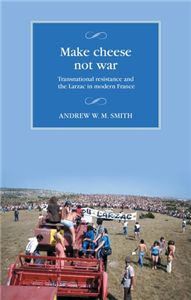
Make cheese not war
Transnational resistance and the Larzac in modern France
by Andrew W. M. Smith
In 1971, the French government announced a massive extension of its military base on the Larzac plateau in southern France. Land was to be expropriated from 107 farms around the small town of La Cavalerie. Limited resistance was expected, but what happened next exceeded all expectations. Local sheep farmers set up protest camps and occupied the land. They soon attracted an astonishing level of support, pioneering a form of regional radicalism with global implications. Drawing out the international dimensions of the protest, Make cheese not war explores a transnational resistance movement in the 1970s that challenged dominant visions of modernity and became a wellspring of radical alternatives. Exploring previously unconsulted archives in France and elsewhere, the book offers an in-depth analysis of the decade-long peasant movement and its aftermath. Repositioning the Larzac struggle within a wider network of French and international solidarities, from the US to the UK, Germany, Burkina Faso, New Caledonia and Japan, the book retraces political networks of pacifist activism, as well as environmental movements and anti-nuclear protest. It shows how this French peasant campaign became both a platform and a model for popular engagement.
-
Promoted Content
 Humanities & Social SciencesMarch 2017
Fight back
Punk, politics and resistance
by Subcultures Network
Fight back examines the different ways punk - as a youth/subculture - may provide space for political expression and action. Bringing together scholars from a range of academic disciplines (history, sociology, cultural studies, politics, English, music), it showcases innovative research into the diverse ways in which punk may be used and interpreted. The essays are concerned with three main themes: identity, locality and communication. These, in turn, cover subjects relating to questions of class, age and gender; the relationship between punk, locality and socio-political context; and the ways in which punk's meaning has been expressed from within the subculture and reflected by the media. Jon Savage, the foremost commentator and curator of punk's cultural legacy, provides an afterword on punk's impact and dissemination from the 1970s to the present day.
-
 Trusted Partner
 Political activismNovember 2014
Fight back
Punk, politics and resistance
by The Subcultures Network
Fight back examines the different ways punk - as a youth/subculture - may provide space for political expression and action. Bringing together scholars from a range of academic disciplines (history, sociology, cultural studies, politics, English, music), it showcases innovative research into the diverse ways in which punk may be used and interpreted. The essays are concerned with three main themes: identity, locality and communication. These, in turn, cover subjects relating to questions of class, age and gender; the relationship between punk, locality and socio-political context; and the ways in which punk's meaning has been expressed from within the subculture and reflected by the media. Jon Savage, the foremost commentator and curator of punk's cultural legacy, provides an afterword on punk's impact and dissemination from the 1970s to the present day.
-
Trusted Partner
 Humanities & Social SciencesJuly 2016
The European Union's fight against terrorism
by Christopher Baker-Beall
-
Trusted Partner

 April 2023
The Battle for Water
In the century of drought
by Jürgen Rahmig
— Water as a reason for war and a political instrument of power — Unique overview of global water conflicts — Foreword by Wolfgang Ischinger Every year, droughts in African countries cause hundreds of thousands of deaths and much suffering. Europe also experienced drought in 2022's summer of record temperatures. Without water, there can be no life. More and more people are suffering from water shortages. Climate change is fuelling the distribution battles for water; violent conflicts over this precious resource are the order of the day. Whether the protests in Iraq, the war in Syria, in the Himalayas, the Nile conflict and in many other places, water is already a reason for war and is being misused as a political instrument of power. The construction of huge dams, the targeted closure of locks, river diversions, water and land grabbing bring wars over the "blue gold" with them. In a unique overview, journalist Jürgen Rahmig describes the struggle for water in the 21st century. Where do dangers lurk today; where will they be tomorrow, and how can we prevent wars over precious water?
-
Trusted Partner
 The ArtsOctober 2025
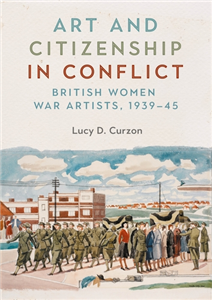
Art and citizenship in conflict
British women war artists, 1939–45
by Lucy Curzon
Art and Citizenship in Conflict examines the work of women war artists in order to highlight the complexity of citizenship and gender in Britain during the Second World War. Evelyn Dunbar, Mary Kessell, Ethel Gabain, Stella Schmolle, and Laura Knight, among others, were commissioned by the War Artists' Advisory Committee (WAAC) to document the millions of women who took up sometimes unconventional roles-in agriculture, the auxiliary services, and manufacturing, among others-to support the British war effort. Indeed, their prints, drawings, and paintings were part of a broader scheme to uphold morale and promote much-needed citizen involvement on the home front. While there is growing interest, the importance of their remit in the history of the Second World War and the quality of their artistry have nonetheless not yet secured them a significant place in scholarship. Art and Citizenship in Conflict seeks to amend this gap while also broadening approaches to the study of war itself.
-
Trusted Partner
 Biography & True StoriesNovember 2024
Walking in the dark
James Baldwin, my father and I
by Douglas Field
A moving exploration of the life and work of the celebrated American writer, blending biography and memoir with literary criticism. Since James Baldwin's death in 1987, his writing - including The Fire Next Time, one of the manifestoes of the Civil Rights Movement, and Giovanni's Room, a pioneering work of gay fiction - has only grown in relevance. Douglas Field was introduced to Baldwin's essays and novels by his father, who witnessed the writer's debate with William F. Buckley at Cambridge University in 1965. In Walking in the dark, he embarks on a journey to unravel his life-long fascination and to understand why Baldwin continues to enthral us decades after his death. Tracing Baldwin's footsteps in France, the US and Switzerland, and digging into archives, Field paints an intimate portrait of the writer's life and influence. At the same time, he offers a poignant account of coming to terms with his father's Alzheimer's disease. Interweaving Baldwin's writings on family, illness, memory and place, Walking in the dark is an eloquent testament to the enduring power of great literature to illuminate our paths.
-
Trusted Partner
 Humanities & Social SciencesApril 2016
University engagement and environmental sustainability
by Michael Osborne, Patricia Inman, Diana Robinson
Universities have a key role to play in contributing to environmental development and combating climate change. The chapters within this volume detail the challenges faced by higher education institutions in considering environmental sustainability, and provide both a broad view of university engagement and a detailed examination of various projects. As part of this series in association with the Place and Social Capital and Learning (PASCAL) International Observatory, the three key PASCAL themes of place management, lifelong learning and the development of social capital are considered throughout the book. While universities have historically generated knowledge outside of specific local contexts, this book argues that it is particularly important for them to engage with the local community and to consider diverse perspectives and assets when looking at issues within an ecological context. The chapters in this volume provide new perspectives and frames of reference for transforming universities by engaging in the development of resilient communities.
-
Trusted Partner
 Business, Economics & LawJune 2024
The labour movement in Lebanon
Power on hold
by Lea Bou Khater
The labour movement in Lebanon: Power on hold narrates the history of the Lebanese labour movement from the early twentieth century to today. Bou Khater demonstrates that trade unionism in the country has largely been a failure, for reasons including state interference, tactical co-optation, and the strategic use of sectarianism by an oligarchic elite, together with the structural weakness of a service-based laissez-faire economy. Drawing on a vast body of Arabic-language primary sources and difficult-to-access archives, the book's conclusions are significant not only for trade unionism, but also for new forms of workers' organisations and social movements in Lebanon and beyond. The Lebanese case study presented here holds significant implications for the wider Arab world and for comparative studies of labour. This authoritative history of the labour movement in Lebanon is vital reading for scholars of trade unionism, Lebanese politics, and political economy.
-
Trusted Partner
 Humanities & Social SciencesMarch 2017
Sunningdale, the Ulster Workers' Council strike and the struggle for democracy in Northern Ireland
by David McCann, Cillian McGrattan
-
Trusted Partner


Does Movement Really Make Us Smart?
by Petra Jansen, Stefanie Richter
Media reports often praise movement as a cure-all. But apart from its undisputed positive effect on health, does movement really make us smarter? Consider a national football team, for example – are these excessively sports-driven players automatically the smartest people? Should we simply replace all school subjects with sports? The authors provide a detailed summary of the latest scientific findings on the influence of movement on cognitive ability. They describe the effects of movement, on old age, embodiment, emotion, school as well as other factors that influence cognition. Target Group: teachers, lecturers, psychologists, psychiatrists, neurologists, psychotherapists, movement therapists.
-
Trusted Partner
-
Trusted Partner
 Humanities & Social SciencesMarch 2017
Reporting the Raj
The British Press and India, c.1880–1922
by Chandrika Kaul
This book is the first analysis of the dynamics of British press reporting of India and the attempts made by the British Government to manipulate press coverage as part of a strategy of imperial control. The press was an important forum for debate over the future of India and was used by significant groups within the political elite to advance their agendas. Focuses on a period which represented a critical transitional phase in the history of the Raj, witnessing the impact of the First World War, major constitutional reform initiatives, the tragedy of the Amritsar massacre, and the launching of Gandhi's mass movement. Asserts that the War was a watershed in official media manipulation and in the aftermath of the conflict the Government's previously informal and ad hoc attempts to shape press reporting were placed on a more formal basis.
-
Trusted Partner
 Humanities & Social SciencesSeptember 2016
Lifelong learning, the arts and community cultural engagement in the contemporary university
by Michael Osborne, Darlene Clover, Kathy Sanford
-
Trusted Partner
 Humanities & Social SciencesDecember 2025
Criminality, political power and conflict
Critical perspectives
by José Antonio Gutiérrez Danton, Francisco Gutiérrez Sanín
In the aftermath of the greed vs. grievance debate and the new wars paradigm, the focus of conflict studies shifted decisively to understanding "predatory" behaviours as the raison d'etre of contemporary conflict. Conflict was viewed as a continuum in which the more you engage in criminal behaviour, the less political you are.This approach has been robustly criticised over the past 15 years; however, in the process, we have been left with unsuitable concepts to handle the complex interactions between civil war, political power and criminality. The departure point here is the understanding of politics and criminality as two historically differentiated domains of human activity. Different, but interrelated, often co-constitutive and overlapping. Here, we empirically and theoretically explore their interactions, connections, and convergences, not focusing solely on irregular actors, thus bringing back the State and elites into this debate.
-
Trusted Partner
 Humanities & Social SciencesApril 2009
Tensions in the struggle for sexual minority rights in Europe
Que(e)rying political practices
by Nico Beger
Tensions in the struggle for sexual minority rights in Europe, newly available in paperback, is the first queer and poststructuralist reading of political rights concepts in the specific European transnational context. In the last thirty years Europe has seen the rise of gay, lesbian, bisexual and transgender movements fighting nationally and transnationally for participation rights in society. In addition academic theorists have increasingly paid attention to the epistemological and ontological roles gender and sexuality play in modern politics. However, in the political process of arguing for rights the centrality of those roles is mostly hidden from view in official institutional and movement discourses. This book investigates the conceptual themes of lesbian, gay and transgender rights and lobby politics in Europe and their open and hidden relations to binary and hierarchical orders of dominance. It contributes to an understanding of the conditions upon which politics of inclusion, participation, social justice and equality rest and why struggles for sexual minority rights have been so difficult and slow. It illuminates how the paradigms of political discourse constitute, consolidate and contest the meaning and cultural significance of gender and sexuality on modern, democratic, capitalist European societies. ;
-
Trusted Partner
-
Trusted Partner
Humanities & Social SciencesMarch 2017
The language of empire
Myths and metaphors of popular imperialism, 1880-1918
by Robert Macdonald
The debate about the Empire dealt in idealism and morality, and both sides employed the language of feeling, and frequently argued their case in dramatic terms. This book opposes two sides of the Empire, first, as it was presented to the public in Britain, and second, as it was experienced or imagined by its subjects abroad. British imperialism was nurtured by such upper middle-class institutions as the public schools, the wardrooms and officers' messes, and the conservative press. The attitudes of 1916 can best be recovered through a reconstruction of a poetics of popular imperialism. The case-study of Rhodesia demonstrates the almost instant application of myth and sign to a contemporary imperial crisis. Rudyard Kipling was acknowledged throughout the English-speaking world not only as a wonderful teller of stories but as the 'singer of Greater Britain', or, as 'the Laureate of Empire'. In the last two decades of the nineteenth century, the Empire gained a beachhead in the classroom, particularly in the coupling of geography and history. The Island Story underlined that stories of heroic soldiers and 'fights for the flag' were easier for teachers to present to children than lessons in morality, or abstractions about liberty and responsible government. The Education Act of 1870 had created a need for standard readers in schools; readers designed to teach boys and girls to be useful citizens. The Indian Mutiny was the supreme test of the imperial conscience, a measure of the morality of the 'master-nation'.
-
Trusted Partner
 Politics & governmentFebruary 2017
Sunningdale, the Ulster Workers' Council strike and the struggle for democracy in Northern Ireland
by Edited by David McCann, Cillian McGrattan
The 'Sunningdale experiment' of 1973-4 witnessed the first attempt to establish peace in Northern Ireland through power-sharing. However, its provisions, particularly the cross-border 'Council of Ireland', proved to be a step too far. The experiment floundered amid ongoing paramilitary-led violence, finally collapsing in May 1974 as a result of the Ulster Workers' Council strike. Drawing on new scholarship from some of the top political historians working on the period, this book presents a series of reflections on how key protagonists struggled with notions of power-sharing and the 'Irish dimension', and how those struggles inhibited a deepening of democracy and the ending of violence for so long.
-
Trusted Partner
 Humanities & Social SciencesMarch 2022
The British left and the defence economy
by Keith Mc Loughlin



