
Firefly Books
Livres Canada Books
View Rights Portal

Spanish literary fiction. House founded in 2015 in Valparaíso (Chile). We want to provide a haven for readers in times of storm. Now that the arrival of new titles is overwhelming, at Kindberg we are committed to a detailed rhythm, to slow-publishing instead of disposable titles. The books we choose are the ones we like and that is why we believe in them and we want other readers to like them. And yes, we only publish fiction, because "poetry, beauty, art, love are the things that keep us alive".
View Rights Portal

This book is a result of the author's search for these facts and truths as a student and farmer and his endeavor as a teacher to present them in a simple manner to others. The object in presenting the book to the general public is the hope that it may be of assistance to farmers, students and teachers, in their search for the fundamental truths and principles of farming.
 Trusted Partner


This book examines the links between major contemporary public sector reforms and neoliberal thinking. The key contribution of the book is to enhance our understanding of contemporary neoliberalism as it plays out in the public administration and to provide a critical analysis of generally overlooked aspects of administrative power. The book examines the quest for accountability, credibility and evidence in the public sector. It asks whether this quest may be understood in terms of neoliberal thinking and, if so, how? The book makes the argument that while current administrative reforms are informed by several distinct political rationalities, they evolve above all around a particular form of neoliberalism: constructivist neoliberalism. The book analyses the dangers of the kinds of administrative power seeking to invoke the self-steering capacities of society and administration itself.
Trusted Partner
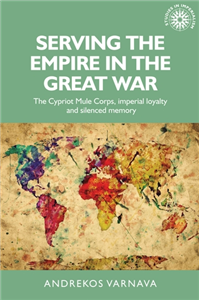
This book contributes to the growing literature on the role of the British non-settler empire in the Great War by exploring the service of the Cypriot Mule Corps on the Salonica Front, and after the war in Constantinople. Varnava encompasses all aspects of the story of the Mule Corps, from the role of the animals to the experiences of the men driving them both during and after the war, as well as how and why this significant story in the history of Cyprus and the British Empire has been forgotten. The book will be of great value to anyone interested in the impact of the Great War upon the British Empire in the Mediterranean, and vice- versa.
Trusted Partner

Seeking to explore what it means to grow older in contemporary Britain from the perspective of older people themselves, this richly detailed ethnographic study engages in debates over selfhood and people's relationships with time. Based on research conducted in a former coal mining village in South Yorkshire, England, Cathrine Degnen explores how the category of 'old age' comes to be assigned and experienced in everyday life through multiple registers of interaction, including that of social memory, in a postindustrial context of great social transformation. Degnen argues that the complex interplay of social, cultural and physical attributes of ageing means that older people can come to have a different position in relation to time and to the self than younger people, unseating normative conventions about narrative and temporality.
Trusted Partner

This volume is the first ever attempt to unite and translate some of the key texts which informed Johan Huizinga's famous study of the Burgundian court, The Waning of the Middle Ages, a work which has never gone out of print. It combines these texts with sources that Huizinga did not consider, those that illuminate the wider civic world that the Burgundian court inhabited and the dynamic interaction between court and city. Through these sources, and an introduction offering new perspectives on recent historiography, the book tests whether Huizinga's controversial vision of the period still stands. Covering subjects including ceremonial events, such as the spectacles and gargantuan banquets that made the Burgundian dukes the talk of Europe, the workings of the court, and jousting, archery and rhetoric competitions, the book will appeal to students of late medieval and early modern Europe and to those with wider interests in court culture, ritual and ceremony.
Trusted Partner
 Trusted Partner
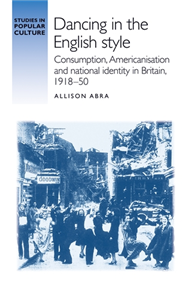
Dancing in the English style explores the development, experience, and cultural representation of popular dance in Britain from the end of the First World War to the early 1950s. It describes the rise of modern ballroom dancing as Britain's predominant popular style, as well as the opening of hundreds of affordable dancing schools and purpose-built dance halls. It focuses in particular on the relationship between the dance profession and dance hall industry and the consumers who formed the dancing public. Together these groups negotiated the creation of a 'national' dancing style, which constructed, circulated, and commodified ideas about national identity. At the same time, the book emphasizes the global, exploring the impact of international cultural products on national identity construction, the complexities of Americanisation, and Britain's place in a transnational system of production and consumption that forged the dances of the Jazz Age.
Trusted Partner
Letter writing in the Northumbrian Kingdom offers the first comprehensive study of Northumbria's vibrant epistolary culture in the seventh and eighth centuries. Through a close examination of more than fifty surviving Latin letters-many written by or to figures such as Bede, Acca of Hexham, Ælfflæd of Whitby, and Alcuin -this book uncovers the literary, political, and spiritual dimensions of early medieval correspondence. From royal diplomacy to theological debate, these letters reveal a world where communication was both a practical necessity and a refined art. Drawing on previously underexamined texts and placing Northumbria in its broader European context, this groundbreaking study sheds new light on the role of letter writing in shaping a Christian kingdom's identity, influence, and intellectual legacy.
Trusted Partner

Recent decades have witnessed major changes in gender roles and family patterns, as well as a falling birth rate in Ireland and the rest of Europe. While the traditional family is now being replaced in many cases by new family forms, we do not know the reasons why people are making the choices they are and whether or not these choices are leading to greater well-being. While demographic research has attempted to explain the new trends in family formation and fertility, there has been little research on people's attitudes to family formation and having children. This book presents the results of the first major study to examine people's attitudes to family formation and childbearing in Ireland. Based on a nationwide representative sample of 1,404 men and women in the childbearing age group, the study was carried out against a backdrop of changing gender role attitudes and behaviour as well as significant demographic change.
Trusted Partner
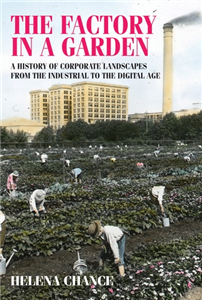
When we think about Victorian factories, 'Dark Satanic Mills' might spring to mind - images of blackened buildings and exhausted, exploited workers struggling in unhealthy and ungodly conditions. But for some employees this image was far from the truth, and this is the subject of 'The Factory in a Garden' which traces the history of a factory gardens movement from its late-eighteenth century beginnings in Britain to its twenty-first century equivalent in Google's vegetable gardens at their headquarters in California. The book is the first study of its kind examining the development of parks, gardens, and outdoor leisure facilities for factories in Britain and America as a model for the reshaping of the corporate environment in the twenty-first century. This is also the first book to give a comprehensive account of the contribution of gardens, gardening and recreation to the history of responsible capitalism and ethical working practices.
Trusted Partner
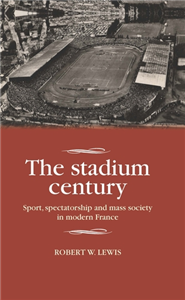
The stadium century traces the history of stadia and mass spectatorship in modern France from the vélodromes of the late nineteenth century to the construction of the Stade de France before the 1998 soccer World Cup. As the book demonstrates, the stadium was at the centre of debates over public health and urban development and proved to be a key space for mobilising the urban crowd for political rallies and spectator sporting events alike. After 1945, the transformed French stadium constituted part of the process of postwar modernisation but also was increasingly connected to global transformations to the spaces and practices of sport. Drawing from a wide range of sources, the stadium century links the histories of French urbanism, mass politics and sport through the stadium in an innovative work that will appeal to historians, students of French history and the history of sport, and general readers alike.
Trusted Partner
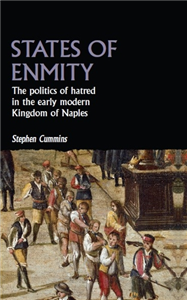
State of enmity explores how relations of hatred and enmity played political and social roles in the early modern Kingdom of Naples. Exploring the pervasive notion of enmity and practices of reconciliation, the book provides new insight into the social dynamics of southern Italy in the early modern period. In particular, widespread banditry and the violent tenor of local politics are analysed through a wide variety of criminal trials and other sources.
Trusted Partner
England and the 1966 World Cup presents a cultural analysis of what is considered a key 'moment of modernity' in the nation's post-war history. Regarded as having an importance beyond its primary sporting purpose, the World Cup in England is examined within the complexity of the cultural, social and political changes that characterised the mid-1960s. Yet, although addressing the importance of non-sport related connections, the book maintains a focus on football, discussing it as a 'cultural form' and presenting an original perspective on the aesthetic accomplishment in football tactics by England's manager, Alf Ramsey. The study considers the World Cup in relation to the cup tradition, England as the World Cup host nation, the England squad and masculinity, the modernism of England's manager Alf Ramsey, design and commercial aspects of the World Cup, a critical engagement within existing academic accounts, and an examination of how England's victory has been remembered and commemorated.
Trusted Partner
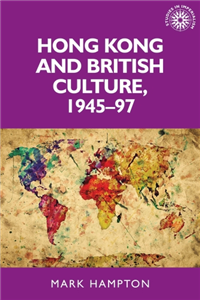
This book examines the British cultural engagement with Hong Kong in the second half of the twentieth century. It shows how the territory fit unusually within Britain's decolonisation narratives and served as an occasional foil for examining Britain's own culture during a period of perceived stagnation and decline. Drawing on a wide range of archival and published primary sources, Hong Kong and British culture, 1945-97 investigates such themes as Hong Kong as a site of unrestrained capitalism, modernisation, and good government, as well as an arena of male social and sexual opportunity. It also examines the ways in which Hong Kong Chinese embraced British culture, and the competing predictions that British observers made concerning the colony's return to Chinese sovereignty. An epilogue considers the enduring legacy of British colonialism.
Trusted Partner

You're nicked is the first comprehensive study of television police series in the UK. It reveals how British television's most popular genre has developed stylistically, politically and philosophically from 1955 to the present. Each chapter focuses on a particular decade, investigating how the most-watched series represent the inner workings of the police station, the civilian life of criminals and the private lives of police officers. This new approach unearths the complex ideology underpinning each series and discerns the key insights the genre can provide into the breakdown of the post-war settlement. Offering insightful readings of police series from Dixon of Dock Green to Happy Valley via The Sweeney, The Bill and Cracker, the book is a must-read for crime-drama enthusiasts worldwide. This new paperback edition features an extensive epilogue on Line of Duty and other Jed Mercurio creations.
Trusted Partner

This book thinks through modernity and its representations by drawing in critical considerations of time and space. It explores the oppositions and enchantments, the contradictions and contentions, and the identities and ambivalences spawned under modernity as constitutive of our worlds. Instead of assuming a straightforward, singular trajectory of the phenomena, it discusses modernity as involving checkered, contingent and contended processes of meaning and power over the past five centuries. Subjects of modernity considers the overlaps yet distinctions between modernity, modernism and modernisation, further imaginatively exploring the relationship between history and anthropology. Critically engaging historical anthropology, subaltern studies, de-colonial understandings, and post-colonial procedures, it at once offers an innovative understanding of cultural identities and imaginatively reassess critical perspectives, from South Asia to Latin America. This book will be of interest to students and scholars of anthropology, history, sociology, post-colonial studies and cultural geography, among other subjects, finding adoption in different courses/seminars across disciplines.
Trusted Partner
This book offers the first English translation of the Chronicle of the city of Genoa by the thirteenth-century Dominican Jacopo da Varagine, an author best known for his monumental book of saints' lives, the Golden legend. Jacopo's Chronicle presents a coherent vision of Genoa's place in history, the cosmos and Creation as written by the city's own archbishop - mixing eyewitness accounts with scholarly research about the city's origins and didactic reflections on the proper conduct of public and private life. Accompanied by an extensive introduction, this complete translation provides a unique perspective on a dynamic medieval city-state from one of its most important officials, broadening the available literature in English on medieval Italian urban life.
Trusted Partner

Musicians and Copyright explores the role of Collective Management Organizations (CMOs) in shaping the music industry from the mid-nineteenth century to today. Edited by VéroniquePouillard, Marius Buning, and Mala Loth, the book traces the development of CMOs and their impact on copyright and cultural production. Through historical analysis, it examines the challenges CMOs have faced, from colonial contexts to European integration and the digital age, and shows how CMOs have navigated regulatory changes, technological shifts, and internal politics. Offering a detailed history of these important institutions, Musicians and Copyright is a valuable resource for anyone interested in the intersection of music, law, and the cultural industries.
Trusted Partner

This volume in the Critical Theory and Contemporary Society series explores the arguments between critical theory and epistemology in the twentieth and twenty-first centuries. Focusing on the first and second generations of critical theorists and Luhmann's systems theory, the book examines how each approaches epistemology. It opens by looking at twentieth-century epistemology, particularly the concept of lifeworld (Lebenswelt). It then moves on to discuss structuralism, poststructuralism, critical realism, the epistemological problematics of Foucault's writings and the dialectics of systems theory. This unique work takes a comparative look at structuralism and post-structuralism's epistemological theory with special reference to scientific reason. It also investigates Luhmann's works in epistemology. The aim is to explore whether the focal point for epistemology and the sciences remain that social and political interests actually form a concrete point of concern for the sciences as well.


