
Studies in Photography
Publishing, books, journals and photographic prints
View Rights Portal

WE HAVE BOOKS IN ENGLISH AND IN PORTUGUESE AND YOU CAN TRANSLATE THEM FOR YOUR LANGUAGE.
View Rights Portal

Ein kämpferisches Buch in dunklen Zeiten, um wieder aus der Defensive zu kommen Für den globalen Rechtsruck spielt der Kampf gegen »Gender« eine zentrale Rolle. Ob in der Hinterfragung geschlechtlicher Normen nun eine Gefährdung von Kindern, die Zerstörung der Familie oder ein Angriff auf die natürliche Ordnung gesehen wird – in nichts sind sich Rechtspopulisten, religiöse Frömmler und Anti-Trans-Feministinnen so einig, nichts sonst bringen sie solche Ablehnung entgegen. Judith Butler hat unser Denken über Geschlecht revolutioniert und wurde zur globalen Ikone. Nun erklärt Butler, welche politische Funktion das Schreckgespenst »Gender« in der rechten Agenda besitzt. Dabei thematisiert Butler nicht nur, wie es ist, selbst zum Hassobjekt zu werden, sondern argumentiert zudem, dass queere Politik nur in einer breiten Koalition der Bewegungen gegen verschiedene Ungerechtigkeiten gelingen kann.

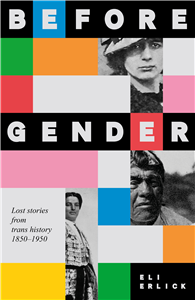
Discover the trailblazing lives of thirty trans people who will radically change everything you've been told about transgender history. Highlighting influential individuals from 1850 to 1950 who are all but unknown today, Eli Erlick shares thirty remarkable stories from romance to rebellion and mystery to murder. These narratives chronicle the grit, joy and survival of trans people long before gender became an everyday term. Organised into four parts, paralleling today's controversies over gender identity - kids, activists, workers and athletes - Before Gender introduces figures whose forgotten stories transform the discussion. These ground-breaking histories include two of the first teens to access gender-affirming medical treatment, a countess who instigated an LGBTQ+ riot forty years before Stonewall and the greatest female billiards player of the 1910s. Bold and visionary, Erlick's debut uncovers these lost stories from the depths of the archives to narrate trans lives in a way that has never been attempted before.
 Trusted Partner

This book marks an important new intervention into a vibrant area of scholarship, creating a dialogue between the histories of imperialism and of women and gender. By engaging critically with both traditional British imperial history and colonial discourse analysis, the essays demonstrate how feminist historians can play a central role in creating new histories of British imperialism. Chronologically, the focus is on the late eighteenth to early twentieth centuries, while geographically the essays range from the Caribbean to Australia and span India, Africa, Ireland and Britain itself. Topics explored include the question of female agency in imperial contexts, the relationships between feminism and nationalism, and questions of sexuality, masculinity and imperial power.
Trusted Partner

This book offers a new critical framework for understanding the processes of politicising and gendering care for older people and their manifestations in several European contexts. It interrogates how care for older adults varies across time and place while searching for an in-depth comprehension of how it becomes an arena of political struggle and the object of public policy in different countries and at various societal and political levels. It brings together multidisciplinary contributions that examine the issue of care for older people as a political concern from many angles, such as problematising care needs, long-term care policies, home care services, institutional services and family care. The contributions reveal the diversity of situations in which the processes of politicising and gendering care for older adults overlap, contradict or reinforce each other while leading to increased gender (in)equalities on different levels.
Trusted Partner
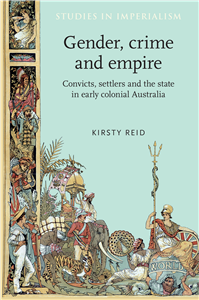
Between 1803 and 1853, some 80,000 convicts were transported to Van Diemen's Land. Revising established models of the colonies, which tend to depict convict women as a peculiarly oppressed group, Gender, crime and empire argues that convict men and women in fact shared much in common. Placing men and women, ideas about masculinity, femininity, sexuality and the body, in comparative perspective, this book argues that historians must take fuller account of class to understand the relationships between gender and power. The book explores the ways in which ideas about fatherhood and household order initially informed the state's model of order, and the reasons why this foundered. It considers the shifting nature of state policies towards courtship, relationships and attempts at family formation which subsequently became matters of class conflict. It goes on to explore the ways in which ideas about gender and family informed liberal and humanitarian critiques of the colonies from the 1830s and 1840s and colonial demands for abolition and self-government. ;
Trusted Partner

Between 1803 and 1853, some 80,000 convicts were transported to Van Diemen's Land. Revising established models of the colonies, which tend to depict convict women as a peculiarly oppressed group, Gender, crime and empire argues that convict men and women in fact shared much in common. Placing men and women, ideas about masculinity, femininity, sexuality and the body, in comparative perspective, this book argues that historians must take fuller account of class to understand the relationships between gender and power. The book explores the ways in which ideas about fatherhood and household order initially informed the state's model of order, and the reasons why this foundered. It considers the shifting nature of state policies towards courtship, relationships and attempts at family formation which subsequently became matters of class conflict. It goes on to explore the ways in which ideas about gender and family informed liberal and humanitarian critiques of the colonies from the 1830s and 1840s and colonial demands for abolition and self-government.
Trusted Partner


Penises are clever guys, sensitive and touchy. At least that’s what Michael Sztenc says. And as a sex and couples’ therapist who has worked on male sexuality for over 25 years, he should know. With practical exercises that have been tried and tested for years, he helps the men who come to him with their problems to develop a sense for their bodies and their own eroticism.
Trusted Partner
Systemtheorie und »Gender Studies« sind sich bislang eher aus dem Weg gegangen: Während der systemtheoretische Ansatz normativ aufgeladene Theorien vermeidet, ist für den »mainstream« der Geschlechterforschung das Gegenteil der Fall. Konsequenz war, daß zwei der zentralen Theoriebereiche der Gegenwart der Fall. Konsequenz war, daß zwei der zentralen Theoriebereiche der Gegenwart wechselseitig Unvereinbarkeitsformeln ausgetauscht und eine Diskussion erschwert haben. Inzwischen hat sich diese Situation gewandelt: Systemtheoretisch inspirierte Beobachtungen der Geschlechterfrage setzen neue, überraschende Akzente in dieser Debatte. Dieser Band nimmt den Faden mit dem polemischen Beitrag Luhmanns »Frauen, Männer und George Spencer Brown« von 1988 und pointierten aktuellen Beiträgen wieder auf.
Trusted Partner

De-centering queer theory seeks to reorient queer theory to a different conception of bodies and sexuality derived from Eastern European Marxism. The book articulates a contrast between the concept of the productive body, which draws its epistemology from Soviet and avant-garde theorists, and Cold War gender, which is defined as the social construction of the body. The first part of the book concentrates on the theoretical and visual production of Eastern European Marxism, which proposed an alternative version of sexuality to that of western liberalism. In doing so it offers a historical angle to understand the emergence not only of an alternative epistemology, but also of queer theory's vocabulary. The second part of the book provides a Marxist, anti-capitalist archive for queer studies, which often neglects to engage critically with its liberal and Cold War underpinnings.
Trusted Partner
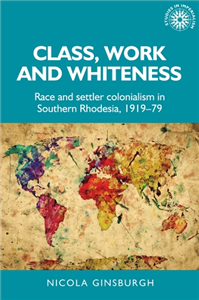
This book offers the first comprehensive history of white workers from the end of the First World War to Zimbabwean independence in 1980. It reveals how white worker identity was constituted, examines the white labouring class as an ethnically and nationally heterogeneous formation comprised of both men and women, and emphasises the active participation of white workers in the ongoing and contested production of race. White wage labourers' experiences, both as exploited workers and as part of the privileged white minority, offer insight into how race and class co-produced one another and how boundaries fundamental to settler colonialism were regulated and policed. Based on original research conducted in Zimbabwe, South Africa and the UK, this book offers a unique theoretical synthesis of work on gender, whiteness studies, labour histories, settler colonialism, Marxism, emotions and the New African Economic History.
Trusted Partner
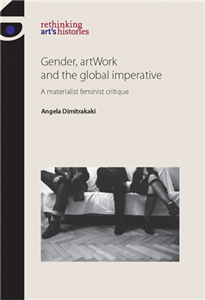
Is gender implicated in how art does its work in the world created by global capital? Is a global imperative exclusive to capital's planetary expansion or also witnessed in oppositional practices in art and curating? And what is new in the gendered paradigms of art after the fall of the Berlin Wall? Angela Dimitrakaki addresses these questions in an insightful and highly original analysis of travel as artistic labour, the sexualisation of migration as a relationship between Eastern and Western Europe, the rise of female collectives, masculinity and globalisation's 'bad boys', the emergence of a gendered economic subject that has dethroned postmodernism, and the need for a renewed materialist feminism. This is a theoretically astute overview of developments in art and its contexts since the 1990s and the first study to attempt a critical refocusing of feminist politics in art history in the wake of globalisation. It will be essential reading in art history, gender, feminist and globalisation studies, curatorial theory, cultural studies and beyond. ;
Trusted Partner
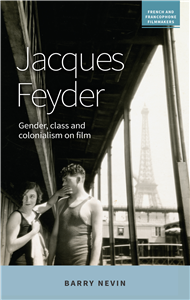
This is the first English-language book on Jacques Feyder, one of the Golden Age of French cinema's most prolific directors. Although once hailed as a major filmmaker, Feyder's reputation waned in the decades following his death, and scholars tend to underestimate his contributions to cinema. This study argues that a fuller understanding of Feyder's style involves exploring his provocative portrayals of gender, class and colonialism across his body of work, including films he directed in France, Hollywood, Germany, England and elsewhere. In doing so, the book reveals an ambitious director who took cinema in new aesthetic directions and often crafted provocative reflections on social inequalities in French society.
Trusted Partner


A how-to guide to affirmative counseling with transgender clients• Presents the best evidence-basedcare• Instructions for strategies to improveinclusivity• Illustrated with case studies• Printable tools for clinical use This volume provides fundamental and evidence-based information on working with transgender and gender diverse people in mental health services. The authors, who are experts in the field, outline the key qualities of affirming mental health services, as well as explore strategies for improving inclusivity and what evidence-based care with trans clients looks like. They also provide insight into current topics, such as working with youth, the harmful and ill-advised approach known as rapid onset gender dysphoria, and whether and how autism is a co-occurring diagnostic concern. Practitioners will find the printable resources provided invaluable for their clinical practice, including sample letters of support for trans clients who are seeking gender affirming medical care. For:• clinical psychologists• psychiatrists• psychotherapists• family practitioners• counselors• students
Trusted Partner
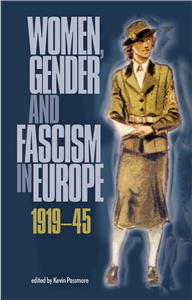
What attracts women to far-right movements that appear to denigrate their rights? This question has vexed feminist scholars for decades and has led to many lively debates in the academy. In this context, during the 1980s, the study of women, gender, and fascism in twentieth-century Europe took off, pioneered by historians such as Claudia Koonz and Victoria de Grazia. This volume makes an exciting contribution to the evolving body of work based upon these earlier studies, bringing emerging scholarship on Central and Eastern Europe alongside that of more established Western European historiography on the topic. Women, Gender and Fascism in Europe, 1919-45 features fourteen essays covering Serbia, Croatia, Yugoslavia, Romania, Hungary, Latvia, and Poland in addition to Germany, Italy, France, Spain, and Britain, and a conclusion that pulls together a European-wide perspective. As a whole, the volume provides a compelling comparative examination of this important topic through current research, literature reviews, and dialogue with existing debates. The essays cast new light on questions such as women's responsibility for the collapse of democracy in interwar Europe, the interaction between the women's movement and the extreme right, and the relationships between conceptions of national identity and gender. ;
Trusted Partner
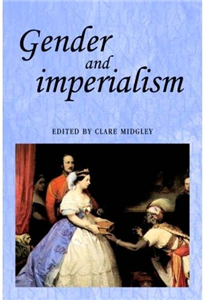
This book marks an important new intervention into a vibrant area of scholarship, creating a dialogue between the histories of imperialism and of women and gender. By engaging critically with both traditional British imperial history and colonial discourse analysis, the essays demonstrate how feminist historians can play a central role in creating new histories of British imperialism. Chronologically, the focus is on the late eighteenth to early twentieth centuries, while geographically the essays range from the Caribbean to Australia and span India, Africa, Ireland and Britain itself. Topics explored include the question of female agency in imperial contexts, the relationships between feminism and nationalism, and questions of sexuality, masculinity and imperial power. ;
Trusted Partner
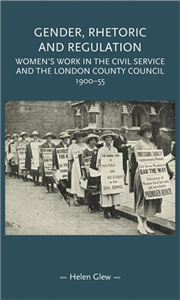
The Civil Service and the London County Council employed tens of thousands of women in Britain in the early twentieth century. As public employers these institutions influenced both each other and private organisations, thereby serving as a barometer or benchmark for the conditions of women's white-collar employment. Drawing on a wide range of archival sources - including policy documents, trade union records, women's movement campaign literature and employees' personal testimony - this is the first book-length study of women's public service employment in this period. It examines three aspects of their working lives - inequality of pay, the marriage bar and inequality of opportunity - and demonstrates how far wider cultural assumptions about womanhood shaped policies towards women's employment and experiences. Scholars and students with interests in gender, British social and cultural history and labour history will find this an invaluable text.
Trusted Partner
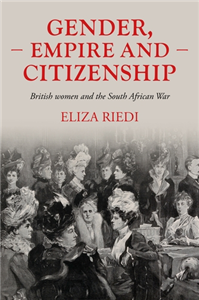
When the South African War broke out in 1899 British middle-class women, already well-integrated into party politics and public life, were quick to respond. Women across a wide political spectrum, from jingo imperialists to 'pro-Boers', actively engaged in public debates over the war through meetings, speeches, petitions, electioneering, and the press. From the start pacifist women made important contributions to the anti-war movement, later providing vital backing for Emily Hobhouse's campaign to reform the concentration camps. Women imperialists supported the war effort through military philanthropy and imperial propaganda. Under Millicent Garrett Fawcett the government-appointed Ladies' Committee transformed the camps, while hundreds of British women were recruited as camps teachers and nurses. Fundamentally shaped by ideologies of gender and race, women's responses to this imperial war continued to influence women's public action and discourses of citizenship into the First World War.
Trusted Partner
Vibes as value explores the relationship between subjectivity, labour and value in the hospitality industry, and thereby how youth, gender, sexuality, race and social class are embodied and made productive in the service economy. It shows that the key product of hospitality labour is 'vibes', or moments of enjoyment and relationality co-produced through exploitative relationships amongst workers and consumers. In the process, the book theorises hospitality as a form of affective labour organised through the normative and structural relations of precarious service work. It shows how identity construction produces value within the highly unequal social terrain of the service economy, and how hospitality labour enacts hierarchies of value extending far beyond the limits of the industry itself.
Trusted Partner
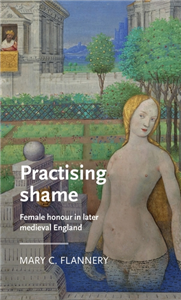
Practicing shame investigates how the literature of medieval England encouraged women to safeguard their honour by cultivating hypervigilance against the possibility of sexual shame. A combination of inward reflection and outward comportment, this practice of 'shamefastness' was believed to reinforce women's chastity of mind and body, and to communicate that chastity to others by means of conventional gestures. The book uncovers the paradoxes and complications that emerged from these emotional practices, as well as the ways in which they were satirised and reappropriated by male authors. Working at the intersection of literary studies, gender studies and the history of emotions, it transforms our understanding of the ethical construction of femininity in the past and provides a new framework for thinking about honourable womanhood now and in the years to come.
Trusted Partner

This book explores the housing problem throughout the 70 years of Soviet history, looking at changing political ideology on appropriate forms of housing under socialism, successive government policies on housing, and the meaning and experience of 'home' for Soviet citizens. Attwood examines the use of housing to alter gender relations, and the ways in which domestic space was differentially experienced by men and women. Much of Attwood's material comes from Soviet magazines and journals, which enables her to demonstrate how official ideas on housing and daily life changed during the course of the Soviet era, and were propagandised to the population. Through a series of in-depth interviews, she also draws on the memories of people with direct experience of Soviet housing and domestic life. Attwood has produced not just a history of housing, but a social history of daily life which will appeal both to scholars and those with a general interest in Soviet history.

