Your Search Results

      • Trusted Partner

        Bastei Lübbe AG

        Bastei Lübbe AG, based in Cologne, Germany, is a large, both traditional and modern company in the German publishing industry, specializing in the publication of books, audio books and eBooks with fiction and popular science content. The company's core business also includes periodically published novel books. The product range of the twelve imprints of the media company currently comprises a total of around 3,600 titles from the fiction, non-fiction, children's and youth book sectors. International and national bestselling authors such as Ken Follett, Dan Brown, Jeff Kinney, Rebecca Gablé, Petra Hülsmann, Andreas Eschbach, Timur Vermes and many more have published their books at the Cologne publishing house, some of them for decades. Die in Köln ansässige Bastei Lübbe AG ist ein großes, sowohl traditionsreiches wie auch modernes Unternehmen im deutschen Verlagswesen, das auf die Herausgabe von Büchern, Hörbüchern und eBooks mit belletristischen und populärwissenschaftlichen Inhalten spezialisiert ist. Zum Kerngeschäft des Unternehmens gehören auch die periodisch erscheinenden Romanhefte. Das Angebot der zwölf Verlage und Imprints des vor mehr als 60 Jahren gegründeten Medienhauses umfasst derzeit insgesamt rund 3.600 Titel aus den Bereichen Belletristik, Sach-, Kinder- und Jugendbuch. Internationale und nationale Bestsellerautoren wie Ken Follett, Dan Brown, Jeff Kinney, Rebecca Gablé, Petra Hülsmann, Andreas Eschbach, Timur Vermes und viele mehr veröffentlichen ihre Bücher zum Teil seit Jahrzehnten im Kölner Verlagshaus.

        View Rights Portal
      • Almatykitab Baspassy

        Almatykitap Baspassy was founded in 1999 and focuses on a wide range children’s books for ages between 2 and 18, including education and non-fiction titles. There are also a number of ethnographic titles on Kazakh culture, its traditions and nature.

        View Rights Portal
      • Trusted Partner
        Humanities & Social Sciences
        May 2026

        Sexual violence in racial capitalism

        by Alison Phipps

        Most texts on sexual violence treat capitalism as backdrop or afterthought. In contrast, political economy is the core of this book. Phipps explores the centrality of sexual violence to racial capitalist processes: the enclosure of bodies, the extraction of labour, the expropriation of land and resources, and the disposal of unwanted populations. Importantly, she argues that both sexual violence and sexual fear create social control and surplus value. Through a framework called the coloniality of sexual violence, Phipps conjoins acts of sexual violence and ideas of sexual threat in an analysis of gendered and raced property relations and the split colonial/modern psyche. She argues that fantasies of sexual danger represent the infolded violence of racial capitalism, which is why fear of revolution is often fear of rape. Revolution, however, is always imminent: violence is necessary because power is incomplete.

      • Trusted Partner
      • Trusted Partner
        Humanities & Social Sciences
        March 2024

        Intimacy and injury

        In the wake of #MeToo in India and South Africa

        by Nicky Falkof, Srila Roy, Shilpa Phadke

        Both India and South Africa have shared the infamy of being labelled the world's 'rape capitals', with high levels of everyday gender-based and sexual violence. At the same time, both boast long histories of resisting such violence and its location in wider cultures of patriarchy, settler colonialism and class and caste privilege. Through the lens of the #MeToo moment, the book tracks histories of feminist organising in both countries, while also revealing how newer strategies extended or limited these struggles. Intimacy and injury is a timely mapping of a shifting political field around gender-based violence in the global south. In proposing comparative, interdisciplinary, ethnographically rich and analytically astute reflections on #MeToo, it provides new and potentially transformative directions to scholarly debates this book builds transnational feminist knowledge and solidarity in and across the global south.

      • Trusted Partner
        Humanities & Social Sciences
        March 2017

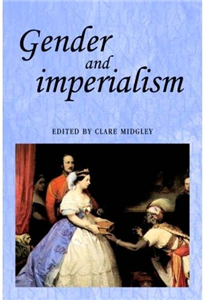
        Gender and imperialism

        by Clare Midgley

        This book marks an important new intervention into a vibrant area of scholarship, creating a dialogue between the histories of imperialism and of women and gender. By engaging critically with both traditional British imperial history and colonial discourse analysis, the essays demonstrate how feminist historians can play a central role in creating new histories of British imperialism. Chronologically, the focus is on the late eighteenth to early twentieth centuries, while geographically the essays range from the Caribbean to Australia and span India, Africa, Ireland and Britain itself. Topics explored include the question of female agency in imperial contexts, the relationships between feminism and nationalism, and questions of sexuality, masculinity and imperial power.

      • Trusted Partner
        2018

        Rediscovering Sex

        From pressure to pleasure in bed - an excersise book for men

        by Michael Sztenc

        Penises are clever guys, sensitive and touchy. At least that’s what Michael Sztenc says. And as a sex and couples’ therapist who has worked on male sexuality for over 25 years, he should know. With practical exercises that have been tried and tested for years, he helps the men who come to him with their problems to develop a sense for their bodies and their own eroticism.

      • Trusted Partner
        Humanities & Social Sciences
        January 2025

        Europeanisation as violence

        Souths and Easts as method

        by Kolar Aparna, Daria Krivonos, Elisa Pascucci

        The book offers a novel lens to situate Europeanisation as violence - through institutions and technologies of development, cultural heritage, and borders, among others - by bringing South and East within a relational frame. Through four inter-related sections, it foregrounds Europeanisation as infrastructural violence and colonial asymmetries, slow violence and the construction of stratified subalternities, epistemic dispossession, and border epistemologies.

      • Trusted Partner
        Humanities & Social Sciences
        November 2025

        The lure of violence

        The Right and the Edwardian crisis in Britain, 1901–14

        by Alessandro Saluppo

        This book provides a comprehensive examination of conservative and right-wing responses to the Edwardian crisis in Britain (1901-1914). It stresses how the upsurge of right-wing extremism within and outside the Conservative party was accompanied by the crystallization of a culture of violence. The preparation, instigation or threatening of violent acts against all those who appeared to threaten the organic nature and vigour of the national community found expression in a myriad of ultra-nationalist organisations, citizen policing groups, private military associations, and paramilitary formations. The book innovatively reconstructs the belief system and the practices of those right-wing actors, which pursued the goals of military preparedness, "racial regeneration" and imperial unity, while defending the amorphous goals of authority, order and 'national efficiency' against the forces of radicalism and socialism. The book helps to cast light on the bellicose and authoritarian reflexes that traversed British conservatism in the turbulent prewar years.

      • Trusted Partner
        Humanities & Social Sciences
        November 2012

        Gender, crime and empire

        convicts, settlers and the state in early colonial Australia

        by Kirsty Reid, Andrew Thompson, John Mackenzie, Martin Hargreaves

        Between 1803 and 1853, some 80,000 convicts were transported to Van Diemen's Land. Revising established models of the colonies, which tend to depict convict women as a peculiarly oppressed group, Gender, crime and empire argues that convict men and women in fact shared much in common. Placing men and women, ideas about masculinity, femininity, sexuality and the body, in comparative perspective, this book argues that historians must take fuller account of class to understand the relationships between gender and power. The book explores the ways in which ideas about fatherhood and household order initially informed the state's model of order, and the reasons why this foundered. It considers the shifting nature of state policies towards courtship, relationships and attempts at family formation which subsequently became matters of class conflict. It goes on to explore the ways in which ideas about gender and family informed liberal and humanitarian critiques of the colonies from the 1830s and 1840s and colonial demands for abolition and self-government. ;

      • Trusted Partner
        Humanities & Social Sciences
        March 2017

        Gender, crime and empire

        Convicts, settlers and the state in early colonial Australia

        by Kirsty Reid, Andrew Thompson, John M. MacKenzie, Martin Hargreaves

        Between 1803 and 1853, some 80,000 convicts were transported to Van Diemen's Land. Revising established models of the colonies, which tend to depict convict women as a peculiarly oppressed group, Gender, crime and empire argues that convict men and women in fact shared much in common. Placing men and women, ideas about masculinity, femininity, sexuality and the body, in comparative perspective, this book argues that historians must take fuller account of class to understand the relationships between gender and power. The book explores the ways in which ideas about fatherhood and household order initially informed the state's model of order, and the reasons why this foundered. It considers the shifting nature of state policies towards courtship, relationships and attempts at family formation which subsequently became matters of class conflict. It goes on to explore the ways in which ideas about gender and family informed liberal and humanitarian critiques of the colonies from the 1830s and 1840s and colonial demands for abolition and self-government.

      • Trusted Partner
        Humanities & Social Sciences
        July 2026

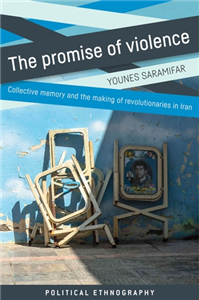
        The promise of violence

        Collective memory and the making of revolutionaries in Iran

        by Younes Saramifar

        Revolutionaries in Iran choose to identify memories of the Iran-Iraq War as their 'collective' memory to mark the war era as the temporal reference in history - the time of times, or sometimes even a time beyond time. Can a sole event and its violence truly become - for some - the all-encompassing, constituting element of history and memory? This book pursues this question and follows revolutionaries in the maze of 'collective' memory to offer a temporal account of the breakdown of happenings - as well as the mending of happenings through the force of remembrance.

      • Trusted Partner
        May 2003

        Frauen, Männer, Gender Trouble

        Systemtheoretische Essays

        by Ursula Pasero, Christine Weinbach

        Systemtheorie und »Gender Studies« sind sich bislang eher aus dem Weg gegangen: Während der systemtheoretische Ansatz normativ aufgeladene Theorien vermeidet, ist für den »mainstream« der Geschlechterforschung das Gegenteil der Fall. Konsequenz war, daß zwei der zentralen Theoriebereiche der Gegenwart der Fall. Konsequenz war, daß zwei der zentralen Theoriebereiche der Gegenwart wechselseitig Unvereinbarkeitsformeln ausgetauscht und eine Diskussion erschwert haben. Inzwischen hat sich diese Situation gewandelt: Systemtheoretisch inspirierte Beobachtungen der Geschlechterfrage setzen neue, überraschende Akzente in dieser Debatte. Dieser Band nimmt den Faden mit dem polemischen Beitrag Luhmanns »Frauen, Männer und George Spencer Brown« von 1988 und pointierten aktuellen Beiträgen wieder auf.

      • Trusted Partner
        Humanities & Social Sciences
        October 2025

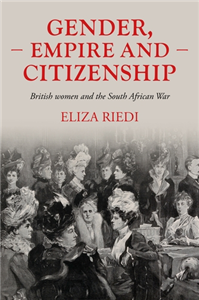
        Gender, empire and citizenship

        British women and the South African War

        by Eliza Riedi

        When the South African War broke out in 1899 British middle-class women, already well-integrated into party politics and public life, were quick to respond. Women across a wide political spectrum, from jingo imperialists to 'pro-Boers', actively engaged in public debates over the war through meetings, speeches, petitions, electioneering, and the press. From the start pacifist women made important contributions to the anti-war movement, later providing vital backing for Emily Hobhouse's campaign to reform the concentration camps. Women imperialists supported the war effort through military philanthropy and imperial propaganda. Under Millicent Garrett Fawcett the government-appointed Ladies' Committee transformed the camps, while hundreds of British women were recruited as camps teachers and nurses. Fundamentally shaped by ideologies of gender and race, women's responses to this imperial war continued to influence women's public action and discourses of citizenship into the First World War.

      • Trusted Partner
        Humanities & Social Sciences
        April 2026

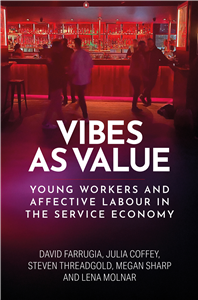
        Vibes as value

        Young workers and affective labour in the service economy

        by David Farrugia, Julia Coffey, Steven Threadgold, Megan Sharp, Lena Molnar

        Vibes as value explores the relationship between subjectivity, labour and value in the hospitality industry, and thereby how youth, gender, sexuality, race and social class are embodied and made productive in the service economy. It shows that the key product of hospitality labour is 'vibes', or moments of enjoyment and relationality co-produced through exploitative relationships amongst workers and consumers. In the process, the book theorises hospitality as a form of affective labour organised through the normative and structural relations of precarious service work. It shows how identity construction produces value within the highly unequal social terrain of the service economy, and how hospitality labour enacts hierarchies of value extending far beyond the limits of the industry itself.

      • Trusted Partner
        Health & Personal Development

        Affirmative Counseling for Transgender and Gender Diverse Clients

        by lore m. dickey, Jae A. Puckett

        A how-to guide to affirmative counseling with transgender clients• Presents the best evidence-basedcare• Instructions for strategies to improveinclusivity• Illustrated with case studies• Printable tools for clinical use This volume provides fundamental and evidence-based information on working with transgender and gender diverse people in mental health services. The authors, who are experts in the field, outline the key qualities of affirming mental health services, as well as explore strategies for improving inclusivity and what evidence-based care with trans clients looks like. They also provide insight into current topics, such as working with youth, the harmful and ill-advised approach known as rapid onset gender dysphoria, and whether and how autism is a co-occurring diagnostic concern. Practitioners will find the printable resources provided invaluable for their clinical practice, including sample letters of support for trans clients who are seeking gender affirming medical care. For:• clinical psychologists• psychiatrists• psychotherapists• family practitioners• counselors• students

      • Trusted Partner
        Humanities & Social Sciences
        May 2024

        Knowing COVID-19

        The pandemic and beyond

        by Des Fitzgerald, Fred Cooper

        Knowing COVID-19 demonstrates how researchers in the humanities shone a light on some of the many hidden problems of COVID-19, in the very depths of the pandemic crisis. Drawing on eight COVID-19 research projects, the volume shows how humanities researchers, alongside colleagues in the clinical and life sciences, addressed some of the major critical unknowns about this new infectious disease - from the effects of racism to the risks of deploying shame; from how to design an effective instructional leaflet to how to communicate effectively to bus passengers. Across eight novel case studies, the book showcases how humanities research during a pandemic is not only about interpreting the crisis when it has safely passed, but how it can play a vital, collaborative and instrumental role as events are still unfolding.

      • Trusted Partner
        Humanities & Social Sciences
        June 2024

        Politicising and gendering care for older people

        Multidisciplinary perspectives from Europe

        by Anca Dohotariu, Ana Paula Gil, Lubica Volanská

        This book offers a new critical framework for understanding the processes of politicising and gendering care for older people and their manifestations in several European contexts. It interrogates how care for older adults varies across time and place while searching for an in-depth comprehension of how it becomes an arena of political struggle and the object of public policy in different countries and at various societal and political levels. It brings together multidisciplinary contributions that examine the issue of care for older people as a political concern from many angles, such as problematising care needs, long-term care policies, home care services, institutional services and family care. The contributions reveal the diversity of situations in which the processes of politicising and gendering care for older adults overlap, contradict or reinforce each other while leading to increased gender (in)equalities on different levels.

      • Trusted Partner
        Humanities & Social Sciences
        January 1998

        Gender and imperialism

        by Clare Midgley, Andrew Thompson, John Mackenzie

        This book marks an important new intervention into a vibrant area of scholarship, creating a dialogue between the histories of imperialism and of women and gender. By engaging critically with both traditional British imperial history and colonial discourse analysis, the essays demonstrate how feminist historians can play a central role in creating new histories of British imperialism. Chronologically, the focus is on the late eighteenth to early twentieth centuries, while geographically the essays range from the Caribbean to Australia and span India, Africa, Ireland and Britain itself. Topics explored include the question of female agency in imperial contexts, the relationships between feminism and nationalism, and questions of sexuality, masculinity and imperial power. ;

      • Trusted Partner

      Subscribe to our

      newsletter