Your Search Results

      • Arkan for Studies, Research and Publishing

        Arkan is an independent research center established in Egypt in February 2017, aiming to drive scientific research movement forward, promote its various tools in Social Science and Humanities, and support their active individuals and institutions.Arkan is one of the most promising emerging research centers and publishers in Egypt and the Middle East and has a staff of nearly 100 people. It cooperates with individuals, institutions and entities as a scientific, cultural, awareness-raising research center in a way that never exceeds the center's vision, mission, work fields and general objectives.Arkan entered into many interactions with eminent thinkers and academics not to mention international business partners. Further, it is a member of the Egyptian Publishers’ Association and Arab Publishers’ Association and it is to become one of the main actors in the various cultural and scientific forums and book fairs throughout the world in the years to come.To find out more, visit our website: https://www.arkan-srp.com/?lang=en

        View Rights Portal
      • Organisation for Researching and Composing University Textbooks in the Humanities (SAMT)

        Over 140 titles of books in cooperation with universities and research centers in countries in Asia and Europe

        View Rights Portal
      • Trusted Partner
      • Trusted Partner
        Science & Mathematics
        September 2024

        The elephant and the dragon in contemporary life sciences

        A call for decolonising global governance

        by Joy Y. Zhang, Saheli Datta Burton

        This book provides a powerful diagnosis of why the global governance of science struggles in the face of emerging powers. Through unpacking critical events in China and India over the past twenty years, it demonstrates that the 'subversiveness' assumed in the two countries' rise in the life sciences reflects many of the regulatory challenges that are shared worldwide. It points to a decolonial imperative for science governance to be responsive and effective in a cosmopolitan world. By highlighting epistemic injustice within contemporary science, the book extends theories of decolonisation.

      • Trusted Partner
      • Trusted Partner
        Humanities & Social Sciences
        March 2026

        Creative research communication

        by Clare Wilkinson, Emma Weitkamp

      • Trusted Partner
        Humanities & Social Sciences
        December 2025

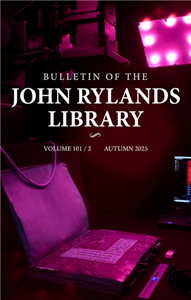
        Bulletin of the John Rylands Library 101/2

        Imaging Heritage Science Initiatives at The John Rylands Research Institute and Library

        by Stefan Hanß, James Robinson

        The John Rylands Library houses one of the finest collections of rare books, manuscripts and archives in the world. The collections span five millennia, have a global reach and cover a wide range of subjects, including art and archaeology; economic, social, political, religious and military history; literature, drama and music; science and medicine; theology and philosophy; travel and exploration. For over a century, the Bulletin of the John Rylands Library has published research that complements the Library's special collections. An electronic edition of this issue is freely available under a Creative Commons (CC BY-NC-ND) licence.

      • Trusted Partner
        October 2023

        Watching the Brain Think

        Facets of neuroscience: short thought provoking texts for the curious

        by Monika Niehaus/Martin Osterloh

        — An exciting and entertaining explanation of neuroscience — In the diverting and humorous style for which the author is known – learning has never been this much fun What processes in the brain are responsible for intelligence, free will, empathy or reason? Can memories be falsified? And what does actually happen in the brain when we reach puberty? Monika Niehaus and Martin Osterloh answer these and many other neuroscientific questions in their book – a fundamental work on brain research, and easy to understand, exciting and entertaining.

      • Trusted Partner
        Humanities & Social Sciences
        May 2024

        Knowing COVID-19

        The pandemic and beyond

        by Des Fitzgerald, Fred Cooper

        Knowing COVID-19 demonstrates how researchers in the humanities shone a light on some of the many hidden problems of COVID-19, in the very depths of the pandemic crisis. Drawing on eight COVID-19 research projects, the volume shows how humanities researchers, alongside colleagues in the clinical and life sciences, addressed some of the major critical unknowns about this new infectious disease - from the effects of racism to the risks of deploying shame; from how to design an effective instructional leaflet to how to communicate effectively to bus passengers. Across eight novel case studies, the book showcases how humanities research during a pandemic is not only about interpreting the crisis when it has safely passed, but how it can play a vital, collaborative and instrumental role as events are still unfolding.

      • Trusted Partner
        August 2003

        Unsere Gene

        Eine Gebrauchsanleitung für ein besseres Leben

        by Burnham, Terry; Phelan, Jay

      • Trusted Partner
      • Trusted Partner
        Humanities & Social Sciences
        July 2025

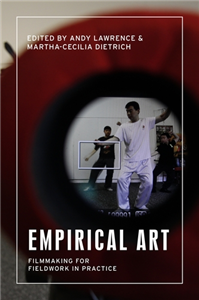
        Empirical art

        Filmmaking for fieldwork in practice

        by Andy Lawrence, Martha-Cecilia Dietrich

        Empirical art: Filmmaking for fieldwork in practice is an insightful exploration of what the craft of filmmaking brings to social science research. Providing creative avenues on how to narrate encounters, relationships, and experiences during fieldwork, this comprehensive volume offers a rich tapestry of theoretical explorations and explorative methodologies. Skilfully connecting the worlds of ethnography, art and cinema, the contributors in this book act as a compass for filmmakers and researchers venturing to use a camera and microphone to relate and narrate their research collaborations and fieldsites. Drawing from the authors' extensive experience in disciplines like social anthropology, environmental humanities, and political science, "Empirical Art" breaks down the intricate process of crafting ethnographic films that departs from the researcher's subjectivity. Covering aspects of filmmaking from conceptualisation to production and distribution, readers are equipped with a treasure trove of collaborative techniques, innovative approaches, and ethical considerations necessary to generate and examine storytelling practices in contemporary fields of study. The authors discuss the significance of the multiple roles that technologies of filmmaking play in reflecting on cultural practices, social dynamics, and (beyond) human storytelling and their transformative potentials. Whether a seasoned filmmaker, an aspiring ethnographer, or an academic seeking new dimensions for their research, Empirical Art serves as a guide to integrating visual storytelling, cinema craft and empirical research.

      • Trusted Partner
        1990

        Florenz in der Renaissance

        Stadt, Gesellschaft, Kultur. (Kulturen und Ideen)

        by Brucker, Gene

      • Trusted Partner
        1988

        Giovanni und Lusanna

        Die Geschichte einer Liebe im Florenz der Renaissance. (Kulturen und Ideen)

        by Brucker, Gene

      • Trusted Partner
      • Trusted Partner
        July 2021

        My Life with Viruses

        A researcher’s history of the fascinating world of pathogens

        by Ernst-Ludwig Winnacker in association with Jeanne Rubner

        In times of the coronavirus pandemic many people have certainly condemned them, but Professor Ernst-Ludwig Winnacker has dedicated his life to researching them and is intrigued by viruses – even if sometimes he is keenly aware of their fatal effects. To mark his 80th birthday the biochemist describes the co-evolution and co-existence as well as the eternal ‘battle’ between humans and viruses. Winnacker takes up the cause of these ‘biological elements between animate and inanimate nature’ because they play an important role in fundamental research and genetic technology, and without them human beings would not be what they are.

      • Trusted Partner
      • Trusted Partner
        Medicine

        Research Work in Nursing

        A Handbook and Workbook for Nurses

        by Eva-Maria Panfil

        This successful handbook and workbook set has rapidly established itself as the standard. With a concise and specific approach, it summarizes all the information on scientific research relevant for nurses. It clearly explains what research in nursing entails, the techniques that are used, and what products can result from the research.   Target Group: Nursing students, nursing trainers, those engaging in further training

      • Trusted Partner
        February 2009

        Die gläsernen Gene

        Die Erfindung des Individuums im molekularen Zeitalter

        by Helga Nowotny, Giuseppe Testa

        In den Lebenswissenschaften hat sich die Molekularbiologie als Leitwissenschaft etabliert, die genzentrierte Sichtweise ist zum dominanten Paradigma, das Genom zum säkularisierten Äquivalent der Seele geworden. Parallel dazu ist in liberalen Demokratien ein Individualisierungsprozeß zu beobachten: Dem einzelnen stehen alle Optionen offen. Die Kategorien, auf denen das gesellschaftliche Leben beruht – Verwandtschaftsbeziehungen, Eigentumsrechte an natürlichen und artifiziellen Organismen, die Verschiebung der Grenzen zwischen privat und öffentlich, die Rechte des Individuums gegenüber der Gemeinschaft und den nachfolgenden Generationen – werden durch die Vorstöße der Lebenswissenschaften tagtäglich aufs neue in Frage gestellt. Auf der einen Seite ist beispielsweise der Kampf gegen das Doping im Sport Ausdruck der Illusion eines natürlichen Lebens, auf der anderen Seite sind wir gezwungen, die Fiktion der Natürlichkeit aufzugeben und eine Koexistenz von Menschen und Artefakten zuzulassen. Das Individuum von morgen wird heute erfunden; seine Rechte und seine Stellung in der Gesellschaft müssen neu definiert werden. »Die Entwicklungen im Sport sind deshalb so interessant, weil sie in paradigmatischer Weise aufdecken, daß sich eine rigide Grenzziehung zwischen künstlich/technisch und natürlich nicht aufrechterhalten läßt.« Der Mensch lebt heute im Zeitalter seiner technischen Reproduzierbarkeit, und die rasante Entwicklung der Gentechnologie weckt entsprechend tiefliegende Ängste: Gehen wir unserer Individualität verlustig? Ist das alles noch natürlich? Und wer soll am Schluß nach welchen Kriterien bestimmen, was getan werden darf und soll? Um diesen Fragen nachzugehen, wählen die Autoren dieses Buchs einen erfrischend innovativen und provokativen Ansatz, bei dem liebgewordene Prinzipien aufgrund aktueller Beispiele aus Forschung, Gesellschaft und Politik hinterfragt und entstaubt werden. Viele der von ihnen gewonnenen Erkenntnisse werden zur Entkrampfung manche

      • Trusted Partner

      Subscribe to our

      newsletter