
Wolters Kluwer Health
Wolters Kluwer Health is a leading global publisher of medical, nursing and allied health information resources in book, journal, newsletter, looseleaf and electronic media formats.
View Rights Portal
Wolters Kluwer Health is a leading global publisher of medical, nursing and allied health information resources in book, journal, newsletter, looseleaf and electronic media formats.
View Rights Portal

This title is the first interdisciplinary book about geography and health that takes scientific methods and questions into account making it a great manual of international health geography research. The topics include: • spatial statistical analysis • mobility analysis in health research • GIS and mapping tools • cartographic visualization • health mapping • cancer epidemiology • morbidity • climate change and health – the example of Germany • global change and infectious diseases Target Group: Health scientists, geographers, doctors (epidemiologists)

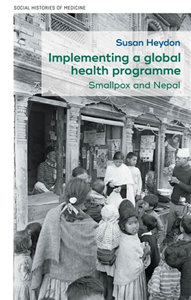
Worldwide eradication of the devastating viral disease of smallpox was devised as a distant global policy, but success depended on implementing a global vaccination programme within nation states. How this was achieved remains relevant and topical for responding to today's global communicable disease challenges. The small and poor Himalayan kingdom of Nepal faced enormous geographical and infrastructure challenges if it was going to succeed in a nationwide vaccination programme. This book acknowledges the key role of the WHO but disrupts the top-down, centre-led standard narrative. Against a background of widespread internal political and social change, Nepal's programme was expanded, effectively decentralised and a vaccination strategy introduced that aligned with people's beliefs. Few foreign personnel were involved.
 Trusted Partner
The first book-length analysis of EU health policy since the COVID-19 pandemic, encompassing the creation of the European Health Union and the Recovery and Resilience Facility, this volume offers a timely and accessible analysis of the EU's health policy, institutions and governance. Focusing on the EU's health objectives and how they are pursued, it offers a detailed overview of the development of EU health policy, and five in-depth case studies of specific policy fields. The book will appeal to academic and policy audiences interested in the EU's health objectives and how it pursues them.
Trusted Partner
It is an accepted convention that non-health sector policies and strategies impact on population health. An instrument and approach, Health Impact Assessment (HIA), seeks to assess the health impacts of projects, programmes and policies in a systematic way. The ultimate goal of HIA is to inform public policy processes of these impacts. This book provides for the first time an analysis of how and why HIAs informed local policy development in both jurisdictions on the island of Ireland. An original theoretical framework was used as the analytical lens for this exploration, drawing from the fields of political and social sciences, and public health. The HIA projects were conducted on traffic and transport, Traveller accommodation, urban redevelopment and air quality. This conceptually-grounded guide draws from the disciplines of the political and social sciences and public health, and will appeal to academics, students and practitioners in these fields as well as policy-makers and planners at local and national government levels. ;
Trusted Partner

This book is available as an open access ebook under a CC-BY-NC-ND licence. At a time when payment is claiming a greater place than ever before within the NHS, this book provides the first in-depth investigation of the workings, scale and meaning of payment in British hospitals before the NHS. There were only three decades in British history when it was the norm for patients to pay the hospital; those between the end of the First World War and the establishment of the National Health Service in 1948. Payment played an important part in redefining rather than abandoning medical philanthropy, based on class divisions and the notion of financial contribution as a civic duty. With new insights on the scope of private medicine and the workings of the means test in the hospital, as well as the civic, consumer and charitable meanings associated with paying the hospital, Gosling offers a fresh perspective on healthcare before the NHS and welfare before the welfare state.
Trusted Partner
 Trusted Partner

The imperatives of public health shaped our understanding of the cities of the global north in the first industrial revolutions of the nineteenth and twentieth centuries. They are doing so again today, reflecting new geographies of the urban age of the twenty-first. Emergent cities in parts of the globe experiencing most profound urban growth face major problems of economic, ecological and social sustainability when making sense of new health challenges and designing policy frameworks for public health infrastructures. The rapid evolution of complex 'systems of systems' in today's cities continually reconfigure the urban commons, reshaping how we understand urban public health, defining new problems and drawing on new data tools for analysis that work from the historical legacies and geographical variations that structure public health systems.
Trusted Partner


— The book on men's health — Confessions from a urologist — Compact, competent, concise Men are often unwilling to seek medical advice when they have problems. However, a lot of diseases can only be treated if they are detected in time. This book contains comprehensible and entertaining information on all the important questions relating to men's health, from the erection and its disorders, fertility and prostate issues, to sexuality in old age. The author knows what matters to men: he speaks from his experience as a urologist.
Trusted Partner
Trusted Partner

Southern Africa played a varied but vital role in Britain's maritime and imperial stories: it was one of the most intricate pieces in the British imperial strategic jigsaw, and representations of southern African landscape and maritime spaces reflect its multifaceted position. Representing Africa examines the ways in which British travellers, explorers and artists viewed southern Africa in a period of evolving and expanding British interest in the region. Drawing on a wide range of archival sources, contemporary travelogues and visual images, many of which have not previously been published in this context, this book posits landscape as a useful prism through which to view changing British attitudes towards Africa. Richly illustrated, this book will be essential reading for scholars and students interested in British, African, imperial and exploration history, art history, and landscape and environment studies.
Trusted Partner

Edmund Spenser and the romance of space advances the exploration of literary space into new areas, firstly by taking advantage of recent interdisciplinary interests in the spatial qualities of early modern thought and culture, and secondly by reading literature concerning the art of cosmography and navigation alongside imaginative literature with the purpose of identifying shared modes and preoccupations. The book looks to the work of cultural and historical geographers in order to gauge the roles that aesthetic subjectivity and the imagination play in the development of geographical knowledge: contexts ultimately employed by the study to achieve a better understanding of the place of Ireland in Spenser's writing. The study also engages with recent ecocritical approaches to literary environments, such as coastlines, wetlands, and islands, thus framing fresh readings of Spenser's handling of mixed genres.
Trusted Partner
Trusted Partner
Discusses the historical development of science, technology and medicine in Western Europe and North America from the Renaissance to the present. Identifies four principle ways of knowing within specific periods: natural history in the eighteenth century analysis following the French Revolution experiment in the epoch of modernism the current presence of technoscience. Balances the historical exposition of natural magic and natural theology with a philosophical interpretation of the Scientific Revolution and reflective comments on Foucault and Collingwood. Strikes a balance between theoretical discussion and empirical illustration. Redefines the geography of science, technology and medicine. ;
Trusted Partner
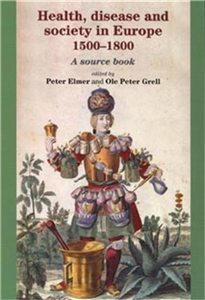
Considers how the body was viewed by the medical profession from the Renaissance to the Enlightenment, and challenges established ideas in the field of medical history. Examines the provision of medical care in context and how it was shaped by the social, religious, political and cultural concerns of the age. Arranged thematically and with brief but scholarly introductions, the selection of documents includes contemporary sources, recent research in the field and classical writings. Written in an accessible style by an Open University lecturer. Companion volume to The Healing Arts: Health, Disease and Society in Europe 1500-1800. ;
Trusted Partner
 Trusted Partner
Trusted Partner
Trusted Partner
 Trusted Partner
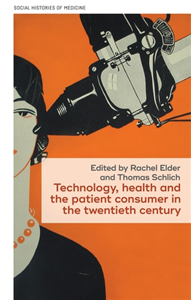
Technology and consumerism are two characteristic phenomena in the history medicine and healthcare, yet the connections between them are rarely explored by scholars. In this edited volume, the authors address this disconnect, noting the ways in which a variety of technologies have shaped patients' roles as consumers since the early twentieth century. Chapters examine key issues, such as the changing nature of patient information and choice, patients' assessment of risk and reward, and matters of patient role and of patient demand as they relate to new and changing technologies. They simultaneously investigate how differences in access to care and in outcomes across various patient groups have been influenced by the advent of new technologies and consumer-based approaches to health. The volume spans the twentieth and twenty-first centuries, spotlights an array of medical technologies and health products, and draws on examples from across the United States and United Kingdom.
Trusted Partner
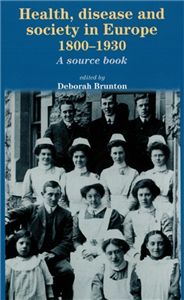
During the nineteenth century, the provision of medical care underwent a radical transformation. In 1800, the body was still understood in terms of humours and fluids, and treatment was provided by a wide range of individuals, some of whom had little or no formal training. Institutions were marginal to the medical enterprise, and governments took almost no part in providing medical services. By 1930, however, a recognisably modern medicine had begun to emerge across Europe. New understandings of human physiology had resulted in the new science of surgical therapy; hospitals had become centres for care, research and training; and the newly organised medical professions increasingly sought to regulate medical practice. In most countries, the state had accepted responsibility for public health and the provision of basic welfare services. This volume provides readers with unrivalled access to a comprehensive range of sources on these major themes. Extracts from contemporary writings vividly illustrate key aspects of medical thought and practice, while a selection of classic historical research and up-to-date work in the field helps further our understanding of medical history. Thematically arranged, these sources are assembled to complement the essays in the companion volume, Medicine Transformed: Health, Disease and Society in Europe, 1800-1930. In addition, brief scholarly introductions make the sources accessible to both the specialist and the general reader. ;
Trusted Partner






