Your Search Results

      • Gerstenberg Verlag GmbH & Co. KG

        The Publishing House and its History Established in St. Petersburg in 1792, today Gerstenberg is one of Germany’s oldest publishing houses. A family business, the publishing house moved to new headquarters in Hildesheim in 1796 and to this day occupies the same address in the old city marketplace as it did then. The most important branch of the publishing business, however, was the Hildesheimer Allgemeine Zeitung, which, incidentally, is the oldest daily newspaper still in existence in Germany. Today, the name of Gerstenberg is synonymous with delightful, innovative books of aesthetic design and high-quality content for children and young adults that compete very successfully also on the international market. An adult range comprising illustrated books, non-fiction and cookery books also forms part of the Gerstenberg portfolio.   Program Gerstenberg publishes board picture books, picture books, children’s and young adult narrative literature and non-fiction. With Eric Carle’s »The Very Hungry Caterpillar« (»Die kleine Raupe Nimmersatt«) and Rotraut Susanne Berner’s ›discovery picture books‹ (›Wimmelbücher‹), Gerstenberg became one of the best-known children’s book publishers. In 1999, the anthology of poetry »Dunkel war’s, der Mond schien helle«, came out as the first in Gerstenberg’s series of household compendiums, a segment that has since developed into a main pillar of the program. The publishing house has brought out some highly respected developments of its own in the children’s knowledge-book series ›Abenteuer! Maja Nielsen erzählt‹.

        View Rights Portal
      • Trusted Partner
        Humanities & Social Sciences
        May 2026

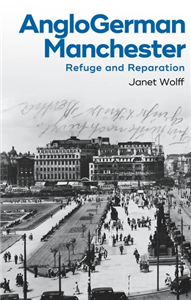
        AngloGerman Manchester

        Refuge and Reparation

        by Janet Wolff

        The essays in this book discuss the lives of Germans living in Manchester, from the mid-nineteenth century to the present, combining historical study with personal and autobiographical material. Chapters are devoted to Frederick Engels, Fanny Lewald, Rabbi Felix Carlebach and W. G. Sebald, with additional discussion of Elizabeth Gaskell and the Manchester writer Geraldine Jewsbury. One chapter focuses on Jewish refugees from Nazism who set up new industries in Manchester, including the author's father. The final chapter takes up the theme of reparation, which runs through the book, relating the work of non-Jewish Germans engaged in the project of 'making amends' in their own country for the crimes of an earlier generation.

      • Trusted Partner
        2020

        History of the German Language

        A textbook for German studies; Part 1: Introduction, prehistory and history; Part 2: Old High German, Middle High German and Early New High German

        by Wilhelm Schmidt, Edited by Dr. Elisabeth Berner and Prof. Dr. Dr. h.c. Dr. h.c. Norbert Richard Wolf

        The 12th revised and updated version of the History of the German language – long regarded as an indispensable standard work for German Studies, has just been published. From now on, this comprehensive textbook on the history of the language is divided into two volumes. In addition to introducing questions about historical linguistics, the first volume provides a detailed account of the prehistory and history of German right up to the present day. Based on extensive source analyses, the focus is on aspects of culture and social history; only the chapters on the Indo-Germanic and Germanic language include key information about structural history. The second part contains concise, but readily understandable accounts of Old, Middle and Early New High German in terms of phonology, graphemics, morphology and syntax. Not only are synchronous descriptions given of the particular language period, but also the development of German language construction at all structural levels is explained. The association of grammatical synchrony and structural diachrony is a particular characteristic of this second part of Schmidt’s work on the history of language.

      • Trusted Partner
        Literature & Literary Studies
        July 2022

        Nordic Gothic

        by Maria Holmgren Troy, Johan Hõglund, Yvonne Leffler, Sofia Wijkmark

        Nordic Gothic traces Gothic fiction in the Nordic region from its beginnings in the nineteenth century, with a main focus on the development of Gothic from the 1990s onwards in literature, film, TV and new media. The volume gives an overview of Nordic Gothic fiction in relation to transnational developments and provides a number of case studies and in-depth analyses of individual narratives. It creates an understanding of this under-researched cultural phenomenon by showing how the narratives make visible cultural anxieties haunting the Nordic countries, their welfare systems, identities and ideologies. Nordic Gothic examines how figures from Nordic folklore function as metaphorical expressions of Gothic themes and Nordic settings are explored from perspectives such as ecocriticism and postcolonialism. The book will be of interest to researchers and post- and- undergraduate students in various fields within the Humanities.

      • Trusted Partner
        Humanities & Social Sciences
        July 2018

        Savage worlds

        German encounters abroad, 1798–1914

        by Matthew Fitzpatrick, Peter Monteath

        With an eye to recovering the experiences of those in frontier zones of contact, Savage Worlds maps a wide range of different encounters between Germans and non-European indigenous peoples in the age of high imperialism. Examining outbreaks of radical violence as well as instances of mutual co-operation, it examines the differing goals and experiences of German explorers, settlers, travellers, merchants, and academics, and how the variety of projects they undertook shaped their relationship with the indigenous peoples they encountered. Examining the multifaceted nature of German interactions with indigenous populations, this volume offers historians and anthropologists clear evidence of the complexity of the colonial frontier and frontier zone encounters. It poses the question of how far Germans were able to overcome their initial belief that, in leaving Europe, they were entering 'savage worlds'.

      • Trusted Partner
        Humanities & Social Sciences
        March 2026

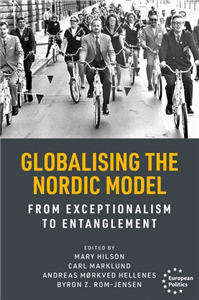
        Globalising the Nordic Model

        From exceptionalism to entanglement

        by Mary Hilson

        The five Nordic countries - Denmark, Finland, Iceland, Norway and Sweden - frequently attract attention as examples of a 'Nordic model'. The meanings of the term vary, but especially since the global financial crisis of 2008-9 the Nordic countries have often been portrayed positively, as examples of economic dynamism, innovation and social equality. Studies of these images of the Nordic countries and Nordic region and their international circulations are now a well-established field of research. This volume explores how the Nordic model has been shaped by global entanglements, in exchange not only with Western Europe and North America, but also with the Global South. Drawing on selected case studies, the volume offers new perspectives on the meanings of the Nordic model and Nordic exceptionalism in a global context during the half century since c. 1970.

      • Trusted Partner
        European history
        October 2009

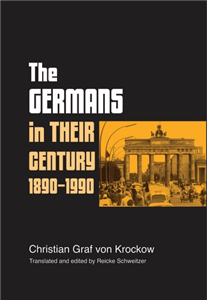
        The Germans in their century

        1890–1990

        by Christian Graf Krockow

        Why did Bismarck's new German State Degenerate into Hitler's Third Reich? What happened to Europes leading industrial nation - cultural heirs to Kant, Goethe, Durer and Bach? How did East and West Germany diverge after 1945? In this unique and controversial study the author - Prussian aristocrat, writer, scholar, historian and patriot - fearlessly explores German social mores, political structures and national psyche over several centuries. V. Krockow draws some sobering and novel conclusions about the unfolding drama in general and the Holocaust in particular. First published in 1990 to coincide with the fall of the Berlin Wall, the German edition sold widely. This first translation now makes it available to English-speaking readers worldwide.

      • Trusted Partner
        August 2021

        Berlin

        Psychogramme of a City

        by Karl Scheffler, Florian Illies, Michael Hofmann, Florian Illies

        “Berlin is damned forever to become, and never to be.” Scheffler could not have anticipated that his dictum would prove prophetic. No other author has captured the city’s fascinating and unique character as perfectly. From the golden twenties to the anarchic nineties and its status of world capital of hipsterdom at the beginning of the new millennium – the formerly divided city has become the symbol of a new urbanity, blessed with the privilege of never having to be, but forever to become. Unlike London or Paris, the metropolis on the Spree lacked an organic principle of development. Berlin was nothing more than a colonial city, its sole purpose to conquer the East, its inhabitants a hodgepodge of materialistic individualists. No art or culture with which it might compete with the great cities of the world. Nothing but provincialism and culinary aberrations far and wide. Berlin: “City of preserves, tinned vegetables and all-purpose dipping sauce.”

      • Trusted Partner
        October 2009

        Berlin 1989 / 2009

        by Cees Nooteboom, Simone Sassen, Helga Beuningen, Rosemarie Still

        Als Außenstehender und anteilnehmender Augenzeuge zugleich erlebt Cees Nooteboom das Jahr 1989 in Berlin. Ende der Neunziger besucht der Autor erneut die nun nicht mehr geteilte Stadt. Und zehn Jahre später inspiziert er die Berliner Verhältnisse ein weiteres Mal. Der Mauerfall, die neunziger Jahre, das heutige Berlin: Der große niederländische Erzähler und Essayist Cees Nooteboom stellt seinen zum Klassiker gewordenen Berliner Notizen und der Rückkehr nach Berlin neue, bisher unveröffentlichte Texte zur Seite. Zwanzig Jahre bewegter Geschichte spiegeln sich in dieser Zusammenstellung von Essays, die von den Deutschen und ihrer Hauptstadt erzählen, klug, unprätentiös und sinnlich.

      • Trusted Partner
        April 2019

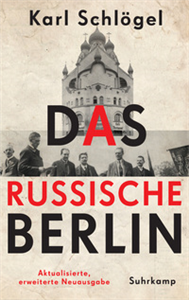
        Das russische Berlin

        by Karl Schlögel

        Fast eine halbe Million russischer Flüchtlinge nahm Berlin Anfang der 1920er Jahre auf. Die Stadt war in der Zwischenkriegszeit nicht nur die »Stiefmutter der russischen Städte«, sondern auch heimliches Zentrum der Weltrevolution. Hier trafen die totalitären Bewegungen aufeinander, die das Schicksal Europas im »Zeitalter der Extreme« besiegelten. Karl Schlögel spürt die große Geschichte in der kleinen auf, er folgt den dramatis personae und rekonstruiert die Netzwerke, in denen sie sich bewegen. Die Welt der Bahnhöfe und die der Salons im Tiergartenviertel, die Dichter des Silbernen Zeitalters und die Agitkünstler der Sowjetmacht, der Empfang in der sowjetischen Botschaft und Nabokovs Beobachtungen zum Aufstieg der Nazis, die Stadtwahrnehmung der Taxifahrer und der Skandal um die »Zarentochter Anastasia«. In seiner Darstellung spielen Kursbücher und Adressverzeichnisse eine Rolle, Cafés und Cabarets, das Zeremoniell der Diplomatie und die Praktiken des Untergrundkampfes, die polyglotte Welt der Komintern-Funktionäre und die Karten der Geopolitiker. Das Russische Berlin ist kein romantischer Ort, sondern Schauplatz einer Epoche, die Nachkrieg und Vorkrieg in einem war. Seit der Entfremdung zwischen Russland und der Europäischen Union ist auch das hochvernetzte »Russkij Berlin« der Gegenwart politisch gespalten. Der doppelte Blick auf das einstige und heutige russische Berlin erweist sich als unerwartet aktuell und produktiv.

      • Trusted Partner
        July 2016

        Israelis in Berlin

        by Fania Oz-Salzberger, Ruth Achlama

        Die israelische Historikerin Fania Oz-Salzberger hat ein Jahr in Berlin gelebt und sich mit ihren gemischten Gefühlen wie mit denen anderer Israelis zu diesem gleichermaßen realen und imaginären Ort auseinandergesetzt. Wie Erich Kästner Emil, einer der Helden ihrer Kindheitsbücher, entdeckt sie bei ihrem Aufenthalt vieles, was ihr die eigene Welt neu erschließt. Das Berlin der Kaiserzeit und der Weimarer Republik wie die Hauptstadt des »Dritten Reichs« haben ihre Spuren in der israelischen Welt hinterlassen. Lebendig und erhellend erzählt Fania Oz-Salzberger von Begegnungen in und mit Berlin – viele individuelle Geschichten, die einen hineinführen in die vielfältig verflochtene und gebrochene jüdische, israelische und deutsche Geschichte – ein Erbe, das Israelis und Deutsche heute verbindet und trennt.

      • Trusted Partner
        May 2021

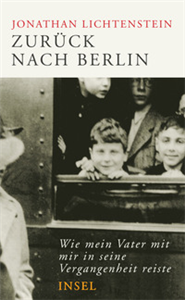
        Zurück nach Berlin

        Wie mein Vater mit mir in seine Vergangenheit reiste

        by Jonathan Lichtenstein

        1939 entkommt der zwölfjährige Hans mit einem der »Kindertransporte« aus Nazi-Deutschland. Als einer der wenigen Überlebenden seiner Familie ist er fortan auf sich alleine gestellt und lässt seine deutsch-jüdische Herkunft hinter sich. Als Erwachsener baut er sich im ländlichen Wales eine neue Existenz auf und gründet eine Familie. Über seine Vergangenheit spricht er nicht, und für seine Kinder ist es schwer, ihren verschlossenen, oft unnachgiebigen Vater und sein mitunter eigensinniges Verhalten zu verstehen. Erst in hohem Alter stellt Hans sich seiner Vergangenheit und reist mit seinem Sohn Jonathan zurück nach Berlin, zu seinen Wurzeln, entlang der ehemaligen Route des Kindertransports. Jonathan Lichtenstein erzählt auf drei Zeitebenen vom Leben mit einem Vater, das geprägt war von den Schatten der Vergangenheit – und davon, wie er ihm endlich näherkam. Ein Road Trip mitten hinein ins Trauma des zwanzigsten Jahrhunderts – bewegend und versöhnlich.

      • Trusted Partner
        May 2021

        Zurück nach Berlin

        Wie mein Vater mit mir in seine Vergangenheit reiste

        by Jonathan Lichtenstein, Thomas Brovot

        1939 entkommt der zwölfjährige Hans mit einem der »Kindertransporte« aus Nazi-Deutschland. Als einer der wenigen Überlebenden seiner Familie ist er fortan auf sich alleine gestellt und lässt seine deutsch-jüdische Herkunft hinter sich. Als Erwachsener baut er sich im ländlichen Wales eine neue Existenz auf und gründet eine Familie. Über seine Vergangenheit spricht er nicht, und für seine Kinder ist es schwer, ihren verschlossenen, oft unnachgiebigen Vater und sein mitunter eigensinniges Verhalten zu verstehen. Erst in hohem Alter stellt Hans sich seiner Vergangenheit und reist mit seinem Sohn Jonathan zurück nach Berlin, zu seinen Wurzeln, entlang der ehemaligen Route des Kindertransports. Jonathan Lichtenstein erzählt auf drei Zeitebenen vom Leben mit einem Vater, das geprägt war von den Schatten der Vergangenheit – und davon, wie er ihm endlich näherkam. Ein Road Trip mitten hinein ins Trauma des zwanzigsten Jahrhunderts – bewegend und versöhnlich.

      • Trusted Partner
      • Trusted Partner
        Humanities & Social Sciences
        August 2023

        The bad German and the good Italian

        by Paul Barnaby, Filippo Focardi

      • Trusted Partner
      • Trusted Partner
        Humanities & Social Sciences
        February 2023

        Globalized urban precarity in Berlin and Abidjan

        Young men and the digital economy

        by Hannah Schilling

        Digital technologies promise efficiency and comfort, but the smoothness of platform services relies on the hidden social labour of those who keep the gig economy running. This book presents a comparative ethnography of young men making a living through digital technologies: selling mobile airtime in Abidjan, Côte d'Ivoire, and app-based delivery riders in Berlin, Germany. These case studies explore the significance of symbolic capital in urban youth's social existence and organisation of livelihood in the digital economy, and the technological mechanisms producing a new form of urban precarity. Globalized urban precarity in Berlin and Abidjan puts forward an original comparative approach to develop a global urban sociology for the digital era. It provides an innovative analytical toolbox that decentres discussions of precarity from the standard of a normal employment contract. With its focus on symbolic capital, the ethnography shows the consequences of the proliferating gig economy for status struggles among urban youth, and carefully embeds the densification of software and services into the socio-material relations on which these new urban infrastructures are built.

      • Trusted Partner
        January 2012

        Rappen lernen

        by Mark Greif

        'Unsere Sprache kostet nichts. Sie gehört uns allen. Man kann sie nicht privatisieren.' 1989 beging Mark Greif einen großen Fehler: Er entschied sich für Indie-Rock – und gegen Hip-Hop. Als er 20 Jahre später versucht, selbst Rappen zu lernen, um dieses Versäumnis wiedergutzumachen, stößt er auf schier unüberwindbare Hindernisse: die anspruchsvolle Atemtechnik, das Wort 'Nigger', die Affinität zu Materialismus und Gewalt. In 'Rappen lernen' setzt Greif nicht nur dem Hip- Hop ein Denkmal, sondern er entwirft zugleich eine Kulturgeschichte von Schwarz und Weiß und erzählt davon, was es bedeutet, in neoliberalen Zeiten erwachsen zu werden.

      • Trusted Partner
        May 2015

        Kollaboration

        by Mark Terkessidis

        Die Proteste der letzten Zeit haben die Unzufriedenheit der Bürger offenbart: Politiker scheinen weit weg vom Alltag und mit Großprojekten wie Bahnhöfen oder Flughäfen überfordert. Im Gegensatz dazu sind die Menschen eigensinnig wie nie. Nach Jahren der neoliberalen Predigten sind sie in Eigenverantwortung geübt: Gemeinsam erschaffen sie die Wikipedia, renovieren Klassenzimmer oder gründen gleich selbst Schulen. So werden sie im positiven Sinne zu Kollaborateuren. Anknüpfend an seine Überlegungen aus »Interkultur« entwirft Mark Terkessidis eine Philosophie der Kollaboration, die beim wütenden und suchenden Individuum ansetzt. Eine Gesellschaft der Vielfalt, so Terkessidis, kann nur funktionieren, wenn viele Stimmen gehört werden und unterschiedliche Menschen zusammenarbeiten.

      Subscribe to our

      newsletter