Your Search Results

      • Guangdong Economy Publishing House Co., Ltd.

        Guangdong Economics Publishing House Co., Ltd. is a leading professional publisher in China who aims at deliver engaging and adaptive solutions to readers in the fields of business management, investment, marketing & advertising, personal finance,military and scholarly monography in print and electrically.       Located in Guangzhou, the capital city of Guangdong Province, the publishing house takes editing, publishing and distributing books, magazines, digital publication as well as copyright trading as its major business.Founded in 1995, we now publish over 500 books annually and provide our diversified products to readers all over China as well as overseas customers in Asia and Europe,.  We joined the Guangdong Publishing Group in 1999 and now as a member of the Southern Publishing and Media Company Ltd., which went to the market in 2016, we look to a brighter future and greater marker globally.

        View Rights Portal
      • Trusted Partner
      • Trusted Partner
        May 2022

        The Price of Freedom

        What Europe must do now. A wake-up call

        by Edzard Reuter

        Edzard Reuter is a European by conviction, and a fighter for an economy that is also geared to the well-being of employees, the environment and society. In his book, he looks back at the 90 years of his life as a politically and socially committed person. The expert in and observer of world politics and the world economy shows how the world has changed and what role the Middle East, Russia, the USA and China play in this. For Reuter, the path of the European Union is quite clear: it has to become an independent state structure. The war in Ukraine testifies to the urgency of a paradigm shift in Europe.

      • Trusted Partner
        Business, Economics & Law
        June 2025

        Foundations of social ecological economics

        The fight for revolutionary change in economic thought

        by Clive L Spash

        This book explores radical dissent from orthodox mainstream economics, and sets out a theoretically grounded vision for the emerging paradigm of social ecological economics. At the heart of this paradigmatic shift lies an acknowledgement of the inextricable embeddedness of economies in biophysical reality and social structure. The struggle for this transformative vision unfolds through a critical examination of mainstream environmental thought, followed by a nuanced evaluation of contributions from Marxists, socialists, critical institutionalists, feminists and Post-Keynesians grappling with the urgent environmental crisis. Synthesising insights from these diverse and heterodox schools, the book navigates the philosophical underpinnings of science, embracing a critical realist approach that challenges not only mainstream economic thought but also eclectic pluralism, relativism and strong constructionism. The question of what constitutes revolutionary science is explored in light of works by Kuhn, Schumpeter and Neurath, emphasising the pivotal role of values and ideology in works from Marx to Gramsci. Building on these radical and philosophical foundations, the book articulates a preanalytic vision of social ecological economics, dismantling entrenched notions of growth and efficiency in favour of a framework centered on social provisioning and needs embedded in ethics. In a thought-provoking conclusion, the book applies its analytical lens to the multiple crises of modernity within industrialised capital-accumulating economies. An agenda for social ecological transformation toward diverse alternative economies emerges, providing a compelling call to action in the face of contemporary challenges.

      • Trusted Partner
      • Trusted Partner
        Business, Economics & Law
        January 2026

        Undermining resistance

        by Lian Sinclair

      • Trusted Partner
        Humanities & Social Sciences
        November 2004

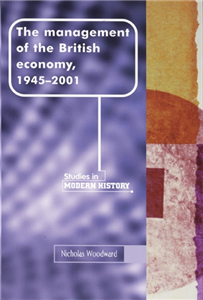
        The management of the British economy, 1945–2001

        by Nicholas Woodward, Martin Hargreaves

        Since 1945 British governments have played an active role in managing the economy in the interests of securing high employment, economic growth and low inflation with their approach evolving in response to changing economic circumstances, intellectual shifts and past policy failures. This book provides an overview of economic management, particularly financial management, and addresses how it has changed and why it has not always been successful. It examines the actual policies that were introduced, the problems that various governments faced in implementing them and how the approach to policy-making changed. It also examines the main phases of economic policy-making and the conduct of policy-making, as there is a widespread consensus that until recently short-run economic management could have been more successful than it was. Clearly and authoritatively written, it will be of particular benefit to students of economics, politics and contemporary history, although it will appeal to anyone with an interest in economic affairs. ;

      • Trusted Partner
        Humanities & Social Sciences
        June 2026

        The political ecology of colonial capitalism

        by Bikrum Gill

      • Trusted Partner
        Humanities & Social Sciences
        May 2026

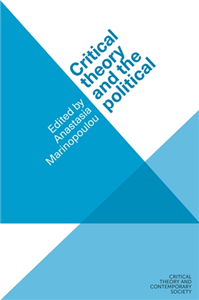
        Critical theory and the political

        by Anastasia Marinopoulou

        The book addresses what is political in critical theory and which aspects, arguments or notions of critical theory maintain political significance for the 20th and the 21st centuries. The collection of essays comprises itself of a series of clear and critical perspectives that analyze the extent to which critical theory relates political argument to modern societies and, thereby, exerts a critique of the multiple social and political phenomena of late modernity. The contributors focus on a multiplicity of universal phenomena such as globalization, multiple crises, late capitalism and the social role of the sciences, and posit some novel criticism of the contemporary social sphere, as it is situated within the wider system of global capitalism. They also present a plurivalent critique that links arguments in Marxism and Freud to all three generations of critical theory.

      • Trusted Partner
        Humanities & Social Sciences
        April 2020

        The British political elite and Europe, 1959-1984

        A higher loyalty

        by Bob Nicholls

        This book offers an original interpretation of Britain's relationship with Europe over a 25 year period: 1959-84 and advances the argument that the current problems over EU membership resulted from much earlier political machinations. This evidence based account of the seminal period analyses the applications for EEC membership, the 1975 referendum, and the role of the press. Was the British public misled over the true aims of the European project? How significant was the role of the press in changing public opinion from anti, to pro Common Market membership? Why, after over 40 years since Britain became a member of the European community, does the issue continue to deeply divide not only the political elite, but also the British public? These, and other pertinent questions are answered in this timely book on a subject that remains topical and highly controversial.

      • Trusted Partner
        Literature & Literary Studies
        January 2013

        The towns of Italy in the later Middle Ages

        by Trevor Dean

        The towns of Italy in the later middle ages presents over one hundred fascinating documents, carefully selected and coordinated from the richest, most innovative and most documented society of the European Middle Ages. No other English language sourcebook has the same geographical or chronological range. This collection is carefully structured around the crisis of the fourteenth century and arranged in contrasting groups of texts. By connecting documents in translation to recent scholarship and debates, it addresses five key areas of medieval urban history: the physical environment, civic religion, economy, society and politics. Offers students well-translated and effectively contextualised documents along with some guidance to the secondary work of Italian scholars which is largely inaccessible to undergraduate students.

      • Trusted Partner
        Humanities & Social Sciences
        November 2011

        Sovereign states or political communities?

        Civil society and contemporary politics

        by Darrow Schecter

        Explores the ideas, meaning and history of civil society, its role in the 1989 revolutions, its role in new social movements and its relationship with the state and the economy.. Distinguishes between security and freedom and illustrates how the latter is a political issue.. Draws on the writings of a wide range of political thinkers including: Kant Hegel Feuerbach Marx Weber Schmitt Adorno Arendt. Offers sophisticated and illuminating analysis and seeks to redefine politics in new ways.. ;

      • Trusted Partner
        Business, Economics & Law
        June 2025

        Clickbait capitalism

        by Amin Samman, Earl Gammon

      • Trusted Partner
        Humanities & Social Sciences
        October 2021

        Ireland and the European Union

        Economic, political and social crises

        by Michael Holmes, Kathryn Simpson, Dimitris Papadimitriou, Kathryn Simpson, Paul Tobin

        This book examines how Ireland's relationship with the EU was affected by a succession of crises in both the Republic of Ireland and Northern Ireland. The financial crisis, the Brexit crisis and the migration crisis were not of equal significance on the island of Ireland. The financial crisis was a huge issue for the Republic but not Northern Ireland, Brexit had a major impact in both polities, the migration and populism issues were less controversial, while foreign policy challenges had a minimal impact. The book provides a summary of the main features of each of the crises to be considered, from both the EU and the Irish perspective. Ireland and the European Union is the first volume of its kind to provide a comprehensive analysis on British-Irish relations in the context of Brexit. It assesses the Withdrawal Agreement and Protocol on Ireland/Northern Ireland, the devolution settlement and the 1998 Agreement, as well as the European dimension to Northern Ireland's peace process. The contributors explore a number of policy areas that are central to the understanding of each of the crises and the impact of each for Ireland. Chapters examine issues such as security, migration and taxation as well as protest politics, political parties, the media, public opinion and the economic impact of each of these crises on Ireland's relationship with the EU.

      • Trusted Partner
        Humanities & Social Sciences
        April 2026

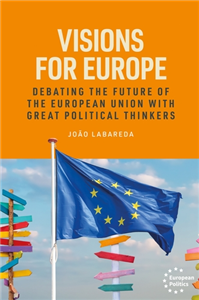
        Visions for Europe

        Debating the future of the European Union with great political thinkers

        by João Labareda

        This book offers a fresh look at some of the most challenging dilemmas of European integration and proposes innovative solutions to them by building on perspectives and insights from twelve classical authors in the history of political thought. The book simultaneously offers an original introduction to critical debates in EU studies and makes key political thinkers more accessible to contemporary readers by presenting present-day policy applications of their doctrines. While each chapter discusses a specific challenge for the EU, five key themes appear recurrently throughout the book: (i) the prospects for peace in Europe; (ii) the conditions for an inclusive EU democracy; (iii) socioeconomic inequalities in the EU; (iv) strategies to promote political change in Europe; and (v) the requisites for a fully-fledged EU citizenship. The authors discussed are Plato, Aristotle, Augustine, Machiavelli, Hobbes, Rousseau, Kant, Wollstonecraft, Marx, Arendt, Rawls and hooks.

      • Trusted Partner
        Humanities & Social Sciences
        July 2026

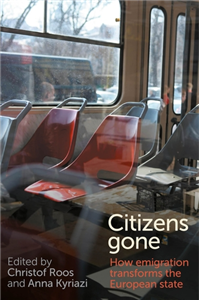
        Citizens gone

        How emigration transforms the European state

        by Christof Roos, Anna Kyriazi

        Emigration of scale challenges states at the European periphery at their core. The book documents these struggles along their effects for politics and policy within their economic and welfare dimensions. The politics of emigration describe changing voter attitudes and behaviour pointing towards more support for nationalist and right-wing parties. The policies of emigration show state and local level efforts for the return of emigrant citizens. The welfare and economic dimensions explore the context for emigration and its effects for growth models and systems of health and care within the European single market. The book observes two types of state transformations: the re-emergent nation-state that re-discovers its core resource, the citizenry, as well as states that functionally and socially adapt to population loss.

      • Trusted Partner
        Business, Economics & Law
        June 2021

        Rigged

        Understanding 'the economy' in Brexit Britain

        by Anna Killick

        In Brexit Britain, talk of 'the economy' dominates; however, we know surprisingly little about how people understand this term. In the aftermath of the 2008 crash and decades of neoliberalism, how are understandings of 'the economy' changing, and is it the case that Remain supporters care more about 'the economy' than Leave supporters? This timely and insightful book argues that people with similar experiences of the economy share an understanding of the term, regardless of whether they supported Leave or Remain. Through extensive ethnographic research in a city on the South coast of England, Anna Killick explores what people from a range of backgrounds understand about key aspects of 'the economy', including employment, austerity, trade and the economic effects of migration.

      • Trusted Partner
        Business, Economics & Law
        July 2010

        South African economy and policy, 1990-2000

        An economy in transition

        by Stuart Jones, Robert W. Vivian

        The 1990s were the decade of transition from white rule to black rule in South Africa. In the political sphere the transition was dramatic. In the economic sphere less so, yet the effects were and are likely to be far more far reaching. It is the economic impacts which are likely to determine the future of the country. With the exception of the diamond-rich Botswana, all the countries of Africa which underwent the transition from white to black rule experienced economic decline. Is this to be the fate of South Africa? How was and is South Africa's historical role as the world's leading gold producer affected by the transition? Why did some economic policies succeed and others fail? This book, by leading authorities in the field, attempts to answer these and other related questions. ;

      • Trusted Partner

      Subscribe to our

      newsletter