Your Search Results

      • Hamad Bin Khalifa University Press

        Hamad Bin Khalifa University Press (HBKU Press) is a world-class publishing house founded on international best practices, excellence and innovation. It strives to be a cornerstone of Qatar’s knowledge-based economy by providing a unique local and international platform for literature, discovery and learning. Headquartered in Doha, Qatar, HBKU Press publishes a wide range of texts including fiction and non-fiction titles, children’s books, collections, and annual reports. In addition, HBKU Press publishes peer-reviewed, scholarly research in the natural and social sciences through academic books, open-access reference materials and conference proceedings. HBKU Press consistently follows international best practices in its publishing procedures, ethics and management, ensuring a steadfast quality of production and a dedication to excellence.

        View Rights Portal
      • Trusted Partner
        March 2024

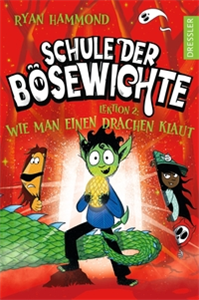
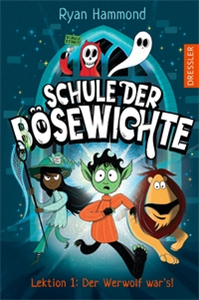
        Schule der Bösewichte 2. Lektion 2: Wie man einen Drachen klaut

        by Ryan Hammond, Ryan Hammond, Maria Zettner

        Böse zu sein, war noch nie so lustig – die neuen Abenteuer von Werwolf Bram und seinen Freund*innen Es ist der Beginn des Winterhalbjahrs und es gibt einen neuen Lehrer an der Schule der Bösewichte – den berüchtigten Drachenreiter Felix Frostbeule. Die Klasse Z hat großen Respekt vor ihm und seinen Lektionen über giftige Bestien und Fabelwesen. Doch Werwolf Bram ist misstrauisch. Ein Glück, denn bald decken Bram und seine Freund*innen Frostbeules bösen Plan auf, alle Drachen aus dem Wald des Wahnsinns zu stehlen und die Schule der Bösewichte schutzlos zurückzulassen. Hat die Bande genug gelernt, um ihren fiesen Lehrer auszutricksen oder wird Felix Frostbeules Überfall in die Schurkengeschichte eingehen? Die zweite Lektion in der Schule der Bösewichte: Wie man einen Drachen klaut. In der Schule der Bösewichte wartet ein neues, herausforderndes Abenteuer auf Werwolf Bram und seine Freunde. Böse zu sein, war noch nie so gut! Ein Kinderbuch für kleine Fantasy-Fans: urkomischer Gruselspaß mit Hexen, Werwölfen und schrägen Fabelwesen.   Spannung beim Lesen, Spaß beim Blättern: liebevoll gestaltet, mit vielen witzigen Illustrationen. Lustiger Kinderroman in leichter Sprache für Lesemuffel ab 8 Jahren.  Wer bereits Ryan Hammonds ersten Teil der lustigen Schule der Bösewichte (Der Werwolf war’s!) verschlungen hat, für den ist der zweite Teil der Fantasy-Kinderbuchreihe ein absolutes Lese-Muss!

      • Trusted Partner
      • Trusted Partner
        Teaching, Language & Reference
        July 2018

        Framing post-Cold War conflicts

        by Philip Hammond

      • Trusted Partner
        Humanities & Social Sciences
        August 2021

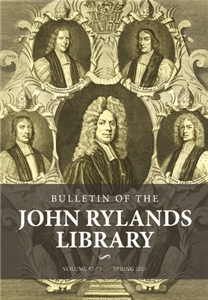
        Bulletin of the John Rylands Library 97/1

        Religion in Britain, 1660–1900: Essays in Honour of Peter B. Nockles

        by William Gibson, Geordan Hammond

        This special issue of the Bulletin of the John Rylands Library is dedicated to Peter Nockles. An expert on the Oxford Movement and the religious history of the eighteenth and nineteenth centuries, Nockles was employed at the John Rylands Library from 1979 to 2016. During this time he extended his scholarly generosity and friendship to countless researchers. The issue features articles on a range of topics connected to Peter's scholarship and networks, including the Church of England (particularly High Churchmanship and the Oxford Movement), Catholicism, Methodism and Church-State conflict relating to the Church of Ireland.

      • Trusted Partner
        March 2024

        Schule der Bösewichte 2. Lektion 2: Wie man einen Drachen klaut

        by Ryan Hammond, Simon Jäger, Ulrich Thiele, STIL Studio, Nele Wehrmann, Ryan Hammond

        Es ist der Beginn des Winterhalbjahrs und es gibt einen neuen Lehrer an der Schule der Bösewichte – den berüchtigten Drachenreiter Felix Frostbite. Die Klasse Z hat ziemlichen Respekt vor ihm und seinen Lektionen über giftige Bestien und Fabelwesen, einzig Werwolf Bram ist misstrauisch. Bald decken Bram und seine Freunde Felix Frostbites bösen Plan auf, alle Drachen aus den Wicked Woods zu stehlen und die Schule der Bösewichte schutzlos zurückzulassen. Hat die Bande genug gelernt, um ihren fiesen Lehrer auszutricksen, oder wird Felix Frostbites Überfall in die Schurkengeschichte eingehen? Schurkig schön gelesen von Simon Jäger.

      • Trusted Partner
      • Trusted Partner
      • Trusted Partner
      • Trusted Partner
        October 1995

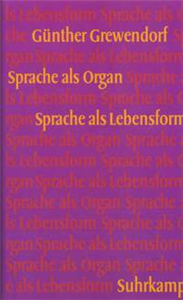
        Sprache als Organ. Sprache als Lebensform

        by Günther Grewendorf, Noam Chomsky

        Mit diesem Buch tritt ein Autor, der mit der sprachanalytischen Philosophie ebenso vertraut ist wie mit den modernen Entwicklungen der theoretischen Sprachwissenschaft, der gängigen Meinung entgegen und versucht zu zeigen, daß die Wittgensteinsche Auffassung von der Sprache, der zufolge die Sprache eine Form sozialen Lebens ist, nicht unverträglich ist mit einer kognitiven Sprachtheorie, der zufolge die Sprache eine Form biologischen Lebens ist und in Analogie zu einem Organ gesehen werden kann. Bei dem Versuch, die scheinbar konträren Sprachauffassungen Chomskys und Wittgensteins miteinander zu versöhnen, werden der Erklärungsanspruch Chomskys und der Beschreibungsanspruch Wittgensteins auf komplementäre Problemstellungen und unterschiedliche wissenschaftliche Verfahren relativiert.

      • Trusted Partner
      • Trusted Partner
      • Trusted Partner
        January 1973

        Der Gerichtsvollzieher als selbständiges Organ der Zwangsvollstreckung.

        Eine organisations- und aufsichtsrechtliche Studie.

        by Dütz, Wilhelm

      • Trusted Partner
      • Trusted Partner
      • Trusted Partner
      • Trusted Partner
        Humanities & Social Sciences
        April 2026

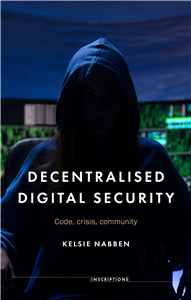
        Decentralised digital security

        Code, crisis, community

        by Kelsie Nabben

        Decentralised digital security offers a compelling exploration of how digital security is practiced, organised and contested within blockchain communities. Drawing on immersive digital ethnography, the book examines how decentralised technologies - rooted in cryptography and designed to operate without central control - depend on not just technical systems but social infrastructures for incentive alignment and coordination. Through first-hand case studies, it reveals the white hat hackers, social infrastructures and ecosystem-wide efforts that make blockchain security possible. At a time of growing concern over digital security, the book provides a timely investigation into how security is enacted across decentralised networks, and what these practices reveal about digital security more broadly.

      • Trusted Partner
        Medical & healthcare law
        August 2016

        Medicine, patients and the law

        Sixth edition

        by Margaret Brazier. Series edited by Simona Giordano

        Embryo research, cloning, assisted conception, neonatal care, saviour siblings, organ transplants, drug trials - modern developments have transformed the field of medicine almost beyond recognition in recent decades and the law struggles to keep up. In this highly acclaimed and very accessible book, now in its sixth edition, Margaret Brazier and Emma Cave provide an incisive survey of the legal situation in areas as diverse as fertility treatment, patient consent, assisted dying, malpractice and medical privacy. The book has been fully revised and updated to cover the latest cases, from assisted dying to informed consent; legislative reform of the NHS, professional regulation and redress; European regulations on data protection and clinical trials; and legislation and policy reforms on organ donation, assisted conception and mental capacity. Essential reading for healthcare professionals, lecturers, medical and law students, this book is of relevance to all whose perusal of the daily news causes wonder, hope and consternation at the advances and limitations of medicine, patients and the law.

      • Trusted Partner
        Business, Economics & Law
        October 2016

        Medicine, patients and the law

        Sixth edition

        by Margaret Brazier, Emma Cave, Rebecca Bennett, Simona Giordano

        Embryo research, cloning, assisted conception, neonatal care, saviour siblings, organ transplants, drug trials - modern developments have transformed the field of medicine almost beyond recognition in recent decades and the law struggles to keep up. In this highly acclaimed and very accessible book, now in its sixth edition, Margaret Brazier and Emma Cave provide an incisive survey of the legal situation in areas as diverse as fertility treatment, patient consent, assisted dying, malpractice and medical privacy. The book has been fully revised and updated to cover the latest cases, from assisted dying to informed consent; legislative reform of the NHS, professional regulation and redress; European regulations on data protection and clinical trials; and legislation and policy reforms on organ donation, assisted conception and mental capacity. Essential reading for healthcare professionals, lecturers, medical and law students, this book is of relevance to all whose perusal of the daily news causes wonder, hope and consternation at the advances and limitations of medicine, patients and the law.

      Subscribe to our

      newsletter