
Your Search Results
-

-

Afram Publications
Afram Publication is specialized in publishing materials for pre-school and basic education with special focus on development of local authorship especially in children’s books.
View Rights Portal
-
Promoted Content
-
Promoted Content
-
 Trusted Partner

 March 2009
Hero und Leander
by Musaios, Marion Giebel, Marion Giebel
Hero, von den Eltern zur Priesterin bestimmt, lebt allein in Sestos am nördlichen Ufer der Dardanellen. Im gegenüberliegenden Abydos stürzt sich auf der asiatischen Seite Leander allnächtlich in die Fluten, um, geleitet von der Öllampe, die Hero ins Fenster ihres Wohnturms stellt, zu ihr zu gelangen – bis eines Nachts im Sturm die Flamme verlischt. Die Sage von den zwei Königskindern, die zusammen nicht kommen können, weil das Wasser viel zu tief ist, hat schon Ovid gestaltet, ihre vollendete Fassung, auf die sich auch Bearbeiter wie Schiller und Grillparzer beziehen, findet sich aber in dem Versepos des Musaios, der um 500 nach Christus lebte. In der neuen, eleganten Prosaübertragung von Marion Giebel wird dieser anrührende Text, mit bildnerischen Darstellungen des Mythos aus verschiedenen Zeiten sowie einem die geschichtlichen Zusammenhänge erläuternden Nachwort versehen, wieder auf deutsch zugänglich gemacht.
-
Trusted Partner
-
Trusted Partner
-
Trusted Partner
 The ArtsJanuary 2026
David Simon's American City
by Mikkel Jensen
This book examines the television serials created by influential showrunner David Simon. The book argues that Simon's main theme is the state of the contemporary American city and that all of his serials (barring one about the Iraq War) explore different facets of the metropolis. Each series offers distinctly different visions of the American city, but taken together they represent a sustained and intricate exploration of urban problems in modern America. From deindustrialisation in The Wire and residential segregation in Show Me a Hero to post-Katrina New Orleans in Treme and the transformation of the urban core in The Deuce, David Simon's American city traces the urban through-line in Simon's body of work. Based on sustained analysis of these serials and their engagement with contemporary politics and culture, David Simon's American city offers a compelling examination of one of television's most arresting voices.
-
Trusted Partner
Humanities & Social SciencesMarch 2017
Unfit for heroes
Reconstruction and soldier settlement in the empire between the wars
by Kent Fedorowich
Research on soldier settlement has to be set within the wider history of emigration and immigration. This book examines two parallel but complementary themes: the settlement of British soldiers in the overseas or 'white' dominions, Australia, Canada, New Zealand and South Africa, between 1915 and 1930. One must place soldier settlement within the larger context of imperial migration prior to 1914 in order to elicit the changes in attitude and policy which occurred after the armistice. The book discusses the changes to Anglo-dominion relations that were consequent upon the incorporation of British ex-service personnel into several overseas soldier settlement programmes, and unravels the responses of the dominion governments to such programmes. For instance, Canadians and Australians complained about the number of ex-imperials who arrived physically unfit and unable to undertake employment of any kind. The First World War made the British government to commit itself to a free passage scheme for its ex-service personnel between 1914 and 1922. The efforts of men such as L. S. Amery who attempted to establish a landed imperial yeomanry overseas is described. Anglicisation was revived in South Africa after the second Anglo-Boer War, and politicisation of the country's soldier settlement was an integral part of the larger debate on British immigration to South Africa. The Australian experience of resettling ex-servicemen on the land after World War I came at a great social and financial cost, and New Zealand's disappointing results demonstrated the nation's vulnerability to outside economic factors.
-
Trusted Partner
 Humanities & Social SciencesMay 2016
Heroes and happy endings
by Jeffrey Richards, Christine Grandy
-
Trusted Partner
 Humanities & Social SciencesJune 2021
Making and remaking saints in nineteenth-century Britain
by Gareth Atkins
-
Trusted Partner
-
Trusted Partner
-
Trusted Partner
The ArtsMarch 2017
Images of the army
The military in British art, 1815-1914
by J. W. M. Hichberger
In an age when engraving and photography were making artistic images available to a much wider public, artists were able to influence public attitudes more powerfully than ever before. This book examines works of art on military themes in relation to ruling-class ideologies about the army, war and the empire. The first part of the book is devoted to a chronological survey of battle painting, integrated with a study of contemporary military and political history. The chapters link the debate over the status and importance of battle painting to contemporary debates over the role of the army and its function at home and abroad. The second part discusses the intersection of ideologies about the army and military art, but is concerned with an examination of genre representations of soldiers. Another important theme which runs through the book is the relation of English to French military art. During the first eighty years of the period under review France was the cynosure of military artists, the school against which British critics measured their own, and the place from which innovations were imported and modified. In every generation after Waterloo battle painters visited France and often trained there. The book shows that military art, or the 'absence' of it, was one of the ways in which nationalist commentators articulated Britain's moral superiority. The final theme which underlies much of the book is the shifts which took place in the perception of heroes and hero-worship.
-
Trusted Partner
 Literature & Literary StudiesNovember 2011
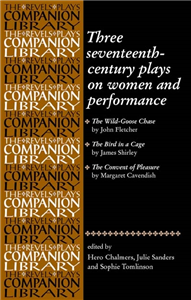
Three seventeenth-century plays on women and performance
by Paul Edmondson, Hero Chalmers, Julie Sanders, Sophie Tomlinson, Martin White
This is a ground-breaking edition of three seventeenth-century plays that all engage in diverse and exciting ways with questions of gender and performance. The collection, edited by three pioneering scholars of elite female culture and early modern drama, makes the texts of three much-discussed plays - John Fletcher's The Wild-Goose Chase, James Shirley's The Bird in a Cage and Margaret Cavendish's The Convent of Pleasure - available together in a full scholarly edition for the first time. The Wild Goose Chase (1621) and The Bird in a Cage (1633) were both performed in the commercial London theatres in the Jacobean and Caroline periods respectively. The Convent of Pleasure (1668) is a so-called 'closet' drama, designed primarily for reading but drawing on a tradition of aristocratic theatricals. In a wide-ranging co-authored introduction to the volume, the editors explore the concerns of these playtexts in relation to contemporary debates surrounding popular festivity and anti-theatricalism, as well as the agency of elite female culture in the Stuart period and the emergence of the professional female actor in the Restoration. The volume will be an invaluable teaching and research tool for students and scholars of early modern drama, women's writing and performance studies more generally, as well as providing a rich sourcebook for the reader interested in seventeenth-century theatrical culture. ;
-
Trusted Partner
-
Trusted Partner
-
Trusted Partner
-
Trusted Partner

 August 2026
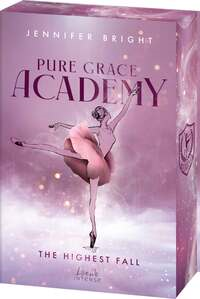
Pure Grace Academy (Band 2) - The Highest Fall
by Jennifer Bright
Wenn der Applaus verstummt Luna Delgados großer Traum ist zum Greifen nah: eine Position im Ballettensemble der Pariser Oper nach ihrem Abschluss an der Pure Grace Academy. Doch kurz vor den finalen Prüfungen gerät sie ins Fadenkreuz anonymer Drohungen gegen ihre Mutter, der Chefin des spanischen Geheimdienstes. Um in Paris bleiben zu dürfen, bekommt Luna einen Bodyguard zugewiesen. Zane ist kompromisslos, selbstbewusst, gefährlich attraktiv – und zu allem Überfluss auch noch der beste Freund ihres Bruders. Er stellt Regeln auf, die sie sofort brechen will. Während die Bedrohung näher rückt, verschwimmen die Grenzen zwischen Pflicht und Verlangen. Doch zwischen Luna und Zane steht nicht nur sein Auftrag, sondern Geheimnisse, die sie beide zerstören könnten. Zwischen Barcelona und Paris : In der Fortsetzung der Pure Grace Academy entfesselt SPIEGEL -Bestsellerautorin Jennifer Bright eine verbotene Liebe inmitten gefährlicher Intrigen . Ballett im Dark-Academia-Stil trifft auf Haters To Lovers und eine mitreißende Bodyguard Romance , die knistert wie ein Lauffeuer. Ein eleganter Tanz zwischen Gefahr und Intrigen : Dynamische Action trifft auf die formvollendete Welt des Balletts Geheimnisse aus der Vergangenheit , die eine verbotene Liebe auf die Probe stellen Haters to Lovers mit heißem Bodyguard , Brother’s Best Friend und Dark Academia Vibes Immersiver Schreibstil mit bildhafter Sprache und leidenschaftlichem Spice ! Mit edlem Farbschnitt und exklusiver Charakterpostkarte in der Erstauflage - Nur solange der Vorrat reicht!
-
Trusted Partner
-
Trusted Partner

 November 1999
Die letzte Nacht des Jahrtausends
Neue Stories aus England
by Herausgegeben von Champion, Sarah
-
Trusted Partner

 Children's & YA
Really Great, Heros! (2). What on Earth are we Doing Here?
by Rüdiger Bertram/ Heribert Schulmeyer
Juli can’t wait for the holidays. His cousin Jenny and he can once more go to her uncle’s Superhero Hotel. Maybe the next superhero adventure will be awaiting them there? Indeed it is: the evil Snakeman has created an army of mutated giant rabbits, whose underground tunnels threaten one city after another with complete collapse. And as the real superheroes are still lazing around at the swimming pool, and Bruce suddenly has to go and defend the world against an alien invasion, it’s once more left to Juli and Jenny to prevent this disaster! Armed with nothing more than a cheap pair of X-ray laser glasses with which they can see through walls, doors and even people’s clothes (villains in underpants – not a pretty sight!). And while Juli is still asking “What on earth are we doing here?” he and Jenny find themselves in the middle of a crazy adventure that takes them all round the world – across the desert, through London, and on to Paris! Can Juli and Jenny stop the evil villain and his giant rabbits in time?



