
Your Search Results
-

-

Aelurus Publishing / Impress Books
An independent publishing house with a small but passionate team, newly focused on the voices of the marginalised.
View Rights Portal
-
Promoted Content

 Humanities & Social SciencesMarch 2017
Imperial cities
Landscape, display and identity
by Felix Driver, David Gilbert
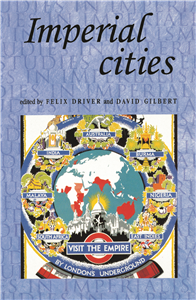
Imperial cities explores the influence of imperialism in the landscapes of modern European cities including London, Paris, Rome, Vienna, Marseilles, Glasgow and Seville. Examines large-scale architectural schemes and monuments, including the Queen Victoria Memorial in London and the Vittoriano in Rome. Focuses on imperial display throughout the city, from spectacular exhibitions and ceremonies, to more private displays of empire in suburban gardens. Cconsiders the changing cultural and political identities in the imperial city, looking particularly at nationalism, masculinity and anti-imperialism.
-
Promoted Content
 Colonialism & imperialismJuly 2003
Imperial cities
Landscape, display and identity
by Edited by Felix Driver and David Gilbert
Imperial cities explores the influence of imperialism in the landscapes of modern European cities including London, Paris, Rome, Vienna, Marseilles, Glasgow and Seville. Examines large-scale architectural schemes and monuments, including the Queen Victoria Memorial in London and the Vittoriano in Rome. Focuses on imperial display throughout the city, from spectacular exhibitions and ceremonies, to more private displays of empire in suburban gardens. Cconsiders the changing cultural and political identities in the imperial city, looking particularly at nationalism, masculinity and anti-imperialism.
-
 Trusted Partner
 Teaching, Language & ReferenceFebruary 2020
A writer's guide to Ancient Rome
by Carey Fleiner, Jerome de Groot
-
Trusted Partner
 International lawSeptember 2009
War crimes and crimes against humanity in the Rome Statute of the International Criminal Court
by Christine Byron
This book provides a critical analysis of the definitions of war crimes and crimes against humanity as construed in the Rome Statute of the International Criminal Court. Each crime is discussed from its origins in treaty or customary international law, through developments as a result of the jurisprudence of modern ad hoc or internationalised tribunals, to modifications introduced by the Rome Statute and the Elements of Crimes. The influence of human rights law upon the definition of crimes is discussed, as is the possible impact of State reservations to the underlying treaties which form the basis for the conduct covered by the offences in the Rome Statute. Examples are also given from recent conflicts to aid a 'real life' discussion of the type of conduct over which the International Criminal Court may take jurisdiction. This will be relevant to postgraduates, academics and professionals with an interest in the International Criminal Court and the normative basis for the crimes over which the Court may take jurisdiction.
-
Trusted Partner
 Humanities & Social SciencesJuly 2023
The imperial Commonwealth
Australia and the project of empire, 1867-1914
by Wm. Matthew Kennedy
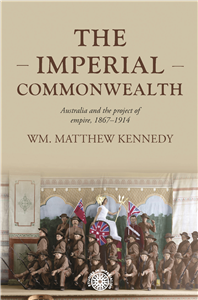
From the late 1800s to the early 1900s, Australian settler colonists mobilised their unique settler experiences to develop their own vision of what 'empire' was and could be. Reinterpreting their histories and attempting to divine their futures with a much heavier concentration on racialized visions of humanity, white Australian settlers came to believe that their whiteness as well as their Britishness qualified them for an equal voice in the running of Britain's imperial project. Through asserting their case, many soon claimed that, as newly minted citizens of a progressive and exemplary Australian Commonwealth, white settlers such as themselves were actually better suited to the modern task of empire. Such a settler political cosmology with empire at its center ultimately led Australians to claim an empire of their own in the Pacific Islands, complete with its own, unique imperial governmentality.
-
Trusted Partner
 Humanities & Social SciencesFebruary 2017
Cultures and caricatures of British imperial aviation
Passengers, pilots, publicity
by Gordon Pirie, Andrew Thompson, John M. MacKenzie
The new activity of trans-continental civil flying in the 1930s is a useful vantage point for viewing the extension of British imperial attitudes and practices. Cultures and caricatures of British imperial aviation examines the experiences of those (mostly men) who flew solo or with a companion (racing or for leisure), who were airline passengers (doing colonial administration, business or research), or who flew as civilian air and ground crews. For airborne elites, flying was a modern and often enviable way of managing, using and experiencing empire. On the ground, aviation was a device for asserting old empire: adventure and modernity were accompanied by supremacism. At the time, however, British civil imperial flying was presented romantically in books, magazines and exhibitions. Eighty years on, imperial flying is still remembered, reproduced and re-enacted in caricature.
-
Trusted Partner
 Humanities & Social SciencesMarch 2017
The harem, slavery and British imperial culture
Anglo-Muslim relations in the late nineteenth century
by Diane Robinson-Dunn
This book focuses on British efforts to suppress the traffic in female slaves destined for Egyptian harems during the late-nineteenth century. It considers this campaign in relation to gender debates in England, and examines the ways in which the assumptions and dominant imperialist discourses of these abolitionists were challenged by the newly-established Muslim communities in England, as well as by English people who converted to or were sympathetic with Islam. While previous scholars have treated antislavery activity in Egypt first and foremost as an extension of earlier efforts to abolish plantation slavery in the New World, this book considers it in terms of encounters with Islam during a period which it argues marked a new departure in Anglo-Muslim relations. This approach illuminates the role of Islam in the creation of English national identities within the global cultural system of the British Empire. This book would appeal to those with an interest in British imperial history; Islam; gender, feminism, and women's studies; slavery and race; the formation of national identities; global processes; Orientalism; and Middle Eastern studies.
-
Trusted Partner
-
Trusted Partner
 The ArtsNovember 2009
Portraiture and social identity in eighteenth-century Rome
by Sabrina Eliasson
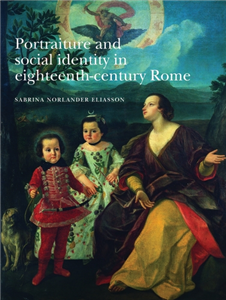
Portraiture and Social Identity in Eighteenth-Century Rome sheds new light on the relationship between portraiture, social affirmation and the myth of Antiquity as it was experienced and elaborated in eighteenth-century Rome. Drawing upon a wealth of unpublished documents and previously unexamined literary texts, it offers new insights and readings into how the experience of the City in terms of abstract or concrete appropriation affected the ways of portraying native or visiting elite sitters. The Grand Tour portrait, usually discussed as a purely British phenomenon, is here put in its original context of production and compared to the portraits of the Romans themselves. Portraiture and social identity in eighteenth-century Rome will become essential reading for anyone with a particular interest in eighteenth-century art and its social use. ;
-
Trusted Partner
Humanities & Social SciencesMarch 2017
Ephemeral vistas
by Paul Greenhalgh
The international exhibitions held around the world between 1851 and 1939 were spectacular gestures, which briefly held the attention of the world before disappearing into an abrupt oblivion, of the victims of their planned temporality. Known in Britain as Great Exhibitions, in France as Expositions Universelles and in America as World's Fairs, the genre became a self-perpetuating phenomenon, the extraordinary cultural spawn of industry and empire. Thoroughly in the spirit of the first industrial age, the exhibitions illustrated the relation between money and power, and revelled in the belief that the uncontrolled expression of that power was the quintessence of freedom. Philanthropy found its place on exhibition sites functioning as a conscience to the age although even here morality was inextricably linked to economic efficiency and expansion. Imperial achievement was celebrated to the full at international exhibitions. Nevertheless, most World's Fairs maintained an imperial element and out of this blossomed a vibrant racism. Between 1889 and 1914, the exhibitions became a human showcase, when people from all over the world were brought to sites in order to be seen by others for their gratification and education. In essence, the English national profile fabricated in the closing decades of the nineteenth century was derived from the pre-industrial world. The Fine Arts were an important ingredient in any international exhibition of calibre. This book incorporates comparative work on European and American empire-building, with the chronological focus primarily on the nineteenth and twentieth centuries, when these cultural exchanges were most powerfully at work.
-
Trusted Partner
Humanities & Social SciencesMarch 2017
Imperialism and the natural world
by John M. MacKenzie
Imperial power, both formal and informal, and research in the natural sciences were closely dependent in the nineteenth century. This book examines a portion of the mass-produced juvenile literature, focusing on the cluster of ideas connected with Britain's role in the maintenance of order and the spread of civilization. It discusses the political economy of Western ecological systems, and the consequences of their extension to the colonial periphery, particularly in forms of forest conservation. Progress and consumerism were major constituents of the consensus that helped stabilise the late Victorian society, but consumerism only works if it can deliver the goods. From 1842 onwards, almost all major episodes of coordinated popular resistance to colonial rule in India were preceded by phases of vigorous resistance to colonial forest control. By the late 1840s, a limited number of professional positions were available for geologists in British imperial service, but imperial geology had a longer pedigree. Modern imperialism or 'municipal imperialism' offers a broader framework for understanding the origins, long duration and persistent support for overseas expansion which transcended the rise and fall of cabinets or international realignments in the 1800s. Although medical scientists began to discern and control the microbiological causes of tropical ills after the mid-nineteenth century, the claims for climatic causation did not undergo a corresponding decline. Arthur Pearson's Pearson's Magazine was patriotic, militaristic and devoted to royalty. The book explores how science emerged as an important feature of the development policies of the Colonial Office (CO) of the colonial empire.
-
Trusted Partner
 Humanities & Social SciencesFebruary 2017
European Empires and the People
Popular responses to imperialism in France, Britain, the Netherlands, Belgium, Germany and Italy
by John M. MacKenzie
This is the first book to survey in comparative form the transmission of imperial ideas to the public in six European countries in the nineteenth and twentieth centuries. The chapters, focusing on France, Britain, the Netherlands, Belgium, Germany and Italy, provide parallel studies of the manner in which colonial ambitions and events in the respective European empires were given wider popular visibility. The international group of contributors, who are all scholars working at the cutting edge of these fields, place their work in the context of governmental policies, the economic bases of imperial expansion, major events such as wars of conquest, the emergence of myths of heroic action in exotic contexts, religious and missionary impulses, as well as the new media which facilitated such popular dissemination. Among these media were the press, international exhibitions, popular literature, educational institutions and methods, ceremonies, church sermons and lectures, monuments, paintings and much else.
-
Trusted Partner
-
Trusted Partner

 2024
2024My Italy with Berlusconi
And what has become of it. Essays, conversations, reports
by Michaela Namuth
The political era of media entrepreneur and multi-billionaire Silvio Berlusconi began in 1994. German journalist Michaela Namuth also arrived in Rome at that time. He became prime minister, she became a freelance correspondent for various newspapers. She spent the long period of his government with him. During this time, the populist Berlusconi not only paved the way for a far-right government, he was also an ice-breaker for other right-wing populists in Europe and elsewhere. What else happened during and after Berlusconi's time in power is told in 20 chapters of articles, reports and interviews. The result is a colourful mosaic of contemporary Italy. It is about publishing, design, crime fiction, the mafia, a women's factory, the south and Nutella. Under Berlusconi, the country has changed. Many speak of “Berlusconisation”, by which they mean the gradual weakening of democracy. It is a critical book, but also a declaration of love to a contradictory country whose name still has a special ring to many ears.
-
Trusted Partner
 Humanities & Social SciencesJune 2012
Cultures and caricatures of British imperial aviation
Passengers, pilots, publicity
by Gordon Pirie, Andrew Thompson, John Mackenzie
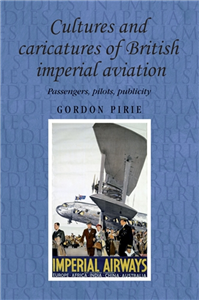
The new activity of trans-continental civil flying in the 1930s is a useful vantage point for viewing the extension of British imperial attitudes and practices. Cultures and caricatures of British imperial aviation examines the experiences of those (mostly men) who flew solo or with a companion (racing or for leisure), who were airline passengers (doing colonial administration, business or research), or who flew as civilian air and ground crews. For airborne elites, flying was a modern and often enviable way of managing, using and experiencing empire. On the ground, aviation was a device for asserting old empire: adventure and modernity were accompanied by supremacism. At the time, however, British civil imperial flying was presented romantically in books, magazines and exhibitions. Eighty years on, imperial flying is still remembered, reproduced and re-enacted in caricature. ;
-
Trusted Partner
Literature & Literary StudiesMarch 2017
Imperialism and juvenile literature
by Jeffrey Richards
Popular culture is invariably a vehicle for the dominant ideas of its age. Never was this truer than in the late-nineteenth and early twentieth centuries, when it reflected the nationalist and imperialist ideologies current throughout Europe. It both reflects popular attitudes, ideas and preconceptions and it generates support for selected views and opinions. This book examines the various media through which nationalist ideas were conveyed in late-Victorian and Edwardian times: in the theatre, "ethnic" shows, juvenile literature, education and the iconography of popular art. It seeks to examine in detail the articulation and diffusion of imperialism in the field of juvenile literature by stressing its pervasiveness across boundaries of class, nation and gender. It analyses the production, distribution and marketing of imperially-charged juvenile fiction, stressing the significance of the Victorians' discovery of adolescence, technological advance and educational reforms as the context of the great expansion of such literature. An overview of the phenomenon of Robinson Crusoe follows, tracing the process of its transformation into a classic text of imperialism and imperial masculinity for boys. The imperial commitment took to the air in the form of the heroic airmen of inter-war fiction. The book highlights that athleticism, imperialism and militarism become enmeshed at the public schools. It also explores the promotion of imperialism and imperialist role models in fiction for girls, particularly Girl Guide stories.
-
Trusted Partner
 Colonialism & imperialismSeptember 2015
Imperial expectations and realities
El Dorados, utopias and dystopias
by Edited by Andrekos Varnava
This volume explores how imperial powers established and expanded their empires through decisions that were often based on exaggerated expectations and wishful thinking, rather than on reasoned and scientific policies. It explores these exaggerations through the concepts of El Dorado, utopias and dystopias - undertakings based on irrational perceived values - in case studies from across the sixteenth to the twentieth centuries, and incorporates imperial traditions including Scottish, British, French, German, Italian and American. Various colonial spaces are considered, from the Mediterranean, Middle East, Africa, Australia, Asia and the Americas, and in doing so, the contributors offer new insights into the nature of imperialism and colonial settlement.
-
Trusted Partner
-
Trusted Partner
Humanities & Social SciencesMarch 2017
The empire in one city?
Liverpool's inconvenient imperial past
by Sheryllynne Haggerty, Andrew Thompson, Anthony Webster, John M. MacKenzie, Nicholas J. White
From the late eighteenth century to the early twentieth century, Liverpool was frequently referred to as the 'second city of the empire'. Yet, the role of Liverpool within the British imperial system and the impact on the city of its colonial connections remain underplayed in recent writing on both Liverpool and the empire. However, 'inconvenient' this may prove, this specially-commissioned collection of essays demonstrates that the imperial dimension deserves more prevalence in both academic and popular representations of Liverpool's past. Indeed, if Liverpool does represent the 'World in One City' - the slogan for Liverpool's status as European Capital of Culture in 2008 - it could be argued that this is largely down to Merseyside's long-term interactions with the colonial world, and the legacies of that imperial history. In the context of Capital of Culture year and growing interest in the relationship between British provincial cities and the British empire, this book will find a wide audience amongst academics, students and history enthusiasts generally.
-
Trusted Partner
 Humanities & Social SciencesMarch 2017
Gender and imperialism
by Clare Midgley
This book marks an important new intervention into a vibrant area of scholarship, creating a dialogue between the histories of imperialism and of women and gender. By engaging critically with both traditional British imperial history and colonial discourse analysis, the essays demonstrate how feminist historians can play a central role in creating new histories of British imperialism. Chronologically, the focus is on the late eighteenth to early twentieth centuries, while geographically the essays range from the Caribbean to Australia and span India, Africa, Ireland and Britain itself. Topics explored include the question of female agency in imperial contexts, the relationships between feminism and nationalism, and questions of sexuality, masculinity and imperial power.



