Your Search Results

      • Families International

        It began when I left Ghana to study in Marburg, Germany. I entered a classroom of children with developmental concerns and instantly fell in love with them–the passion continues. I’m an indie professional author-publisher of Christian, academic and children’s books. Founder of Families International, Ottawa, Canada. An organization for all families, especially those who have children with developmental concerns. Our vision is to empower these families to believe in and help themselves, and their children. Be passionate partners of their children’s educational systems and working resiliently with special pedagogic and medical teams to support their children to achieve their full potential. We value every child and believe disabilities don’t mean inabilities. These children have educational assets exemplified by my newly released children’s books–Mommie, Snoopy Mr. Crab and Jumbolino The Dancing Clown. Inspired and created from my international work with these children and their families.

        View Rights Portal
      • Trusted Partner
        Literature & Literary Studies
        June 2023

        The politics of male friendship in contemporary American fiction

        by Michael Kalisch

        How might our friendships shape our politics? This book examines how contemporary American fiction has rediscovered the concept of civic friendship and revived a long tradition of imagining male friendship as interlinked with the promises and paradoxes of democracy in the United States. Bringing into dialogue the work of a wide range of authors - including Philip Roth, Paul Auster, Michael Chabon, Jonathan Lethem, Dinaw Mengestu, and Teju Cole - this innovative study advances a compelling new account of the political and intellectual fabric of the American novel today.

      • Trusted Partner
        Humanities & Social Sciences
        February 2017

        Servants of the empire

        The Irish in Punjab 1881–1921

        by Patrick O'Leary, Andrew Thompson, John M. MacKenzie

        Punjab, 'the pride of British India', attracted the cream of the Indian Civil Service, many of the most influential of whom were Irish. Some of these men, along with Irish viceroys, were inspired by their Irish backgrounds to ensure security of tenure for the Punjabi peasant, besides developing vast irrigation schemes which resulted in the province becoming India's most affluent. But similar inspiration contributed to the severity of measures taken against Indian nationalist dissent, culminating in the Amritsar massacre which so catastrophically transformed politics on the sub-continent. Setting the experiences of Irish public servants in Punjab in the context of the Irish diaspora and of linked agrarian problems in Ireland and India, this book descrides the beneficial effects the Irish had on the prosperity of India's most volatile province. Alongside the baleful contribution of some towards a growing Indian antipathy towards British rule. Links are established between policies pursued by Irishmen of the Victorian era and current happenings on the Pakistan-Afghan border and in Punjab.

      • Trusted Partner
        Humanities & Social Sciences
        July 2023

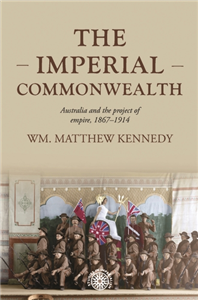
        The imperial Commonwealth

        Australia and the project of empire, 1867-1914

        by Wm. Matthew Kennedy

        From the late 1800s to the early 1900s, Australian settler colonists mobilised their unique settler experiences to develop their own vision of what 'empire' was and could be. Reinterpreting their histories and attempting to divine their futures with a much heavier concentration on racialized visions of humanity, white Australian settlers came to believe that their whiteness as well as their Britishness qualified them for an equal voice in the running of Britain's imperial project. Through asserting their case, many soon claimed that, as newly minted citizens of a progressive and exemplary Australian Commonwealth, white settlers such as themselves were actually better suited to the modern task of empire. Such a settler political cosmology with empire at its center ultimately led Australians to claim an empire of their own in the Pacific Islands, complete with its own, unique imperial governmentality.

      • Trusted Partner
        Humanities & Social Sciences
        September 2025

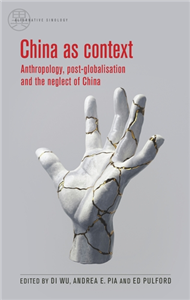
        China as context

        Anthropology, post-globalisation and the neglect of China

        by Di Wu, Andrea E. Pia, Ed Pulford

        Decades-old calls to promote the significance of China for anthropological theory and the social sciences more generally ring more urgently today given China's importance to social, political and economic life globally. Yet Chinese-grounded ideas remain marginal to the discipline, and scholarly discussions retain a sense of China as an 'Other' apart from the 'real' world, and thus unsuitable or generating widely applicable theoretical ideas. Inspired by East Asian postcolonial scholarship, this volume tackles this unsettling situation head-on, arguing that without taking China seriously as a powerful agent, a locus of knowledge production, and a new discursive topos of an emerging post-global imaginary, anthropologists and other social scientists may fail to adequately analyse the global present and make sense of both the material and immaterial forces that animate it, wherever and however they work. Amid the end of Western globalisation and shifting anthropological understandings of relations between ethnography and theory, we show how 'China' must be understood as the ordinary 'context' for anthropological research practices worldwide.

      • Trusted Partner
        Humanities & Social Sciences
        July 2016

        The American bomb in Britain

        by Ken Young

      • Trusted Partner
      • Trusted Partner
      • Trusted Partner
      • Trusted Partner
        Humanities & Social Sciences
        March 2017

        Silk and empire

        by Brenda King

        In this book, Brenda M. King challenges the notion that Britain always exploited its empire. Creativity, innovation and entrepreneurship were all part of the Anglo-Indian silk trade and were nurtured in the era of empire through mutually beneficial collaboration. The trade operated within and without the empire, according to its own dictates and prospered in the face of increasing competition from China and Japan. King presents a new picture of the trade, where the strong links between Indian designs, the English silk industry and prominent members of the English the arts and crafts movement led to the production of beautiful and luxurious textiles. Lavishly illustrated, this book will be of interest to those interested in the relationship between the British Empire and the Indian subcontinent, as well as by historians of textiles and fashion.

      • Trusted Partner
        Humanities & Social Sciences
        March 2017

        The language of empire

        Myths and metaphors of popular imperialism, 1880-1918

        by Robert Macdonald

        The debate about the Empire dealt in idealism and morality, and both sides employed the language of feeling, and frequently argued their case in dramatic terms. This book opposes two sides of the Empire, first, as it was presented to the public in Britain, and second, as it was experienced or imagined by its subjects abroad. British imperialism was nurtured by such upper middle-class institutions as the public schools, the wardrooms and officers' messes, and the conservative press. The attitudes of 1916 can best be recovered through a reconstruction of a poetics of popular imperialism. The case-study of Rhodesia demonstrates the almost instant application of myth and sign to a contemporary imperial crisis. Rudyard Kipling was acknowledged throughout the English-speaking world not only as a wonderful teller of stories but as the 'singer of Greater Britain', or, as 'the Laureate of Empire'. In the last two decades of the nineteenth century, the Empire gained a beachhead in the classroom, particularly in the coupling of geography and history. The Island Story underlined that stories of heroic soldiers and 'fights for the flag' were easier for teachers to present to children than lessons in morality, or abstractions about liberty and responsible government. The Education Act of 1870 had created a need for standard readers in schools; readers designed to teach boys and girls to be useful citizens. The Indian Mutiny was the supreme test of the imperial conscience, a measure of the morality of the 'master-nation'.

      • Trusted Partner
      • Trusted Partner
      • Trusted Partner
        The Arts
        January 2019

        Spanish cinema 1973–2010

        Auteurism, politics, landscape and memory

        by Maria M. Delgado, Robin Fiddian

        This collection offers a new lens through which to examine Spain's cinema production following the isolation imposed by the Franco regime. The seventeen key films analysed in the volume span a period of 35 years that have been crucial in the development of Spain, Spanish democracy and Spanish cinema. They encompass different genres (horror, thriller, melodrama, social realism, documentary), both popular (Los abrazos rotos/Broken Embraces, Vicky Cristina Barcelona) and more select art house fare (En la ciudad de Sylvia/In the City of Sylvia, El espíritu de la colmena/Spirit of the Beehive) and are made in English (as both first and second language), Basque, Castilian, Catalan and French. Offering an expanded understanding of 'national' cinemas, the volume explores key works by Guillermo del Toro and Lucrecia Martel alongside an examination of the ways in which established auteurs (Almodóvar, José Garci, Carlos Saura) and younger generations of filmmakers (Cesc Gay, Amenábar, Bollaín) have harnessed cinematic language towards a commentary on the nation-state. The result is a bold new study of the ways in which film has created new prisms that have determined how Spain is positioned in the global marketplace.

      • Trusted Partner
        Humanities & Social Sciences
        March 2017

        Jute and empire

        by Andrew Thompson, John M. MacKenzie, Gordon Stewart

        Dundee had an interesting role to play in the jute trade, but the main player in the story of jute was Calcutta. This book follows the relationship of jute to empire, and discusses the rivalry between the Scottish and Indian cities from the 1840s to the 1950s and reveals the architecture of jute's place in the British Empire. The book adopts significant fresh approaches to imperial history, and explores the economic and cultural landscapes of the British Empire. Jute had been grown, spun and woven in Bengal for centuries before it made its appearance as a factory-manufactured product in world markets in the late 1830s. The book discusses the profits made in Calcutta during the rise of jute between the 1880s and 1920s; the profits reached extraordinary levels during and after World War I. The Calcutta jute industry entered a crisis period even before it was pummelled by the depression of the 1930s. The looming crisis stemmed from the potential of the Calcutta mills to outproduce world demand many times over. The St Andrew's Day rituals in Calcutta, begun three years before the founding of the Indian Jute Mills Association. The ceremonial occasion helps the reader to understand what the jute wallahs meant when they said they were in Calcutta for 'the greater glory of Scotland'. The book sheds some light on the contentious issues surrounding the problematic, if ever-intriguing, phenomenon of British Empire. The jute wallahs were inextricably bound up in the cultural self-images generated by British imperial ideology.

      • Trusted Partner
        Humanities & Social Sciences
        May 2026

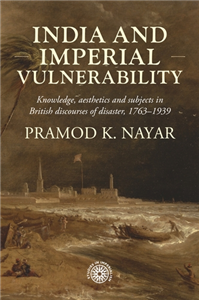
        India and imperial vulnerability

        Knowledge, aesthetics and subjects in British discourses of disaster, 1763-1939

        by Pramod K Nayar

        This study of famines, earthquakes and cyclones in British India, 1770-1934, moves from the aesthetics of representation through the knowledge cultures that sprang up around the disasters and finally the construction of the helpless native and the labouring Englishman. It studies the creation of imperial networks of knowledge acquisition, codification and training, as well as the employment of certain aesthetic modes when speaking of the land's disasters. It pays attention to the categorization of the disaster victims and the work of the Englishman in understanding and helping the native. The study shows how the disasters were shaped and were shaped by imperial discourses of knowledge and learning, aesthetics of fright and horror and the labouring English.

      • Trusted Partner
        Humanities & Social Sciences
        June 2025

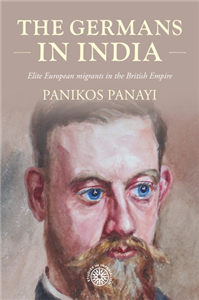
        The Germans in India

        Elite European migrants in the British Empire

        by Panikos Panayi

        Based on years of research in libraries and archives in England, Germany, India and Switzerland, this book offers a new interpretation of global migration from the early nineteenth until the early twentieth century. Rather than focusing upon the mass transatlantic migration or the movement of Britons towards British colonies, it examines the elite German migrants who progressed to India, especially missionaries, scholars and scientists, businessmen and travellers. The story told here questions, for the first time, the concept of Europeans in India. Previous scholarship has ignored any national variations in the presence of white people in India, viewing them either as part of a ruling elite or, more recently, white subalterns. The German elites undermine these conceptions. They developed into distinct groups before 1914, especially in the missionary compound, but faced marginalisation and expulsion during the First World War.

      • Trusted Partner
        Literature & Literary Studies
        July 2022

        Nordic Gothic

        by Maria Holmgren Troy, Johan Hõglund, Yvonne Leffler, Sofia Wijkmark

        Nordic Gothic traces Gothic fiction in the Nordic region from its beginnings in the nineteenth century, with a main focus on the development of Gothic from the 1990s onwards in literature, film, TV and new media. The volume gives an overview of Nordic Gothic fiction in relation to transnational developments and provides a number of case studies and in-depth analyses of individual narratives. It creates an understanding of this under-researched cultural phenomenon by showing how the narratives make visible cultural anxieties haunting the Nordic countries, their welfare systems, identities and ideologies. Nordic Gothic examines how figures from Nordic folklore function as metaphorical expressions of Gothic themes and Nordic settings are explored from perspectives such as ecocriticism and postcolonialism. The book will be of interest to researchers and post- and- undergraduate students in various fields within the Humanities.

      • Trusted Partner
        Humanities & Social Sciences
        November 2017

        Indian foreign policy

        by Harsh Pant

      Subscribe to our

      newsletter