Your Search Results

      • Inner Flower Child Books

        We present to you a rhino that actually once circled the earth in the spaceship, an artist cat from Paris known by everyone, the adventures, and wanderlust of a tiny house, and love stories kissed by the sun... Curious? If you are looking for children's books with a universal message of hope and connectedness, we'd love the opportunity to meet with you. Inner Flower Child Books is a children's book publisher founded in California in 2012 by the creative team of author Susan Schaefer Bernardo (M.A. English Languages and Literature, Yale University) and illustrator Courtenay Fletcher (BFA Advertising/Graphic Design, Art Center College of Design). These artists and their team produce profound, touching, and humorously inspiring books that have become very successful in the US. With wittiness, humor, and intelligence — with rhymes at times — they create stories that promote children's language and social capabilities development. Partly because of that, Susan’s and Courtenay's picture books are used nationwide by schools, children's charities, therapists, and families across the United States to help children and youth heal from problems, large and small. At a time when the whole world is being hit by the trauma of a pandemic, books such as “Sun Kisses and Moon Hugs” bring children and young people a comforting message of love and connection. The colorfully illustrated and inspiring picture books contain generally assignable topics such as healing trauma, bringing people closer to living a sustainable life, and the power of creative expression — predestined to be successful worldwide. (Speaking of worldwide distribution: one of Susan’s and Courtenay's books, “The Rhino Who Swallowed The Storm” was sent to the International Space Station to orbit the planet — and was read aloud by astronaut Kate Rubins as part of the innovative “Story Time From Space” program and broadcasted! Apart from that, “The Rhino” was also promoted by former, then-incumbent First Lady Michelle Obama and present presidential candidate Joe Biden. For more information, please visit our website!). All Inner Flower Child Books titles are currently only published in the United States. Susan and Courtenay are therefore pleased to be able to offer publication and subsidiary rights on all other world markets for the first time. On our book fair landing page, you can find book trailers and details about our work: http://www.innerflowerchildbooks.com/buchmesse2020.html. We, the European representatives Anette and Leonie Waldeck, are happy to present the works of Inner Flower Child Books to you in the context of the Frankfurt book fair. Here we would like to meet in person or jump on an online video call to speak about publishing and foreign sub-rights options. Please contact us at +49 179 10 93 276 or via email buchmesse2020@innerflowerchild.com to ask questions or to make an appointment. Thank you for your time.   Anette and Leonie Waldeck with international greetings from the US from Susan Bernardo and Courtenay Fletcher

        View Rights Portal
      • World for kids

        Our passion is to show kids, how colourful and fascinating the world is. There is not only one way to live but so many. We love curious children and we do the books they need to explore the world. So we do travel books for kids and novels for the journey in a hammock.

        View Rights Portal
      • Trusted Partner
        The Arts
        October 2025

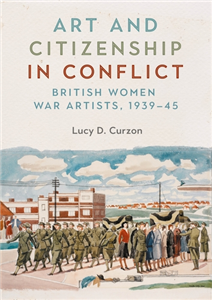
        Art and citizenship in conflict

        British women war artists, 1939–45

        by Lucy Curzon

        Art and Citizenship in Conflict examines the work of women war artists in order to highlight the complexity of citizenship and gender in Britain during the Second World War. Evelyn Dunbar, Mary Kessell, Ethel Gabain, Stella Schmolle, and Laura Knight, among others, were commissioned by the War Artists' Advisory Committee (WAAC) to document the millions of women who took up sometimes unconventional roles-in agriculture, the auxiliary services, and manufacturing, among others-to support the British war effort. Indeed, their prints, drawings, and paintings were part of a broader scheme to uphold morale and promote much-needed citizen involvement on the home front. While there is growing interest, the importance of their remit in the history of the Second World War and the quality of their artistry have nonetheless not yet secured them a significant place in scholarship. Art and Citizenship in Conflict seeks to amend this gap while also broadening approaches to the study of war itself.

      • Trusted Partner
        Medicine
        February 2025

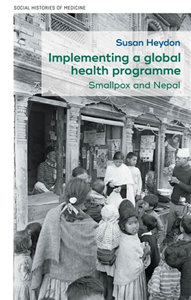
        Implementing a global health programme

        Smallpox and Nepal

        by Susan Heydon

        Worldwide eradication of the devastating viral disease of smallpox was devised as a distant global policy, but success depended on implementing a global vaccination programme within nation states. How this was achieved remains relevant and topical for responding to today's global communicable disease challenges. The small and poor Himalayan kingdom of Nepal faced enormous geographical and infrastructure challenges if it was going to succeed in a nationwide vaccination programme. This book acknowledges the key role of the WHO but disrupts the top-down, centre-led standard narrative. Against a background of widespread internal political and social change, Nepal's programme was expanded, effectively decentralised and a vaccination strategy introduced that aligned with people's beliefs. Few foreign personnel were involved.

      • Trusted Partner
        Humanities & Social Sciences
        February 2025

        Global counter-terrorism

        by Tahir Abbas, Sylvia I. Bergh, Sagnik Dutta

        This collection aims to inaugurate a new direction in research on counterterrorism by exploring global connections - both in terms of practices and discourses, as well as shared ideas and epistemes - that animate counterterrorism practices. The chapters - grouped under the themes of postcoloniality and coloniality, and entanglements of the transnational and the local, and counterterrorism and right-wing extremism - are attentive to global connections and are mindful of the complexities of global historical processes that constitute the politics of counterterrorism. This book aims to bring together scholars studying counterterrorism in the global North and the global South to explore convergence and divergence in how counterterrorism policies function in a range of national and local contexts.

      • Trusted Partner
        Humanities & Social Sciences
        November 2023

        Critical theory and human rights

        From compassion to coercion

        by David McGrogan

        This book describes how human rights have given rise to a vision of benevolent governance that, if fully realised, would be antithetical to individual freedom. It describes human rights' evolution into a grand but nebulous project, rooted in compassion, with the overarching aim of improving universal welfare by defining the conditions of human well-being and imposing obligations on the state and other actors to realise them. This gives rise to a form of managerialism, preoccupied with measuring and improving the 'human rights performance' of the state, businesses and so on. The ultimate result is the 'governmentalisation' of a pastoral form of global human rights governance, in which power is exercised for the general good, moulded by a complex regulatory sphere which shapes the field of action for the individual at every turn. This, unsurprisingly, does not appeal to rights-holders themselves.

      • Trusted Partner
        Humanities & Social Sciences
        January 2017

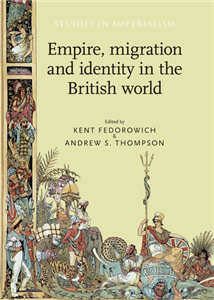
        Empire, migration and identity in the British World

        by Andrew Thompson, Kent Fedorowich, John M. MacKenzie, Andrew Thompson, Keith Povey

        The essays in this volume have been written by leading experts in their respective fields and bring together established scholars with a new generation of migration and transnational historians. Their work weaves together the 'new' imperial and the 'new' migration histories, and is essential reading for scholars and students interested in the interplay of migration within and between the local, regional, imperial, and transnational arenas. Furthermore, these essays set an important analytical benchmark for more integrated and comparative analyses of the range of migratory processes - free and coerced - which together impacted on the dynamics of power, forms of cultural circulation and making of ethnicities across a British imperial world.

      • Trusted Partner
        Humanities & Social Sciences
        June 2025

        Private property and the fear of social chaos

        by Aidan Beatty

      • Trusted Partner
        Humanities & Social Sciences
        January 2026

        Inner empire

        by Daniel Maudlin, Alex Bremner

      • Trusted Partner
        Humanities & Social Sciences
        March 2017

        Child, nation, race and empire

        Child rescue discourse, England, Canada and Australia, 1850–1915

        by Margot Hillel, Shurlee Swain, Andrew Thompson, John M. MacKenzie

        Child, nation, race and empire is an innovative, inter-disciplinary, cross cultural study that contributes to understandings of both contemporary child welfare practices and the complex dynamics of empire. It analyses the construction and transmission of nineteenth-century British child rescue ideology. Locating the origins of contemporary practice in the publications of the prominent English Child rescuers, Dr Barnardo, Thomas Bowman Stephenson, Benjamin Waugh, Edward de Montjoie Rudolf and their colonial disciples and literature written for children, it shows how the vulnerable body of the child at risk came to be reconstituted as central to the survival of nation, race and empire. Yet, as the shocking testimony before the many official enquiries into the past treatment of children in out-of-home 'care' held in Britain, Ireland, Australia and Canada make clear, there was no guarantee that the rescued child would be protected from further harm.

      • Trusted Partner
        Humanities & Social Sciences
        March 2024

        How to be multiple

        The philosophy of twins

        by Helena de Bres, Julia de Bres

        In How to be multiple, Helena de Bres - a twin herself - argues that twinhood is a unique lens for examining our place in the world and how we relate to other people. The way we think about twins offers remarkable insights into some of the deepest questions of our existence, from what is a person? to how should we treat one another? Deftly weaving together literary and cultural history, philosophical enquiry and personal experience, de Bres examines such thorny issues as binary thinking, objectification, romantic love and friendship, revealing the limits of our individualistic perspectives. In this illuminating, entertaining book, wittily illustrated by her twin sister, de Bres ultimately suggests that to consider twinhood is to imagine the possibility of a more interconnected, capacious human future.

      • Trusted Partner
        Humanities & Social Sciences
        April 2025

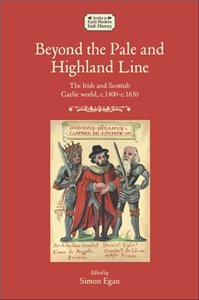
        Beyond the Pale and Highland Line

        The Irish and Scottish Gaelic world

        by Simon Egan

        This book offers important new insights into the history and culture of the Gaelic-speaking world from the mid-fifteenth century through to the reign of James VI and I. Throughout this period, the reach of the English and Scottish crowns within these western regions was limited. The initiative lay with local communities and royal power was contingent upon negotiating with well-established and largely autonomous aristocratic lineages. Moreover, events within this western world could exert a powerful, often unpredictable, influence upon the affairs of the wider archipelago. Using a series of case studies, this collection examines the evolving relationship between Ireland and Scotland in rich detail. It demonstrates how this world interacted with the encroaching English and Scottish states and underlines the importance of paying closer attention to this neglected area of Irish and British history.

      • Trusted Partner
        Humanities & Social Sciences
        August 2022

        The power of citizens and professionals in welfare encounters

        The influence of bureaucracy, market and psychology

        by Nanna Mik-Meyer

        This book is about power in welfare encounters. Present-day citizens are no longer the passive clients of the bureaucracy and welfare workers are no longer automatically the powerful party of the encounter. Instead, citizens are expected to engage in active, responsible and coproducing relationships with welfare workers. However, other factors impact these interactions; factors which often pull in different directions. Welfare encounters are thus influenced by bureaucratic principles and market values as well. Consequently, this book engages with both Weberian (bureaucracy) and Foucauldian (market values/NPM) studies when investigating the powerful welfare encounter. The book is targeted Academics, post-graduates, and undergraduates within sociology, anthropology and political science.

      • Trusted Partner
        Literature & Literary Studies
        July 2021

        Making home

        Orphanhood, kinship and cultural memory in contemporary American novels

        by Maria Holmgren Troy, Elizabeth Kella, Helena Wahlstrom, Maria Holmgren Troy

        Making home explores the figure of the orphan child in a broad selection of contemporary US novels by popular and critically acclaimed authors Barbara Kingsolver, Linda Hogan, Leslie Marmon Silko, Marilynne Robinson, Michael Cunningham, Jonathan Safran Foer, John Irving, Kaye Gibbons, Octavia Butler, Jewelle Gomez and Toni Morrison. The orphan child is a continuous presence in US literature, not only in children's books and nineteenth-century texts, but also in a variety of genres of contemporary fiction for adults. Making home examines the meanings of this figure in the contexts of American literary history, social history and ideologies of family, race and nation. It argues that contemporary orphan characters function as links to literary history and national mythologies, even as they may also serve to critique the limits of literary history, as well as the limits of familial and national belonging.

      • Trusted Partner
        Humanities & Social Sciences
        July 2025

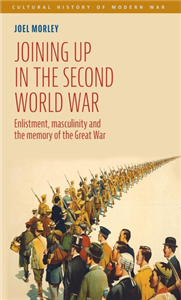
        Joining up in the Second World War

        Enlistment, masculinity and the memory of the Great War

        by Joel Morley

        This book connects the First and Second World Wars. It uses oral histories and Mass Observation material to explore men's attitudes to Second World War enlistment and the relationship they perceived between military service and masculinity, and how these were influenced by understandings of the First World War. Locating the cultural legacy of First World War in the subjectivities of men who participated in the Second World War demonstrates the breadth of sources that informed men's understandings of the First World War in interwar Britain. Its cultural legacy was omnipresent and diverse, and informed young men's attitudes and service preferences, but it reinforced Edwardian conceptions of wartime masculinity as often as it undermined them. Two decades after the First World War ended, they remained resilient in the subjective understandings of men who grew up in the Great War's shadow.

      • Trusted Partner
        Humanities & Social Sciences
        March 2026

        Negotiating identity conflicts in a fragmenting world order

        by Paul Willem Meerts, Mark Anstey

        At every level of human interaction new levels of identity-based tension are in evidence. Contributors to this book explore facets of fragmentation processes within systems of state and interstate organisation, how they influence the use of negotiation, and how negotiation might be used to effect renewed coherence. Following Anstey's (Ch1) introductory chapter framing the nature and shape of fragmentation dynamics, Zartman (Ch 2) argues that the use of negotiation as a process of conflict resolution is deeply shaped by identity groups whose internal coherence is dependent on sustaining a negative identity of others. International relations are no longer solely the realm of experienced diplomats but are shaped as Meerts (Ch3) points out by politicians seeking to be responsive to voting publics rather than wider concerns. Anstey digs into problems of fragmentation (Ch. 4) and Troitskiy (Ch 5) points out how a reluctant acceptance of the power of 'the other' can lead to a form of strategic stability in relations. Anstey and Meerts (Ch 6) point out in their analysis of the Israeli-Palestinian case as an identity conflict turned very bad. Guggenbuhl (Ch 7 ) reveals how structures and processes have been designed within the EU to prevent, contain and regulate conflicts to limit risks of confrontation and fragmentation. Schuessler (Ch 8) to advocates a shift away from a template or roadmap approach to EU membership to a cohesion based on non-dominance. There is still a strong desire on the part of some states, like Northern Macedonia, to become EU members, as reflected in Manton's (Ch 9). Paula Garzon and Frans Schram explain the success of the Colombia Peace Negotiations (Ch 10), while Odigie and da Rocha (Ch 11) analyse the struggle faced by ECOWAS to influence coup leaders in Mali to return to constitutional government and changes of government by constitutional means. Liang (Ch12) discusses how the internet as the modern vehicle of inter-state, inter-group and interpersonal communication has become weaponised. In Ch 13 Anstey draws some lessons from contributions to the compilation.

      • Trusted Partner
        Business, Economics & Law
        January 2026

        Latin America and international investment law

        A mosaic of resistance

        by Sufyan Droubi, Cecilia Juliana Flores Elizondo

        Latin America has been a complex laboratory for the development of international investment law. While some governments and non-state actors have remained true to the Latin American tradition of resistance towards the international investment law regime, other governments and actors have sought to accommodate said regime in the region. Consequently, a profusion of theories and doctrines, too often embedded in clashing narratives, has emerged. In Latin America, the practice of international investment law is the vivid amalgamation of the practice of governments sometimes resisting and sometimes welcoming mainstream approaches; the practice of lawyers assisting foreign investors from outside and within the region; and the practice of civil society, indigenous peoples and other actors in their struggle for human rights and sustainable development. Latin America and international investment law describes the complex roles that governments have played vis-à-vis foreign investors and investments; the refreshing but clashing forces that international organizations, corporations, civil society, and indigenous peoples have brought to the field; and the contribution that Latin America has made to the development of the theory and practice of international investment law, notably in fields in which the Latin American experience has been traumatic: human rights and sustainable development. Latin American scholars have been contributing to the theory of international investment law for over a century; resting on the shoulders of true giants, this volume aims at pushing this contribution a little further.

      • Trusted Partner
        Humanities & Social Sciences
        January 2013

        Christian Dualist Heresies in the Byzantine World, c. 650-c. 1450

        by Janet Hamilton, Bernard Hamilton

        Christian dualism originated in the reign of Constans II (641-68). It was a popular religion, which shared with orthodoxy an acceptance of scriptual authority and apostolic tradition and held a sacramental doctrine of salvation, but understood all these in a radically different way to the Orthodox Church. One of the differences was the strong part demonology played in the belief system. This text traces, through original sources, the origins of dualist Christianity throughout the Byzantine Empire, focusing on the Paulician movement in Armenia and Bogomilism in Bulgaria. It presents not only the theological texts, but puts the movements into their social and political context.

      • Trusted Partner
        Humanities & Social Sciences
        March 2017

        Imperialism and the natural world

        by John M. MacKenzie

        Imperial power, both formal and informal, and research in the natural sciences were closely dependent in the nineteenth century. This book examines a portion of the mass-produced juvenile literature, focusing on the cluster of ideas connected with Britain's role in the maintenance of order and the spread of civilization. It discusses the political economy of Western ecological systems, and the consequences of their extension to the colonial periphery, particularly in forms of forest conservation. Progress and consumerism were major constituents of the consensus that helped stabilise the late Victorian society, but consumerism only works if it can deliver the goods. From 1842 onwards, almost all major episodes of coordinated popular resistance to colonial rule in India were preceded by phases of vigorous resistance to colonial forest control. By the late 1840s, a limited number of professional positions were available for geologists in British imperial service, but imperial geology had a longer pedigree. Modern imperialism or 'municipal imperialism' offers a broader framework for understanding the origins, long duration and persistent support for overseas expansion which transcended the rise and fall of cabinets or international realignments in the 1800s. Although medical scientists began to discern and control the microbiological causes of tropical ills after the mid-nineteenth century, the claims for climatic causation did not undergo a corresponding decline. Arthur Pearson's Pearson's Magazine was patriotic, militaristic and devoted to royalty. The book explores how science emerged as an important feature of the development policies of the Colonial Office (CO) of the colonial empire.

      • Trusted Partner
        Humanities & Social Sciences
        July 2025

        A grand strategy of peace

        Britain and the creation of the United Nations Organization, 1939-1945

        by Andrew Ehrhardt

        A grand strategy of peace is the first detailed account of Britain's role in the creation of the United Nations Organization during the Second World War. As a work of traditional diplomatic history that brings in elements of intellectual history, the book describes how British officials, diplomats, politicians, and writers - previously seen to be secondary actors to the United States in this period - thought about, planned for, and helped to establish a future international order. While in the present day, many scholars and analysts have returned to the origins of the post- 1945 international system, this book offers an exhaustive account of how the statesmen and more importantly, the officials working below the statesmen, actually conceived of and worked to establish a post-war world order.

      Subscribe to our

      newsletter