Your Search Results

      • A Story Inside Books

        A Story Inside Books was formed when Book Coach to Best Sellers® Kim O'Hara launched client Allen Maxwell's book to #3 on the Wall Street Journal Best Business books in July 2020.  She saw that her clients who self-publish need an avenue to sell foreign rights.  She also saw her clients who wanted traditional publishing needing an extra forum to present their content.  As a book coach, she has worked individually with each client for over a year on navigating their books to best sellers.  She is now proud to present each special and unique titile at this marketplace.

        View Rights Portal
      • Stories Imagined

        Stories Imagined was created to have a voice in woman's fiction. Writing about an age group of women who are on their second wind. Ready to take on the world how they see fit. The juggle and struggle of womanhood, sexuality, motherhood and coming back to self.

        View Rights Portal
      • Trusted Partner
        October 2023

        Post-Mortem

        Autopsy stories: the unusual experiences of a pathologist

        by Roland Sedivy

        — True crime stories from the morgue — Famous deaths and autopsy stories resolved, such as Antarctic explorer Sir Ernest Shackleton and the case of Anne Greene, who survived her execution by hanging The post-mortem examination. A glimpse inside the interior of the human being. Many find the idea fascinating; for others it is creepy or even repugnant. There are still numerous myths and horror stories surrounding the autopsy, many of them associated with primal human fears such as that of being buried alive, which have existed since Antiquity. It is precisely for this reason that it is important to carry out the post-mortem examination with the utmost conscientiousness. Pathologist Roland Sedivy provides an exciting insight into his profession. Profound and with tremendous humour, he tells us about the early days of the autopsy, and shares with us some macabre and some mysterious cases.

      • Trusted Partner
        Literature & Literary Studies
        March 2017

        Imperialism and juvenile literature

        by Jeffrey Richards

        Popular culture is invariably a vehicle for the dominant ideas of its age. Never was this truer than in the late-nineteenth and early twentieth centuries, when it reflected the nationalist and imperialist ideologies current throughout Europe. It both reflects popular attitudes, ideas and preconceptions and it generates support for selected views and opinions. This book examines the various media through which nationalist ideas were conveyed in late-Victorian and Edwardian times: in the theatre, "ethnic" shows, juvenile literature, education and the iconography of popular art. It seeks to examine in detail the articulation and diffusion of imperialism in the field of juvenile literature by stressing its pervasiveness across boundaries of class, nation and gender. It analyses the production, distribution and marketing of imperially-charged juvenile fiction, stressing the significance of the Victorians' discovery of adolescence, technological advance and educational reforms as the context of the great expansion of such literature. An overview of the phenomenon of Robinson Crusoe follows, tracing the process of its transformation into a classic text of imperialism and imperial masculinity for boys. The imperial commitment took to the air in the form of the heroic airmen of inter-war fiction. The book highlights that athleticism, imperialism and militarism become enmeshed at the public schools. It also explores the promotion of imperialism and imperialist role models in fiction for girls, particularly Girl Guide stories.

      • Trusted Partner
        Humanities & Social Sciences
        February 2023

        Faith stories

        by Anna Hickey-Moody

      • Trusted Partner
        Humanities & Social Sciences
        October 2021

        Higher education in a globalising world

        Community engagement and lifelong learning

        by Peter Mayo

        This book focuses on current policy discourse in Higher Education, with special reference to Europe. It discusses globalisation, Lifelong Learning, the EU's Higher Education discourse, this discourse's regional ramifications and alternative practices in Higher Education from both the minority and majority worlds with their different learning traditions and epistemologies. It argues that these alternative practices could well provide the germs for the shape of a public good oriented Higher Education for the future. It theoretically expounds on important elements to consider when engaging Higher Education and communities, discussing the nature of the term 'community' itself. Special reference is accorded to the difference that lies at the core of these ever-changing communities. It then provides an analysis of an 'on the ground project' in University community engagement, before suggesting signposts for further action at the level of policy and provision. This book is relevant to United Nations Sustainable Development Goal 4, Quality education

      • Trusted Partner
        Humanities & Social Sciences
        December 2022

        Class, work and whiteness

        Race and settler colonialism in Southern Rhodesia, 1919–79

        by Nicola Ginsburgh

        This book offers the first comprehensive history of white workers from the end of the First World War to Zimbabwean independence in 1980. It reveals how white worker identity was constituted, examines the white labouring class as an ethnically and nationally heterogeneous formation comprised of both men and women, and emphasises the active participation of white workers in the ongoing and contested production of race. White wage labourers' experiences, both as exploited workers and as part of the privileged white minority, offer insight into how race and class co-produced one another and how boundaries fundamental to settler colonialism were regulated and policed. Based on original research conducted in Zimbabwe, South Africa and the UK, this book offers a unique theoretical synthesis of work on gender, whiteness studies, labour histories, settler colonialism, Marxism, emotions and the New African Economic History.

      • Trusted Partner
      • Trusted Partner
        Child & developmental psychology

        The Captain Nemo Stories

        by Ulrike Petermann

        Even at a primary school age, children can suffer from anxiety and stress with symptoms ranging from feeling tense to problems concentrating or sleeping. The stories of Captain Nemo help children relax and learn to let go of their anxiety and restlessness. The relaxation stories, written for children ages 5-12, can be either read aloud to the child or by the children themselves. The main character, Captain Nemo, invites the children to come along for his adventures on his submarine the Nautilus. The stories take the children to visit a coral forest, ride a giant tortoise, or explore the lost city of Atlantis. Through the stories, the children learn strategies to calm themselves and relax which they can then re-use in difficult situations in their daily lives. This widely successful book can be used at home, by teachers, social workers, school psychologists, child and adolescentpsychotherapists, and psychiatrists. For:• child and adolescent psycho-therapistsand psychiatrists,social workers, school psychologists,teachers, parents

      • Trusted Partner
        Humanities & Social Sciences
        March 2017

        The language of empire

        Myths and metaphors of popular imperialism, 1880-1918

        by Robert Macdonald

        The debate about the Empire dealt in idealism and morality, and both sides employed the language of feeling, and frequently argued their case in dramatic terms. This book opposes two sides of the Empire, first, as it was presented to the public in Britain, and second, as it was experienced or imagined by its subjects abroad. British imperialism was nurtured by such upper middle-class institutions as the public schools, the wardrooms and officers' messes, and the conservative press. The attitudes of 1916 can best be recovered through a reconstruction of a poetics of popular imperialism. The case-study of Rhodesia demonstrates the almost instant application of myth and sign to a contemporary imperial crisis. Rudyard Kipling was acknowledged throughout the English-speaking world not only as a wonderful teller of stories but as the 'singer of Greater Britain', or, as 'the Laureate of Empire'. In the last two decades of the nineteenth century, the Empire gained a beachhead in the classroom, particularly in the coupling of geography and history. The Island Story underlined that stories of heroic soldiers and 'fights for the flag' were easier for teachers to present to children than lessons in morality, or abstractions about liberty and responsible government. The Education Act of 1870 had created a need for standard readers in schools; readers designed to teach boys and girls to be useful citizens. The Indian Mutiny was the supreme test of the imperial conscience, a measure of the morality of the 'master-nation'.

      • Trusted Partner
        Humanities & Social Sciences
        May 2020

        Citizenship, nation, empire

        The politics of history teaching in England, 1870–1930

        by Andrew Thompson, Peter Yeandle, John M. MacKenzie

        Citizenship, nation, empire investigates the extent to which popular imperialism influenced the teaching of history between 1870 and 1930. It is the first book-length study to trace the substantial impact of educational psychology on the teaching of history, probing its impact on textbooks, literacy primers and teacher-training manuals. Educationists identified 'enlightened patriotism' to be the core objective of historical education. This was neither tub-thumping jingoism, nor state-prescribed national-identity teaching, but rather a carefully crafted curriculum for all children which fused civic as well as imperial ambitions. The book will be of interest to those studying or researching aspects of English domestic imperial culture, especially those concerned with questions of childhood and schooling, citizenship, educational publishing and anglo-British relations. Given that vitriolic debates about the politics of history teaching have endured into the twenty-first century, Citizenship, nation, empire is a timely study of the formative influences that shaped the history curriculum in English schools

      • Trusted Partner
        2019

        At Night, Everyone is an Enemy

        True stories

        by Bruno Schrep

        One wrong word, one perceived insult – a small matter may begin a chain of events resulting in tragedy. This was the case with Anothai S., who died in a brawl in Hamburg in September 2014. A quote from the circumstances of this death, reconstructed by Bruno Schrep for the SPIEGEL magazine, has given this book its title. “At Night, Everyone is an Enemy” compiles true stories of people who have been torn from their normal lives and plunged into despair from one moment to the next. In one case, it is a rumour that destroys all plans – the accusation of having abused children. Likewise, the information that your father and mother, who raised you, are not your biological parents, can turn your life upside down. And many an accident destroys not only the life of the victim, but also that of the person who caused the accident. As an accurate observer, Bruno Schrep describes human tragedies with empathy, but also with a keen eye for structural problems.

      • Trusted Partner
      • Trusted Partner
        Humanities & Social Sciences
        February 2025

        An unorthodox history

        British Jews since 1945

        by Gavin Schaffer

        A bold, new history of British Jewish life since the Second World War. Historian Gavin Schaffer wrestles Jewish history away from the question of what others have thought about Jews, focusing instead on the experiences of Jewish people themselves. Exploring the complexities of inclusion and exclusion, he shines a light on groups that have been marginalised within Jewish history and culture, such as queer Jews, Jews married to non-Jews, Israel-critical Jews and even Messianic Jews, while offering a fresh look at Jewish activism, Jewish religiosity and Zionism. Weaving these stories together, Schaffer argues that there are good reasons to consider Jewish Britons as a unitary whole, even as debates rage about who is entitled to call themselves a Jew. Challenging the idea that British Jewish life is in terminal decline. An unorthodox history demonstrates that Jewish Britain is thriving and that Jewishness is deeply embedded in the country's history and culture.

      • Trusted Partner
        Humanities & Social Sciences
        October 2023

        A progressive education?

        by Laura Tisdall

      • Trusted Partner
        Humanities & Social Sciences
        September 2018

        Beslan: Six stories of the siege

        by Sue-Ann Harding

      • Trusted Partner
        Literature & Literary Studies
        June 2025

        Literature and class

        by Andrew Hadfield

      • Trusted Partner
        Humanities & Social Sciences
        April 2022

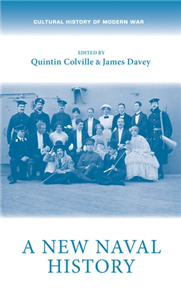
        A new naval history

        by Quintin Colville, James Davey, Katherine Parker, Elaine Chalus, Evan Wilson, Barbara Korte, Cicely Robinson, Cindy McCreery, Ellie Miles, Mary A. Conley, Jonathan Rayner, Daniel Spence, Emma Hanna, Ulrike Zimmerman, Max Jones, Jan Rüger

        A New Naval History brings together the most significant and interdisciplinary approaches to contemporary naval history. The last few decades have witnessed a transformation in how this field is researched and understood and this volume captures the state of a field that continues to develop apace. It examines - through the prism of naval affairs - issues of nationhood and imperialism; the legacy of Nelson; the socio-cultural realities of life in ships and naval bases; and the processes of commemoration, journalism and stage-managed pageantry that plotted the interrelationship of ship and shore. This bold and original publication will be essential for undergraduate and postgraduate students of naval and maritime history. Beyond that, though, it marks an important intervention into wider historiographies that will be read by scholars from across the spectrum of social history, cultural studies and the analysis of national identity.

      • Trusted Partner
        Lifestyle, Sport & Leisure
        September 2024

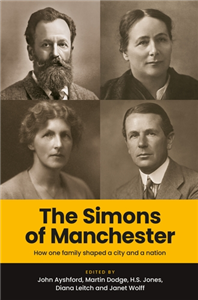
        The Simons of Manchester

        How one family shaped a city and a nation

        by Martin Dodge, John Ayshford, Diana Leitch, Stuart Jones, Janet Wolff

        The Simons of Manchester revives the history of one of Manchester's most influential families, the Simons. The book investigates the lives and public work of Henry and Emily Simon, and Ernest and Shena Simon. Through philanthropy and work in social reform, the two generations of the Simons greatly enriched Manchester's cultural and civic institutions, worked to improve the lives of its citizens, and helped to spearhead profound national reforms in health, housing, planning and education. While many people in Manchester are familiar with the Simon name through Shena Simon College, Simonsway, and the Simon Building at the University of Manchester, there is scant public knowledge of who the Simons were and their legacy. As such, this edited volume of collected essays aims to illuminate their fascinating lives and public service to rehabilitate the Simons and examine their local and national significance.

      • Trusted Partner
        February 2022

        On Narrative

        Poetry of Everyday

        by Hermann Bausinger

        Narrative art Narrating is an art that is gifted to everyone. Narrative, for Hermann Bausinger, begins from the moment we wait together for the bus. When we complain of it being late again and the stories that emerge about travel by bus. The well-known cultural academic is also luckily a gifted narrator. His book is an extremely vivid and descriptive account of the multiple varieties of narrative. He takes us into the rich world of storytelling of fairy tales and fables, invoking the wit of language, focusing on narrative theory and the special significance of narrative in the online age. Full of variety and wonderful examples, Bausinger lets the narrative, and the stories shine. Because for him storytelling, our relationship with language, is what defines us as human beings.

      Subscribe to our

      newsletter