
Agriculture & International Development
Textbooks, research and professional titles in Agriculture and International Development
View Rights Portal
Textbooks, research and professional titles in Agriculture and International Development
View Rights Portal
La Pollera's catalog includes narrative, essay, and chronicle of contemporary and classic authors.
View Rights Portal


This important book provides new understandings of how the politics of memory impacts peace in societies transitioning from a violent past. It does so by developing a theoretical approach focusing on the intersection of sites, agency, narratives, and events in memory-making. Drawing on rich empirical studies of mnemonic formations in Cyprus, Bosnia and Herzegovina, Rwanda, South Africa and Cambodia, the book speaks to a broad audience. The in-depth, cross-case analysis shows that inclusivity, pluralism, and dignity in memory politics are key to the construction of a just peace. The book contributes crucial and timely knowledge about societies that grapple with the painful legacies of the past and advances the study of memory and peace.
 Trusted Partner
Trusted Partner
Trusted Partner
 Trusted Partner
The politics of Middle English parables examines the dynamic intersection of fiction, theology and social practice in late-medieval England. Parables occupy a prominent place in Middle English literature, appearing in dream visions and story collections as well as in lives of Christ and devotional treatises. While most scholarship approaches the translated stories as stable vehicles of Christian teaching, this book highlights the many variations and points of conflict across Middle English renditions of the same story. In parables related to labour, social inequality, charity and penance, the book locates a creative theological discourse through which writers attempted to re-construct Christian belief and practice. Analysis of these diverse retellings reveals not what a given parable meant in a definitive sense but rather how Middle English parables inscribe the ideologies, power structures and cultural debates of late-medieval Christianity.
Trusted Partner
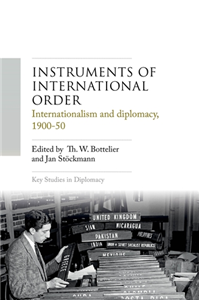
During the first half of the twentieth century, world politics was reshaped in pursuit of a new international order. The ideological foundations of the 'new diplomacy' (and its fate during the interwar period) are well known. This book instead examines the practices of internationalism and diplomacy from the First Hague Conference of 1899 to the aftermath of the Second World War. By focusing on these practices, such as disarmament regimes or public diplomacy, and their use as instruments to build international order(s), it emphasises the constructed, contested, and experimental character of what subsequently became a standard repertoire of international politics. Essays from a range of interdisciplinary scholars address well-established principles such as self-determination, and also less prominent practices such as small arms control or parliamentary inquiry. The book makes a major contribution to the growing historiography on twentieth-century internationalism.
Trusted Partner
During the first half of the twentieth century, world politics was reshaped in pursuit of a new international order. The ideological foundations of the 'new diplomacy' (and its fate during the interwar period) are well known. This book instead examines the practices of internationalism and diplomacy from the First Hague Conference of 1899 to the aftermath of the Second World War. By focusing on these practices, such as disarmament regimes or public diplomacy, and their use as instruments to build international order(s), it emphasises the constructed, contested, and experimental character of what subsequently became a standard repertoire of international politics. Essays from a range of interdisciplinary scholars address well-established principles such as self-determination, and also less prominent practices such as small arms control or parliamentary inquiry. The book makes a major contribution to the growing historiography on twentieth-century internationalism.
Trusted Partner
A short but comprehensive textbook for students of British politics which interprets changes over the last thirty years and analyses institutions within the context of British society and economics. ;
Trusted Partner
This volume offers new practical and theoretical perspectives on one of the most complex questions regarding the formation of international law, namely that actors other than states contribute to the making of customary international law. Notwithstanding the International Law Commission's valuable contribution, the making of customary international law remains riddled with acute practical and theoretical controversies that continue to be intensively debated. Making extensive reference to the case-law of international law courts and tribunals, as well as the most recent scholarly work on customary international law, this volume provides a comprehensive study of the contribution of international organisations and non-state actors to the formation of customary international law. With innovative tools and guidance for law students, legal scholars, and researchers in law, as well as legal practitioners, advisers, judges, arbitrators, and counsels, this collection is essential reading for those wishing to understand and address contemporary questions of international law-making.
Trusted Partner
This book offers a comprehensive study of racialisation of Romani communities in Europe (and beyond). Drawing on the idea of unbelonging it demonstrates how Romani communities are placed in a position of visceral visibility by local, national and international institutions as well as public media discourses. It shows how such positionality impacts the ability of Roma to self-represent politically and build capacity for change. From the position of unbelonging the book offers an account of Romani agency which both challenges the mainstream representations of Roma but also develops an alternative none-nation-state sense of belonging. In doing so the book outlines an account of Romani alternative expressions in order to take control of their relationship with their own history, future, knowledge, and identity, and the rest of the society.
Trusted Partner

This book offers the first authoritative guide to assumptions about time in theories of contemporary world politics. It demonstrates how predominant theories of the international or global 'present' are affected by temporal assumptions, grounded in western political thought, that fundamentally shape what we can and cannot know about world politics today. The first part of the book traces the philosophical roots of assumptions about time in contemporary political theory. The second part examines contemporary theories of world politics, including liberal and realist International Relations theories and the work of Habermas, Hardt and Negri, Virilio and Agamben. In each case, it is argued, assumptions about political time ensure the identification of the particular temporality of western experience with the political temporality of the world as such and put the theorist in the unsustainable position of holding the key to the direction of world history. In the final chapter, the book draws on postcolonial and feminist thinking, and the philosophical accounts of political time in the work of Derrida and Deleuze, to develop a new 'untimely' way of thinking about time in world politics. ;
Trusted Partner

This introductory text, written by an established authority on communist and post-communist politics, describes how Vladimir Putin has turned to those with backgrounds in the military and security structures to provide stability in today's Russian Federation, following the democratising reforms of Gorbachev and the ensuing instability of the Yeltsin presidency. Against the background of an increasing authoritarianism, which has restored features of the Soviet political system, it examines the attempts by social and economic groups to assert themselves against the state using embryonic democratic forms that fall far short of pluralism. The book's fourteen chapters offer an exceptionally broad coverage. It will appeal to first- and second-year students in higher education, but its deliberately accessible style will also make it attractive to sixth-form students and the general reader. ;
Trusted Partner
Provides a comprehensive introduction to the political system and processes of western Europe. Demonstrates clearly that political decisions are made in the context of specific historical developments, geographical constraints and social demands. Fully updated to take account of the recent French, British and Italian general elections as well as the momentous changes that have taken place in global politics as a result of the September 11 terrorist attacks, and the preparations for EU enlargement. Chapters on the European Union and democracy in western Europe have been substantially revised to take account of globalisation and recent political corruption issues. ;
Trusted Partner
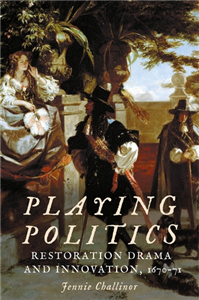
This study focuses on the 1670-71 season in the Restoration playhouses, an exciting and formative moment in theatrical and political history. The year proved to be difficult and damaging to King Charles II, as political, religious, and personal matters provoked controversy and disquiet, and the country teetered on the brink of major constitutional problems. My research sets drama against this backdrop. Theatrical records for this period are patchy and, for the most part, frustratingly incomplete: this book does not attempt to reconstruct the day-to-day operations of the playhouses, but rather it uses the available evidence of the extant new and revived plays we know (or believe) to have been performed in the 1670-71 theatrical season, and argues that this was the period in which serious and far-reaching political and dramatic questions began to be seriously asked and (tentatively) answered.
Trusted Partner
Trusted Partner
From Diane Abbott to Hugo Young via Keynesianism and Thatcherism, from Major to Millbank and from New Labour to Norman Tebbitt, this book is the ultimate student reference guide to British politics. The 2nd edition has been fully updated to take account of all the changes that have taken place in British politics since 2004. With over one thousand entries, the book covers the personalities, policies and institutions that have shaped British politics, with special emphasis on developments since the beginning of the twentieth century. This is the ideal instant reference book on British politics. It provides the reader with short, authoritative explanations and definitions of key terms, institutions, offices of state, political events, processes and policies as well as biographies of well known politicians, political thinkers, movements and theorists. Any student unsure of a term, an event, the details of the life of a prominent politician, or the inner workings of an institution can turn to this book for immediate assistance. ;
Trusted Partner
This book offers a nuanced snapshot of the complex geopolitical dynamics in the Persian Gulf, underlining the interaction between Iran, Saudi Arabia, and the US. Examining their interwoven relations since the 1970s, Luíza Cerioli's framework reveals how changes in US-Saudi ties have ripple effects on Iran-US and Iran-Saudi relations and vice versa. Using a historical lens, she explores how enduring US-Saudi connections hinge on order expectations, delves into the cognitive factors shaping US-Iran enmity and traces the source of oscillation in the Saudi-Iran ties. Employing Neoclassical Realism, the book investigates status-seeking, national identities and leadership preferences, offering a deeper understanding of the region's multipolar system. By combining International Relations and Middle East Studies, Cerioli's work contributes to both fields, unravelling the intricate interplay between international structures, regional nuances and agency in shaping Persian Gulf geopolitics.
Trusted Partner

Do dogs belong with humans? Scientific accounts of dogs' 'species story,' in which contemporary dog-human relations are naturalised with reference to dogs' evolutionary becoming, suggest that they do. Dog politics dissects this story. This book offers a rich empirical analysis and critique of the development and consolidation of dogs' species story in science, asking what evidence exists to support it, and what practical consequences, for dogs, follow from it. It explores how this story is woven into broader scientific shifts in understandings of species, animals, and animal behaviours, and how such shifts were informed by and informed transformative political events, including slavery and colonialism, the Second World War and its aftermath, and the emergence of anti-racist movements in the twentieth and twenty-first centuries. The book pays particular attention to how species-thinking bears on 'race,' racism, and individuals.
Trusted Partner
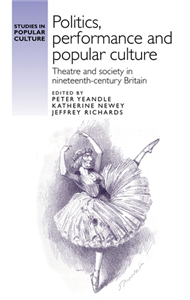
This collection brings together studies of popular performance and politics across the nineteenth century, offering a fresh perspective from an archivally grounded research base. It works with the concept that politics is performative and performance is political. The book is organised into three parts in dialogue regarding specific approaches to popular performance and politics. Part I offers a series of conceptual studies using popular culture as an analytical category for social and political history. Part II explores the ways that performance represents and constructs contemporary ideologies of race, nation and empire. Part III investigates the performance techniques of specific politicians - including Robert Peel, Keir Hardie and Henry Hyndman - and analyses the performative elements of collective movements.
Trusted Partner



