Your Search Results

      • Dylan-Related-Books (Agentur für englishsprachige Dylan-Autoren und Literatur)

        Dylan-Related-Books is a literature agency only for books with a relation to the artist and the many different themes, which he´s able to connect with his songs. It´s about the aim to bring this special field in writing to a German readership, which might get the lyrics in a song, but have some struggle to get through a sophisticated analysis of a song. Dylan-Related-books is also a network of and for Dylan-authors and presents the new books of the Dylan-Kosmos in a series of musical readings, the ONE-MORE-CUP-OF-COFFEE-READINGS. To realize these projects, especially during the culture cutting times of Corona the agency is running a Crowdfunding-Campain which is explore on startnext.com/one-more-cup-of-coffee-reading

        View Rights Portal
      • Agriculture & International Development

        Textbooks, research and professional titles in Agriculture and International Development

        View Rights Portal
      • Trusted Partner
      • Trusted Partner
        Business, Economics & Law
        January 2026

        International organisations, non-State actors, and the formation of customary international law

        by Sufyan Droubi, Jean d'Aspremont

        This volume offers new practical and theoretical perspectives on one of the most complex questions regarding the formation of international law, namely that actors other than states contribute to the making of customary international law. Notwithstanding the International Law Commission's valuable contribution, the making of customary international law remains riddled with acute practical and theoretical controversies that continue to be intensively debated. Making extensive reference to the case-law of international law courts and tribunals, as well as the most recent scholarly work on customary international law, this volume provides a comprehensive study of the contribution of international organisations and non-state actors to the formation of customary international law. With innovative tools and guidance for law students, legal scholars, and researchers in law, as well as legal practitioners, advisers, judges, arbitrators, and counsels, this collection is essential reading for those wishing to understand and address contemporary questions of international law-making.

      • Trusted Partner
        Humanities & Social Sciences
        July 2016

        Romantic narratives in international politics

        by Alexander Spencer

      • Trusted Partner
        Humanities & Social Sciences
        July 2025

        International Relations in a multipolar Middle East

        by Francesco Belcastro, Edward Wastnidge

        This volume explores the international relations of today's Middle East, a region that has become increasingly multi-polar. The tumult following the Arab Uprisings has expanded the arenas competed over by regional powers, global actors and non-state players. The United States, once seemingly intent on a hegemonic 'Pax Americana' has stepped back, leaving powers such as Russia, China, India and the EU, with opportunities to increase their reach and expand their influence. Meanwhile, regional rivalries and alliances have continued to shape conflict and cooperation in the Middle East. As global politics moves towards a new, multipolar era, this volume sheds important light on how this transition will impact on the region. Comprised of two macro sections that offer theoretical reflections and empirical case studies, this volume is essential reading for scholars of the politics and international relations of the Middle East.

      • Trusted Partner
        Humanities & Social Sciences
        December 2024

        Iran, Saudi Arabia and the United States

        Power, identity and strategy in the Persian Gulf triangle

        by Luíza Cerioli

        This book offers a nuanced snapshot of the complex geopolitical dynamics in the Persian Gulf, underlining the interaction between Iran, Saudi Arabia, and the US. Examining their interwoven relations since the 1970s, Luíza Cerioli's framework reveals how changes in US-Saudi ties have ripple effects on Iran-US and Iran-Saudi relations and vice versa. Using a historical lens, she explores how enduring US-Saudi connections hinge on order expectations, delves into the cognitive factors shaping US-Iran enmity and traces the source of oscillation in the Saudi-Iran ties. Employing Neoclassical Realism, the book investigates status-seeking, national identities and leadership preferences, offering a deeper understanding of the region's multipolar system. By combining International Relations and Middle East Studies, Cerioli's work contributes to both fields, unravelling the intricate interplay between international structures, regional nuances and agency in shaping Persian Gulf geopolitics.

      • Trusted Partner
        Humanities & Social Sciences
        June 2026

        The Persian Gulf triangle

        Strategic relations between Iran, Saudi Arabia and the United States

        by Luíza Cerioli

        This book offers a nuanced snapshot of the complex geopolitical dynamics in the Persian Gulf, underlining the interaction between Iran, Saudi Arabia, and the US. Examining their interwoven relations since the 1970s, Luíza Cerioli's framework reveals how changes in US-Saudi ties have ripple effects on Iran-US and Iran-Saudi relations and vice versa. Using a historical lens, she explores how enduring US-Saudi connections hinge on order expectations, delves into the cognitive factors shaping US-Iran enmity and traces the source of oscillation in the Saudi-Iran ties. Employing Neoclassical Realism, the book investigates status-seeking, national identities and leadership preferences, offering a deeper understanding of the region's multipolar system. By combining International Relations and Middle East Studies, Cerioli's work contributes to both fields, unravelling the intricate interplay between international structures, regional nuances and agency in shaping Persian Gulf geopolitics.

      • Trusted Partner
        Humanities & Social Sciences
        September 2019

        The genesis of international mass migration

        by Eric Richards

      • Trusted Partner
      • Trusted Partner
        Humanities & Social Sciences
        September 2023

        International law in Europe, 700–1200

        by Jenny Benham

        Was there international law in the Middle Ages? Using treaties as its main source, this book examines the extent to which such a system of rules was known and followed in the period 700 to 1200. It considers how consistently international legal rules were obeyed, whether there was a reliance on justification of action and whether the system had the capacity to resolve disputed questions of fact and law. The book further sheds light on issues such as compliance, enforcement, deterrence, authority and jurisdiction, challenging traditional ideas over their role and function in the history of international law. International law in Europe, 700-1200 will appeal to students and scholars of medieval Europe, international law and its history, as well as those with a more general interest in warfare, diplomacy and international relations.

      • Trusted Partner
        Humanities & Social Sciences
        October 2012

        The European Union and industrial relations

        New procedures, new context

        by Emil Kirchner, Stijn Smismans, Thomas Christiansen

        This is the first book to provide a clear overview and innovative analysis of the multiple ways the European Union affects industrial relations. It frames the EU as the provider of both a new institutional framework and policy context for industrial relations. It first examines the European level institutional framework for industrial relations, namely the European social dialogue at cross-sectoral, sectoral and company level, as well as interactions between these and transnational developments. It then focuses on the EU's role as a driver for institutional change in industrial relations at the national level, and subsequently analyses how the EU's policy framework, such as the common market freedoms, economic governance and Agenda 2020, influences industrial relations. The book will be of great interest particularly to all those involved in industrial relations and EU studies and more generally to anyone interested in the EU's debated and contested role in socio-economic governance in the face of an economic crisis that puts into question existing national and transnational governance structures. ;

      • Trusted Partner
        Humanities & Social Sciences
        December 2009

        Managing EU-US relations

        Actors, institutions and the new translatlantic agenda

        by Rebecca Steffenson

        This book examines developments in EU-US political and economic relations in the 1990s. It contributes to the existing literature by combining knowledge about actors and institutions to outline the transatlantic decision-making process. It focuses not only on how states co-operate but how they effectively govern the transatlantic marketplace and the international political order through transatlantic institutions. Studying transatlantic governance enables us to understand not only how domestic, or EU level, decision-making structures affect transatlantic decisions but also how transatlantic decisions affect domestic institutions. In short, employing decision-making structures as an analytical approach helps us identify who governs and how, and who or what determines policy outcomes. This book is the result of a comprehensive research project and it includes detailed case studies on EU-US efforts to fight people-trafficking, EU-US regulatory co-operation in the form of Mutual Recognition Agreements and the transatlantic trade dispute over bananas. The book is aimed at anyone with an interest in what transatlantic relations entail outside the confines of NATO security. ;

      • Trusted Partner
        Humanities & Social Sciences
        April 2025

        Britain’s 'Mr X’

        Sir Frank Roberts and the making of British foreign policy, 1930-68

        by Jonathan Colman

        Over four decades as a diplomat, Sir Frank Roberts dealt with headline issues, including policy towards Germany during the years of appeasement, the Second World War alliance with the Soviet Union, the origins of the Cold War, NATO affairs, the Berlin and Cuban Missile Crises, European integration, and relations with the Federal Republic of Germany. Collaborating with the renowned American diplomat, George F. Kennan (the cryptonymous author 'X' of an influential 1947 article), his despatches from Moscow in 1946 shaped Britain's Cold War strategy. In 1954 he played an integral part in the diplomacy behind the rearmament of the Federal Republic and her incorporation into NATO, helping to build an enduring structure of transatlantic security. Roberts' career sheds new light on British foreign policy across an era in which Britain slipped from global pre-eminence to regional power status.

      • Trusted Partner
      • Trusted Partner
      • Trusted Partner
        Humanities & Social Sciences
        January 2026

        Prussians, Nazis and Peaceniks

        by Jens Steffek, Leonie Holthaus

      • Trusted Partner
        Business, Economics & Law
        May 2025

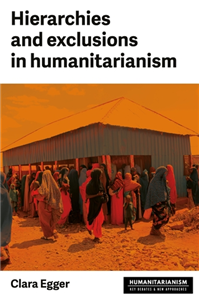
        Hierarchies and exclusion in humanitarianism

        by Clara Egger, Andrea Schneiker

        While humanitarians generally present themselves as 'do-gooders' and use this image to gather support and funding, this edited volume addresses hierarchies and exclusions in humanitarianism - an issue that has gained increased attention. Contributions analyse how hierarchies, power asymmetries and exclusion emerge, are maintained and can ultimately be challenged in humanitarian governance. Leading scholars on humanitarianism coming from a variety of disciplinary fields such as international relations, philosophy, organisational science and management, and sociology analyse exclusion dynamics at the individual, organisational and structural levels. Authors thereby combine data from a diverse range of methods, including ethnography, survey and statistical analysis. The volume informs current efforts to increase inclusiveness and equity in humanitarian practice.

      • Trusted Partner
        Humanities & Social Sciences
        February 2026

        Diplomatic training

        Histories, geographies, politics

        by Ruth Craggs, Jonathan Harris, Fiona McConnell

        Despite the essential role diplomatic training plays in the everyday workings of international relations, international law and in the various multilateral organisations, this practice has received little critical attention in the humanities, social and political sciences. Bringing together detailed accounts of the histories, development and contemporary practices of diplomatic training with insights from key practitioners, this edited collection places training centrally within our understanding of international relations. It argues that diplomatic training both reflects and reproduces hegemonic power relations, whilst at the same time offering opportunities to contest them, and imagine alternative futures. The book includes a substantive introduction, nine full-length chapters from a range of disciplinary and regional perspectives drawing on archival research, oral history, interviews, and ethnographic methods, and four 'interventions': reflection pieces from trainers and directors of training programmes. It offers a globe-spanning, interdisciplinary account of the politics of diplomatic training and appeals to both scholarly and practitioner audiences.

      • Trusted Partner
        Business, Economics & Law
        January 2026

        Cinematic perspectives on international law

        by Olivier Corten, Francois Dubuisson, Martyna Falkowska-Clarys

        Why are constitutionalist ideals so prominent in science fiction? Does Independence Day depict self-defence as a legal concept with absolute limits? Is international law lost in space? This innovative interdisciplinary volume represents the first exploration of the relationship between international law and cinema. From Star Wars to Werner Herzog, The Godfather to The West Wing, this book uncovers a diverse range of representations of international law and its norms in film and television. Examining the wider links between international law, cinema, and ideology, the contributions not only examine visual representations of international law, but they offer an essential insight into the functions fulfilled by these cinematic representations. Providing an extraordinary introduction to a variety of perspectives on core international legal questions, Cinematic perspectives on international law extends a valuable methodology by which international lawyers can critique the depiction of international law in film.

      Subscribe to our

      newsletter