
Hunan Literature and Art Publishing House
Publisher of fine Literature and Art books from China.
View Rights Portal
Publisher of fine Literature and Art books from China.
View Rights Portal
Flanders Literature opens a window on the dynamic and diverse literary landscape in the northern part of Belgium. It puts translators from Dutch in the spotlight and highlights the works of Flemish authors and illustrators abroad. Flanders Literature supports the publication of translations and literary tours abroad by means of grants, that can be applied for by foreign publishers and festival organisers.
View Rights Portal

Von Berlin geht eine Faszination aus, die bis nach Israel ausstrahlt. Immer mehr jüngere Israelis zieht es heute in die alt-neue deutsche Hauptstadt. Geht man dieser Faszination nach, begibt man sich auf einen Weg, der ins Zentrum der vielfältig verflochtenen und gebrochenen jüdischen und deutschen Geschichte führt. Weder das Berlin der Weimarer Republik noch die Hauptstadt des 'Dritten Reichs' ist von der historisch-imaginären Landkarte Israels wegzudenken. Tausende von gebürtigen Berlinern sind Israelis geworden, prägende hebräische Schriftsteller wie Lea Goldberg und S. J. Agnon haben entscheidende Jahre in Berlin verbracht. Israel hat auch eine Berliner, eine europäische Vergangenheit. Die israelische Historikerin Fania Oz-Salzberger hat ein Jahr in Berlin gelebt und sich mit den eigenen gemischten Gefühlen wie mit denen anderer Israelis zu diesem gleichermaßen realen und imaginären Ort auseinandergesetzt. Wie Erich Kästners Emil, einem Helden ihrer Kindheitsbücher, entdeckt sie bei ihrer Reise durch Berlin vieles, was ihr die eigene Welt neu erschließt, ihre Wahrnehmung für bestimmende Momente des israelischen kulturellen Codes schärft. Lebendig und erhellend erzählt sie von Begegnungen in und mit Berlin, von den Erfahrungen und Familienerinnerungen einzelner, viele individuelle Geschichten, die eine Welt wiederauferstehen lassen, die es nicht mehr gibt und die doch fortwirkt – ein Erbe, das Israelis und Deutsche heute zugleich dauerhaft verbindet und trennt.


Middle English literature is intimately concerned with sleep and the spaces in which it takes place. In the medieval English imagination, sleep is an embodied and culturally determined act. It is both performed and interpreted by characters and contemporaries, subject to a particular habitus and understood through particular hermeneutic lenses. While illuminating the intersecting medical and moral discourses by which it is shaped, sleep also sheds light on subjects in favour of which it has hitherto been overlooked: what sleep can enable (dreams and dream poetry) or what it can stand in for or supersede (desire and sex). This book argues that sleep mediates thematic concerns and questions in ways that have ethical, affective and oneiric implications. At the same time, it offers important contributions to understanding different Middle English genres: romance, dream vision, drama and fabliau.
 Trusted Partner
This book analyses the international phenomenon of private peace entrepreneurs. These are private citizens with no official authority who initiate channels of communication with official representatives from the other side of a conflict in order to promote a conflict resolution process. It combines theoretical discussion with historical analysis, examining four cases from different conflicts: Norman Cousins and Suzanne Massie in the Cold War, Brendan Duddy in the Northern Ireland conflict and Uri Avnery in the Israeli-Palestinian conflict. The book defines the phenomenon, examines the resources and activities of private peace entrepreneurs and their impact on the official diplomacy, and examines the conditions under which they can play an effective role in peace-making processes. This book is relevant to United Nations Sustainable Development Goal 16, Peace, justice and strong institutions.
Trusted Partner
As literary theory has grown more influential, interdisciplinary and sophisticated, it has come to concern itself with a much greater range of issues and objects than those traditionally considered literary. It now addresses philosophy, history, psychology, politics and the media. Addressing a central and fundamental, but relatively neglected, issue in literary theory, this title seeks to recontextualise how theory has changed our understanding of literature and its questions by relating literature to the institution of the university, to ethical judgements and values, new media and computer technology and the nature of representative democracy. ;
Trusted Partner
Popular culture is invariably a vehicle for the dominant ideas of its age. Never was this truer than in the late-nineteenth and early twentieth centuries, when it reflected the nationalist and imperialist ideologies current throughout Europe. It both reflects popular attitudes, ideas and preconceptions and it generates support for selected views and opinions. This book examines the various media through which nationalist ideas were conveyed in late-Victorian and Edwardian times: in the theatre, "ethnic" shows, juvenile literature, education and the iconography of popular art. It seeks to examine in detail the articulation and diffusion of imperialism in the field of juvenile literature by stressing its pervasiveness across boundaries of class, nation and gender. It analyses the production, distribution and marketing of imperially-charged juvenile fiction, stressing the significance of the Victorians' discovery of adolescence, technological advance and educational reforms as the context of the great expansion of such literature. An overview of the phenomenon of Robinson Crusoe follows, tracing the process of its transformation into a classic text of imperialism and imperial masculinity for boys. The imperial commitment took to the air in the form of the heroic airmen of inter-war fiction. The book highlights that athleticism, imperialism and militarism become enmeshed at the public schools. It also explores the promotion of imperialism and imperialist role models in fiction for girls, particularly Girl Guide stories.
Trusted Partner
 Trusted Partner
 Trusted Partner
This volume of essays is the first to be dedicated to the subject of intertextuality in modern Arabic literature. Beginning with a general overview of the topic by Roger Allen, it brings together essays on a range of writers from all parts of the Arab world, including, among others, Edwar al-Kharrat, Sa'd Allah Wannus, Najib Mahfuz, Rabi' Jabir, Salim Matar and the recently deceased Sudanese writer al-Tayyib Salih, whose seminal work Season of Migration to the North heralded a new phase in the modern Arabic literary tradition. The volume, which also includes two essays on aspects of intertextuality in Gulf literature, also discusses transformations of popular medieval literature such as the Alf Layla wa-Layla (the Thousand and One Nights) in modern Arabic literature. ;
Trusted Partner
 Trusted Partner
Trusted Partner
Trusted Partner
Over the course of a career spanning five decades, Jane Taylor has shown a commitment to the rehabilitation of the more neglected aspects of later medieval French literature. This volume brings together original contributions from scholars who have worked alongside Taylor and directly or indirectly benefitted from her example. The chapters demonstrate their authors' link to this legacy, and concomitantly underline the vibrancy and breadth of approach which is the hallmark of current later medieval studies. The essays in the collection centre on a number of key issues in the field: notions of literary self-consciousness and what it means to come after an avatar; issues of intertextuality and the appeal to past models in the creation of a new literary aesthetic (or a new literary criticism); and interdisciplinary questions of translation, reworking, and continuation. Essays in later medieval French literature seeks not only to illustrate the buoyant state of later medieval French literary studies but also, in so doing, to show how in broader terms responding to the legacy of an illustrious predecessor has not pejorative but positive consequences. ;
Trusted Partner
This is the first book-length history of the classic French children's author, the comtesse de Ségur. Virtually unknown in the English-speaking world, in France Ségur is a national icon and a cultural phenomenon. Generations of children have grown up reading her stories. This book combines a discussion of her life, her works, and their reception with a broader analysis of the cultural context of the mid-nineteenth century. It offers a unique insight into the political engagement of Catholic women through the medium of children's literature and education, and brings out new aspects of the history of publishing aimed at children, with particular reference to the market for books for girls. With its lively subject matter and accessible style, this book will appeal not only to scholars of nineteenth-century France, but also to specialists and students interested in the fields of children's literature, gender studies, and religious history. ;
Trusted Partner

Die israelische Historikerin Fania Oz-Salzberger hat ein Jahr in Berlin gelebt und sich mit ihren gemischten Gefühlen wie mit denen anderer Israelis zu diesem gleichermaßen realen und imaginären Ort auseinandergesetzt. Wie Erich Kästner Emil, einer der Helden ihrer Kindheitsbücher, entdeckt sie bei ihrem Aufenthalt vieles, was ihr die eigene Welt neu erschließt. Das Berlin der Kaiserzeit und der Weimarer Republik wie die Hauptstadt des »Dritten Reichs« haben ihre Spuren in der israelischen Welt hinterlassen. Lebendig und erhellend erzählt Fania Oz-Salzberger von Begegnungen in und mit Berlin – viele individuelle Geschichten, die einen hineinführen in die vielfältig verflochtene und gebrochene jüdische, israelische und deutsche Geschichte – ein Erbe, das Israelis und Deutsche heute verbindet und trennt.
Trusted Partner
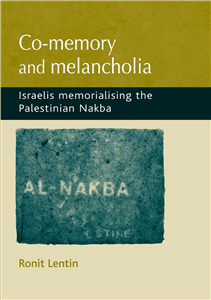
The 1948 war that led to the creation of the State of Israel also resulted in the destruction of Palestinian society when some 80 per cent of the Palestinians who lived in the major part of Palestine upon which Israel was established became refugees. Israelis call the 1948 war their 'War of Independence' and the Palestinians their 'Nakba', or catastrophe. After many years of Nakba denial, land appropriation, political discrimination against the Palestinians within Israel and the denial of rights to Palestinian refugees, in recent years the Nakba is beginning to penetrate Israeli public discourse. This book, available at last in paperback, explores the construction of collective memory in Israeli society, where the memory of the trauma of the Holocaust and of Israel's war dead competes with the memory claims of the dispossessed Palestinians. Against a background of the Israeli resistance movement, Lentin's central argument is that co-memorating the Nakba by Israeli Jews is motivated by an unresolved melancholia about the disappearance of Palestine and the dispossession of the Palestinians, a melancholia that shifts mourning from the lost object to the grieving subject. Lentin theorises Nakba co-memory as a politics of resistance, counterpoising co-memorative practices by internally displaced Israeli Palestinians with Israeli Jewish discourses of the Palestinian right of return, and questions whether return narratives by Israeli Jews, courageous as they may seem, are ultimately about Israeli Jewish self-healing rather than justice for Palestine.
Trusted Partner
Trusted Partner
 Trusted Partner

Zionism in Arab discourses presents a ground-breaking study of the Arab-Israeli conflict. Through analyses of hundreds of texts written by Arab Islamists and liberals from the late-nineteenth century to the 'Arab Spring', the book demonstrates that the Zionist enterprise has played a dual function of an enemy and a mentor. Islamists and liberals alike discovered, respectively, in Zionism and in Israeli society qualities they sought to implement in their sown homelands. Focusing on Palestinian, Egyptian, Syrian and Jordanian political discourses, this study uncovers fascinating and unexpected Arab points of views on different aspects of Zionism; from the first Zionist Congress to the First Lebanon War; from gardening in the early years of Tel Aviv to women's service in the Israeli Defence Forces; from the role of religion in the creation of the state to the role of democracy in its preservation. This study presents the debates between and within contesting Arab ideological trends on a conflict that has shaped, and is certain to continue and shape, one of the most complicated regions in the world. ;
Trusted Partner
Combining the fields of evolutionary economics and the humanities, this book examines McCarthy's literary works as a significant case study demonstrating our need to recognise the interrelated complexities of economic policies, environmental crises, and how public policy and rhetoric shapes our value systems. In a world recovering from global economic crisis and poised on the brink of another, studying the methods by which literature interrogates narratives of inevitability around global economic inequality and eco-disaster is ever more relevant.
Trusted Partner
Tattoos in crime and detective narratives examines representations of the tattoo and tattooing in literature, television and film, from two periods of tattoo renaissance (1851-1914, and c1955 to present). It makes an original contribution to understandings of crime and detective genre and the ways in which tattoos act as a mimetic device that marks and remarks these narratives in complex ways. With a focus on tattooing as a bodily narrative, the book incorporates the critical perspectives of posthumanism, spatiality, postcolonialism, embodiment and gender studies. The grouped essays examine the first tattoo renaissance, the rebirth of the tattoo in contemporary culture through literature, children's literature, film and television. The collection has a broad appeal, and will be of interest to all literature and media scholars, but in particular those with an interest in crime and detective narratives and skin studies.
Trusted Partner
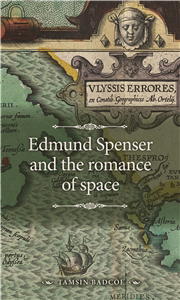
Edmund Spenser and the romance of space advances the exploration of literary space into new areas, firstly by taking advantage of recent interdisciplinary interests in the spatial qualities of early modern thought and culture, and secondly by reading literature concerning the art of cosmography and navigation alongside imaginative literature with the purpose of identifying shared modes and preoccupations. The book looks to the work of cultural and historical geographers in order to gauge the roles that aesthetic subjectivity and the imagination play in the development of geographical knowledge: contexts ultimately employed by the study to achieve a better understanding of the place of Ireland in Spenser's writing. The study also engages with recent ecocritical approaches to literary environments, such as coastlines, wetlands, and islands, thus framing fresh readings of Spenser's handling of mixed genres.



