
Facultas Verlag
Das facultas Verlagsprogramm umfasst Lehr- und Studienbücher wie auch Forschungs- und Fachliteratur
View Rights Portal
Das facultas Verlagsprogramm umfasst Lehr- und Studienbücher wie auch Forschungs- und Fachliteratur
View Rights Portal Trusted Partner

Hanser Publishers represents a wide range of products and concentrates at the same time on clearly defined target groups: Engineers and Technicians in training and at work in the following fields: Metalworking, Plastics Technology, Electrical engineering and Electronics, Computers, Economy and Management. Our portfolio has a range from Journals, Books, Training Books and electronic media up to seminars and conferences in German and in English language. Additionally Hanser provides information for different branches in the World Wide Web. Hanser Publishers also provides 25 Journals and about 200 new books each year. The whole backlist of books counts up to about 2,000 titles. With this amount of Books and Journals Hanser Publishers is one of the leading Publishing Houses in Germany. Our success mainly derives from the high quality of our products and content, from the expertise of our staff and their ability to identify new trends and products. Our strong and close ties to the industry and leading research institutes are the basis for a close cooperation with our authors. Supported by synergies of our books, journals, seminars and the World Wide Web we are accompanying our authors from their first discover of new technologies in form of an article in one of our journals till the maturity of a technology in form of an uptodate handbook. Characteristic for Hanser Publishers are its numerous cooperations with partners in Germany and other countries. The Journal “Kunststoffe” for example is the official Publication of the VDI-Society, the leading society of engineers in Germany. Our Journal “Qualität und Zuverlässigkeit” is the official publication of the “Deutsche Gesellschaft für Qualität (DGQ)”. Also the Books are made in close cooperation with leading companies, associations and Universities.
View Rights Portal

Lisa Downing's comprehensive study of the films of Patrice Leconte traces lines of continuity and revision through a body of apparently disparate films whose "messages" often appear both contradictory and controversial. Pursuing a close reading of the recurrent themes, styles, intertexts and techniques which structure Leconte's filmmaking, Downing re-evaluates Leconte's status as an enigmatic artist offering complex and paradoxical commentary on contemporary questions of sexuality, ethics and identity. This book is the first full-length critical work in English on Leconte's cinema. It provides essential reading for both enthusiasts of French cinema and for those fascinated by the relationship between popular culture and theory.
Trusted Partner
 Trusted Partner

A smart, incisive toolkit for understanding how the framing of information influences the way we think about it. In today's chaotic media landscape, working out who and what to believe is a daunting task. Lies and misinformation are only part of the problem - often the way a story is presented has just as much effect on us as what the story is. In Framing, sociologist Mikael Klintman offers a cutting-edge toolkit for exposing and analysing the rhetoric that saturates our everyday lives. Combining insights from the social sciences, economics and evolutionary biology, he lays out a four-part approach to understanding how information is 'framed' for us, built around the key elements of texture, temperature, position and size. Demonstrating this approach through an array of real-world examples, from climate change denial to the subtle messaging of caviar ads, Klintman reveals how canny communicators mislead us without relying on overt deception. At the same time, he probes the deeper evolutionary and cultural roots of our susceptibility to frames.
Trusted Partner
Trusted Partner

Cinesonica: sounding film and video explores previously neglected and under-theorised aspects of film and video sound, drawing on detailed case study analyses of Hollywood cinema, art cinema, animated cartoons, and avant-garde film and video. Adopting an interdisciplinary approach to the study of the soundtrack, and breaking away from the focus on narrative and signification that has tended to dominate the study of film sound, the book examines the way in which sound's materiality figures within audiovisual experience. Through a close examination of sound-image relations in a range of film and video forms and genres - including Warner Bros. cartoons, scratch video, and artist's film and video - Cinesonica recasts the film and video text as the meeting point of audio and visual materialities, cultural practices and perceptual activity. The interdisciplinary approach adopted by the book makes its discussion of sound of interest to those studying and working in a range of subject disciplines, including film studies, sound studies, sonic arts, cultural studies, music and art history.
Trusted Partner
 Trusted Partner
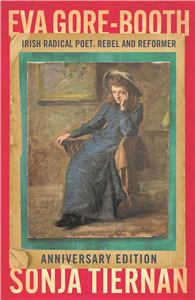
An acclaimed biography of poet, pacifist and political firebrand Eva Gore-Booth. The Irish poet and activist Eva Gore-Booth (1870-1926) led a life defiantly at odds with her aristocratic origins. Choosing to live and work among the poor of Manchester, she campaigned on behalf of barmaids, circus performers, flower sellers and pit-brow lasses, her partner, Esther Roper, at her side. Gore-Booth was tireless in her pursuit of justice. She was a militant pacifist during the First World War, a champion of Irish independence and a pioneering thinker on gender and sexuality. She was also a prolific author, publishing nineteen volumes of poetry and prose that reflect the full force of her radical convictions. Featuring a new preface that situates Gore-Booth's life and work in the context of our current political climate, this biography reclaims her place as a significant figure of Anglo-Irish letters and an unsung hero of LGBT+ history.
Trusted Partner
Trusted Partner
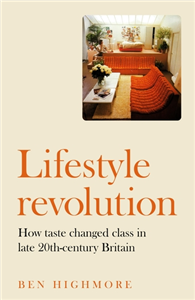
In postwar Britain, journalists and politicians prophesised that the class system would not survive a consumer culture where everyone had TVs and washing machines, and where more and more people owned their own homes. They were to be proved entirely wrong. In good taste charts how class culture, rather than being destroyed by mass consumption, was remade from flat-pack furniture, Mediterranean cuisine and lifestyle magazines. Novelists, cartoonists and playwrights satirised the tastes of the emerging middle classes, and sociologists claimed that an entire population was suffering from status anxiety, but underneath it all, a world was being constructed out of duvets, quiches and mayonnaise, easy chairs from Habitat, white emulsion paint and ubiquitous well-scrubbed, second-hand pine kitchen tables. This was less a world of symbolic goods and more an intimate environment alive with new feelings and attitudes.
Trusted Partner
This interdisciplinary volume explores the role of images and narratives in different borderscapes. Written by experienced scholars in the field, Border images, border narratives provides fresh insight into how borders, borderscapes, and migration are imagined and narrated in public and private spheres. Offering new ways to approach the political aesthetics of the border and its ambiguities, this volume makes a valuable contribution to the methodological renewal of border studies and presents ways of discussing cultural representations of borders and related processes. Influenced by the thinking of philosopher Jacques Rancière, this timely volume argues that narrated and mediated images of borders and borderscapes are central to the political process, as they contribute to the public negotiation of borders and address issues such as the in/visiblity of migrants and the formation of alternative borderscapes. The contributions analyse narratives and images in literary texts, political and popular imagery, surveillance data, border art, and documentaries, as well as problems related to borderland identities, migration, and trauma. The case studies provide a highly comparative range of geographical contexts ranging from Northern Europe and Britain, via Mediterranean and Mexican-USA borderlands, to Chinese borderlands from the perspectives of critical theory, literary studies, social anthropology, media studies, and political geography.
Trusted Partner
Trusted Partner
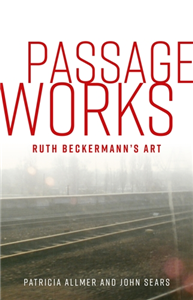
Passage Works is the first book-length English language critical analysis of the transdisciplinary work of the Austrian film-maker, writer, and artist Ruth Beckermann (b. 1952, Vienna). Beckermann's works interrogate identity and geography as formations of the intersections between the past and the contemporary. Taking as her central topics Austria and its history and politics, her own identity as a Jewish woman, and the contemporary global geopolitics of migration and displacement, Beckermann develops wider meditations in film, art, and writing on the persistence of European memory, and the meanings of Europe itself; on borders, migrations, and identities; on memories, traumas, and traditions; on the image as marker of presence and absence, repository of the traces of historical violence; and on the passage as metaphor for a range of physical, psychological, and ideological movements defining the complexities of contemporary cosmopolitan identities.
Trusted Partner

Despite its popularity when it first appeared in print in 1600, Every Man out of His Humour has never appeared as a single modern critical edition until now. The volume's introduction and annotations convey early modern obsessions with wealth and self-display by providing historical contexts and pointing out the continuity of those obsessions into modern life. The play is of interest because of its influence on the course of city comedy and its wealth of information about social relationships and colloquial language at the end of Elizabeth's reign. Jonson's experiments in generating theatrical meaning continued throughout his career, but Every Man out of His Humour - with its youthful vigour and extraordinary visualizations of the urban capacity for self-deceit - is a text that enriches the understanding of all the plays that come after it. ;
Trusted Partner
The debate about the Empire dealt in idealism and morality, and both sides employed the language of feeling, and frequently argued their case in dramatic terms. This book opposes two sides of the Empire, first, as it was presented to the public in Britain, and second, as it was experienced or imagined by its subjects abroad. British imperialism was nurtured by such upper middle-class institutions as the public schools, the wardrooms and officers' messes, and the conservative press. The attitudes of 1916 can best be recovered through a reconstruction of a poetics of popular imperialism. The case-study of Rhodesia demonstrates the almost instant application of myth and sign to a contemporary imperial crisis. Rudyard Kipling was acknowledged throughout the English-speaking world not only as a wonderful teller of stories but as the 'singer of Greater Britain', or, as 'the Laureate of Empire'. In the last two decades of the nineteenth century, the Empire gained a beachhead in the classroom, particularly in the coupling of geography and history. The Island Story underlined that stories of heroic soldiers and 'fights for the flag' were easier for teachers to present to children than lessons in morality, or abstractions about liberty and responsible government. The Education Act of 1870 had created a need for standard readers in schools; readers designed to teach boys and girls to be useful citizens. The Indian Mutiny was the supreme test of the imperial conscience, a measure of the morality of the 'master-nation'.
Trusted Partner

A journey to the Italian cinema that overturns established views and opens up new perspectives and interpretations. Its itinerary is organized in four stages. The first is an analysis of the theories of Cesare Zavattini on neorealism which overturns widely accepted positions both on Zavattini and on neorealism. The second confronts a key film of the post-war Italian cinema, Roberto Rossellini's Paisà, by examining the nature of its realism. The third is dedicated to Luchino Visconti: to questions of the use of language exemplified in his La terra trema, the use of settings, costume and light as agents of meaning in his Il Gattopardo and Vaghe stelle dell'Orsa. The final voyage of the film is to the physical and symbolic construction of heaven and earth in the work of Pasolini. Particular attention is given to the representation of the body in his last four films: the grotesque and mythical bodies in popular tradition in his Trilogia di vita and the tortured bodies destroyed by the mass media in Salò.
Trusted Partner
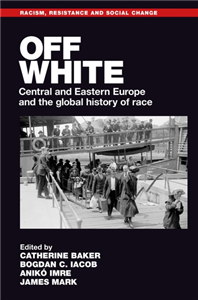
This volume foregrounds racial difference as a key to an alternative history of the Central and Eastern European region, which revolves around the role of whiteness as the unacknowledged foundation of semi-peripheral nation-states and national identities, and of the region's current status as a global stronghold of unapologetic white, Christian nationalisms. Contributions address the pivotal role of whiteness in international diplomacy, geographical exploration, media cultures, music, intellectual discourses, academic theories, everyday language and banal nationalism's many avenues of expressions. The book offers new paradigms for understanding the relationships among racial capitalism, populism, economic peripherality and race.
Trusted Partner
Trusted Partner
Trusted Partner



