
American Diabetes Association
The American Diabetes Association is the world’s largest publisher of titles on diabetes care and treatment, setting the standards of patient care based on the latest research.
View Rights Portal
The American Diabetes Association is the world’s largest publisher of titles on diabetes care and treatment, setting the standards of patient care based on the latest research.
View Rights Portal
Diametric Verlag is an independent publisher founded by Jutta A. Wilke providing high-quality specialized literature focused on women's issues like Women's Health, Gender Medicine and Feminism. All titles are published in German and available in print and digital editions.
View Rights Portal
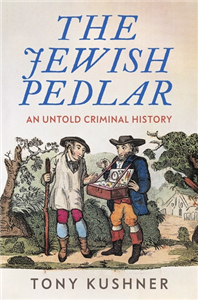
An imaginative investigation into a historical crime that sheds new light on Jewish history. In 1734 a pedlar turned smuggler named Jacob Harris slit the throats of three people in a pub in Sussex. This triple-murder, for which he was hanged and gibbeted, remains the most violent crime ever committed by a British Jew. Yet today it is all but forgotten. In The Jewish pedlar, Tony Kushner goes in search of the enigmatic Harris. Digging into a remarkable range of sources, from law records and newspaper reports to ballads and folktales, he follows the traces of Harris's legend across three hundred years of British history. In doing so, he reconstructs the world of Jewish pedlars and criminals across many continents. The lives these figures eked out at the margins of society paint a picture of persistent antisemitism - but also of remarkable integration. Intellectually bold and deeply humane, The Jewish pedlar takes a new, grassroots approach to the history of Jews in the modern world, shedding light on everyday lives from the Enlightenment to the Holocaust and beyond.

Since the early 2000s, Turkey has shown an unprecedented interest in its diaspora. This book provides the first in-depth examination of the institutionalisation of Turkey's diaspora engagement policy since the Justice and Development Party's rise to power in 2002, the Turkish diaspora's new role as an agent of diplomatic goals, and how Turkey's growing sphere of influence affects intra-diaspora politics and diplomatic relations with Europe. The book is based on fieldwork in Turkey, France and Germany, and interviews conducted with diaspora organisation leaders and policymakers. Diasporas have become transformative for relations at the state-to-state level and blur the division between the domestic and the foreign. A case study of Turkey's diasporas is significant at a time when emigrants from Turkey form the largest Muslim community in Europe and when issues of diplomacy, migration and citizenship have become more salient than ever.
 Trusted Partner
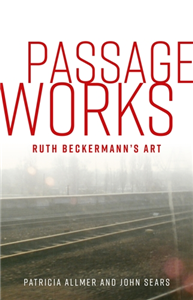
Passage Works is the first book-length English language critical analysis of the transdisciplinary work of the Austrian film-maker, writer, and artist Ruth Beckermann (b. 1952, Vienna). Beckermann's works interrogate identity and geography as formations of the intersections between the past and the contemporary. Taking as her central topics Austria and its history and politics, her own identity as a Jewish woman, and the contemporary global geopolitics of migration and displacement, Beckermann develops wider meditations in film, art, and writing on the persistence of European memory, and the meanings of Europe itself; on borders, migrations, and identities; on memories, traumas, and traditions; on the image as marker of presence and absence, repository of the traces of historical violence; and on the passage as metaphor for a range of physical, psychological, and ideological movements defining the complexities of contemporary cosmopolitan identities.
Trusted Partner

This innovative study engages critically with existing conceptualisations of diaspora, arguing that if diaspora is to have analytical purchase, it should illuminate a specific angle of migration or migrancy. To reveal the much-needed transformative potential of the concept, the book looks specifically at how diasporas undertake translation and decolonisation. It offers various conceptual tools for investigating diaspora, with a specific focus on diasporas in the Global North and a detailed empirical study of the Kurdish diaspora in Europe. The book also considers the backlash diasporas of colour have faced in the Global North.
Trusted Partner
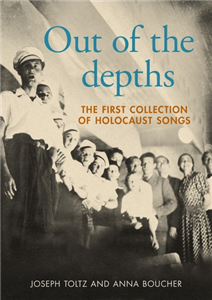
Available for the first time in English translation, this collection of songs is a powerful memorial to the victims of the Holocaust. In June 1945, before the full devastation of the Holocaust had emerged, a team of researchers embarked on a remarkable project. While documenting the experiences of Jewish refugees, they began to collect songs composed and sung in the Nazi camps and ghettos. The resulting book, Mima'amakim (Out of the depths), was published in a short run of 500 copies. Today, only a handful survive. Out of the depths: The first collection of Holocaust songs presents the contents of this extraordinary document for a new generation of readers. Based on a copy of Mima'amakim discovered in 2013, it contains not only the songs' melodies and lyrics, the latter in a new translation by Joseph Toltz, but also short biographies of the composers, drawn from painstaking original research. Introductory essays provide historical and musicological background, deepening our knowledge of this terrible event and the creative means by which the Jewish people responded to and endured it. Described by the original editor, Yehuda Eismann, as a 'memorial stone for Polish Jewry', the songbook is a timeless document of a people's despair, hope and strength.
Trusted Partner
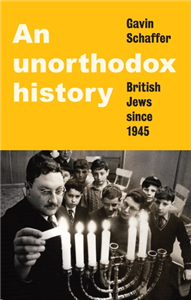
A bold, new history of British Jewish life since the Second World War. Historian Gavin Schaffer wrestles Jewish history away from the question of what others have thought about Jews, focusing instead on the experiences of Jewish people themselves. Exploring the complexities of inclusion and exclusion, he shines a light on groups that have been marginalised within Jewish history and culture, such as queer Jews, Jews married to non-Jews, Israel-critical Jews and even Messianic Jews, while offering a fresh look at Jewish activism, Jewish religiosity and Zionism. Weaving these stories together, Schaffer argues that there are good reasons to consider Jewish Britons as a unitary whole, even as debates rage about who is entitled to call themselves a Jew. Challenging the idea that British Jewish life is in terminal decline. An unorthodox history demonstrates that Jewish Britain is thriving and that Jewishness is deeply embedded in the country's history and culture.
Trusted Partner

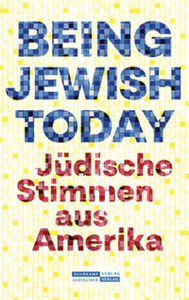
Der 7. Oktober, der Terror der Hamas und der nachfolgende Krieg in Gaza, die weltweiten Proteste dagegen stellen Jüdinnen und Juden in aller Welt vor neue entscheidende Fragen: nach Zugehörigkeit, Entfremdung von Israel oder Loyalität zum jüdischen Staat, nach Repräsentation. Die jüdische Welt ist in Aufruhr und Unruhe. Antisemitische Anfeindungen haben weltweit, besonders in Deutschland massiv zugenommen. Gleichzeitig sind viele liberale, säkulare oder progressive Jüdinnen und Juden uneins mit der Politik der derzeitigen israelischen Regierung, geraten in Erklärungsnot oder einen Zwang, sich anderen erklären zu müssen. Ein Spannungsfeld ist entstanden, das nicht nur politisch, sondern existentiell ist. Wie lassen sich Solidarität und Kritik zusammendenken? Wie sieht ein jüdisches Selbstverständnis aus, das Raum für Vielstimmigkeit und Widerspruch bietet? Bedeutet jüdisch zu sein auch israelisch zu sein? Inwieweit verändert der 7. Oktober jüdisches Gemeindeleben, die Gedankenwelt und jüdische Publizistik? Wie steht es um das jüdische Gemeindeleben in den USA?In den USA wird eine intensive Diskussion über all das geführt, mit der dieser Band vertraut machen möchte: Peter Beinart ist darin mit seinem Beitrag Being Jewish after the Destruction of Gaza vertreten, die Gegenstimme von Elliot Crosgrove mit In such a time as this. On being Jewish Today sowie Susannah Heschel, Sarah Hammerschlag, Emily Levine, Shaul Magid und David N. Myers.
Trusted Partner

As European politics, society, economy and religion underwent epoch-making changes between 1400 and 1600, the treatment of Europe's Jews by the non-Jewish majority was, then as in later periods, a symptom of social problems and tensions in the Continent as a whole. Through a broad-ranging collection of documents, John Edwards sets out to present a vivid picture of the Jewish presence in European life during this vital and turbulent period. Subjects covered include the Jews' own economic presence and culture, social relations between Jews and Christians, the policies and actions of Christian authorities in Church and State. He also draws upon original source material to convey ordinary people's prejudices about Jews, including myths about Jewish 'devilishness', money-grabbing, and 'ritual murder' of Christian children. Full introductory and explanatory material makes accessible the historical context of the subject and highlights the insights offered by the documents as well as the pitfalls to be avoided in this area of historical enquiry. This volume aims to provide a coherent working collection of texts for lecturers, teachers and students who wish to understand the experience of Jewish Europeans in this period.
Trusted Partner
 Trusted Partner
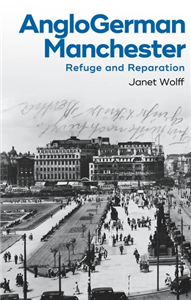
The essays in this book discuss the lives of Germans living in Manchester, from the mid-nineteenth century to the present, combining historical study with personal and autobiographical material. Chapters are devoted to Frederick Engels, Fanny Lewald, Rabbi Felix Carlebach and W. G. Sebald, with additional discussion of Elizabeth Gaskell and the Manchester writer Geraldine Jewsbury. One chapter focuses on Jewish refugees from Nazism who set up new industries in Manchester, including the author's father. The final chapter takes up the theme of reparation, which runs through the book, relating the work of non-Jewish Germans engaged in the project of 'making amends' in their own country for the crimes of an earlier generation.
Trusted Partner
Trusted Partner

— An overall presentation of the history of anti-Semitism based on the latest research — A necessary book that helps to recognise (and combat) anti-Jewish attitudes and patterns of behaviour even in the present day The Hamas attack on Israel is further aggravating the situation in the Middle East, and will continue to intensify anti-Semitism. And this plague, combined with Israel’s denied right to exist; the attacks in Brussels and Paris; the aggressive violence against everything Jewish in the Islamic world – is as dangerous as ever. Hatred of the Jews is old, vast and strong. The anamnesis began 2500 years ago in the Middle Ages, and came to head in the 18th and 19th centuries. It culminated ideologically in the Wannsee Conference, and became murderous in Auschwitz. Historian Sebastian Voigt provides a dense history of the hatred of the Jews – and combines it with a passionate call for courageous resistance.
Trusted Partner
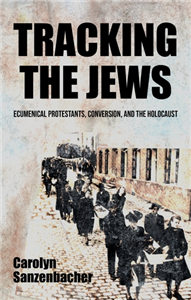
This book sheds light on an unprecedented Protestant conversion initiative for the global evangelisation of Jews. Founded in 1929, the International Committee on the Christian Approach to the Jews (ICCAJ) aimed to bring Jewish people to their 'spiritual destiny', a task it saw as both benevolent and essential for a harmonious society. By the time of Hitler's rise to power it was active in thirty-two countries, educating Protestant churches on the right Christian attitude towards Jews and antisemitism. Reconstructing the activities of the ICCAJ in the years before, during and immediately after the Holocaust, Tracking the Jews reveals how ideas disseminated through the organisation's discourse - 'Jewish problem', 'Jewish influence', 'Judaising threat', 'eternal Jew' - were used to rationalise, justify, explain or advance a number of deeply troubling policies. They were, for vastly different reasons, consciously used elements of argumentation in both Protestant conversionary discourse and Nazi antisemitic ideology.
Trusted Partner
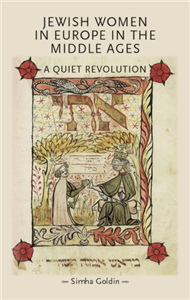
Goldin's study explores the relationships between men and women within Jewish society living in Germany, northern France and England among the Christian population over a period of some 350 years. Looking at original Hebrew sources to conduct a social analysis, he takes us from the middle of the tenth century until the middle of the second half of the fourteenth century, when the Christian population had expelled the Jews from almost all of the places they were living. Particularly fascinating are the attitudes towards women, as well as their changes in social status. By examining the factors involved in these issues, including views of the leadership, economic influences, internal power politics and gender struggles, Goldin's book provides a greater understanding of the functioning of these communities. This volume will be of great interest to historians of medieval Europe, gender and religion.
Trusted Partner

The forgotten legacy of religious Jewish anarchism, and the adventures and ideas of its key figures, finally comes to light in this book. Set in the decades surrounding both world wars, No masters but God identifies a loosely connected group of rabbis and traditionalist thinkers who explicitly appealed to anarchist ideas in articulating the meaning of the Torah, traditional practice, Jewish life and the mission of modern Jewry. Full of archival discoveries and first translations from Yiddish and Hebrew, it explores anarcho-Judaism in its variety through the works of Yaakov Meir Zalkind, Yitshak Nahman Steinberg, Yehudah Leyb Don-Yahiya, Avraham Yehudah Heyn, Natan Hofshi, Shmuel Alexandrov, Yehudah Ashlag and Aaron Shmuel Tamaret. With this ground-breaking account, Hayyim Rothman traces a complicated story about the modern entanglement of religion and anarchism, pacifism and Zionism, prophetic anti-authoritarianism and mystical antinomianism.
Trusted Partner
 Trusted Partner

Leó Szilárd is a brilliant physicist - although he originally began his studies in Berlin without even being enrolled. On long walks home from university, he discusses scientific issues of all kinds with his professor and neighbour Albert Einstein. Szilárd, who is of Jewish descent, flees to London in 1933. His goal is to prevent the Germans from being the first to have nuclear weapons. With Albert Einstein and other scientists, he puts himself at the service of the American government to advance the development of an atomic bomb for defence purposes. When he realises that the Manhattan Project is not about defence, but about an attack on Japan, he is horrified. Author and journalist Arne Molfenter traces the life of this brilliant man whose invention was used completely against his intentions. It is an exciting book about a scientist whose research influenced the course of history.
Trusted Partner

The increasing hostility that Jews experience can no longer be explained away with fine rhetoric. Antisemitism is taking hold in a menacing way at the heart of society. Sigmund Gottlieb addresses his wake-up call to the population at large: stand up – not only against right-wing extremist violence and radical Islamism, but also against hatred in the social media, against unfair criticism of the state of Israel, against anti-Jewish abusive language in the school playground, against trivializing reports in the media and day-to-day indifference. The resurgent talk of ‘packed suitcases’ in Jewish communities is a moral indictment. And it is intolerable.
Trusted Partner
The rule of law, an ideology of equality and universality that justified Britain's eighteenth-century imperial claims, was the product not of abstract principles but imperial contact. As the Empire expanded, encompassing greater religious, ethnic and racial diversity, the law paradoxically contained and maintained these very differences. This book revisits six notorious incidents that occasioned vigorous debate in London's courtrooms, streets and presses: the Jewish Naturalization Act and the Elizabeth Canning case (1753-54); the Somerset Case (1771-72); the Gordon Riots (1780); the mutinies of 1797; and Union with Ireland (1800). Each of these cases adjudicated the presence of outsiders in London - from Jews and Gypsies to Africans and Catholics. The demands of these internal others to equality before the law drew them into the legal system, challenging longstanding notions of English identity and exposing contradictions in the rule of law.
Trusted Partner
Love and anti-Judaism is a new examination of medieval romance for the questions it poses of the most significant events in Christian history. Providing new readings of Sir Gawain and the Green Knight, Sir Orfeo, Sir Gowther and Sir Amadace, the book argues that romance explores depictions of love-and the sacrifices it may necessitate-in the Hebrew Bible, especially where they do not easily fit into interpretations asserting that this history must prefigure Christ and the crucifixion. An examination of anti-Judaism as a discourse of violence and desire that could be turned inwardly to expose the irresolution in Christianity, this book will provoke new investigations into the religious crises of medieval romance.

