
Your Search Results
-

-

Agencia Literaria Latinoamericana
The Latin American Literary Agency (ALL) was founded in 1986 with headquarters in Havana. It exercises, in matters of copyright, the legal representation of Cuban writers and other Latin American countries for all the languages and regions of the world. Represents and promotes authors in the fields of fiction and nonfiction, children and youth, scientific-technical and social sciences. The ALL has a wide catalog that includes writers of universal stature, several National Literature Awards and recognized contemporary authors and new generations.
View Rights Portal
-
Promoted Content

 Business, Economics & LawJanuary 2026
Latin America and international investment law
A mosaic of resistance
by Sufyan Droubi, Cecilia Juliana Flores Elizondo
Latin America has been a complex laboratory for the development of international investment law. While some governments and non-state actors have remained true to the Latin American tradition of resistance towards the international investment law regime, other governments and actors have sought to accommodate said regime in the region. Consequently, a profusion of theories and doctrines, too often embedded in clashing narratives, has emerged. In Latin America, the practice of international investment law is the vivid amalgamation of the practice of governments sometimes resisting and sometimes welcoming mainstream approaches; the practice of lawyers assisting foreign investors from outside and within the region; and the practice of civil society, indigenous peoples and other actors in their struggle for human rights and sustainable development. Latin America and international investment law describes the complex roles that governments have played vis-à-vis foreign investors and investments; the refreshing but clashing forces that international organizations, corporations, civil society, and indigenous peoples have brought to the field; and the contribution that Latin America has made to the development of the theory and practice of international investment law, notably in fields in which the Latin American experience has been traumatic: human rights and sustainable development. Latin American scholars have been contributing to the theory of international investment law for over a century; resting on the shoulders of true giants, this volume aims at pushing this contribution a little further.
-
Promoted Content
 Humanities & Social SciencesNovember 2025
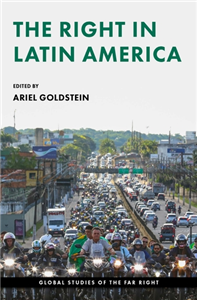
The right in Latin America
by Ariel Goldstein
This book provides an in-depth analysis of the rise and influence of both radical and mainstream right-wing movements across Latin America. Through country-specific case studies, it explores the evolution of these groups and their impact on politics, culture, and governance, highlighting key figures and strategies shaping the political landscape in the region.
-
 Trusted Partner
 Business, Economics & LawFebruary 2022
Latin America and international investment law
by Sufyan Droubi, Cecilia Juliana Flores Elizondo, Jean d'Aspremont, Sufyan Droubi, Iain Scobbie
-
Trusted Partner
Humanities & Social SciencesJanuary 2026
Latin America–European Union relations in the twenty-first century
by Arantza Gomez Arana, María J. García
-
Trusted Partner
 Humanities & Social SciencesSeptember 1999
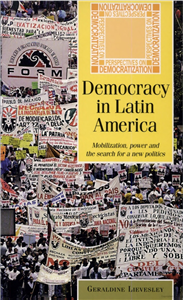
Democracy in Latin America
by Geraldine Lievesley
This book offers an insight into the democratic processes and institutions in Latin and Central America. It analyses the different political systems and the challenges to them from the Left and popular movements. Lievesley questions how far democracy is embedded in Latin and Central American and asks what constitutes citizenship in political cultures which remain highly differentiated in terms of the structures and relations of power. She does this through an evaluation of the two distinct perspectives of democracy: the liberal pacted and the radical participatory models. Established political systems, systems in transition from military to civilian rule and Socialist systems are viewed through the prism of these two models. The inter-relationship between state, military, political parties and popular movements are examined with a view to determining the possibility of the emergence of a new politics, which would be inclusion rather than exclusionary and would pursue social justice. The book will provide a stimulating assessment of the region's politics for undergraduates and will provoke debate for postgraduates.
-
Trusted Partner

 November 2021
Joe Biden's America
Introduction to a divided country
by Roland Benedikter
— "A precise, analytical insight into the phenomenon Trump." (Anton Pelinka, Central European University Budapest) — "An introduction to the contemporary US." (Heinrich Neisser, Jean Monnet Chair of European Integration, University of Innsbruck) — "Refreshingly different." (Herbert Dorfmann, Member of the European Parliament) Joe Biden's America is deeply divided. Donald Trump's term in office made many problems of modern US society visible, which Biden now has to solve. What do American politics look like under Joe Biden? What legacy did Donald Trump leave behind, and what kind of impact does it have? How can the deeper causes, factors and drivers of current US developments be put in a historical context? Roland Benedikter provides a thorough insight into a complex country. In a compact and comprehensible way, he explains the background, challenges and perspectives of the Biden era, while also providing an overview of the current state of US society and culture in general. His analysis is suitable for teaching, decision-makers and civil society as an introduction to today's USA.
-
Trusted Partner
-
Trusted Partner
Humanities & Social SciencesNovember 2024
US public diplomacy in socialist Yugoslavia, 1950–70
Soft culture, cold partners
by Carla Konta
The first comprehensive account of the public and cultural diplomacy campaigns carried out by the US in Yugoslavia during the height of the Cold War, this book examines the political role of culture in US-Yugoslav bilateral relations and the fluid links between information and propaganda. Tito allowed the US Information Agency and the State Department's cultural programmes to enter Yugoslavia, liberated from Soviet control. The exchange of intellectual and political personnel helped foster the US-Yugoslav relationship, yet it posed severe ideological challenges for both sides. By providing new insights into porous borders between freedom and coercion in Tito's regime, this book shows how public diplomacy acted as an external input for Yugoslav liberalisation and dissident movements. Using extensive archival research and interviews, Konta analyses the links between information and propaganda, and the unintended effects of propaganda beyond the control of producers and receivers.
-
Trusted Partner
 Humanities & Social SciencesJanuary 2026
United States and Chinese foreign assistance and diplomacy
Aid for dominance
by Salvador Santino Regilme, Obert Hodzi
Aid for Dominance addresses the analytic weaknesses of mainstream analysis of foreign aid, which often focuses on its material dimensions. The book underscores the constitutive relationship between foreign aid as a material resource and the diplomatic discourses and practices that constitute complex bilateral relations between donor and recipient states. Written by two leading scholars of contemporary United States and Chinese foreign policies in the Global South, Aid for Dominance offers a pioneering, theoretically conscious, and empirically rich account of the two great powers' grand strategies in the global development sector. By deploying a multidisciplinary and comparative analysis, this book draws from a wide range of evidentiary materials from primary sources, including data from fieldwork interviews, government documents, local and international newspapers, speeches by high-ranking government officials and diplomats, and secondary data from scholarly publications and policy papers.
-
Trusted Partner


Does Movement Really Make Us Smart?
by Petra Jansen, Stefanie Richter
Media reports often praise movement as a cure-all. But apart from its undisputed positive effect on health, does movement really make us smarter? Consider a national football team, for example – are these excessively sports-driven players automatically the smartest people? Should we simply replace all school subjects with sports? The authors provide a detailed summary of the latest scientific findings on the influence of movement on cognitive ability. They describe the effects of movement, on old age, embodiment, emotion, school as well as other factors that influence cognition. Target Group: teachers, lecturers, psychologists, psychiatrists, neurologists, psychotherapists, movement therapists.
-
Trusted Partner
 Humanities & Social SciencesDecember 2024
Iran, Saudi Arabia and the United States
Power, identity and strategy in the Persian Gulf triangle
by Luíza Cerioli
This book offers a nuanced snapshot of the complex geopolitical dynamics in the Persian Gulf, underlining the interaction between Iran, Saudi Arabia, and the US. Examining their interwoven relations since the 1970s, Luíza Cerioli's framework reveals how changes in US-Saudi ties have ripple effects on Iran-US and Iran-Saudi relations and vice versa. Using a historical lens, she explores how enduring US-Saudi connections hinge on order expectations, delves into the cognitive factors shaping US-Iran enmity and traces the source of oscillation in the Saudi-Iran ties. Employing Neoclassical Realism, the book investigates status-seeking, national identities and leadership preferences, offering a deeper understanding of the region's multipolar system. By combining International Relations and Middle East Studies, Cerioli's work contributes to both fields, unravelling the intricate interplay between international structures, regional nuances and agency in shaping Persian Gulf geopolitics.
-
Trusted Partner
 Teaching, Language & ReferenceMay 2025
US diplomacy and the Good Friday Agreement in post-conflict Northern Ireland
by Richard Hargy
Richard Haass and Mitchell Reiss, as autonomous diplomats in the George W. Bush State Department, were able to alter US intervention in Northern Ireland and play critical roles in the post-1998 peace process. Their contributions have not been fully appreciated or understood. The restoration of Northern Ireland's power-sharing government in 2007 was made possible by State Department-led intervention in the peace process. There are few references to Northern Ireland in work examining the foreign policy legacy of the George W. Bush presidency. Moreover, the ability to control US foreign policy towards the region brought one of George W. Bush's Northern Ireland special envoys into direct diplomatic conflict with the most senior actors inside the British government. This book will uncover the extent of this fall-out and provide original accounts on how diplomatic relations between these old allies became so fraught.
-
Trusted Partner
 Humanities & Social SciencesApril 2020
The US public diplomacy in socialist Yugoslavia, 1950-70
by Carla Konta, Giles Scott-Smith, J. Simon Rofe
-
Trusted Partner
-
Trusted Partner
 Humanities & Social SciencesApril 2021
The future of U.S.–India security cooperation
by Šumit Ganguly, M. Chris Mason
-
Trusted Partner
-
Trusted Partner
 Humanities & Social SciencesMarch 2026
US cultural diplomacy after the Cold War
Decline, recovery, and fall
by Jeffrey H. Michaels, Giles Scott-Smith
In the decades following the USSR's collapse, the US has gone from unrivalled hegemon to a position of relative decline. With America 'triumphant' after 1991, its culture, like its diplomatic, military and economic power, remained unmatched. Such favourable circumstances seemed to undercut the need for cultural diplomacy. Why should the US government sell a product that was already selling so well? After 9/11, however, it was apparent the US image was less popular than previously assumed. To reverse this negative image, cultural diplomacy was revived. Despite being beset by internal and external challenges, US officials supported various cultural initiatives and partnerships to promote the American brand globally. Along the way, cultural diplomacy has made use of new forms of expression to promote American culture and build positive foreign relations. The arrival of the second Trump administration in 2025 has clearly signalled an end to using cultural diplomacy to further causes of empowerment and diversity, making the future uncertain for this field of activity.
-

 Humanities & Social SciencesNovember 1904
Common Sense
Addressed to The Inhabitants of America
by Thomas Paine
Published anonymously in 1776, six months before the Declaration of Independence, Thomas Paine’s Common Sense was a radical and impassioned call for America to free itself from British rule and set up an independent republican government. Savagely attacking hereditary kingship and aristocratic institutions, Paine urged a new beginning for his adopted country in which personal freedom and social equality would be upheld and economic and cultural progress encouraged.
-
Trusted Partner
 Humanities & Social SciencesFebruary 2020
The United States in the Indo-Pacific
by Oliver Turner, Inderjeet Parmar
-
Trusted Partner



