
Editorial Leonard Levy
Venezuelan gastronomic literature.
View Rights Portal

Our original card sets are a way for any parent to play and interact with their child in a way that stimulates learning, improving cognitive skills and, perhaps more importantly, create a positive parent-child relationship. With the Carrot Cards both the parent and the child are engaged in an activity and they explore, learn, try, and experience together. We create every card set with a goal to make it as useful as possible, combining pedagogy and psychology, as well as aesthetics, creative writing and original concepts. Thus, allowing every child who opens a box of Carrot cards to experience a whole new learning experience. We have thousands of parents using the cards all over the world, sharing the excitement of learning and being curious together with their children. While striving to give more and more parents the opportunity to support their children’s development, we have also been recognized as a trustworthy partner for almost any kind of professionals working with children. From pre-school teachers to therapists, hundreds of experts use our cards in classrooms, offices, at presentations or as home assignments daily. Our contribution to early childhood development and our role as a supporter for parents were recognized in 2018 when we were selected as “Champions of Change” by the Reach for Change Foundation – Bulgaria, and we have been a part of the Reach for Change Global Network ever since.
View Rights Portal
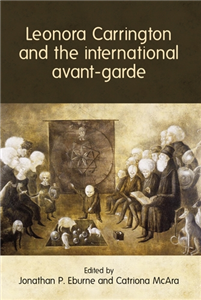
Leonora Carrington (1917-2011) was an English surrealist artist and writer who emigrated to Mexico after the Second World War. As the first comprehensive examination of Carrington's writing and art, this volume approaches her as a major international figure in modern and contemporary art, literature and thought. It offers an interdisciplinary exploration of the intellectual, literary and artistic currents that animate her contribution to experimental art movements throughout the Western Hemisphere, including surrealism and magical realism. In addition to a substantive editorial introduction, the book contains nine chapters from scholars of modern literature and art, each focusing on a major feature in Carrington's career. It also features a visual essay drawn from the 2015 Tate Liverpool exhibition Leonora Carrington: Transgressing Discipline, and two experimental essays by the novelist Chloe Aridjis and the scholar Gabriel Weisz, Carrington's son. This collection offers a resource for students, researchers and readers interested in Carrington's works, and contributes to her continued rise in global recognition.

Leonora Carrington (1917-2011) was an English surrealist artist and writer who emigrated to Mexico after the Second World War. This volume approaches Carrington as a major international figure in modern and contemporary art, literature and thought. It offers an interdisciplinary exploration of the intellectual, literary and artistic currents that animate her contribution to experimental art movements throughout the Western Hemisphere, including surrealism and magical realism. The book contains nine chapters from scholars of modern literature and art, each focusing on a major feature in Carrington's career. It also features a visual essay drawn from the 2015 Tate Liverpool exhibition Leonora Carrington: Transgressing Discipline, and two experimental essays by the novelist Chloe Aridjis and the scholar Gabriel Weisz, Carrington's son. This collection offers a resource for students, researchers and readers interested in Carrington's works.
 Trusted Partner
Trusted Partner
Trusted Partner
Trusted Partner
Trusted Partner
Trusted Partner
Trusted Partner
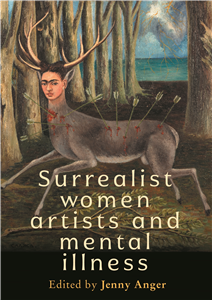
Female mental illness has been a prominent and complicated theme in surrealist cultural traditions, including the idealization of women with mental illness in works such as André Breton's Nadja (1928). Art historians have examined this tendency before, but to date there has been no comprehensive study of the lived reality of women surrealist artists with mental illness. How did women's experience and their work intersect with this romanticized vision? Was the masculine dream of feminized, "mad" genius prohibitive or productive for these women artists? After establishing the ideological field within which these women worked, the book turns to case studies of well-known and some lesser-known artists, including Ángeles Santos, Leonora Carrington, Dora Maar, Claude Cahun, Frida Kahlo, Meret Oppenheim, Sonja Sekula, and Unica Zürn. This collection of essays contains a wide range of responses, revealing surrealism's generative as well as restrictive force.
Trusted Partner
Trusted Partner
 Trusted Partner


Schon als Kind sieht sie die Welt mit eigenen Augen, hält sich für ein Pferd und bewohnt einen Kosmos aus Fabelwesen. Den Konventionen ihrer reichen englischen Familie mißtraut Leonora, sie sagt sich von allen Zwängen los und erkämpft sich das Recht, eine in der Gesellschaft und an der Staffelei absolut freie Frau zu werden. In der wahnwitzigen Liebe zu dem Maler Max Ernst stürzt sie in wonnevolle Abgründe. Mit ihm zusammen ergibt Leonora sich in Paris dem Sinnestaumel des Surrealismus, ist eng befreundet mit Dalí, Miró und Picasso. Als Max Ernst im Zweiten Weltkrieg interniert wird, verliert Leonora den Verstand und wird in eine Anstalt eingewiesen. Nach Ausbruch und Flucht über den Atlantik erobert sie, unterstützt durch ihre Freundin Peggy Guggenheim, die Kunstwelt New Yorks. Vertrieben, getrieben und besessen – in ihrer letzten Heimat Mexiko schafft sie, beseelt durch eine letzte große Liebe, Meisterwerke so singulär wie ihre Geschichte selbst. Das außergewöhnliche Leben der Leonora Carrington (1917–2011) wird in den Händen Elena Poniatowskas zu einem weltumspannenden Abenteuer, einem Schrei nach Freiheit und einem Zeugnis von bedingungsloser Leidenschaft.
Trusted Partner
Schon als Kind sieht sie die Welt mit eigenen Augen, hält sich für ein Pferd und bewohnt einen Kosmos aus Fabelwesen. Den Konventionen ihrer reichen englischen Familie mißtraut Leonora, sie sagt sich von allen Zwängen los und erkämpft sich das Recht, eine in der Gesellschaft und an der Staffelei absolut freie Frau zu werden. In der wahnwitzigen Liebe zu dem Maler Max Ernst stürzt sie in wonnevolle Abgründe. Mit ihm zusammen ergibt Leonora sich in Paris dem Sinnestaumel des Surrealismus, ist eng befreundet mit Dalí, Miró und Picasso. Als Max Ernst im Zweiten Weltkrieg interniert wird, verliert Leonora den Verstand und wird in eine Anstalt eingewiesen. Nach Ausbruch und Flucht über den Atlantik erobert sie, unterstützt durch ihre Freundin Peggy Guggenheim, die Kunstwelt New Yorks. Vertrieben, getrieben und besessen – in ihrer letzten Heimat Mexiko schafft sie, beseelt durch eine letzte große Liebe, Meisterwerke so singulär wie ihre Geschichte selbst. Das außergewöhnliche Leben der Leonora Carrington (1917–2011) wird in den Händen Elena Poniatowskas zu einem weltumspannenden Abenteuer, einem Schrei nach Freiheit und einem Zeugnis von bedingungsloser Leidenschaft.
Trusted Partner

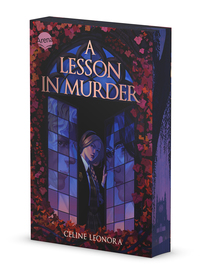
Das fesselnde Romantic Suspense-Debüt von BookTokerin Celine Leonora alias afterhourbookclub! Lügen, Intrigen und Mord stehen an dieser Schule plötzlich auf der Tagesordnung. Astoria Blairwood liebt das Verbrechen – was leider nicht auf Gegenseitigkeit beruht. Und das, obwohl sie an der Eliteschule St. Moriarty ein kriminologisches Superhirn ist! Denn als eine Mitschülerin tot aufgefunden wird, steht schnell die Tatverdächtige fest: Astoria. Schlimmer könnte das Abschlussjahr wohl kaum laufen. Des Mordes angeklagt, versucht sie mit allen Mitteln herauszufinden, wer die Schülerin tatsächlich ermordet hat. Dafür greift sie sogar auf ihre akademischen Rivalen zurück, die ihr bei den Ermittlungen helfen sollen: Isaac, der unausstehliche Sohn des Premierministers, und Theodore, der mysteriöse Einzelgänger der Schule. Die Hilfe der beiden braucht sie dringend, denn der Mörder scheint Astoria unbedingt hinter Gitter sehen zu wollen. Obwohl sie sich auf andere Dinge konzentrieren sollte, fühlt sie sich immer mehr zu Isaac und Theodore hingezogen. Doch kann sie den beiden voll und ganz vertrauen oder haben sie ihre Finger in diesem perfiden Spiel? Und kann Astoria rechtzeitig den richtigen Mörder finden, bevor es zu spät ist? Tropes: rivals to lovers, love triangle, dark academia, forced proximity Mit Farbschnitt und Charakterkarte in der 1. Auflage!
Trusted Partner
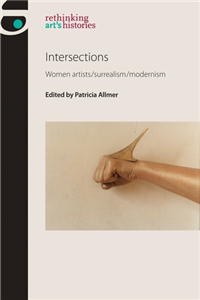
Featuring new essays by established and emerging scholars, Intersections: Women artists/surrealism/modernism redefines conventional surrealist and modernist canons by focusing critical attention on women artists working in and with surrealism in the context of modernism. In doing so it redefines critical understanding of the complex relations between all three terms. The essays address work produced in a wide variety of international contexts and across several generations of surrealist production by women closely connected to the surrealist movement or more marginally influenced by it. Intersections explores work in a wide range of media, from painting and sculpture to film and fashion, by artists including Susan Hiller, Maya Deren, Birgit Jurgenssen, Aube Elléouët, Dorothea Tanning, Claude Cahun, Elsa Schiaparelli, Joyce Mansour, Leonor Fini, Mimi Parent, Lee Miller, Leonora Carrington, Ithell Colquhoun and Eileen Agar.
Trusted Partner
Trusted Partner
Trusted Partner
Trusted Partner
Trusted Partner
Trusted Partner

 Trusted Partner
Trusted Partner
Trusted Partner



