Between the Lines
Livres Canada Books
View Rights Portal

Lindbak + Lindbak is a fresh new Nordic publishing house adding an innovative twist to popular genres like crime, romance & children's books.
View Rights Portal
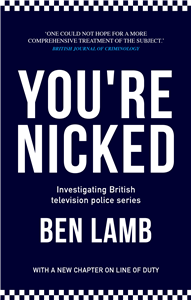
You're nicked is the first comprehensive study of television police series in the UK. It reveals how British television's most popular genre has developed stylistically, politically and philosophically from 1955 to the present. Each chapter focuses on a particular decade, investigating how the most-watched series represent the inner workings of the police station, the civilian life of criminals and the private lives of police officers. This new approach unearths the complex ideology underpinning each series and discerns the key insights the genre can provide into the breakdown of the post-war settlement. Offering insightful readings of police series from Dixon of Dock Green to Happy Valley via The Sweeney, The Bill and Cracker, the book is a must-read for crime-drama enthusiasts worldwide. This new paperback edition features an extensive epilogue on Line of Duty and other Jed Mercurio creations.
 Trusted Partner
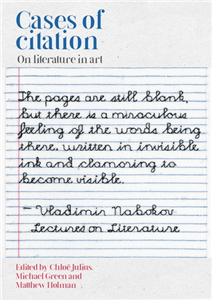
Cases of citation presents a history of artists who incorporated literary references into their work from the 1960s onwards. Through a series of object-focused chapters that each take up a singular 'case of citation', the collection considers how literary citation emerged as a viable and urgent strategy for artists during this period. It surveys eleven artworks by a diverse group of artists - including David Wojnarowicz, Lis Rhodes, Romare Bearden and Silvia Kolbowski - whose citations draw on works as varied as Karl Marx's Das Kapital and Mary Shelley's Frankenstein. The book also features an interview with pioneering feminist artist Elaine Reichek that discusses her career-long commitment to working with text. Together, the artworks and cited texts are approached from various critical angles, with each author questioning and complicating the ways in which we can 'read' textual citations in art.
Trusted Partner

Cases of citation presents a history of artists who incorporated literary references into their work from the 1960s onwards. Through a series of object-focused chapters that each take up a singular 'case of citation', the collection considers how literary citation emerged as a viable and urgent strategy for artists during this period. It surveys nine artworks by a diverse group of artists - including David Wojnarowicz, Lis Rhodes, Romare Bearden and Silvia Kolbowski - whose citations draw on literary works with authors ranging from Gertrude Stein to Jean Genet. The book also features an interview with pioneering feminist artist Elaine Reichek that discusses her career-long commitment to working with text. Together, the artworks and cited texts are approached from various critical angles, with each author questioning and complicating the ways in which we can 'read' textual citations in art.
Trusted Partner
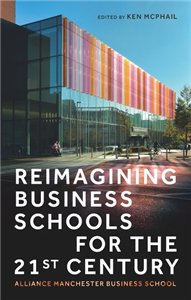
Whether it's dealing with regional economic disparities, global geopolitical upheaval, climate change, or the impact of new technologies such as artificial intelligence, we are living in pivotal times. To mark its 60th anniversary in 2025, this accessible book from Alliance Manchester Business School outlines in detail how business schools can play a significant role in confronting these huge challenges, and equip the next generation of business leaders with the skills they need to embrace them. Informing public and political debate on the role of business in both the causes and solutions to our biggest challenges the book offers a rethinking of the role of business in society. It will also discuss specific examples of how collaborations with business are leading to impact and change in society. Featuring a range of thought-provoking essays co-authored by eminent academics and business leaders, this collection will challenge the status quo and outline how business and management research is helping address grand challenges, generate economic growth, inform policy development, and define business thinking over the next generation.
Trusted Partner
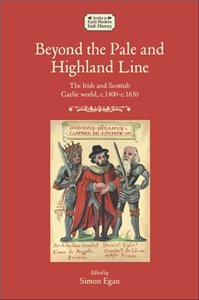
This book offers important new insights into the history and culture of the Gaelic-speaking world from the mid-fifteenth century through to the reign of James VI and I. Throughout this period, the reach of the English and Scottish crowns within these western regions was limited. The initiative lay with local communities and royal power was contingent upon negotiating with well-established and largely autonomous aristocratic lineages. Moreover, events within this western world could exert a powerful, often unpredictable, influence upon the affairs of the wider archipelago. Using a series of case studies, this collection examines the evolving relationship between Ireland and Scotland in rich detail. It demonstrates how this world interacted with the encroaching English and Scottish states and underlines the importance of paying closer attention to this neglected area of Irish and British history.
Trusted Partner
Trusted Partner
 Trusted Partner
Air policing was used in many colonial possessions, but its most effective incidence occurred in the crescent of territory from north-eastern Africa, through South-West Arabia, to North West Frontier of India. This book talks about air policing and its role in offering a cheaper means of 'pacification' in the inter-war years. It illuminates the potentialities and limitations of the new aerial technology, and makes important contributions to the history of colonial resistance and its suppression. Air policing was employed in the campaign against Mohammed bin Abdulla Hassan and his Dervish following in Somaliland in early 1920. The book discusses the relationships between air control and the survival of Royal Air Force in Iraq and between air power and indirect imperialism in the Hashemite kingdoms. It discusses Hugh Trenchard's plans to substitute air for naval or coastal forces, and assesses the extent to which barriers of climate and geography continued to limit the exercise of air power. Indigenous responses include being terrified at the mere sight of aircraft to the successful adaptation to air power, which was hardly foreseen by either the opponents or the supporters of air policing. The book examines the ethical debates which were a continuous undercurrent to the stream of argument about repressive air power methods from a political and operational perspective. It compares air policing as practised by other European powers by highlighting the Rif war in Morocco, the Druze revolt in Syria, and Italy's war of reconquest in Libya.
Trusted Partner
Trusted Partner
Trusted Partner
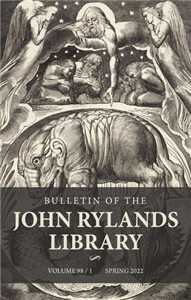
This special issue of the Bulletin of the John Rylands Library is devoted to William Blake. It explores the British and European reception of Blake's work from the late nineteenth century to the present day, with a particular focus on the counterculture. Opening with two articles by the late Michael Horovitz, an important figure in the 'Blake Renaissance' of the 1960s, the issue goes on to investigate the ideological struggle over Blake in the early part of the twentieth century, with particular reference to W. B. Yeats. This is followed by articles on the artistic avant-garde and underground of the 1960s and on Blake's significance for science fiction authors of the 1970s. The issue closes with an article on the contemporary Belgian art collective maelstrÖm reEvolution.
Trusted Partner
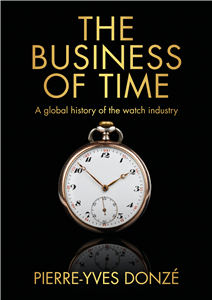
The business of time presents a comprehensive history of the global watch industry from the mid-nineteenth century to the present. Watch production in the twenty-first century is concentrated in three countries: Switzerland, Japan and China. The industry is dominated by a dozen or so large companies, including the Swatch Group, Richemont, LVMH, Seiko and Fossil. But a hundred years ago the picture was dramatically different. Over the course of a century, Great Britain, France, the United States and Russia saw the manufacture of watches disappear from their territory. At the same time, Hong Kong went from being a subcontractor of watch components to an intermediary between Chinese factories and the world market. Revealing the conditions that drove the spread of watch production around the globe, The business of time explains how multinationals emerged to dominate the industry and highlights how Swiss companies were able to establish themselves as the undisputed leader in luxury watches.
Trusted Partner
Trusted Partner
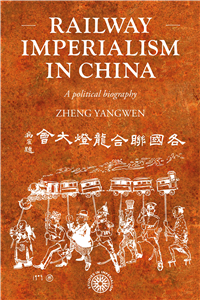
Railway Imperialism in China: a Political Biography is the first and most comprehensive book on history and politics of all major railways in China from the late Qing to the post-Mao era. It investigates the transformation of railways from a bête noire within discussions about reform to the emblematic "engines for empire" as foreign powers used it to carve outspheres of control and exploit the late Qing, and as an instrument of nation making for Chinese regimes. The book introduces new archival sources and a wide range of secondary materials. Boldly conceived, it situates the making of modern China in the context of British, Russian, German, Japanese, American expansion. It traces China's transformation from a victim of railway imperialism in the Age of Empireto a railway expansionist in the twenty-first century.
Trusted Partner
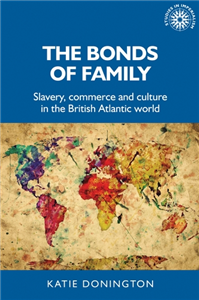
Moving between Britain and Jamaica The bonds of family reconstructs the world of commerce, consumption and cultivation sustained through an extended engagement with the business of slavery. Transatlantic slavery was both shaping of and shaped by the dynamic networks of family that established Britain's Caribbean empire. Tracing the activities of a single extended family - the Hibberts - this book explores how slavery impacted on the social, cultural, economic and political landscape of Britain. It is a history of trade, colonisation, enrichment and the tangled web of relations that gave meaning to the transatlantic world. The Hibberts's trans-generational story imbricates the personal and the political, the private and the public, the local and the global. It is both the intimate narrative of a family and an analytical frame through which to explore Britain's history and legacies of slavery.
Trusted Partner

Air empire is a fresh study of civil aviation as a tool of late British imperialism. The first pioneering flights across the British empire in 1919-20 were flag-waving adventures that recreated an era of plucky British maritime exploration and conquest. Britain's development of international air routes and services was approved, organised and celebrated largely in London; there was some resistance in and beyond the subordinate colonies and dominions. Negotiating the financing and geopolitics of regular commercial air service delayed its inception until the 1930s. Technological, managerial and logistical problems also meant that Britain was slow into the air and slow in the air. Propaganda concealed underperformance and criticism. The study uses archival sources, biographies, industry magazines and newspapers to chronicle the disputed progress toward air empire. The rhetoric behind imperial air service offers a glimpse of late imperial hopes, fears, attitudes and style. Empire air service had emotional appeal and symbolic value, but disappointed in practice.
Trusted Partner
Trusted Partner


Mit schönem Farbschnitt in der Erstauflage – Lieferung je nach Verfügbarkeit Heiße Leidenschaft im ewigen Eis Im Inselkönigreich Askja herrschen ewiges Eis und ein fragiler Frieden zwischen den machthungrigen Menschen und den skrupellosen Magiewesen. Als die Eisdämonin Frin dem Prinzen Leif mit ihrem Kuss den Kältetod bringen will, zögert sie einen Atemzug zu lang und gerät stattdessen in seine Gefangenschaft. Leifs Vater sandte ihn aus, um ihm die magischen Wesen des Reiches zu bringen. Ein dunkles Ritual soll die Magie endgültig von Askja vertreiben und die ungeteilte Herrschaft der Menschen sichern. In den düsteren Kerkergewölben kommen sich Frin und Leif näher und merken, dass die Eisdämonin mehr mit dem Königssohn verbindet, als die beiden für möglich gehalten hätten … Legends of Askja 1. A Kiss of Ice and Blood: Eine epische Fantasy Romance um Liebe, Macht und Magie Heiße Leidenschaft und eisige Kälte: Spicy Romantasy über Liebe, Machtspiele und Selbstfindung für Leser*innen ab 16 Jahren. Vielschichtige Charaktere: Eisdämonin Frin und Königssohn Leif verstricken sich in ein Netz aus Anziehung, Feindschaft und dunkler Vergangenheit. Spannend und mitreißend: New Adult-Buch mit den beliebten Tropes „forbidden love" und „morally grey characters“. Verbotene Liebe im ewigen Eis: Die mitreißende Romantasy begeistert alle, die Fantasy Romance-Bücher mit vielschichtigen Figuren, dramatischen Wendungen und einem Hauch Magie lieben.
Trusted Partner