
Your Search Results
-

-

A Walk through History
A Walk Through History is a Russian publishing house specializing in children’s nonfiction. Since 2011 it has created and designed about 50 titles on various periods of history and other subjects such as mathematics, sport, plants and animals.
View Rights Portal
-
Promoted Content
-
Promoted Content

 Humanities & Social SciencesMarch 2021
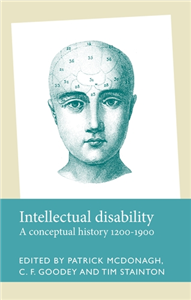
Intellectual disability
A conceptual history, 1200–1900
by Patrick McDonagh, C. F. Goodey, Timothy Stainton
This collection explores the historical origins of our modern concepts of intellectual or learning disability. The essays, from some of the leading historians of ideas of intellectual disability, focus on British and European material from the Middle Ages to the late-nineteenth century and extend across legal, educational, literary, religious, philosophical and psychiatric histories. They investigate how precursor concepts and discourses were shaped by and interacted with their particular social, cultural and intellectual environments, eventually giving rise to contemporary ideas. Intellectual disability is essential reading for scholars interested in the history of intelligence, intellectual disability and related concepts, as well as in disability history generally.
-
 Trusted Partner
-
Trusted Partner
 Humanities & Social SciencesFebruary 2025
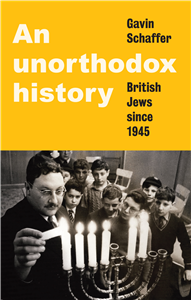
An unorthodox history
British Jews since 1945
by Gavin Schaffer
A bold, new history of British Jewish life since the Second World War. Historian Gavin Schaffer wrestles Jewish history away from the question of what others have thought about Jews, focusing instead on the experiences of Jewish people themselves. Exploring the complexities of inclusion and exclusion, he shines a light on groups that have been marginalised within Jewish history and culture, such as queer Jews, Jews married to non-Jews, Israel-critical Jews and even Messianic Jews, while offering a fresh look at Jewish activism, Jewish religiosity and Zionism. Weaving these stories together, Schaffer argues that there are good reasons to consider Jewish Britons as a unitary whole, even as debates rage about who is entitled to call themselves a Jew. Challenging the idea that British Jewish life is in terminal decline. An unorthodox history demonstrates that Jewish Britain is thriving and that Jewishness is deeply embedded in the country's history and culture.
-
Trusted Partner
 Literature & Literary StudiesMay 2023
Counterfactual Romanticism
by Damian Walford Davies
Innovatively extending counterfactual thought experiments from history and the social sciences to literary historiography, criticism and theory, Counterfactual Romanticism reveals the ways in which the shapes of Romanticism are conditioned by that which did not come to pass. Exploring various modalities of counterfactual speculation and inquiry across a range of Romantic-period authors, genres and concerns, this collection offers a radical new purchase on literary history, on the relationship between history and fiction, and on our historicist methods to date - and thus on the Romanticisms we (think we) have inherited. Counterfactual Romanticism provides a ground-breaking method of re-reading literary pasts and our own reading presents; in the process, literary production, texts and reading practices are unfossilised and defamiliarised.
-
Trusted Partner
-
Trusted Partner
-
Trusted Partner
 The ArtsMay 2025
A new genre for television?
Creativity in historical drama documentary
by Justin Hardy
In A New Genre for Television?, filmmaker Justin Hardy argues the dramatised history documentaries broadcast by British public service channels in the 2000s constituted a distinct television genre. Offering a vital distinction between docudramas and drama documentaries, Hardy contributes to the field of television history through exclusive interviews with key figures from BBC and Channel 4 - many of whom have never been publicly interviewed before - and envisions a future model for the portrayal of national histories on screen.
-
Trusted Partner
 The ArtsMarch 2006
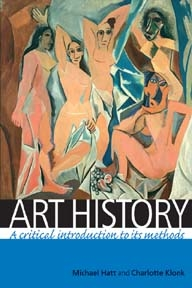
Art history
A critical introduction to its methods
by Michael Hatt, Charlotte Klonk
Art History: A critical introduction to its methods provides a lively and stimulating introduction to methodological debates within art history. Offering a lucid account of approaches from Hegel to post-colonialism, the book provides a sense of art history's own history as a discipline from its emergence in the late-eighteenth century to contemporary debates. By explaining the underlying philosophical and political assumptions behind each method, along with clear examples of how these are brought to bear on visual and historical analysis, the authors show that an adherence to a certain method is, in effect, a commitment to a set of beliefs and values. The book makes a strong case for the vitality of the discipline and its methodological centrality to new fields such as visual culture. This book will be of enormous value to undergraduate and graduate students, and also makes its own contributions to ongoing scholarly debates about theory and method. ;
-
Trusted Partner
-
Trusted Partner
 Literature & Literary StudiesMarch 2007
On the uses of history in recent Irish writing
by Bernhard Klein
This book offers a critical reassessment of the uses of history in contemporary Irish literature and culture. It argues that in much recent Irish writing, history is approached not as the proverbial 'nightmare' from which Joyce's Stephen Dedalus tried to awake, but as a rich, imaginative resource. Drawing on recent debates in Irish literary and cultural criticism, On the uses of history in recent Irish writing explores the varied, creative, and often critically challenging forms of rewriting Ireland's troubled past in contemporary prose, drama and poetry. Individual chapters focus on literary treatments of the Tudor reconquest, the Famine, the Northern Irish Troubles and other key events in Irish history, highlighting in a series of close readings the unique forms of historical thought enabled by different literary forms and genres. Canonical works by authors such as Seamus Heaney, Derek Mahon, Tom Paulin, Brian Friel, Stewart Parker and Frank McGuinness are considered alongside lesser known writers and texts, placing each in their wider social, cultural and historical contexts. ;
-
Trusted Partner
 Humanities & Social SciencesMay 2021
Doing digital history
by Jonathan Blaney, Jane Winters, Sarah Milligan, Martin Steer
-
Trusted Partner
 Literature & Literary StudiesNovember 2021
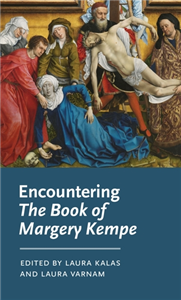
Encountering The Book of Margery Kempe
by Laura Kalas, Laura Varnam, David Matthews, Anke Bernau, James Paz
This innovative critical volume brings the study of Margery Kempe into the twenty-first century. Structured around four categories of 'encounter' - textual, internal, external and performative - the volume offers a capacious exploration of The Book of Margery Kempe, characterised by multiple complementary and dissonant approaches. It employs a multiplicity of scholarly and critical lenses, including the intertextual history of medieval women's literary culture, medical humanities, history of science, digital humanities, literary criticism, oral history, the global Middle Ages, archival research and creative re-imagining. Revealing several new discoveries about Margery Kempe and her Book in its global contexts, and offering multiple ways of reading the Book in the modern world, it will be an essential companion for years to come.
-
Trusted Partner
Literature & Literary StudiesApril 2023
Encountering The Book of Margery Kempe
by Laura Kalas, Laura Varnam
This innovative critical volume brings the study of Margery Kempe into the twenty-first century. Structured around four categories of 'encounter' - textual, internal, external and performative - the volume offers a capacious exploration of The Book of Margery Kempe, characterised by multiple complementary and dissonant approaches. It employs a multiplicity of scholarly and critical lenses, including the intertextual history of medieval women's literary culture, medical humanities, history of science, digital humanities, literary criticism, oral history, the global Middle Ages, archival research and creative re-imagining. Revealing several new discoveries about Margery Kempe and her Book in its global contexts, and offering multiple ways of reading the Book in the modern world, it will be an essential companion for years to come.
-
Trusted Partner
 Literature & Literary StudiesJanuary 2017
Literary and visual Ralegh
by J. B. Lethbridge, Christopher Armitage
-
Trusted Partner
 Literature & Literary StudiesJune 2022
The early modern English sonnet
Ever in motion
by Laetitia Sansonetti, Rémi Vuillemin, Enrica Zanin
This volume questions and qualifies commonly accepted assumptions about the early modern English sonnet: that it was a strictly codified form, most often organised in sequences, which only emerged at the very end of the sixteenth century and declined as fast as it had bloomed, and that minor poets merely participated in the sonnet fashion by replicating established conventions. Drawing from book history and relying on close reading and textual criticism, this collection offers a more nuanced account of the history of the sonnet. It discusses how sonnets were written, published and received in England as compared to mainland Europe, and explores the works of major (Shakespeare, Sidney, Spenser) and minor (Barnes, Harvey) poets alike. Reflecting on current editorial practices, it also provides the first modern edition of an early seventeenth-century Elizabethan miscellany including sonnets presumably by Sidney and Spenser.
-
Trusted Partner
 The ArtsJanuary 2019
Contemporary Spanish cinema and genre
by Jay Beck, Vicente Rodríguez Ortega
This volume is the first English-language collection exclusively dedicated to the study of genre in relation to Spanish cinema. Providing a variety of critical perspectives, the collection gives the reader a thorough account of the relationship between Spanish cinema and genre, drawing on case studies of several of the most remarkable Spanish films in recent years. The book analyses the significant changes in the aesthetics, production and reception of Spanish film from 1990 onwards. It brings together European and North American scholars to establish a critical dialogue on the topics under discussion, while providing multiple perspectives on the concepts of national cinemas and genre theory. In recent years film scholarship has attempted to negotiate the tension between the nationally specific and the internationally ubiquitous, discussing how globalisation has influenced film making and surrounding cultural practice. These broader social concerns have prompted scholars to emphasise a redefinition of national cinemas beyond strict national boundaries and to pay attention to the transnational character of any national site of film production and reception. This collection provides a thorough investigation of contemporary Spanish cinema within a transnational framework, by positing cinematic genres as the meeting spaces between a variety of diverse forces that necessarily operate within but also across territorial spaces. Paying close attention to the specifics of the Spanish cinematic and social panorama, the essays investigate the transnational economic, cultural and aesthetic forces at play in shaping Spanish film genres today.
-
Trusted Partner
 The ArtsJune 2021
Contemporary Spanish cinema and genre
by Jay Beck, Vicente Rodríguez Ortega
This volume is the first English-language collection exclusively dedicated to the study of genre in relation to Spanish cinema. Providing a variety of critical perspectives, the collection gives the reader a thorough account of the relationship between Spanish cinema and genre, drawing on case studies of several of the most remarkable Spanish films in recent years. The book analyses the significant changes in the aesthetics, production and reception of Spanish film from 1990 onwards. It brings together European and North American scholars to establish a critical dialogue on the topics under discussion, while providing multiple perspectives on the concepts of national cinemas and genre theory. In recent years film scholarship has attempted to negotiate the tension between the nationally specific and the internationally ubiquitous, discussing how globalisation has influenced film making and surrounding cultural practice. These broader social concerns have prompted scholars to emphasise a redefinition of national cinemas beyond strict national boundaries and to pay attention to the transnational character of any national site of film production and reception. This collection provides a thorough investigation of contemporary Spanish cinema within a transnational framework, by positing cinematic genres as the meeting spaces between a variety of diverse forces that necessarily operate within but also across territorial spaces. Paying close attention to the specifics of the Spanish cinematic and social panorama, the essays investigate the transnational economic, cultural and aesthetic forces at play in shaping Spanish film genres today.
-
Trusted Partner
 The ArtsJanuary 2019
The secret life of romantic comedy
by Celestino Deleyto
The secret life of romantic comedy offers a new approach to one of the most popular and resilient genres in the history of Hollywood. Steering away from the rigidity and ideological determinism of traditional accounts of the genre, this book advocates a more flexible theory, which allows the student to explore the presence of the genre in unexpected places, extending the concept to encompass films that are not usually considered romantic comedies. Combining theory with detailed analyses of a selection of films, including To Be or Not to Be (1942), Rear Window (1954), Kiss Me Stupid (1964), Crimes and Misdemeanors (1989) and Before Sunset (2004), the book aims to provide a practical framework for the exploration of a key area of contemporary experience - intimate matters - through one of its most powerful filmic representations: the genre of romantic comedy. Original and entertaining, The secret life of romantic comedy is perfect for students and academics of film and film genre.
-
Trusted Partner
Humanities & Social SciencesMarch 2017
Law, history, colonialism
The reach of empire
by Diane Kirkby, Andrew Thompson, Catharine Coleborne, John M. MacKenzie
Drawing on the latest contemporary research from an internationally acclaimed group of scholars, Law, history, colonialism bring together the disciplines of law, history and postcoloinial studies in a singular exploration of imperialism. In fresh, innovative essays from a range of disciplinary backgrounds, this collection offers exciting new perspectives on the length and breadth of empire. As issues of native title, truth and reconciliation commission, and access to land and natural resources are contested in courtrooms and legislation of former colonies, the disciplines of law and history afford new ways of seeing, hearing and creating knowledge. Issues explored include the judicial construction of racial categories, the gendered definitions of nation-states, the historical construction of citizenship, sovereignty and land rights, the limits to legality and the charting of empire, constructions of madness among colonised peoples, reforming property rights of married women, questions of legal and historical evidence, and the rule of law. This collection will be an indispensable reference work to scholars, students and teachers.



