Live It Publishing
Live It Publishing is an innovative independent publishing house discovering new titles through its Live It Publishing and Britain's Next Bestseller (BNBS) imprints.
View Rights Portal
Live It Publishing is an innovative independent publishing house discovering new titles through its Live It Publishing and Britain's Next Bestseller (BNBS) imprints.
View Rights Portal
Founded in 2008, Grua publishes high quality fiction and nonfiction, both Brazilian and foreign.
View Rights Portal
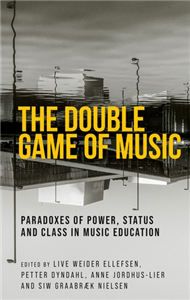
The double game of music imagines music education as a series of games - each with its own rules, play currency and players - to challenge readers to rethink the significance of music and musical upbringing in shaping social structures. Drawing on their own empirical research and a wide range of international contributions, the authors unravel the intertwining of social positioning and power hierarchies with players beliefs in the pure values and virtues of their games, whether these relate to parenting, children's play, schooling, academic pursuits, musical leisure activities or the television and music industries. In a world where music is often celebrated as an important tool for inclusion and democratisation, this groundbreaking book offers a timely critique, revealing complexities and contradictions that tend to be overlooked by teachers, researchers, politicians and others interested in the powers of music education.
 Trusted Partner
Trusted Partner
Trusted Partner
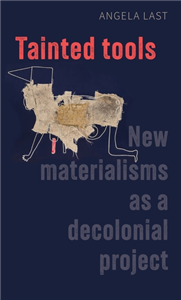
Tainted Tools makes a provocative intervention into the fraught intersection between new materialist and decolonial approaches. Despite a common project of challenging European philosophical and social categories and hierarchies, the discourses are considered incompatible. Most prominently, new materialisms have been accused of harbouring a White vision of the human while disregarding the racist resonances of the 'nonhuman'. The book traces this conflict to an earlier meeting point of new materialist and decolonial projects, which came about through the experimental combination of Marx and Nietzsche. Used to fight fascism, Stalinism and colonialism, this politically contentious fusion gradually became depoliticised, leading to unaddressed tensions today. While the book does not argue for a revival of these early 'new materialisms', it brings their strategies into dialogue with today's new materialisms and decolonial approaches to develop greater theoretical solidarity in times of crisis.
Trusted Partner
Trusted Partner
Trusted Partner
Trusted Partner
Trusted Partner
Trusted Partner

 Trusted Partner

Puma - disentangled from the three-part structure of The End of the World News and published here for the first time in its intended format - is Anthony Burgess's lost science fiction novel. Set some way into the future, the story details the crushing of the planet Earth by a heavyweight intruder from a distant galaxy - the dreaded Puma. It is a visceral book about the end of history as man has known it. Despite its apocalyptic theme, its earthquakes and tidal waves, murder and madness, Puma is a gloriously-comic novel, steeped in the rich literary heritage of a world soon to be extinguished and celebrating humanity in all its squalid glory. In Burgess's hands this meditation on destruction, mitigated by the hope of salvation for a select few, becomes powerful exploration of friendship, violence, literature and science at the end of the world.
Trusted Partner

 Trusted Partner
 Trusted Partner
Trusted Partner
Trusted Partner

This novel is one of Anthony Burgess's most accessible and entertaining works. By turns bawdy, raucous, tender and bittersweet, and full of music and songs, this is a warm and affectionate portrait of the working-class Lancashire of the 1920s and 1930s that he knew from his own early life. The Pianoplayers is a funny, moving, autobiographical novel that brings to life the world of silent cinemas and music-halls of 1920s Manchester and Blackpool. Fully annotated and with a new introduction, this is an authoritative text for a new generation of readers. Part of the forthcoming Irwell Edition of the Works of Anthony Burgess, this book offers an opportunity to reappraise an unjustly neglected novel important to our understanding of Burgess's wider oeuvre. The 2017 Burgess centenary makes this a key moment for reflection on the life and work of a major figure in twentieth century letters.
Trusted Partner
Trusted Partner
Trusted Partner
Trusted Partner
Trusted Partner


Die Psalmen hat das Christentum übernommen, die im Raum der lateinischen Kultur entstandenen Hymnen sind sein eigener Beitrag zur Lyrik der Weltliteratur. Im 4. Jahrhundert setzt diese für Gottesdienst und private Frömmigkeit gedachte Literatur ein. Am Ende des Mittelalters ist der Bestand auf annähernd dreißigtausend Titel angewachsen. Hunderte sind in der Neuzeit im ständigen liturgischen Gebrauch geblieben. Der lateinische Hymnus wurde, wie etwa bei dem Passionslied „O Haupt, voll Blut und Wunden”, Grundlage deutschsprachiger Kirchenlieddichtung. Stücke wie das „Stabat mater” oder „Dies irae” haben große Kompositionen angeregt. Aus diesem Schatz werden in der vorliegenden Ausgabe dreiunddreißig Titel ausgewählt. Auf den lateinischen Text folgt jeweils eine Neuübersetzung oder eine liturgisch verwendete Nachdichtung. Einige Bemerkungen zur Textüberlieferung und ein ausführlicher Kommentar erschließen jeweils den Hymnus. Die Auswahl folgt dem Ablauf des Kirchenjahres und des monastischen Stundengebets. Sie ist exemplarisch für die literarische und theologische Vielfalt des Genres und kann als kleine poetische Summe der lateinischen Tradition des Christentums gelesen werden.