
Manchester University Press
Manchester University Press is a leading UK publisher known for excellent research in the humanities and social sciences.
View Rights Portal Trusted Partner

Manchester University Press is a leading UK publisher known for excellent research in the humanities and social sciences.
View Rights Portal
Manilla Press is a home for novelists, journalists, memoirists, thinkers, dreamers, influencers. Our reach is international, our range broad, we publish with focus, passion and conviction, and we seek to find and publish underrepresented voices.
View Rights Portal
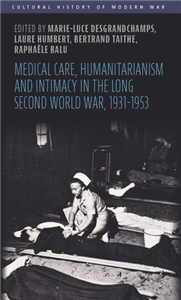
This book offers a micro-global history of humanitarianism and medical care during the 'long' Second World War, which challenges the traditional and Eurocentric chronological boundaries of 1939/1945. It takes as its starting point the Japanese invasion of Manchuria in 1931, which led to the progressive dislocation of the League of Nations, with the Japanese, German and Soviet departures in the 1930s. It ends with the termination of the Korean War in 1953, and the subsequent dismantlement of the first United Coalition and UN Peace enforcement operation. It considers the slow, messy and ambivalent transformation of humanitarian actors' relations to the suffering of distant others through a study of humanitarian encounters, practices, spaces and affects. Paying close attention to a variety of actors, such as French colonial doctors, Swiss ICRC delegates, Egyptian relief workers, Chinese-style physicians, Peruvian and Ecuadorian nurses or American member of the Unitarian Service Committee, the book provides a more holistic story of humanitarianism.
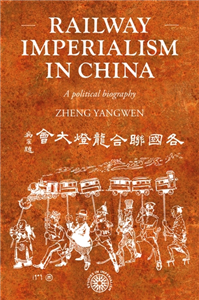
Railway Imperialism in China: a Political Biography is the first and most comprehensive book on history and politics of all major railways in China from the late Qing to the post-Mao era. It investigates the transformation of railways from a bête noire within discussions about reform to the emblematic "engines for empire" as foreign powers used it to carve outspheres of control and exploit the late Qing, and as an instrument of nation making for Chinese regimes. The book introduces new archival sources and a wide range of secondary materials. Boldly conceived, it situates the making of modern China in the context of British, Russian, German, Japanese, American expansion. It traces China's transformation from a victim of railway imperialism in the Age of Empireto a railway expansionist in the twenty-first century.

