
Wolters Kluwer Health
Wolters Kluwer Health is a leading global publisher of medical, nursing and allied health information resources in book, journal, newsletter, looseleaf and electronic media formats.
View Rights Portal
Wolters Kluwer Health is a leading global publisher of medical, nursing and allied health information resources in book, journal, newsletter, looseleaf and electronic media formats.
View Rights Portal

Ranging from eyebaths and compression stockings to electronic cigarettes, the variety of medical aids available is huge. Every day, expert advice on these is needed at the pharmacy. The authors have summarised these aids in a practically oriented way. They provide background information, specifics about the materials, application descriptions, practical tips and product examples. Colourful illustrations show how they are used on or by the patient. Fully updated, the new edition of the book contains not only conventional medical devices but also those asked for at a contemporary community pharmacy. This 11th edition, which has been completely revised, contains: - definitions enabling rapid familiarisation with the topic, - tables that provide an overview, - illustrations and advice tips to help with practical use, - mnemonics and practice questions which help reinforce the knowledge Bonus: QR codes take the user to additional digital material! The ideal companion in training and on the job!


This book is available as an open access ebook under a CC-BY-NC-ND licence. At a time when payment is claiming a greater place than ever before within the NHS, this book provides the first in-depth investigation of the workings, scale and meaning of payment in British hospitals before the NHS. There were only three decades in British history when it was the norm for patients to pay the hospital; those between the end of the First World War and the establishment of the National Health Service in 1948. Payment played an important part in redefining rather than abandoning medical philanthropy, based on class divisions and the notion of financial contribution as a civic duty. With new insights on the scope of private medicine and the workings of the means test in the hospital, as well as the civic, consumer and charitable meanings associated with paying the hospital, Gosling offers a fresh perspective on healthcare before the NHS and welfare before the welfare state.
 Trusted Partner
Trusted Partner
Trusted Partner
 Trusted Partner


This title is the first interdisciplinary book about geography and health that takes scientific methods and questions into account making it a great manual of international health geography research. The topics include: • spatial statistical analysis • mobility analysis in health research • GIS and mapping tools • cartographic visualization • health mapping • cancer epidemiology • morbidity • climate change and health – the example of Germany • global change and infectious diseases Target Group: Health scientists, geographers, doctors (epidemiologists)
Trusted Partner

What applies when storing potatoes is also good for drugs and medical devices! But this is where the similarities end. If medicines are not stored correctly or used properly, they may not be effective. Pharmacists - the experts on medicines - explain to the nursing team: - How light, air and temperature can cause damage - Where the pitfalls lie in the use of tablets, drops etc. - What makes medical devices so different from drugs New in the 3rd edition: Improved overview of the types of use. Clearer comparison of drugs and medical devices. Video clips on the use of specific dosage forms can now be directly launched from the presentation. 36 editable PowerPoint slides, videos and a complete text of the presentation are available on CD-ROM and for download
Trusted Partner
Trusted Partner
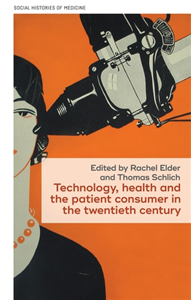
Technology and consumerism are two characteristic phenomena in the history medicine and healthcare, yet the connections between them are rarely explored by scholars. In this edited volume, the authors address this disconnect, noting the ways in which a variety of technologies have shaped patients' roles as consumers since the early twentieth century. Chapters examine key issues, such as the changing nature of patient information and choice, patients' assessment of risk and reward, and matters of patient role and of patient demand as they relate to new and changing technologies. They simultaneously investigate how differences in access to care and in outcomes across various patient groups have been influenced by the advent of new technologies and consumer-based approaches to health. The volume spans the twentieth and twenty-first centuries, spotlights an array of medical technologies and health products, and draws on examples from across the United States and United Kingdom.
Trusted Partner
Trusted Partner

This book is available as an open access ebook under a CC-BY-NC-ND licence. Through its study of diabetes care in twentieth-century Britain, Managing diabetes, managing medicine offers the first historical monograph to explore how the decision-making and labour of medical professionals became subject to bureaucratic regulation and managerial oversight. Where much existing literature has cast health care management as either a political imposition or an assertion of medical control, this work positions managerial medicine as a co-constructed venture. Although driven by different motives, doctors, nurses, professional bodies, government agencies and international organisations were all integral to the creation of managerial systems, working within a context of considerable professional, political, technological, economic and cultural change.
Trusted Partner

The first book-length analysis of EU health policy since the COVID-19 pandemic, encompassing the creation of the European Health Union and the Recovery and Resilience Facility, this volume offers a timely and accessible analysis of the EU's health policy, institutions and governance. Focusing on the EU's health objectives and how they are pursued, it offers a detailed overview of the development of EU health policy, and five in-depth case studies of specific policy fields. The book will appeal to academic and policy audiences interested in the EU's health objectives and how it pursues them.
Trusted Partner


— The book on men's health — Confessions from a urologist — Compact, competent, concise Men are often unwilling to seek medical advice when they have problems. However, a lot of diseases can only be treated if they are detected in time. This book contains comprehensible and entertaining information on all the important questions relating to men's health, from the erection and its disorders, fertility and prostate issues, to sexuality in old age. The author knows what matters to men: he speaks from his experience as a urologist.
Trusted Partner
 Trusted Partner
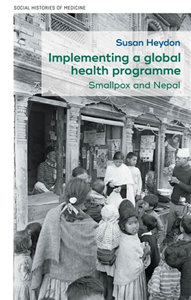
Worldwide eradication of the devastating viral disease of smallpox was devised as a distant global policy, but success depended on implementing a global vaccination programme within nation states. How this was achieved remains relevant and topical for responding to today's global communicable disease challenges. The small and poor Himalayan kingdom of Nepal faced enormous geographical and infrastructure challenges if it was going to succeed in a nationwide vaccination programme. This book acknowledges the key role of the WHO but disrupts the top-down, centre-led standard narrative. Against a background of widespread internal political and social change, Nepal's programme was expanded, effectively decentralised and a vaccination strategy introduced that aligned with people's beliefs. Few foreign personnel were involved.
Trusted Partner
Trusted Partner
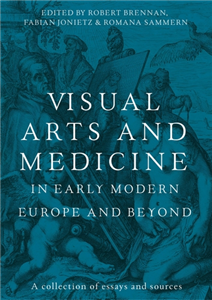
This book opens up new perspectives on the relationship between art, medicine, and science in late-medieval and early modern Europe. Looking beyond the traditional nexus of art, anatomy, and optics, the volume sheds light on a broader array of connections between artists and physicians: collaborations between painters and doctors on colour charts, handwork skills common to sculptors and surgeons, the transmission of art theory through medical texts long before the emergence of art writing itself as an independent genre, and the kinship of medical diagnosis with early modes of connoisseurship. Reconfiguring the histories of art, medicine, and science, the book also traverses conventional boundaries between physical and mental health, religious and medical modes of healing, menial and exalted forms of knowledge and labour, as well as vernacular and scientific understandings of human difference, including gender, race, and neurodiversity.
Trusted Partner


Indian mulberry, St. John’s wort, Hawaiian baby woodrose – whether disputed wonder drug, traditional medicinal plant or unknown exotic plant – the Lexicon of Medicinal Plants can always be relied upon. The lexical and classic knowledge about the individual medicinal plants – such as family, origin, use, effect and constituents – garnered over decades and peppered with particular anecdotes on the herbal drugs, can be regarded as unique and largely timeless. At the repeated request of readers, this reference work has therefore been reissued in book form, with its contents largely unchanged but with misprints corrected and its layout modernised. A wealth of experience that even in the fast-moving digital world preserves traditional knowledge.
Trusted Partner

At the core of this book are three central contentions: That medical welfare became the totemic function of the Old Poor Law in its last few decades; that the poor themselves were able to negotiate this medical welfare rather than simply being subject to it; and that being doctored and institutionalised became part of the norm for the sick poor by the 1820s, in a way that had not been the case in the 1750s. Exploring the lives and medical experiences of the poor largely in their own words, Sickness, medical welfare and the English poor offers a comprehensive reinterpretation of the so-called crisis of the Old Poor Law from the later eighteenth century. The sick poor became an insistent presence in the lives of officials and parishes and the (largely positive) way that communities responded to their dire needs must cause us to rethink the role and character of the poor law.
Trusted Partner
Trusted Partner

A healthy, caredfor mouth prevents the occurrence of oral diseases and systemic contingent diseases. Every day, professional hygienists are confronted with the oral care of their patients and need to be informed of new developments in dentistry, pharmacology, technology, and care methods. This book offers sound action recommendations for hygienists and dental assistants with vivid illustrations. There are clear descriptions of the anatomical and physiological basics of oral mucosa, teeth, and the oral cavity ecosystem. Practical illustrations of the connections between oral health and general health, debilitating risks, handling modern dentures, assessment of oral changes, oral approaches through basal stimulation and dietary recommendations are provided. Consideration is also given to oral hygiene in special settings, for example, in the case of neurological, psychological, or mental impairments as well as people receiving geriatric, oncological, intensive, or palliative care.






