
Clockwork Books
Clockwork Books publishes for an African audience first, but we believe that our stories resonate with readers further afield. We would especially like to find new global audiences for our titles.
View Rights Portal
Clockwork Books publishes for an African audience first, but we believe that our stories resonate with readers further afield. We would especially like to find new global audiences for our titles.
View Rights Portal

Ranging from eyebaths and compression stockings to electronic cigarettes, the variety of medical aids available is huge. Every day, expert advice on these is needed at the pharmacy. The authors have summarised these aids in a practically oriented way. They provide background information, specifics about the materials, application descriptions, practical tips and product examples. Colourful illustrations show how they are used on or by the patient. Fully updated, the new edition of the book contains not only conventional medical devices but also those asked for at a contemporary community pharmacy. This 11th edition, which has been completely revised, contains: - definitions enabling rapid familiarisation with the topic, - tables that provide an overview, - illustrations and advice tips to help with practical use, - mnemonics and practice questions which help reinforce the knowledge Bonus: QR codes take the user to additional digital material! The ideal companion in training and on the job!
 Trusted Partner

What applies when storing potatoes is also good for drugs and medical devices! But this is where the similarities end. If medicines are not stored correctly or used properly, they may not be effective. Pharmacists - the experts on medicines - explain to the nursing team: - How light, air and temperature can cause damage - Where the pitfalls lie in the use of tablets, drops etc. - What makes medical devices so different from drugs New in the 3rd edition: Improved overview of the types of use. Clearer comparison of drugs and medical devices. Video clips on the use of specific dosage forms can now be directly launched from the presentation. 36 editable PowerPoint slides, videos and a complete text of the presentation are available on CD-ROM and for download
Trusted Partner
Trusted Partner


This book is available as an open access ebook under a CC-BY-NC-ND licence. At a time when payment is claiming a greater place than ever before within the NHS, this book provides the first in-depth investigation of the workings, scale and meaning of payment in British hospitals before the NHS. There were only three decades in British history when it was the norm for patients to pay the hospital; those between the end of the First World War and the establishment of the National Health Service in 1948. Payment played an important part in redefining rather than abandoning medical philanthropy, based on class divisions and the notion of financial contribution as a civic duty. With new insights on the scope of private medicine and the workings of the means test in the hospital, as well as the civic, consumer and charitable meanings associated with paying the hospital, Gosling offers a fresh perspective on healthcare before the NHS and welfare before the welfare state.
Trusted Partner
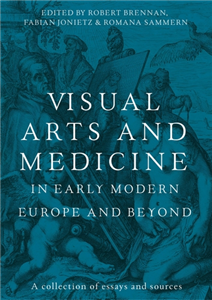
This book opens up new perspectives on the relationship between art, medicine, and science in late-medieval and early modern Europe. Looking beyond the traditional nexus of art, anatomy, and optics, the volume sheds light on a broader array of connections between artists and physicians: collaborations between painters and doctors on colour charts, handwork skills common to sculptors and surgeons, the transmission of art theory through medical texts long before the emergence of art writing itself as an independent genre, and the kinship of medical diagnosis with early modes of connoisseurship. Reconfiguring the histories of art, medicine, and science, the book also traverses conventional boundaries between physical and mental health, religious and medical modes of healing, menial and exalted forms of knowledge and labour, as well as vernacular and scientific understandings of human difference, including gender, race, and neurodiversity.
Trusted Partner

The secret life of romantic comedy offers a new approach to one of the most popular and resilient genres in the history of Hollywood. Steering away from the rigidity and ideological determinism of traditional accounts of the genre, this book advocates a more flexible theory, which allows the student to explore the presence of the genre in unexpected places, extending the concept to encompass films that are not usually considered romantic comedies. Combining theory with detailed analyses of a selection of films, including To Be or Not to Be (1942), Rear Window (1954), Kiss Me Stupid (1964), Crimes and Misdemeanors (1989) and Before Sunset (2004), the book aims to provide a practical framework for the exploration of a key area of contemporary experience - intimate matters - through one of its most powerful filmic representations: the genre of romantic comedy. Original and entertaining, The secret life of romantic comedy is perfect for students and academics of film and film genre.
Trusted Partner
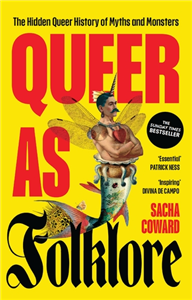
A celebration of queer history like you've never seen it before. Queer as folklore travels across centuries and continents to reveal the unsung heroes and villains of storytelling, magic and fantasy. Featuring images from archives, galleries and museums around the world, each chapter investigates the queer history of different mythic and folkloric characters, both old and new. Leaving no headstone unturned, Sacha Coward takes you on a wild ride through the night from ancient Greece to the main stage of RuPaul's Drag Race, visiting cross-dressing pirates, radical fairies and the graves of the 'queerly departed' along the way. Queer communities have often sought refuge in the shadows and created safe spaces in underworlds. But these forgotten narratives tell stories of resilience that deserve to be heard. Join any Pride march and you will see a glorious display of papier-mâché unicorn heads, drag queens in mermaid tails and more fairy wings than you can shake a trident at. These are not just accessories: they are queer symbols with historic roots. To truly understand who queer people are today, we must confront the twisted tales of the past.
Trusted Partner
Trusted Partner
Trusted Partner
Trusted Partner
Trusted Partner

 Trusted Partner


Indian mulberry, St. John’s wort, Hawaiian baby woodrose – whether disputed wonder drug, traditional medicinal plant or unknown exotic plant – the Lexicon of Medicinal Plants can always be relied upon. The lexical and classic knowledge about the individual medicinal plants – such as family, origin, use, effect and constituents – garnered over decades and peppered with particular anecdotes on the herbal drugs, can be regarded as unique and largely timeless. At the repeated request of readers, this reference work has therefore been reissued in book form, with its contents largely unchanged but with misprints corrected and its layout modernised. A wealth of experience that even in the fast-moving digital world preserves traditional knowledge.
Trusted Partner

Queer exceptions is a study of contemporary solo performance in the UK and Western Europe that explores the contentious relationship between identity, individuality and neoliberalism. With diverse case studies featuring the work of La Ribot, David Hoyle, Oreet Ashery, Bridget Christie, Tanja Ostojic, Adrian Howells and Nassim Soleimanpour, the book examines the role of singular or 'exceptional' subjects in constructing and challenging assumed notions of communal sociability and togetherness, while drawing fresh insight from the fields of sociology, gender studies and political philosophy to reconsider theatre's attachment to singular lives and experiences. Framed by a detailed exploration of arts festivals as encapsulating the material, entrepreneurial circumstances of contemporary performance-making, this is the first major critical study of solo work since the millennium.
Trusted Partner
Trusted Partner
Trusted Partner
Trusted Partner
Trusted Partner



