Your Search Results

      • MidnightSun Publishing

        MidnightSun Publishing has grown out of a disenchantment with the established publishing houses in Australia. We know there are plenty of fabulous manuscripts about unusual topics floating around, but publishing new and unknown writers poses a big risk. MidnightSun is prepared to take that risk.   We want our readers to be entertained. We want to challenge, excite, enrage and overwhelm. Therefore, we publish books in any genre that have touched us in some way. Because we are a new publishing company, striving to become established, we expect our writers to be enthusiastic about their own work and able to promote it in the wider community.

        View Rights Portal
      • Cherche Midi Editeur / Belfond

        Hello I am in charge of foreign rights at Le Cherche midi éditeur and Belfond. Le Cherche midi is a mainstream publisher presenting literature, women's fiction, thrillers, self help, documents... with always accurate topics.  Belfond is a historical fiction publisher which has two series: Literary fiction (Belfond Pointillés) and Commercial Fiction (novels and thrillers).  I would be pleased to introduce our Fall rights list with you. :)

        View Rights Portal
      • Trusted Partner
        Medicine
        April 2021

        Leprosy and identity in the Middle Ages

        From England to the Mediterranean

        by Elma Brenner, François-Olivier Touati

        For the first time, this volume explores the identities of leprosy sufferers and other people affected by the disease in medieval Europe. The chapters, including contributions by leading voices such as Luke Demaitre, Carole Rawcliffe and Charlotte Roberts, challenge the view that people with leprosy were uniformly excluded and stigmatised. Instead, they reveal the complexity of responses to this disease and the fine line between segregation and integration. Ranging across disciplines, from history to bioarchaeology, Leprosy and identity in the Middle Ages encompasses post-medieval perspectives as well as the attitudes and responses of contemporaries. Subjects include hospital care, diet, sanctity, miraculous healing, diagnosis, iconography and public health regulation. This richly illustrated collection presents previously unpublished archival and material sources from England to the Mediterranean.

      • Trusted Partner
        Humanities & Social Sciences
        January 2013

        Crime, Law and Society in the Later Middle Ages

        by Anthony Musson, Edward Powell

        This book provides an accessible collection of translated legal sources through which the exploits of criminals and developments in the English criminal justice system (c.1215-1485) can be studied. Drawing on the wealth of archival material and an array of contemporary literary texts, it guides readers towards an understanding of prevailing notions of law and justice and expectations of the law and legal institutions. Tensions are shown emerging between theoretical ideals of justice and the practical realities of administering the law during an era profoundly affected by periodic bouts of war, political in-fighting, social dislocation and economic disaster. Introductions and notes provide both the specific and wider legal, social and political contexts in addition to offering an overview of the existing secondary literature and historiographical trends. This collection affords a valuable insight into the character of medieval governance as well as revealing the complex nexus of interests, attitudes and relationships prevailing in society during the later Middle Ages.

      • Trusted Partner
      • Trusted Partner
      • Trusted Partner
        Humanities & Social Sciences
        February 2025

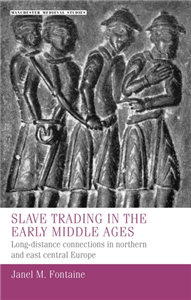
        Slave trading in the Early Middle Ages

        Long-distance connections in northern and east central Europe

        by Janel M. Fontaine

        This book examines slave trading in northern and eastern central Europe from the seventh century through the eleventh century, tracing its growth, climax, and decline. Demand from the Islamic world in the ninth and tenth centuries prompted changes in warfare, trade logistics, and administrative responses to slavery in the slaving zones centred on the British Isles and the Czech lands. This study establishes slave trading as a core driver of connectivity and presents a model for this practice in politically fragmented areas of Europe.

      • Trusted Partner
      • Trusted Partner
        Literature & Literary Studies
        May 2000

        The towns of Italy in the later Middle Ages

        by Rosemary Horrox, Trevor Dean, Simon Maclean

        The towns of Italy in the later middle ages presents over one hundred fascinating documents, carefully selected and coordinated from the richest, most innovative and most documented society of the European Middle Ages. No other English language sourcebook has the same geographical or chronological range. This collection is carefully structured around the crisis of the fourteenth century and arranged in contrasting groups of texts. By connecting documents in translation to recent scholarship and debates, it addresses five key areas of medieval urban history: the physical environment, civic religion, economy, society and politics. Offers students well-translated and effectively contextualised documents along with some guidance to the secondary work of Italian scholars which is largely inaccessible to undergraduate students. ;

      • Trusted Partner
        Literature & Literary Studies
        January 2013

        The towns of Italy in the later Middle Ages

        by Trevor Dean

        The towns of Italy in the later middle ages presents over one hundred fascinating documents, carefully selected and coordinated from the richest, most innovative and most documented society of the European Middle Ages. No other English language sourcebook has the same geographical or chronological range. This collection is carefully structured around the crisis of the fourteenth century and arranged in contrasting groups of texts. By connecting documents in translation to recent scholarship and debates, it addresses five key areas of medieval urban history: the physical environment, civic religion, economy, society and politics. Offers students well-translated and effectively contextualised documents along with some guidance to the secondary work of Italian scholars which is largely inaccessible to undergraduate students.

      • Trusted Partner
        Humanities & Social Sciences
        January 2020

        Peacemaking in the Middle Ages

        Principles and practice

        by S. H. Rigby, J. E. M. Benham

        Peacemaking in the Middle Ages explores the making of peace in the late-twelfth and early thirteenth centuries based on the experiences of the kings of England and the kings of Denmark. From dealing with owing allegiance to powerful neighbours to conquering the 'barbarians', this book offers a vision of how relationships between rulers were regulated and maintained, and how rulers negotiated, resolved, avoided and enforced matters in dispute in a period before nation states and international law. This is the first full-length study in English of the principles and practice of peacemaking in the medieval period. Its findings have wider significance and applications, and numerous comparisons are drawn with the peacemaking activities of other western European rulers, in the medieval period and beyond. This book will appeal to scholars and students of medieval Europe, but also those with a more general interest in kingship, warfare, diplomacy and international relations.

      • Trusted Partner
        Humanities & Social Sciences
        June 2021

        Peacemaking in the Middle Ages

        Principles and practice

        by J. E. M. Benham

        Peacemaking in the Middle Ages explores the making of peace in the late-twelfth and early thirteenth centuries based on the experiences of the kings of England and the kings of Denmark. From dealing with owing allegiance to powerful neighbours to conquering the 'barbarians', this book offers a vision of how relationships between rulers were regulated and maintained, and how rulers negotiated, resolved, avoided and enforced matters in dispute in a period before nation states and international law. This is the first full-length study in English of the principles and practice of peacemaking in the medieval period. Its findings have wider significance and applications, and numerous comparisons are drawn with the peacemaking activities of other western European rulers, in the medieval period and beyond. This book will appeal to scholars and students of medieval Europe, but also those with a more general interest in kingship, warfare, diplomacy and international relations.

      • Trusted Partner
        Humanities & Social Sciences
        January 2019

        Hermits and anchorites in England, 1200–1550

        by E. A. Jones

        This source book offers a comprehensive treatment of solitary religious lives in England in the late Middle Ages. It covers both enclosed recluses (anchorites) and free-wandering hermits, and explores the relationship between them. Although there has been a recent surge of interest in the solitary vocations, especially anchorites, this has focused almost exclusively on a small number of examples. The field is in need of reinvigoration, and this book provides it. Featuring translated extracts from a wide range of Latin, Middle English and Old French sources, as well as a scholarly introduction and commentary from one of the foremost experts in the field, Hermits and anchorites in England is an invaluable resource for students and lecturers alike.

      • Trusted Partner
        Literature & Literary Studies
        December 2010

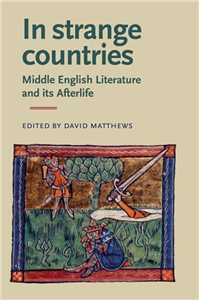
        In Strange Countries: Middle English Literature and its Afterlife

        Essays in memory of J. J. Anderson

        by Anke Bernau, David Matthews

        These essays by senior scholars in medieval studies celebrate the career of J.J. Anderson, editor, critic, and co-founder of the Manchester Medieval Literature and Culture series, who taught in medieval studies at the University of Manchester for forty years. The essays are rooted in medieval literature but frequently range beyond the confines of the Middle Ages. They reflect the breadth of Anderson's own scholarly interests, especially in drama and Arthurian literature. There is a particular focus on Sir Gawain and the Green Knight and Pearl, poems which preoccupied him throughout his scholarly life. There are also new reconsiderations of La?amon's Brut, Mirk's Festial, the Passion plays, and the manuscripts of the Pore Caitif. Moving beyond the traditional purview of medieval literature, several contributors trace the afterlives of medieval themes in later literature. These essays include a consideration of the twinned trajectories of the medieval heroes Robin Hood and King Arthur from medieval literature to modern television, a comparison of La?amon's Brut and Tennyson's Idylls of the King, and a recreation of the Bishop Blase procession which took place in industrial Bradford. Contributors are Rosamund Allen, Ralph Elliott, Alexandra Johnston, Stephen Knight, Peter Meredith, Susan Powell, Gillian Rudd, Alan Shelston, and Kalpen Trivedi. ;

      • Trusted Partner
        Humanities & Social Sciences
        October 2013

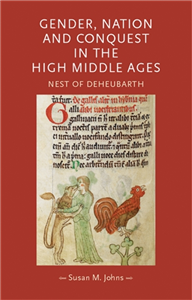
        Gender, nation and conquest in the high Middle Ages

        Nest of Deheubarth

        by Susan Johns, Pamela Sharpe, Penny Summerfield, Lynn Abrams, Cordelia Beattie

        Nest of Deheubarth was one of the most notorious women of the Middle Ages, mistress of Henry I and many other men, famously beautiful and strong-willed, object of one of the most notorious abduction/elopements of the period and ancestress of one of the most famous dynasties in medieval Ireland, the Fitzgeralds. This volume sheds light on women, gender, imperialism and conquest in the Middle Ages. From it emerges a picture of a woman who, though remarkable, was not exceptional, representative not of a group of victims or pawns in the dramatic transformations of the high Middle Ages but powerful and decisive actors. The book examines beauty, love, sex and marriage and the interconnecting identities of Nest as wife/concubine/mistress, both at the time and in the centuries since her death, when for Welsh writers and other commentators she has proved a powerful symbol. ;

      • Trusted Partner
        Medieval history
        November 2011

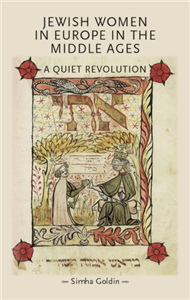
        Jewish Women in Europe in the Middle Ages

        A quiet revolution

        by Simha Goldin

        Goldin's study explores the relationships between men and women within Jewish society living in Germany, northern France and England among the Christian population over a period of some 350 years. Looking at original Hebrew sources to conduct a social analysis, he takes us from the middle of the tenth century until the middle of the second half of the fourteenth century, when the Christian population had expelled the Jews from almost all of the places they were living. Particularly fascinating are the attitudes towards women, as well as their changes in social status. By examining the factors involved in these issues, including views of the leadership, economic influences, internal power politics and gender struggles, Goldin's book provides a greater understanding of the functioning of these communities. This volume will be of great interest to historians of medieval Europe, gender and religion.

      • Trusted Partner
        Humanities & Social Sciences
        July 2025

        International Relations in a multipolar Middle East

        by Francesco Belcastro, Edward Wastnidge

        This volume explores the international relations of today's Middle East, a region that has become increasingly multi-polar. The tumult following the Arab Uprisings has expanded the arenas competed over by regional powers, global actors and non-state players. The United States, once seemingly intent on a hegemonic 'Pax Americana' has stepped back, leaving powers such as Russia, China, India and the EU, with opportunities to increase their reach and expand their influence. Meanwhile, regional rivalries and alliances have continued to shape conflict and cooperation in the Middle East. As global politics moves towards a new, multipolar era, this volume sheds important light on how this transition will impact on the region. Comprised of two macro sections that offer theoretical reflections and empirical case studies, this volume is essential reading for scholars of the politics and international relations of the Middle East.

      • Trusted Partner
        October 2025

        Beirut. Fragments of a metropolis

        by Meret Michel

        The tragic history of a cosmopolitan city: Beirut and the fate of LebanonOn August 4, 2020, the port of Beirut is shaken by a massive explosion that was to have an impact on the entire city: Hundreds of thousands of houses are destroyed, more than 200 people killed and thousands injured. This was not to be the first and last catastrophe for a country shaken by multiple crises. In this book, ten people tell their stories from their city - a city that has been the hub of the Middle East region for many decades. They live in the once glamorous district of Hamra or in the south of the city, which is controlled by Hezbollah. They are devout Muslims or atheists, come from the upper classes or have been struggling to survive for a long time.

      • Trusted Partner
        Literature & Literary Studies
        April 2024

        Bestsellers and masterpieces

        by Heather Blurton, Dwight F. Reynolds

      • Trusted Partner
        Humanities & Social Sciences
        March 2020

        Knowledge, mediation and empire

        James Tod's journeys among the Rajputs

        by Florence D'Souza, Andrew Thompson, John M. MacKenzie

        This study of the British colonial administrator James Tod (1782-1835), who spent five years in north-western India (1818-22) collecting every conceivable type of material of historical or cultural interest on the Rajputs and the Gujaratis, gives special attention to his role as a mediator of knowledge about this little-known region of the British Empire in the early nineteenth century to British and European audiences. The book aims to illustrate that British officers did not spend all their time oppressing and inferiorising the indigenous peoples under their colonial authority, but also contributed to propagating cultural and scientific information about them, and that they did not react only negatively to the various types of human difference they encountered in the field.

      Subscribe to our

      newsletter