Your Search Results

      • mikrotext / Nikola Richter

        mikrotext is a publisher for texts with attitude and for new narratives, founded in 2013 in Berlin by Nikola Richter The independent publishing house focusses on new literary texts that comment on contemporary questions and allow insights into tomorrow. The texts are inspired by discussions on social media platformes and reflect today’s global debates. All titles are published digital first. A selection is available in English. In 2020 and 2019, mikrotext was awarded the German Publisher Award by the Federal Ministry of Culture and Media.

        View Rights Portal
      • Trusted Partner
        Humanities & Social Sciences
        February 2026

        AIDS in Soviet Russia

        A story of deception, despair and hope

        by Rustam Alexander

        The first book to tell the shocking story of the AIDS crisis in Soviet Russia. Throughout the 1980s, as the world was grappling with the escalating crisis of AIDS, Soviet Russia continued to deny there was a problem. Arguing that the disease was limited to foreigners and 'immoral' groups, the government failed to take meaningful action, long past the point other countries had begun to recognise the full scale of the threat. In this ground-breaking book, Rustam Alexander tells the story of AIDS in Soviet Russia. Fixated on disinformation, censorship and the persecution of marginalised communities, the Soviet authorities wasted precious time, allowing the epidemic to strike at the very heart of the nation: its children. Yet, despite the government's failure, a number of brave journalists, doctors and nascent gay groups decided to take matters into their own hands and engage in full-fledged AIDS activism. Tracing the political and social response to AIDS in the final years of the Soviet era, Alexander sheds light on the devastating consequences of government inaction. He draws on personal stories, media reports and archival materials to provide a riveting account of the Russian people's fight against AIDS amid the tumultuous transformations of Gorbachev's perestroika.

      • Trusted Partner
        Humanities & Social Sciences
        February 2025

        Red closet

        by Rustam Alexander

      • Trusted Partner
      • Trusted Partner
      • Trusted Partner
      • Trusted Partner
      • Trusted Partner
        Literature & Literary Studies
        January 2026

        Shakespeare's liminal spaces

        by Ben Haworth

      • Trusted Partner
        Literature & Literary Studies
        February 2025

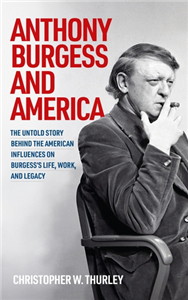
        Anthony Burgess and America

        The untold story behind the American influences on Burgess’s life, work and legacy

        by Christopher W Thurley

        Anthony Burgess and America is a biographical and critical analysis of Burgess's commentary on and relationship with the United States of America. Utilising Burgess's entire canon and newly discovered materials to assess Burgess's views on America, this book also evaluates the American inspirations in five Burgess novels. This essential addition to Burgess scholarship tells the story of a nearly unexplored area of Burgess's life. For the first time ever, Burgess's American experiences, work, and documented communication, lectures, interviews and public utterances are brought together to assess where these commentaries overlapped with his fiction. The result is a complex personal and public history about one of Britain's greatest twentieth century authors and their immersion into and interaction with American culture in the second half of the twentieth century.

      • Trusted Partner
        April 1977

        Philosophie der Offenbarung

        1841/42

        by Friedrich Wilhelm Joseph Schelling, Manfred Frank, Manfred Frank

        Schellings Berliner Vorlesung vom Wintersemester 1841/42, deren Nachschrift (auf der unsere Ausgabe basiert) H.E.G. Paulus gegen den Willen ihres Autors 1843 unter dem Titel »Die endlich offenbar gewordene positive Philosophie der Offenbarung« edierte, ist von Karl Jaspers als das letzte große Universitätsereignis bezeichnet worden. Jedenfalls müssen es die Zeitgenossen so empfunden haben. Friedrich Engels, der wie Kierkegaard, Bakunin, Jacob Burckhardt, Savigny und Ranke zu den Zuhörern der Schelling- Vorlesung gehörte, schrieb damals: »Wenn ihr jetzt hier in Berlin irgendeinen Menschen … nach dem Kampfplatze fraget, auf dem um die Herrschaft über die öffentliche Meinung Deutschlands in Politik und Religion, also über Deutschland selbst, gestritten wird, so wird er euch antworten, dieser Kampfplatz sei in der Universität, und zwar das Auditorium Nr. 6, wo Schelling seine Vorlesungen über Philosophie der Offenbarung hält.« Die umfangreiche Einleitung des Herausgebers rekonstruiert den geistes- und theoriegeschichtlichen Zusammenhang, in dem Schellings späte Philosophie in ihrer prinzipiellen Gegnerschaft zu der Hegels gesehen werden muß. Ergänzend dazu und mit teilweise überraschenden Pointen bringt der Anhang zeitgenössische Repliken auf Schellings Berliner Auftritt, der der preußischen Reaktion als »das notwendige Korrektiv für die neueren Entdeckungen der Kritik« - gemeint war die der Hegelschen Linken – galt.

      • Trusted Partner
        June 1988

        Der Künstler und die Zeitkrankheit

        Ausgewählte Schriften. Herausgegeben und mit einem Nachwort versehen von Burkhard Schlichting

        by Hugo Ball, Hans Burkhard Schlichting, Hans Burkhard Schlichting

        Dieses Buch mit seinen vierzig, teils unveröffentlichten, teils in entlegene Zeitungen und Zeitschriften verstreuten Schriften ist eine Entdeckung. Denn die Brisanz von Hugo Balls zeit- und kulturkritischen Arbeiten aus den Jahren 1909-1925 kommt erst heute, nachdem die meisten seiner Prognosen eingetroffen sind und seit der Studentenrevolte der sechziger Jahre nicht nur die kulturpolitische Diskussion, sondern auch unser Lebensgefühl bestimmen, zu voller Geltung. Es ist der im Ersten Weltkrieg in die Schweiz Emigrierte, der Nachbar und Mitarbeiter von Walter Benjamin und Ernst Bloch bei der oppositionellen »Freien Zeitung«, der Verfasser eines »Bakunin-Breviers«, der Sympathisant von Kurt Eisner, der Autor eines Essays über Thomas Münzer, welcher Ernst Bloch zu seinem Münzer-Buch anregte, aber auch der Verfasser von brisanten Angriffen gegen Wilhelm II., Hindenburg und von Thesen über die verhängnisvollen Folgen Kantscher Philosophie für den preußischen Militarismus. »Ball würde – wäre der Begriff schon damals bekannt gewesen – ein leidenschaftlicher Gegner der modernen Leistungsgesellschaft samt ihren sozialpsychologischen Folgen gewesen sein. Seine eminente Bildung, sein glühender politisch-sozialer Erneuerungswille und die Kraft seiner Sprache entheben ihn dem Vorwurf, ein anarchistischer Agitator zu sein. Ansatzpunkt ist der erste deutsche ›Zusammenbruch‹ 1918/19. Das heißt die Frage nach den geschichtlichen Ursachen der deutschen Katastrophe. Thomas Münzer sieht Ball in Luthers Preisgabe der aufrührerischen Bauern und in der Tragödie der Bauernkriege einen Schlüssel zur deutschen Geschichte. Ball hat mit wenigen Gleichgesinnten Dada und den Surrealismus ›als Hingabe an den Gegensatz alles dessen, was brauchbar und nutzbar ist‹, in den Jahren vor dem Ausbruch des Ersten Weltkrieges vorweggenommen.« ›Karl Korn in der Frankfurter Allgemeinen Zeitung‹

      • Trusted Partner
        Religious subjects depicted in art
        October 2009

        Pyostryye skazki

        By V. F. Odoyevsky

        by Neil Cornwell

        Odoyevsky's cycle of short stories, Pyostryye skazki (1833), is a transitional work between his writings of the 1820s (in particular his contributions to Mnemozina, 1824-5) and his mature period which culminated in Russkiye nochi (1844). Pyostryye skazki thus represents a romantic amalgam of elements drawn from fairy-tale and folklore, the fantastic and the society tale, serving didactic, satirical and whimsical purposes. The narration supposedly comes from an authorial alter ego, one Iriney Modestovich Gomozeyko, who occupies a place in Russian literature of the 1830s alongside Pushkin's Ivan Petrovich Belkin and Gogol's Rudyy Pan'ko. While individual stories from the cycle reappeared during the Soviet revival of interest in Odoyevsky, this edition, which includes an introduction, notes and a short bibliography, was the first integral (re)publication since 1833 of one of the basic texts of Russian Romanticism.

      • Trusted Partner
      • Trusted Partner
        June 2024

        At the Very Bottom of the System

        How migrant workers ensure prosperity for us

        by Sascha Lübbe

        The author reveals structural problems and offers solutions – an urgently necessary book, not least with a view to the acute shortage of skilled workers 450,000 migrant workers toll on German construction sites, work in sometimes inhumane conditions in meat factories or as truck drivers, and let’s not forget the hordes of cleaners in German hotels and companies. They are systematically exploited and cheated out of their wages. Sascha Lübbe exposes the octopus-like network of partly criminal companies in a shadowy world where the boundary between the legal and the illegal is blurred. In his evocative book with interviews with those aff ected, he reveals how a parallel system has established itself in the German working world, but also how those affected resist.

      Subscribe to our

      newsletter