Your Search Results

      • Welbeck Publishing Group Ltd.

        We are Welbeck Publishing Group – a globally recognised, independent publisher based in London. Our mission is to deliver talent-driven publishing with leading authors and brands worldwide. Our books and products span a variety of categories including, fiction, non-fiction and stationery and gift. We are renowned for our innovative ideas, production values, and developing long-lasting content. Welbeck’s amazing product comes to life for adults, children, and families in over 30 languages in more than 60 countries around the world. We have collaborated with many of the world’s leading institutions and licensors including – Disney, Universal, Paramount, HBO, Queen Productions, FIFA, International Mensa, Roald Dahl Literary Estate, the Science, Natural History and Imperial War Museums, and Royal Botanic Gardens, Kew.

        View Rights Portal
      • Trusted Partner
      • Trusted Partner
        Humanities & Social Sciences
        January 2025

        England’s military heartland

        Preparing for war on Salisbury Plain

        by Vron Ware, Antonia Lucia Dawes, Mitra Pariyar, Alice Cree

        What is it like to live next door to a British Army base? England's military heartland provides an eye-opening account of the sprawling military presence on Salisbury Plain, drawing on a wide range of voices from both sides of the divide. Targeted for expansion under government plans to reorganise the UK's global defence estate, the Salisbury 'super garrison' offers a unique opportunity to explore the impact of the military footprint in a particular place. But this is no ordinary environment: as well as being the world-famous site of Stonehenge, the grasslands of Salisbury Plain are home to rare plants and wildlife. How does the army take responsibility for conserving this unique landscape as it trains young men and women to use lethal weapons? Are its claims that its presence is a positive for the environment anything more than propaganda? This book investigates these questions against the backdrop of a historic landscape inscribed with the legacy of perpetual war.

      • Trusted Partner
        Humanities & Social Sciences
        January 2025

        England’s military heartland

        Preparing for war on Salisbury Plain

        by Vron Ware, Antonia Dawes, Mitra Pariyar, Alice Cree

        A considered investigation of a long-standing army base's impact on the British countryside. What is it like to live next door to a British Army base? Beyond the barracks provides an eye-opening account of the sprawling military presence on Salisbury Plain, drawing on a wide range of voices from both sides of the divide. Targeted for expansion under government plans to reorganise the UK's global defence estate, the Salisbury 'super garrison' offers a unique opportunity to explore the impact of the military footprint in a particular place. But this is no ordinary environment: as well as being the world-famous site of Stonehenge, the grasslands of Salisbury Plain are home to rare plants and wildlife. How does the army take responsibility for conserving this unique landscape as it trains young men and women to use lethal weapons? Are its claims that its presence is a positive for the environment anything more than propaganda? Beyond the barracks investigates these questions against the backdrop of a historic landscape inscribed with the legacy of perpetual war.

      • Trusted Partner
        Humanities & Social Sciences
        July 2021

        Post-everything

        An intellectual history of post-concepts

        by Herman Paul, Adriaan van Veldhuizen

        Postmodern, postcolonial and post-truth are broadly used terms. But where do they come from? When and why did the habit of interpreting the world in post-terms emerge? And who exactly were the 'post boys' responsible for this? Post-everything examines why post-Christian, post-industrial and post-bourgeois were terms that resonated, not only among academics, but also in the popular press. It delves into the historical roots of postmodern and poststructuralist, while also subjecting more recent post-constructions (posthumanist, postfeminist) to critical scrutiny. This study is the first to offer a comprehensive history of post-concepts. In tracing how these concepts found their way into a broad range of genres and disciplines, Post-everything contributes to a rapprochement between the history of the humanities and the history of the social sciences.

      • Trusted Partner
        Humanities & Social Sciences
        October 2025

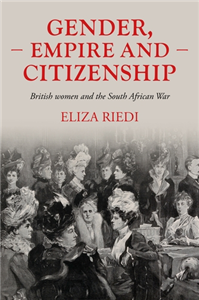
        Gender, empire and citizenship

        British women and the South African War

        by Eliza Riedi

        When the South African War broke out in 1899 British middle-class women, already well-integrated into party politics and public life, were quick to respond. Women across a wide political spectrum, from jingo imperialists to 'pro-Boers', actively engaged in public debates over the war through meetings, speeches, petitions, electioneering, and the press. From the start pacifist women made important contributions to the anti-war movement, later providing vital backing for Emily Hobhouse's campaign to reform the concentration camps. Women imperialists supported the war effort through military philanthropy and imperial propaganda. Under Millicent Garrett Fawcett the government-appointed Ladies' Committee transformed the camps, while hundreds of British women were recruited as camps teachers and nurses. Fundamentally shaped by ideologies of gender and race, women's responses to this imperial war continued to influence women's public action and discourses of citizenship into the First World War.

      • Trusted Partner
        Humanities & Social Sciences
        March 2017

        Popular imperialism and the military, 1850-1950

        by John M. MacKenzie

        Colonial war played a vital part in transforming the reputation of the military and placing it on a standing equal to that of the navy. The book is concerned with the interactive culture of colonial warfare, with the representation of the military in popular media at home, and how these images affected attitudes towards war itself and wider intellectual and institutional forces. It sets out to relate the changing image of the military to these fundamental facts. For the dominant people they were an atavistic form of war, shorn of guilt by Social Darwinian and racial ideas, and rendered less dangerous by the increasing technological gap between Europe and the world. Attempts to justify and understand war were naturally important to dominant people, for the extension of imperial power was seldom a peaceful process. The entertainment value of war in the British imperial experience does seem to have taken new and more intensive forms from roughly the middle of the nineteenth century. Themes such as the delusive seduction of martial music, the sketch of the music hall song, powerful mythic texts of popular imperialism, and heroic myths of empire are discussed extensively. The first important British war correspondent was William Howard Russell (1820-1907) of The Times, in the Crimea. The 1870s saw a dramatic change in the representation of the officer in British battle painting. Up to that point it was the officer's courage, tactical wisdom and social prestige that were put on display.

      • Trusted Partner
      • Trusted Partner
        Humanities & Social Sciences
        January 2019

        Sickness, medical welfare and the English poor, 1750-1834

        by Steven King, Keir Waddington, David Cantor

        At the core of this book are three central contentions: That medical welfare became the totemic function of the Old Poor Law in its last few decades; that the poor themselves were able to negotiate this medical welfare rather than simply being subject to it; and that being doctored and institutionalised became part of the norm for the sick poor by the 1820s, in a way that had not been the case in the 1750s. Exploring the lives and medical experiences of the poor largely in their own words, Sickness, medical welfare and the English poor offers a comprehensive reinterpretation of the so-called crisis of the Old Poor Law from the later eighteenth century. The sick poor became an insistent presence in the lives of officials and parishes and the (largely positive) way that communities responded to their dire needs must cause us to rethink the role and character of the poor law.

      • Trusted Partner
        Humanities & Social Sciences
        July 2025

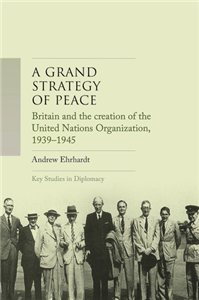
        A grand strategy of peace

        Britain and the creation of the United Nations Organization, 1939-1945

        by Andrew Ehrhardt

        A grand strategy of peace is the first detailed account of Britain's role in the creation of the United Nations Organization during the Second World War. As a work of traditional diplomatic history that brings in elements of intellectual history, the book describes how British officials, diplomats, politicians, and writers - previously seen to be secondary actors to the United States in this period - thought about, planned for, and helped to establish a future international order. While in the present day, many scholars and analysts have returned to the origins of the post- 1945 international system, this book offers an exhaustive account of how the statesmen and more importantly, the officials working below the statesmen, actually conceived of and worked to establish a post-war world order.

      • Trusted Partner
        Humanities & Social Sciences
        March 2017

        Payment and philanthropy in British healthcare, 1918–48

        by George Campbell Gosling, Keir Waddington

        This book is available as an open access ebook under a CC-BY-NC-ND licence. At a time when payment is claiming a greater place than ever before within the NHS, this book provides the first in-depth investigation of the workings, scale and meaning of payment in British hospitals before the NHS. There were only three decades in British history when it was the norm for patients to pay the hospital; those between the end of the First World War and the establishment of the National Health Service in 1948. Payment played an important part in redefining rather than abandoning medical philanthropy, based on class divisions and the notion of financial contribution as a civic duty. With new insights on the scope of private medicine and the workings of the means test in the hospital, as well as the civic, consumer and charitable meanings associated with paying the hospital, Gosling offers a fresh perspective on healthcare before the NHS and welfare before the welfare state.

      • Trusted Partner
        The Arts
        September 2024

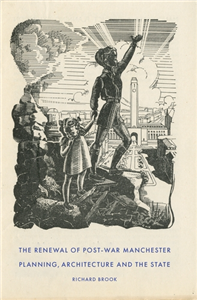
        The renewal of post-war Manchester

        Planning, architecture and the state

        by Richard Brook

        A compelling account of the project to transform post-war Manchester, revealing the clash between utopian vision and compromised reality. Urban renewal in Britain was thrilling in its vision, yet partial and incomplete in its implementation. For the first time, this deep study of a renewal city reveals the complex networks of actors behind physical change and stagnation in post-war Britain. Using the nested scales of region, city and case-study sites, the book explores the relationships between Whitehall legislation, its interpretation by local government planning officers and the on-the-ground impact through urban architectural projects. Each chapter highlights the connections between policy goals, global narratives and the design and construction of cities. The Cold War, decolonialisation, rising consumerism and the oil crisis all feature in a richly illustrated account of architecture and planning in post-war Manchester.

      • Trusted Partner
        Computing & IT
        May 2025

        The myth of good AI

        by Arshin Adib-Moghaddam

      • Trusted Partner
        Humanities & Social Sciences
        April 2025

        Bordering social reproduction

        Migrant mothers and children making lives in the shadows

        by Rachel Rosen, Eve Dickson

        Bordering social reproduction explores what happens when migrants subject to policies that seek to deny them the means of life nonetheless endeavour to make and sustain meaningful lives. Developing innovative theorisations of welfare bordering, the volume provides rich ethnographic insights into the everyday lives of destitute mothers and children who are denied mainstream welfare support in the United Kingdom due to their immigration status. This book shows how enforced destitution and debt work alongside detention and deportation as part of a tripartite of exclusionary technologies of the racial state. It advances the novel concept of weathering to comprehend mother's and children's life-making practices under duress - arguing that these are neither acts of heroic resilience nor solely symptomatic of lives rendered disposable, but indications of the fragilities of repressive migration regimes and, on occasion, refusals to accept their terms of existence.

      • Trusted Partner
        Humanities & Social Sciences
        February 2026

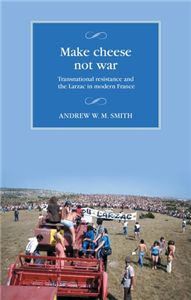
        Make cheese not war

        Transnational resistance and the Larzac in modern France

        by Andrew W. M. Smith

        In 1971, the French government announced a massive extension of its military base on the Larzac plateau in southern France. Land was to be expropriated from 107 farms around the small town of La Cavalerie. Limited resistance was expected, but what happened next exceeded all expectations. Local sheep farmers set up protest camps and occupied the land. They soon attracted an astonishing level of support, pioneering a form of regional radicalism with global implications. Drawing out the international dimensions of the protest, Make cheese not war explores a transnational resistance movement in the 1970s that challenged dominant visions of modernity and became a wellspring of radical alternatives. Exploring previously unconsulted archives in France and elsewhere, the book offers an in-depth analysis of the decade-long peasant movement and its aftermath. Repositioning the Larzac struggle within a wider network of French and international solidarities, from the US to the UK, Germany, Burkina Faso, New Caledonia and Japan, the book retraces political networks of pacifist activism, as well as environmental movements and anti-nuclear protest. It shows how this French peasant campaign became both a platform and a model for popular engagement.

      • Trusted Partner
        Humanities & Social Sciences
        March 2017

        The French empire at War, 1940–1945

        by Martin Thomas

        The French empire at war draws on original research in France and Britain to investigate the history of the divided French empire - the Vichy and the Free French empires - during the Second World War. What emerges is a fascinating story. While it is clear that both the Vichy and Free French colonial authorities were only rarely masters of their own destiny during the war, preservation of limited imperial control served them both in different ways. The Vichy government exploited the empire in an effort to withstand German-Italian pressure for concessions in metropolitan France and it was key to its claim to be more than the mouthpiece of a defeated nation. For Free France too, the empire acquired a political and symbolic importance which far outweighed its material significance to the Gaullist war effort. As the war progressed, the Vichy empire lost ground to that of the Free French, something which has often been attributed to the attraction of the Gaullist mystique and the spirit of resistance in the colonies. In this radical new interpretation, Thomas argues that it was neither of these. The course of the war itself, and the initiatives of the major combatant powers, played the greatest part in the rise of the Gaullist empire and the demise of Vichy colonial control.

      • Trusted Partner
        Humanities & Social Sciences
        March 2017

        Science and society in southern Africa

        by Saul Dubow

        This collection, dealing with case studies drawn from South Africa, Zimbabwe, Mozambique and Mauritius, examines the relationship between scientific claims and practices, and the exercise of colonial power. It challenges conventional views that portray science as a detached mode of reasoning with the capacity to confer benefits in a more or less even-handed manner. That science has the potential to further the collective good is not fundamentally at issue, but science can also be seen as complicit in processes of colonial domination. Not only did science assist in bolstering aspects of colonial power and exploitation, it also possessed a significant ideological component: it offered a means of legitimating colonial authority by counter-poising Western rationality to native superstition and it served to enhance the self-image of colonial or settler elites in important respects. This innovative volume ranges broadly through topics such as statistics, medicine, eugenics, agriculture, entomology and botany.

      • Trusted Partner
        Teaching, Language & Reference
        May 2025

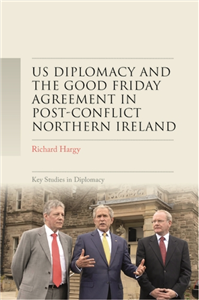
        US diplomacy and the Good Friday Agreement in post-conflict Northern Ireland

        by Richard Hargy

        Richard Haass and Mitchell Reiss, as autonomous diplomats in the George W. Bush State Department, were able to alter US intervention in Northern Ireland and play critical roles in the post-1998 peace process. Their contributions have not been fully appreciated or understood. The restoration of Northern Ireland's power-sharing government in 2007 was made possible by State Department-led intervention in the peace process. There are few references to Northern Ireland in work examining the foreign policy legacy of the George W. Bush presidency. Moreover, the ability to control US foreign policy towards the region brought one of George W. Bush's Northern Ireland special envoys into direct diplomatic conflict with the most senior actors inside the British government. This book will uncover the extent of this fall-out and provide original accounts on how diplomatic relations between these old allies became so fraught.

      • Trusted Partner
        Humanities & Social Sciences
        June 2026

        Governing the military

        by Carlos Solar

      Subscribe to our

      newsletter