Your Search Results

      • Trusted Partner
        Literature & Literary Studies
        November 2000

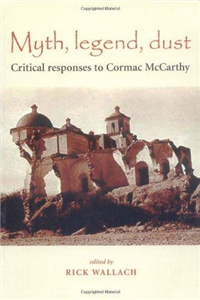
        Myth, legend, dust

        Critical Responses to Cormac McCarthy

        by Rick Wallach

      • Trusted Partner
      • Trusted Partner
        Literature & Literary Studies
        January 2026

        Myth and (mis)information

        by Allan Ingram, Helen Williams, Clark Lawlor

      • Trusted Partner
      • Trusted Partner
        October 2020

        Turning Men into Pigs and Staying Safe from Such Trickery

        A Scientific Foray into the World of Ancient Greek Legends

        by Monika Niehaus, Michael Wink

        The adventures of Odysseus are not just a classic literary epic but also shine a light on intriguing questions for geography, archaeology and biology. Phenomena like the Cyclops and magic potions were only understood in recent decades thanks to phytochemical and pharmacological research that enabled new insights into the effect of plant substances on the mind and body. Monika Niehaus and Michael Wink embark on an enjoyable excursion in their book on a scientific foray for knowledge – from ancient myths to medieval drug excesses and the world of comics.

      • Trusted Partner
        Humanities & Social Sciences
        June 2022

        Creating the people’s war

        by Jessica Hammett, Penny Summerfield

      • Trusted Partner
        British & Irish history
        July 2013

        Myth and materiality in a woman’s world

        by Lynn Abrams

      • Trusted Partner
      • Trusted Partner
      • Trusted Partner
        Humanities & Social Sciences
        March 2017

        Popular imperialism and the military, 1850-1950

        by John M. MacKenzie

        Colonial war played a vital part in transforming the reputation of the military and placing it on a standing equal to that of the navy. The book is concerned with the interactive culture of colonial warfare, with the representation of the military in popular media at home, and how these images affected attitudes towards war itself and wider intellectual and institutional forces. It sets out to relate the changing image of the military to these fundamental facts. For the dominant people they were an atavistic form of war, shorn of guilt by Social Darwinian and racial ideas, and rendered less dangerous by the increasing technological gap between Europe and the world. Attempts to justify and understand war were naturally important to dominant people, for the extension of imperial power was seldom a peaceful process. The entertainment value of war in the British imperial experience does seem to have taken new and more intensive forms from roughly the middle of the nineteenth century. Themes such as the delusive seduction of martial music, the sketch of the music hall song, powerful mythic texts of popular imperialism, and heroic myths of empire are discussed extensively. The first important British war correspondent was William Howard Russell (1820-1907) of The Times, in the Crimea. The 1870s saw a dramatic change in the representation of the officer in British battle painting. Up to that point it was the officer's courage, tactical wisdom and social prestige that were put on display.

      • Trusted Partner
        Humanities & Social Sciences
        March 2017

        The language of empire

        Myths and metaphors of popular imperialism, 1880-1918

        by Robert Macdonald

        The debate about the Empire dealt in idealism and morality, and both sides employed the language of feeling, and frequently argued their case in dramatic terms. This book opposes two sides of the Empire, first, as it was presented to the public in Britain, and second, as it was experienced or imagined by its subjects abroad. British imperialism was nurtured by such upper middle-class institutions as the public schools, the wardrooms and officers' messes, and the conservative press. The attitudes of 1916 can best be recovered through a reconstruction of a poetics of popular imperialism. The case-study of Rhodesia demonstrates the almost instant application of myth and sign to a contemporary imperial crisis. Rudyard Kipling was acknowledged throughout the English-speaking world not only as a wonderful teller of stories but as the 'singer of Greater Britain', or, as 'the Laureate of Empire'. In the last two decades of the nineteenth century, the Empire gained a beachhead in the classroom, particularly in the coupling of geography and history. The Island Story underlined that stories of heroic soldiers and 'fights for the flag' were easier for teachers to present to children than lessons in morality, or abstractions about liberty and responsible government. The Education Act of 1870 had created a need for standard readers in schools; readers designed to teach boys and girls to be useful citizens. The Indian Mutiny was the supreme test of the imperial conscience, a measure of the morality of the 'master-nation'.

      • Trusted Partner
        Business, Economics & Law
        March 2023

        Imperialism and the development myth

        by Sam King

      • Trusted Partner
        Literature & Literary Studies
        April 2017

        Re-visioning myth

        by Frances Babbage

      • Trusted Partner
        Computing & IT
        May 2025

        The myth of good AI

        by Arshin Adib-Moghaddam

      • Trusted Partner
      • Trusted Partner
      • Trusted Partner
        Humanities & Social Sciences
        September 2020

        Law in popular belief

        by Anthony Amatrudo, Regina Rauxloh

      • Trusted Partner
        Literature & Literary Studies
        September 2022

        William Blake's Gothic imagination

        by Chris Bundock, Elizabeth Effinger

      Subscribe to our

      newsletter