
The Porcupine's Quill
Livres Canada Books
View Rights Portal

The National Academies Press (NAP)publish the reports of the National Academies of Sciences, Engineering and Medicine. They published more than 200 books a year on a wide range of topics.
View Rights Portal
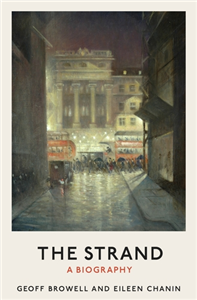
The first history of one of London's most extraordinary streets. Running along the Thames's northern shore and spanning three-quarters of a mile from Trafalgar Square to Temple Bar, the Strand has been a witness to London's growth and change from the earliest years of the city's existence. In The Strand: A biography, Geoff Browell and Eileen Chanin uncover the deep history of this remarkable street. Tracing its origins in the Roman era, they reveal how it grew in importance as authority shifted from church to aristocracy, then to commerce, media and law. Over time, everything that mattered converged on the Strand: tradition and ceremony clashed with rebellion and destitution. By 1910, the street was known as the 'centre of the world'. Drawing on remarkable archival discoveries, Browell and Chanin present the most complete and compelling history of the Strand ever written. Filled with surprising, untold stories, The Strand: A biography is a must-read for lovers of one of the world's greatest cities.

This topical and innovative study is the first book on Algerian cinema to be published in English since the 1970s. At a time when North African and Islamic cultures are of increasing political significance, Algerian National Cinema presents a dynamic, detailed and up to date analysis of how film has represented this often misunderstood nation. Algerian National Cinema explores key films from The Battle of Algiers (1966) to Mascarades (2007). Introductions to Algerian history and to the national film industry are followed by chapters on the essential genres and themes of filmmaking in Algeria, including films of anti-colonial struggle, representations of gender, Berber cinema, and filming the 'black decade' of the 1990s. This thoughtful and timely book will appeal to all interested in world cinemas, in North African and Islamic cultures, and in the role of cinema as a vehicle for the expression of contested identities. By the author of the critically-acclaimed Contemporary French Cinema.
 Trusted Partner

This topical and innovative study is the first book on Algerian cinema to be published in English since the 1970s. At a time when North African and Islamic cultures are of increasing political significance, Algerian National Cinema presents a dynamic, detailed and up to date analysis of how film has represented this often misunderstood nation. Algerian National Cinema explores key films from The Battle of Algiers (1966) to Mascarades (2007). Introductions to Algerian history and to the national film industry are followed by chapters on the essential genres and themes of filmmaking in Algeria, including films of anti-colonial struggle, representations of gender, Berber cinema, and filming the 'black decade' of the 1990s. This thoughtful and timely book will appeal to all interested in world cinemas, in North African and Islamic cultures, and in the role of cinema as a vehicle for the expression of contested identities. By the author of the critically-acclaimed Contemporary French Cinema.
Trusted Partner
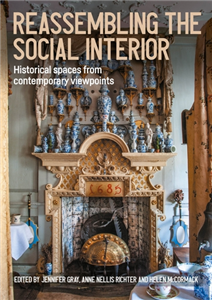
At the intersection of heritage, design history and contemporary art, this book offers new perspectives on the way historical interiors are encountered by, and viewed and presented for, present-day audiences. Many studies have highlighted the historical significance and meanings embedded in the landscape, architecture, decoration and objects to be found within houses and homes. But what about the social meanings of these spaces? Central to this book is the idea that in reflecting, remaking and reimagining historical interiors, the contributions of artists, designers and craftspeople should be foregrounded in constructing ideas of authenticity, transparency, and materiality in the making process. The chapters present a range of case studies that reflect upon on how historical interiors are remade and reimagined by looking in and out; at how a reassembling of spaces ought to avoid 'a shrinking definition of the social itself' (Latour, 2005). Surveying a range of interior 'types' from a number of historical periods, the book includes contributions from practitioners, scholars and makers. From digital reconstructions of a seventeenth-century Belgian constcamer to the interior and exterior worlds of specific historical figures, including Charles Rennie Mackintosh and Beatrix Potter, the book considers how these spaces have powerful significance for contemporary audiences, particularly in ways that are relatable to shared experiences of work, leisure, family, community, power and politics. This book will be of interest to scholars of the history of interiors and collections, museology, archaeology, architectural history, art, and design history, as well as curators and caretakers of historical sites, spaces and objects.
Trusted Partner
Trusted Partner
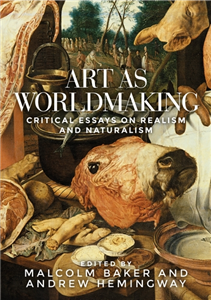
Introduction : Realism and its others in the 21st century: Why Realism won't go away - Andrew Hemingway Part I: Theory 1. The figure as double agent: realism and abstraction in European post-war art - Briony Fer 2. Realism's Credibility Problem - Joshua Shannon 3. If only; only if ... - Adrian Rifkin Part II: Sculpture 4. Confronting the Veristic Sculptural Portrait - Malcolm Baker 5. Sculpture, Realism and the Neo-classical Ideal - Martina Droth 6. Elasticity and Victorian Sculptural Form - Caroline Arscott 7. Image of the People: Charles Ray's Recent Work - Anne M. Wagner Part III: Garden Design 8. Of Gardens and Persons: the English Engagement with China's Garden Design - Martin Powers 9. Traditional Views. Conservative Anti-Naturalism and Landscape Aesthetics in France around 1900 - Neil McWilliam Part IV: Painting and Photography 10. Willem Kalf on Reflexykonst and the Aesthetics of Transformation in Still Life - Celeste Brusati 11. Democratic light: phenomenology and the worldliness of painting - Brendan Prendeville 12. The Visibility of Labor - T.J. Clark 13. Body and Soul in the work of Thomas Eakins and F. Holland Day - Rebecca Zurier Part V: Photography and Conema 14. Photography as counter forensics - Steve Edwards 15. Woman, War and Social Documentary Photography in South Africa - Tamar Garb 16. Antonioni's Blow-Up (1966): photography and film - Lisa Tickner Part VI: Post-Media / Contemporary Practice 17. Peter Dreher's Everyday Realism - Alistair Rider 18. From grey and rainy Vermont - Thomas Crow 19. 'Every day, something happens to us': Realism at the crossroads - Gail Day Index
Trusted Partner
Trusted Partner


Vladimir Putin has been ruling Russia for 25 years. There is no end in sight to his dictatorship. He relies on repression at home and is waging a war of destruction against a neighbouring country. The conflict with the West has long become a systemic conflict between an illiberal-autocratic ideology and liberal-democratic principles. Nothing will change as long as Putin remains in power. Nevertheless, as far as can be ascertained under unfree conditions, the majority of the population seems to be supporting Putin. Does this mean that too many people in Russia do not want democracy or peace? Will everything remain the same after Putin? Or is there a chance that Russia will eventually take a different, more democratic path? Whatever the outcome of the war in Ukraine, Russia is not going to disappear. We will still have to deal with our big neighbour in the east. This makes it all the more important to focus on longer-term developments. As a recognised expert on Russian history and society, the author outlines what the post-Putin era might look like. His in-depth analysis makes it clear that Russia is partly Putin, but Putin is not everything about Russia.
Trusted Partner
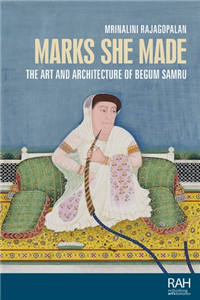
Begum Samru (b. circa 1750-d. 1836) was a north Indian woman ruler who used art and architecture to facilitate her social, political, and financial station in early modern India. Rising from the ranks of courtesans in Mughal Delhi to become the commander of her own mercenary army, she later became the ruler of an independent territory of Sardhana (60 km northwest of Delhi). The begum (Urdu/ Hindustani title for noblewoman) was a trusted ally to the Mughal emperor and the English East India Company, two of the dominant political powers in north India at the time. As a sovereign ruler, she corresponded with two popes and King Louis Philippe of France, exchanging portraits, architectural drawings, and letters with these powerful men in addition to her Mughal counterparts in India. Art and architecture played a key role in establishing Begum Samru as a powerful but non-threatening ruler; as an upholder and patron of the Catholic faith in India; as a political ally to several European and Indian factions that were vying for power; and as ruling matriarch of a cosmopolitan household, court, and army. In narrating the story of a single woman in nineteenth-century India, this book offers a path to think of the creative ways in which women participated in public and political spheres. It also illustrates how women without pedigree, women who did not bear biological children or produce male heirs, and women who lived in contravention of gendered norms found alternative methods of recognition, dignity, power, and sometimes, as in the case of Begum Samru, global visibility.
Trusted Partner

On 25 January 1474, Charles the Bold, duke of Burgundy, appeared before his subjects in Dijon. Robed in silk, gold and precious jewels and wearing a headpiece that gave the illusion of a crown, he made a speech in which he cryptically expressed his desire to become a king. Three years later, Charles was killed at the battle of Nancy, an event that plunged the Great Principality of Burgundy into chaos. This book, innovative and essential, not only explores Burgundian history and historiography but offers a complete synthesis about the nature of politics in this region, considered both from the north and the south. Focusing on political ideologies, a number of important issues are raised relating to the medieval state, the signification of the nation under the 'Ancien Regime', the role of warfare in the creation of political power and the impact of political loyalties in the exercise of government. In doing so, the book challenges a number of existing ideas about the Burgundian state.
Trusted Partner
Trusted Partner
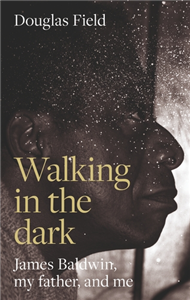
A moving exploration of the life and work of the celebrated American writer, blending biography and memoir with literary criticism. Since James Baldwin's death in 1987, his writing - including The Fire Next Time, one of the manifestoes of the Civil Rights Movement, and Giovanni's Room, a pioneering work of gay fiction - has only grown in relevance. Douglas Field was introduced to Baldwin's essays and novels by his father, who witnessed the writer's debate with William F. Buckley at Cambridge University in 1965. In Walking in the dark, he embarks on a journey to unravel his life-long fascination and to understand why Baldwin continues to enthral us decades after his death. Tracing Baldwin's footsteps in France, the US and Switzerland, and digging into archives, Field paints an intimate portrait of the writer's life and influence. At the same time, he offers a poignant account of coming to terms with his father's Alzheimer's disease. Interweaving Baldwin's writings on family, illness, memory and place, Walking in the dark is an eloquent testament to the enduring power of great literature to illuminate our paths.
Trusted Partner
 Trusted Partner
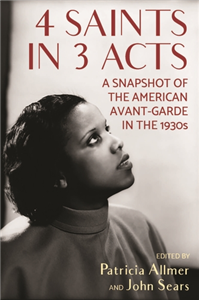
Four Saints in Three Acts by Gertrude Stein and Virgil Thomson was a major avant-garde phenomenon of the 1930s, an experimental opera that nonetheless achieved remarkable popular success. Photography was a key element of that success, but its complex roles in the construction, representation and dissemination of the opera have hitherto received little critical attention. The photographic recording of the all-African American cast in particular affords a unique insight into the complexities of Four Saints in relation to the Harlem Renaissance and the New York avant-gardes of the time. This book, published in collaboration with The Photographers' Gallery, London, presents a wide selection of photographs of the cast, performances, and other material - many images reproduced for the first time - alongside essays by an international range of scholars exploring different aspects of the opera, including dance, fashion, music, and avant-garde writing, as well as photography.
Trusted Partner
Trusted Partner
Trusted Partner
Trusted Partner

European Film Noir is the first book to bring together specialist discussions of film noir in specific European national cinemas. Written by leading scholars, this groundbreaking study provides an authoritative understanding of an important aspect of European cinema and of film noir itself, for too long considered as a solely American form. The Introduction reviews the problems of defining film noir, its key characteristics and discusses its significance to the development of European film, the relationship of specific national films noirs to each other, to American noir and to historical and social change. Eight chapters then discuss film noir in France, Germany, Britain and Spain, analysing both earlier developments and the evolution of neo-noir through to the present. A further chapter explores film noir in Italian cinema where its presence is not so well defined. Each piece provides a critical overview of the most significant films in relation to their industrial and social contexts. European Film Noir is an important contribution to the study of European cinema that will have a broad appeal to undergraduates, cinéastes, film teachers and researchers.
Trusted Partner
Why are constitutionalist ideals so prominent in science fiction? Does Independence Day depict self-defence as a legal concept with absolute limits? Is international law lost in space? This innovative interdisciplinary volume represents the first exploration of the relationship between international law and cinema. From Star Wars to Werner Herzog, The Godfather to The West Wing, this book uncovers a diverse range of representations of international law and its norms in film and television. Examining the wider links between international law, cinema, and ideology, the contributions not only examine visual representations of international law, but they offer an essential insight into the functions fulfilled by these cinematic representations. Providing an extraordinary introduction to a variety of perspectives on core international legal questions, Cinematic perspectives on international law extends a valuable methodology by which international lawyers can critique the depiction of international law in film.
Trusted Partner



