Silke Heiss (Give Your Writing The Edge)
We are a one-woman charity, hoping to transform into a self-sustaining business, devoted to reminding readers of themselves.
View Rights Portal
We are a one-woman charity, hoping to transform into a self-sustaining business, devoted to reminding readers of themselves.
View Rights Portal
Writing power radically rethinks the place of the canon and canonicity as objects and concepts in contemporary academia and the everyday intellectual practices of academics. It is distinctive in its demonstration of how academics' engagements with canons shape their writing practices but also how scholars' writing practices, spaces, proclivities, and desires shape the canon and changing ideas of value in canonicity. The book thinks through frequently discussed problems of legitimacy and knowledge production from fresh perspectives of lived experience and the everyday to offer new insights into the politics of knowledge in contemporary social sciences.
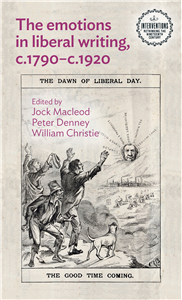
This volume of essays from a selection of distinguished international scholars is the first of its kind to explore in depth the emotional dimensions of liberal writing in Britain over the long nineteenth century. Addressing liberal writing in the public sphere rather than high political or parliamentary liberalism, it comprises a clear, context-setting introduction and eleven substantive chapters. The chapters analyse key texts and figures from the 1790s through to the 1920s and offer several different approaches to the central concern with the emotions and liberalism. These include examining the place of the emotions in the 'good life'; the social and political function of the emotions; emotional rhetoric in liberal writing; and liberal theories of the emotions. Both individually and as a collection, the essays provide an essential foundation for further scholarly work in this emerging field.
 Trusted Partner
Trusted Partner
Trusted Partner

Writing otherwise is a collection of essays by established feminist and cultural critics interested in experimenting with new styles of expression. Leading figures in their field, such as Marianne Hirsch, Lynne Pearce, Griselda Pollock, Carol Smart, Jackie Stacey and Janet Wolff, all risk new ways of writing about themselves and their subjects. Aimed at both general and academic readers interested in how scholarly writing might be more innovative and creative, this collection introduces the personal, the poetic and the experimental into the frame of cultural criticism. This collection of essays is highly interdisciplinary and contributes to debates in sociology, history, anthropology, art history, cultural and media studies and gender studies. ;
Trusted Partner

Writing otherwise is a collection of essays by established feminist and cultural critics interested in experimenting with new styles of expression. Leading figures in their field, such as Marianne Hirsch, Lynne Pearce, Griselda Pollock, Carol Smart, Jackie Stacey and Janet Wolff, all risk new ways of writing about themselves and their subjects. Aimed at both general and academic readers interested in how scholarly writing might be more innovative and creative, this collection introduces the personal, the poetic and the experimental into the frame of cultural criticism. This collection of essays is highly interdisciplinary and contributes to debates in sociology, history, anthropology, art history, cultural and media studies and gender studies.
Trusted Partner
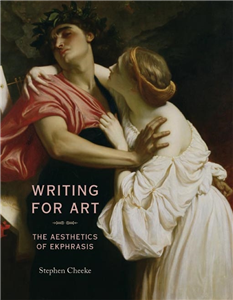
Writing for art is a concise introduction to the subject of ekphrasis, and the first study to offer a useful general survey of the larger philosophical and theoretical questions arising from the encounter of literary texts and artworks. Stephen Cheeke offers close readings of poems and prose from the nineteenth and twentieth centuries alongside a generous amount of illustrations, covering a broad range of writing and theory about the relation of literary texts to the visual arts, and extending the subject of ekphrasis to include literary works on photography, as well as celebrated prose descriptions of artworks. ;
Trusted Partner
 Trusted Partner

Eine Frau sitzt während des Lockdowns in ihrer Wohnung. Sie schaut auf den Ausschnitt vor ihrem Fenster und blickt zurück. In ihre Kindheit in einem Dorf in Yorkshire in den 1990er Jahren. Eine Zeit, in der sie alles erkundete. Eine Zeit, die sie lehrte, wie alles notwendigerweise Teil von etwas Größerem ist. Wie der örtliche Steinbruch, der zuvor Schauplatz einer Jagd zwischen einem Turmfalken und einer Wühlmaus war, nun von schweren Maschinen internationaler Konzerne zerstört wird. Wie das Nest einer unermüdlichen Kibitzin immer wieder von Traktoren zerquetscht wird und in der Blumenzucht nebenan Gastarbeiter ausgebeutet werden. Sie beginnt zu verstehen, wie belanglose Begebenheiten in ihrem Alltag in einem nordenglischen Dorf bis nach Nicaragua und China reichen und auf globale Warenketten und Klimaverschiebungen einwirken. Und wie sich in ihrem scheinbaren Idyll die Zeichen mehren, dass wir auf eine Katastrophe zusteuern. Notstand, der vielgepriesene Roman der britischen Autorin Daisy Hildyard, zeigt uns den Reichtum der Welt – die betörenden Details ebenso wie ihre weitreichende und schicksalhafte Vernetztheit. Ein stilles und großartiges Buch, in dem Mensch und Natur eins sind und in dem eine geteilte Zerbrechlichkeit alle Spezies eint.
Trusted Partner
 Trusted Partner
Trusted Partner
Trusted Partner
Trusted Partner
Trusted Partner
Trusted Partner
Trusted Partner


In the middle of the woods, in the middle of Germany: Wolfgang Büscher‘s fascinating journey into its very core. Night after night, a boy stands at the window of his parents’ house and watches the sun as it disappears from view behind the rolling hills in the west. He roams through the woods with his friends, building wooden shacks which the foresters destroy. It’s the early sixties. Decades later, Wolfgang Büscher makes his childhood dream come true. He moves to the woods and experiences spring, summer and autumn there. An aristocratic family on the border of Hessen and Westphalia where Büscher grew up allows him to stay in a hunting lodge in the middle of the woods, in the middle of Germany. This is where he puts up his camp bed. He has no electricity or running water. He prepares himself for quiet times alone, chopping wood and making fires, the odd hunting expedition, hiking, a marksmen’s festival, extreme loneliness and a nighttime blackness never seen in the city. The year takes an unexpectedly dramatic turn as storms, heat and plagues of beetles kill half of the woods. And something else happens which turns everything on its head: Büscher’s mother dies that summer, meaning the house he grew up in is left empty, but full of memories. This is a homecoming more existential than he could have imagined. A book far removed from the deafening din of today‘s world. An exploration of a nation, floods of memories and a “sentimental education” all rolled into one - literary, perceptive and overwhelming.
Trusted Partner
This is the first study of the Anglo-Welsh border region in the period before the Norman arrival in England, from the fifth to the twelfth centuries. Its conclusions significantly alter our current picture of Anglo/Welsh relations before the Norman Conquest by overturning the longstanding critical belief that relations between these two peoples during this period were predominately contentious. Writing the Welsh borderlands in Anglo-Saxon England demonstrates that the region which would later become the March of Wales was not a military frontier in Anglo-Saxon England, but a distinctively mixed Anglo-Welsh cultural zone which was depicted as a singular place in contemporary Welsh and Anglo-Saxon texts. This study reveals that the region of the Welsh borderlands was much more culturally coherent, and the impact of the Norman Conquest on it much greater, than has been previously realised.
Trusted Partner

In this bold and exhilarating mix of memoir and writing guide, Melissa Febos tackles the emotional, psychological, and physical work of writing intimately while offering an utterly fresh examination of the storyteller's life and the challenges it presents. How do we write about the relationships that have formed us? How do we describe our bodies, their desires and traumas? What does it mean to have your writing, or living, dismissed as "navel-gazing"-or else hailed as "so brave, so raw"? And to whom, in the end, do our most intimate stories belong? Drawing on her journey from aspiring writer to acclaimed author and writing professor-via addiction and recovery, sex work and academia-Melissa Febos has created a captivating guide to the writing life, and a brilliantly unusual exploration of subjectivity, privacy, and the power of divulgence. Candid and inspiring, Body Work will empower readers and writers alike, offering ideas-and occasional notes of caution-to anyone who has ever hoped to see their true self reflecting back from the open page.
Trusted Partner

In this bold and exhilarating mix of memoir and writing guide, Melissa Febos tackles the emotional, psychological, and physical work of writing intimately while offering an utterly fresh examination of the storyteller's life and the challenges it presents. How do we write about the relationships that have formed us? How do we describe our bodies, their desires and traumas? What does it mean to have your writing, or living, dismissed as "navel-gazing"-or else hailed as "so brave, so raw"? And to whom, in the end, do our most intimate stories belong? Drawing on her journey from aspiring writer to acclaimed author and writing professor-via addiction and recovery, sex work and academia-Melissa Febos has created a captivating guide to the writing life, and a brilliantly unusual exploration of subjectivity, privacy, and the power of divulgence. Candid and inspiring, Body Work will empower readers and writers alike, offering ideas-and occasional notes of caution-to anyone who has ever hoped to see their true self reflecting back from the open page.
Trusted Partner
In this bold and exhilarating mix of memoir and writing guide, Melissa Febos tackles the emotional, psychological, and physical work of writing intimately while offering an utterly fresh examination of the storyteller's life and the challenges it presents. How do we write about the relationships that have formed us? How do we describe our bodies, their desires and traumas? What does it mean to have your writing, or living, dismissed as "navel-gazing"-or else hailed as "so brave, so raw"? And to whom, in the end, do our most intimate stories belong? Drawing on her journey from aspiring writer to acclaimed author and writing professor-via addiction and recovery, sex work and academia-Melissa Febos has created a captivating guide to the writing life, and a brilliantly unusual exploration of subjectivity, privacy, and the power of divulgence. Candid and inspiring, Body Work will empower readers and writers alike, offering ideas-and occasional notes of caution-to anyone who has ever hoped to see their true self reflecting back from the open page.
Trusted Partner
How has it happened that from being politely ignored or marginalized just half a century ago, women writers in Italy are now at the centre of literary activity? To what extent does writing by women reflect the successes and failures of Italy in the post-war period? What form did the feminist movement in Italy take, and how did this affect what - and how - women wrote? And how are women who write responding to a more fragmented post-modern age? These are just some of the questions asked of the relationship between women and fiction in post-war Italy in this anthology. It includes stories by Cialente, Ginzburg, Ortese, Morante, Romano, Maraini and Duranti as well as Bompiani, Sanvitale, Mizzau, Scaramuzzino, Capriolo and Petrignani. The thirteen stories presented offer a range of style and content indicative of the wealth and diversity of writing by women, and their reading is supported by critical notes and an extensive vocabulary. This is a clear and challenging introduction to the rich field of women and fiction in Italy. ;
Trusted Partner

In this fascinating study, Samantha George explores the cultivation of the female mind and the feminised discourse of botanical literature in eighteenth-century Britain. In particular, she discusses British women's engagement with the Swedish botanist, Carl Linnaeus, and his unsettling discovery of plant sexuality. Previously ignored primary texts of an extraordinary nature are rescued from obscurity and assigned a proper place in the histories of science, eighteenth-century literature, and women's writing. The result is groundbreaking: the author explores nationality and sexuality debates in relation to botany and charts the appearance of a new literary stereotype, the sexually precocious female botanist. She uncovers an anonymous poem on Linnaean botany, handwritten in the eighteenth century, and subsequently traces the development of a new genre of women's writing - the botanical poem with scientific notes. The book is indispensable reading for all scholars of the eighteenth century, especially those interested in Romantic women's writing, or the relationship between literature and science.
Trusted Partner

Reading, writing and the influence of Harold Bloom takes the work of the world's best-known living literary critic and discovers what it is like to read 'with', 'against' and 'beyond' his ideas. The editors, Alan Rawes and Jonathon Shears, introduce the collection by assessing the impact of Bloom's brand of agonistic criticism on literary critics and its ongoing relevance to a discipline attempting to redefine and settle on its collective goals. Firmly grounded in, though not confined to, Bloom's first specialism of Romantic Studies, the volume contains essays that examine Bloom's debts to high Romanticism, his quarrels with feminism, his resistance to historicism, the tensions with the 'Yale School' and his recent work on Shakespeare and genius. Crucially, chapters are also devoted to putting Bloom's anxiety-themed ratios into practice on the poetry of Wordsworth, Shelley, Keats and D. H. Lawrence, amongst others. The Harold Bloom that emerges from this collection is by turns divisive and unifying, marginalised and central, radical and conservative.