
Your Search Results
-

-

Kia Persia Literary Agency
KIA Literary Agency was founded in 2002 in Tehran with the aim of promoting and supporting fine literary works in all forms throughout the world. It brings about opportunities for authors, illustrators, publishers, translators, and those involved in this field to meet their counterparts. And at the same time, it introduces them to the world and will inform them of all the related events which take place in the world of art and literature.
View Rights Portal
-
Promoted Content
-
Promoted Content

 Humanities & Social SciencesJune 2025
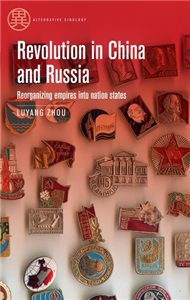
Revolution in China and Russia
Reorganizing empires into nation states
by Luyang Zhou
Most scholars believe that China's nationality policy, like that of other socialist states, imitated the Soviet nationality model, a system which has been termed an "affirmative action empire." This book offers two contributions to the literature which run counter to this convention. First, it argues that the People's Republic of China (PRC) and the Soviet Union (USSR) were different; while the PRC was aimed to build an ideal-typical nation-state, the USSR was an open union of nation-states that was only temporarily confined to a physical territory. Second, while scholars who have noted this difference attribute it to contextual factors, such as ethnic structure, geopolitical status, and Russia's intervention into the Chinese Revolution, this book contends that context shaped the Sino-Soviet difference, yet it did not determine it. Rather, there was significant leeway between the implications of the contextual factors, and what the policy-designers ultimately established. This book probes who held agency, and how these individuals bridged this gap.
-
 Trusted Partner
 Humanities & Social SciencesAugust 2002
The rise of the Nazis
by Conan Fischer, Mark Greengrass
How and why did the Nazis seize power in Germany? Nearly seventy years on, the question remains heated and important discoveries continue to challenge long standing assumptions. Beginmning with an overview of the historical context within which Nazism grew, looking at the foreign relations, politics and society of Weimar and in particular at the role of the elites in the rise of Nazism. The book questions the anatomy of Nazism itself: What lent Nazi ideology its coherence and credibility? What distinguished the Nazi's programme from their competitors' and how did they project it so effectively? How was Hitler able to put together and fund an organisation so quickly and effectively that it could launch a sustained assault on Weimar? Who supported the Nazis and what were their motives? Where, precisely, does Nazism belong in the history of Europe?. Since the publication of the first edition, important new works have appeared and this new scholarship has been incorporated into the text. ;
-
Trusted Partner
 The ArtsDecember 2000
Theatre under the Nazis
by John London
This is the first book to appear in English about theatre from the entire Nazi period (1933-45). It is based on detailed statistical analysis, contemporary press reports, research in German archives and interviews with surviving playwrights, actors and musicians. The volume has an extensive bibliography and is fully illustrated. It forms a much needed guide to this neglected area of European culture and will be of interest to historians, Germanists and theatre specialists. The international contributors are William J. Niven, Glen Gadberry, Erik Levi, Rebecca Rovit, William Abbey and Katharina Havekamp. ;
-
Trusted Partner
 Humanities & Social SciencesFebruary 2026
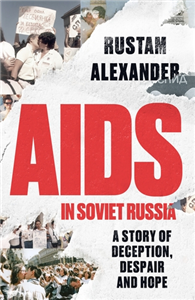
AIDS in Soviet Russia
A story of deception, despair and hope
by Rustam Alexander
The first book to tell the shocking story of the AIDS crisis in Soviet Russia. Throughout the 1980s, as the world was grappling with the escalating crisis of AIDS, Soviet Russia continued to deny there was a problem. Arguing that the disease was limited to foreigners and 'immoral' groups, the government failed to take meaningful action, long past the point other countries had begun to recognise the full scale of the threat. In this ground-breaking book, Rustam Alexander tells the story of AIDS in Soviet Russia. Fixated on disinformation, censorship and the persecution of marginalised communities, the Soviet authorities wasted precious time, allowing the epidemic to strike at the very heart of the nation: its children. Yet, despite the government's failure, a number of brave journalists, doctors and nascent gay groups decided to take matters into their own hands and engage in full-fledged AIDS activism. Tracing the political and social response to AIDS in the final years of the Soviet era, Alexander sheds light on the devastating consequences of government inaction. He draws on personal stories, media reports and archival materials to provide a riveting account of the Russian people's fight against AIDS amid the tumultuous transformations of Gorbachev's perestroika.
-
Trusted Partner

 2024
2024Where is Russia Heading?
by Jens Siegert
Vladimir Putin has been ruling Russia for 25 years. There is no end in sight to his dictatorship. He relies on repression at home and is waging a war of destruction against a neighbouring country. The conflict with the West has long become a systemic conflict between an illiberal-autocratic ideology and liberal-democratic principles. Nothing will change as long as Putin remains in power. Nevertheless, as far as can be ascertained under unfree conditions, the majority of the population seems to be supporting Putin. Does this mean that too many people in Russia do not want democracy or peace? Will everything remain the same after Putin? Or is there a chance that Russia will eventually take a different, more democratic path? Whatever the outcome of the war in Ukraine, Russia is not going to disappear. We will still have to deal with our big neighbour in the east. This makes it all the more important to focus on longer-term developments. As a recognised expert on Russian history and society, the author outlines what the post-Putin era might look like. His in-depth analysis makes it clear that Russia is partly Putin, but Putin is not everything about Russia.
-
Trusted Partner

 July 2025
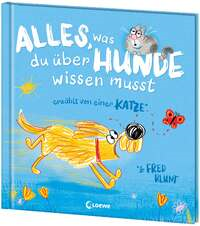
Alles, was du über Hunde wissen musst (erzählt von einer Katze)
Urkomisches All-Age Bilderbuch über unsere besten Freunde auf vier Pfoten - Das perfekte Geschenk für alle Hundemenschen und Katzenfans
by Fred Blunt, Fred Blunt, Linda Borchert
Hunde sind DUMM. Ende. Oh. Du bist immer noch da? Na gut, ich kann es dir gern beweisen … Hunde verstehen ist für die Katz! Und diese Katze will dich unbedingt davon überzeugen, dass Katzen besser sind als Hunde. Bis eine SEHR große Katze auftaucht. Doch ausgerechnet die „dummen“ Hunde beweisen, was wahre Loyalität bedeutet, und eilen zur Rettung. Fazit: Vielleicht sind Hunde gar nicht so dumm, sondern die besten Freunde der Welt … Aber das bleibt unter uns! All-Age Bilderbuch von 3 bis 99 Jahren Über die lustigste Hassliebe im Tierreich Das perfekte Geschenk für alle Hundefreunde und Katzenfans Klärt ein für alle Mal die Frage, wer das bessere Haustier ist (nicht) Wirft einen liebevoll-witzigen Blick auf unsere felligen Freunde: von Stubentigern bis zu Freigängern, von Rassehunden bis zu Promenadenmischungen Mit typisch britischem Humor genial illustriert und erzählt vom preisgekrönten Autor-Illustrator Fred Blunt
-
Trusted Partner
 Humanities & Social SciencesJanuary 2025
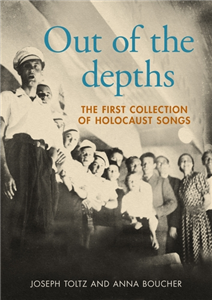
Out of the depths
The first collection of Holocaust songs
by Joseph Toltz, Anna Boucher
Available for the first time in English translation, this collection of songs is a powerful memorial to the victims of the Holocaust. In June 1945, before the full devastation of the Holocaust had emerged, a team of researchers embarked on a remarkable project. While documenting the experiences of Jewish refugees, they began to collect songs composed and sung in the Nazi camps and ghettos. The resulting book, Mima'amakim (Out of the depths), was published in a short run of 500 copies. Today, only a handful survive. Out of the depths: The first collection of Holocaust songs presents the contents of this extraordinary document for a new generation of readers. Based on a copy of Mima'amakim discovered in 2013, it contains not only the songs' melodies and lyrics, the latter in a new translation by Joseph Toltz, but also short biographies of the composers, drawn from painstaking original research. Introductory essays provide historical and musicological background, deepening our knowledge of this terrible event and the creative means by which the Jewish people responded to and endured it. Described by the original editor, Yehuda Eismann, as a 'memorial stone for Polish Jewry', the songbook is a timeless document of a people's despair, hope and strength.
-
Trusted Partner
 Literature & Literary StudiesMay 2023
Pasts at play
Childhood encounters with history in British culture, 1750–1914
by Rachel Bryant Davies, Barbara Gribling
This collection brings together scholars from disciplines including Children's Literature, Classics, and History to develop fresh approaches to children's culture and the uses of the past. It charts the significance of historical episodes and characters during the long nineteenth-century (1750-1914), a critical period in children's culture. Boys and girls across social classes often experienced different pasts simultaneously, for purposes of amusement and instruction. The book highlights an active and shifting market in history for children, and reveals how children were actively involved in consuming and repackaging the past: from playing with historically themed toys and games to performing in plays and pageants. Each chapter reconstructs encounters across different media, uncovering the cultural work done by particular pasts and exposing the key role of playfulness in the British historical imagination.
-
Trusted Partner
 Humanities & Social SciencesOctober 2022
Germany's Russia problem
The struggle for balance in Europe
by John Lough
The relationship between Germany and Russia is Europe's most important link with the largest country on the continent. But despite Germany's unparalleled knowledge and historical experience, its policymakers struggle to accept that Moscow's efforts to rebalance Europe at the cost of the cohesion of the EU and NATO are an attack on Germany's core interests. This book explains the scale of the challenge facing Germany in managing relations with a changing Russia. It analyses how successive German governments from 1991 to 2014 misread Russian intentions, until Angela Merkel sharply recalibrated German and EU policy towards Moscow. The book also examines what lies behind efforts to revise Merkel's bold policy shift, including attitudes inherited from the GDR and the role of Russian influence channels in Germany.
-
Trusted Partner

 July 2019
Show me the Stars
by Kira Mohn
Take Some Time Out! The headline grabs Liv’s attention as she browses, depressed, through the job ads. Although she’s only 22 and just starting out in journalism, a recent disastrous interview cost her a new job. The ad sounds like a dream come true: someone needs a house-sitter to mind a lighthouse on the Irish coast for six months! Taking time out is exactly what Liv needs to clear her head and recharge her batteries. She sends off her application and a few weeks later finds herself standing in front of her new home. Next to a good-looking Irishman who makes her heart beat faster. She doesn’t know it yet, but he’ll break her heart, too… 16+ years The beginning of a unique romance trilogy about three young women, a lighthouse and love. All titles can be read separately. Rousing characters and a fine dry humor For all fans of Mona Kasten, Laura Kneidl and Colleen Hoover! More than 60.000 copies of this series were sold!
-
Trusted Partner
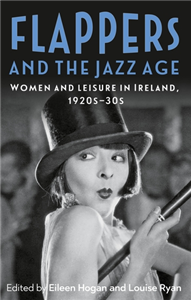 Humanities & Social SciencesJuly 2026
Flappers and the Jazz Age
Women and leisure in Ireland, 1920s–30s
by Eileen Hogan, Louise Ryan
People's ordinary, everyday lives - and more specifically, their leisure activities - are often obscured within existing academic research on 1920s-30s Ireland. This book seeks to redress that neglect by exploring the relationship between identity, recreation, and culture both North and South of the border, with particular attention to women's lived experiences. Leisurely pursuits during this period were commonly overshadowed by religious influence and the nation-building projects in post-partition Ireland. Nevertheless, there existed alternative spaces, where people enjoyed dancing, singing, listening to music, shopping, glamour, reading magazines, swimming, travelling, and going to the cinema. Such activities reflected international trends beyond national borders. This book documents those activities and spaces through a feminist lens and intersectional analysis of gender, class, religion and rural/urban identities. It brings together multi-disciplinary perspectives including cultural studies, architecture, geography, fashion, and musicology. In so doing, we present new insights and advance understanding of this under-researched aspect of Irish history.
-
Trusted Partner
 November 2021
The Metropolitan Age
The decisive force in the Anthropocene
by German Environmental Foundation (Ed.)
Three quarters of the world’s population live in cities. One in eight people lives in a metropolitan area. Megacities swallow up land, energy and resources – and at the same time are particularly hard hit by the current climate crisis that they fuel. However, in the metropolises of the overcrowded world plenty of committed people have heard the warning signals and establish networks to use the potential of cities to reorganize the participative and social-ecological activity that is urgently needed. The contributions to this Yearbook for Ecology focus on the present and future of cities from wide-ranging viewpoints and highlight perspectives for their creative transformation towards liveable sustainability.
-
Trusted Partner
 September 2023
Being Able to Stop
Against the delusion of permanent growth
by Edited by Jean-Pierre Wils
We moderns were the inhabitants of an age of impetuous forward movement and voracious discontent. Our main virtue was to increase our reach. Increasing our having and accelerating our being were the signposts towards the future. We just could not get enough. Using the blinkers of ignorance and self-anaesthesia, however, we managed to forget the tremendous costs incurred by this intoxication. Now disillusionment has set in. We look to the future with anxiety. We know that we have long since crossed a line and that a revision of our lifestyle is imminent. We have a bad feeling, and doubts about progress often give way to anger and rebellion. Which stocks of the modern narrative should we defend; which would we do better to let go? How will we even "be able to stop"? The path to a different society needs an attractive goal, because without the prospect of a different, better life, we will not move forward. We should start practising immediately. There is no time to lose.
-
Trusted Partner
-
Trusted Partner
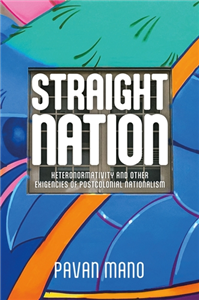 Humanities & Social SciencesMarch 2025
Straight nation
Heteronormativity and other exigencies of postcolonial nationalism
by Pavan Mano
In Straight Nation, Pavan Mano reveals the logic of straightness that sits at the heart of postcolonial nationalism in Singapore. Mano rejects the romantic notion of the nation as a haven of belonging, showing it to be a relentless force that is allied with heteronormativity to create a host of minoritized and xenologized figures. Through meticulous exploration and close reading of a swathe of texts, Mano unveils the instrumental role of sexuality in structuring the national imaginary. The book adroitly demonstrates how queerness is rendered foreign in postcolonial Singapore and functions alongside technologies of "race", gender, and class. A provocative critique of narrow contemporary identity politics and its concomitant stymying of a more ambitious political critique, Straight Nation sets out an argument that moves beyond the negativity of traditional critique into a space of (re)thinking, (re)building and (re)imagining.
-
Trusted Partner
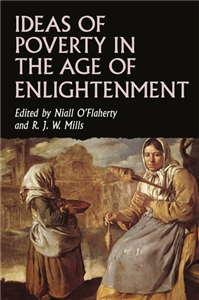 Humanities & Social SciencesApril 2024
Ideas of poverty in the Age of Enlightenment
by Niall O’Flaherty, Robin Mills
This collection of essays examines the ways in which poverty was conceptualised in the social, political, and religious discourses of eighteenth-century Europe. It brings together experts with a wide range of expertise to offer pathbreaking discussions of how eighteenth-century thinkers thought about the poor. Because the theme of poverty played important roles in many critical issues in European history, it was central to some of the key debates in Enlightenment political thought throughout the period, including the controversies about sovereignty and representation, public and private charity, as well as questions relating to crime and punishment. The book examines some of the most important contributions to these debates, while also ranging beyond the canonical Enlightenment thinkers, to investigate how poverty was conceptualised in the wider intellectual culture, as politicians, administrators and pamphlet writers grappled with the issue.
-
Trusted Partner
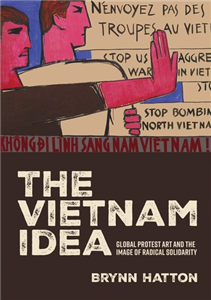 The ArtsJune 2026
The Vietnam idea
Global protest art and the image of radical solidarity
by Brynn Hatton
The Vietnam idea examines how Vietnam became a potent symbol for global movements fighting colonialism, racism, and imperialism during the American War and its aftermath. Rather than focusing on Vietnam as a place, Brynn Hatton explores how artists and activists around the world used the idea of 'Vietnam' to express political identification and solidarity through posters, films, protest actions, exhibitions, and conceptual art. Drawing on international archives, the book reveals how diverse visual works helped shape the political imagination of the global left, and continue to influence how we see identity, conflict, and solidarity today.
-
Trusted Partner
 Literature & Literary StudiesOctober 2020
Play time
by Daisy Black, David Matthews, Anke Bernau, James Paz
-
Trusted Partner

 May 2021
Zurück nach Berlin
Wie mein Vater mit mir in seine Vergangenheit reiste
by Jonathan Lichtenstein
1939 entkommt der zwölfjährige Hans mit einem der »Kindertransporte« aus Nazi-Deutschland. Als einer der wenigen Überlebenden seiner Familie ist er fortan auf sich alleine gestellt und lässt seine deutsch-jüdische Herkunft hinter sich. Als Erwachsener baut er sich im ländlichen Wales eine neue Existenz auf und gründet eine Familie. Über seine Vergangenheit spricht er nicht, und für seine Kinder ist es schwer, ihren verschlossenen, oft unnachgiebigen Vater und sein mitunter eigensinniges Verhalten zu verstehen. Erst in hohem Alter stellt Hans sich seiner Vergangenheit und reist mit seinem Sohn Jonathan zurück nach Berlin, zu seinen Wurzeln, entlang der ehemaligen Route des Kindertransports. Jonathan Lichtenstein erzählt auf drei Zeitebenen vom Leben mit einem Vater, das geprägt war von den Schatten der Vergangenheit – und davon, wie er ihm endlich näherkam. Ein Road Trip mitten hinein ins Trauma des zwanzigsten Jahrhunderts – bewegend und versöhnlich.



