
NeWest Press
Livres Canada Books
View Rights Portal


This book examines the television serials created by influential showrunner David Simon. The book argues that Simon's main theme is the state of the contemporary American city and that all of his serials (barring one about the Iraq War) explore different facets of the metropolis. Each series offers distinctly different visions of the American city, but taken together they represent a sustained and intricate exploration of urban problems in modern America. From deindustrialisation in The Wire and residential segregation in Show Me a Hero to post-Katrina New Orleans in Treme and the transformation of the urban core in The Deuce, David Simon's American city traces the urban through-line in Simon's body of work. Based on sustained analysis of these serials and their engagement with contemporary politics and culture, David Simon's American city offers a compelling examination of one of television's most arresting voices.
 Trusted Partner
Trusted Partner
Trusted Partner
Trusted Partner
Trusted Partner
Trusted Partner
Trusted Partner
Trusted Partner
Trusted Partner
Trusted Partner
Trusted Partner

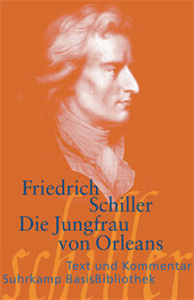
In der Suhrkamp BasisBibliothek erscheinen literarische Hauptwerke aller Epochen und Gattungen als Arbeitstexte für Schule und Studium. Sie bietet die besten verfügbaren Texte aus den großen Editionen des Suhrkamp Verlages, des Insel Verlages und des Deutschen Klassiker Verlages, ergänzt durch anschaulich geschriebene Kommentare.
Trusted Partner
 Trusted Partner
 Trusted Partner
Trusted Partner
Trusted Partner

Truman Capote, geboren 1924 in New Orleans, starb 1984 in Los Angeles. Seine Romane Frühstück bei Tiffany und Kaltblütig machten ihn zu einem der berühmtesten Autoren der amerikanischen Literatur. 2004 verkörperte ihn Philip Seymour Hoffman in dem Film Capote. Annemarie Seidel (1894-1959) war Schauspielerin, Lektorin und Übersetzerin, verheiratet mit Peter Suhrkamp von 1935 bis zu seinem Tod 1959. Sie übersetzte, in Zusammenarbeit mit Friedrich Podszus, Truman Capotes Roman Die Grasharfe ins Deutsche.
Trusted Partner

Slavoj Žižek wurde am 21. März 1949 in Ljubljana, Slowenien geboren und wuchs auch dort auf. Er studierte Philosophie und Soziologie an der Universität in Ljubljana und Psychoanalyse an der Universität Paris VIII. Seit den achtziger Jahren hat Žižek zahlreiche Gastprofessuren im Ausland inne, unter anderem an der Tulane University, New Orleans (1993), der Cardozo Law School, New York (1994), der Columbia University, New York (1995), in Princeton (1996) und an der New School for Social Research, New York (1997). Von 2000 bis 2002 leitete er eine Forschungsgruppe am kulturwissenschaftlichen Institut in Essen. Er war jahrelanger Herausgeber der Zeitschrift der slowenischen Lacan-Schule Wo Es war und setzte sich unter anderem mit der Philosophie des Deutschen Idealismus, mit Hegel und mit Karl Marx auseinander, sowie mit zeitgenössischen Denkansätzen aus dem Bereich des Poststrukturalismus, der Medientheorie, des Feminismus und der Cultural Studies. Seine erste englischsprachige Buchveröffentlichung The Sublime Object of Ideology erschien 1989. Seitdem veröffentlichte Žižek über 20 Monographien, in denen er sich zunächst um eine lacanianische Lesart der Philosophie, der Populärkultur und in den letzten Jahren zunehmend der Politischen Theorie bemühte.
Trusted Partner

So wie New Orleans für Jazz und Blues gilt das Düsseldorf der 1970er und 80er als Mekka der elektronischen Popmusik. Hier schraubte »Kraftwerk« im legendären Klingklang-Studio an Klassikern wie »Autobahn« oder »Wir sind die Roboter«, hier schuf »Neu!« den Motorik Beat, hier brachte »DAF« den Sequenzern das Schwitzen bei. Und je größer der Abstand, nach Kilometern wie nach Jahren, umso mythischer erscheint der Ort. Rüdiger Esch, selbst Düsseldorfer und als Mitglied von »Die Krupps« Teil der Szene, beleuchtet deren Entwicklung von den Anfängen um 1970 bis zum Ende der analogen Phase um 1986. Und zwar sowohl von innen, als Spur aus exklusiven O-Tönen ihrer Protagonisten wie Wolfgang Flür (»Kraftwerk«), Bodo Staiger (»Rheingold«), Gabi Delgado (»DAF)«, Jürgen Engler (»Die Krupps«), Ralf Dörper (»Propaganda«), wie zugleich von außen, in exklusiven Statements von Giorgio Moroder, Ryuichi Sakamoto, Andy McCluskey (»OMD«), Martyn Ware (»The Human League«), Glenn Gregory (»Heaven 17«) u. v. a. nebst Dokumenten aus der Rezeptionsgeschichte. So wird sowohl die Wirklichkeit des Mythos wie die Wirklichkeit hinter dem Mythos sichtbar, die Weltmetropole des Modernismus genauso wie das Dorf in Düsseldorf.
Trusted Partner
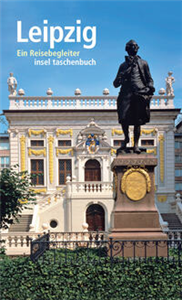
Wer durch Leipzigs wunderschöne Innenstadt spaziert oder sich hinausbegibt ins Rosental und nach Gohlis, dem begegnen Namen wie Wagner, Klopstock, Lessing, Jean Paul, Nietzsche, Ernst Jünger, Erich Kästner, Uwe Johnson, Christa Wolf, Volker Braun oder Christoph Hein. Schiller schrieb hier sein Lied an die Freude und wurde zur Uraufführung seiner Jungfrau von Orleans in der Stadt gefeiert wie Albert Lortzing als Schauspieler, Sänger und Dirigent.
Trusted Partner
This edited collection investigates New Zealand's history as an imperial power, and its evolving place within the British Empire. It revises and expands the history of empire within, to and from New Zealand by looking at the country's spheres of internal imperialism, its relationship with Australia, its Pacific empire and its outreach to Antarctica. The book critically revises our understanding of the range of ways that New Zealand has played a role as an imperial power, including the cultural histories of New Zealand inside the British Empire, engagements with imperial practices and notions of imperialism, the special significance of New Zealand in the Pacific region, and the circulation of ideas of empire both through and inside New Zealand over time. The essays in this volume span social, cultural, political and economic history, and in testing the concept of New Zealand's empire, the contributors take new directions in both historiographical and empirical research.
Trusted Partner
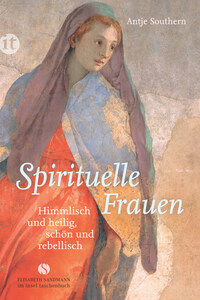
Die Charakterfestigkeit, mit der heilige und spirituelle Frauen für ihren Glauben einstanden und mehr wagten, als zu ihrer Zeit üblich war, machte sie zu ebenso verehrten wie gefürchteten Frauen. Im Klosterleben wirkten sie als Dichterinnen, Malerinnen, Musikerinnen und Lehrerinnen und nahmen Einfluss auf die sie umgebende Welt. Und noch heute vermögen sie als Schutzpatroninnen Kraft, Trost und Beistand zu spenden. Die Faszination, die seit jeher von ihnen ausgeht, schlug sich nicht zuletzt auch in der Kunst nieder, wo sie berühmten Malern immer wieder als Sujet und Inspiration dienten. Antje Southern stellt in dieser reich illustrierten Geschichte vom Mittelalter bis ins 20. Jahrhundert legendäre Märtyrerinnen, Mystikerinnen, Prophetinnen, Denkerinnen und Heilerinnen vor – von der Heiligen Maria über Maria Magdalena hin zu Hildegard von Bingen, Teresa von Ávila, Johanna von Orleans u. v. a. –, die berühmte Künstler in ihren Gemälden unsterblich gemacht haben. Mit Gemälden von Giotto, Raffael, Lucas Cranach d. Ä., Peter Paul Rubens, John Everett Millais, John William Waterhouse u. v. a.
Trusted Partner

This book examines the distinctive aspects that insiders and outsiders perceived as characteristic of Irish and Scottish ethnic identities in New Zealand. When, how, and why did Irish and Scots identify themselves and others in ethnic terms? What characteristics did the Irish and the Scots attribute to themselves and what traits did others assign to them? Did these traits change over time and if so how? Contemporary interest surrounding issues of ethnic identities is vibrant. In countries such as New Zealand, descendants of European settlers are seeking their ethnic origins, spurred on in part by factors such as an ongoing interest in indigenous genealogies, the burgeoning appeal of family history societies, and the booming financial benefits of marketing ethnicities abroad. This fascinating book will appeal to scholars and students of the history of empire and the construction of identity in settler communities, as well as those interested in the history of New Zealand.
Trusted Partner
 Trusted Partner
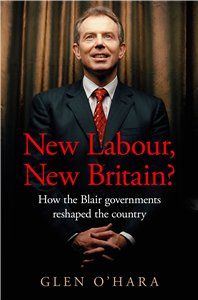
A bold and balanced re-appraisal of New Labour in power. Rewriting the story of New Labour, Glen O'Hara challenges the prevailing narrative to present a more balanced and positive assessment. New Labour, new Britain is the first book to examine both the intentions behind New Labour's domestic policies and their real-world effects, moving beyond the entrenched left-right debates that have dominated the party's legacy. The period from 1997 to 2007 marked a pivotal moment in modern British history, as New Labour sought to reshape Britain into a more cohesive and forward-thinking society. It saw the rise of socially liberal attitudes and flourishing public services under a government committed to rebuilding and investing in them. Yet New Labour's track record was far from flawless and its legacy remains complicated and contested. Through interviews with key players and rigorous archival research, O'Hara offers a new perspective on Tony Blair's years in power. Painting a fuller picture of New Labour's successes and challenges, he highlights its lasting impact on Britain and offers a thoughtful reassessment of its place in history.



