Your Search Results

      • Trusted Partner
        March 2023

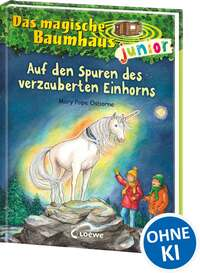
        Das magische Baumhaus junior (Band 33) - Auf den Spuren des verzauberten Einhorns

        Begib dich mit Anne und Philipp auf die Suche nach dem verwunschenen Einhorn - Erstlesebuch für Kinder ab 6 Jahren

        by Mary Pope Osborne, Jutta Knipping, Sabine Rahn

        Die beliebte Kinderbuchreihe von Bestsellerautorin Mary Pope Osborne zum Vorlesen und ersten Selberlesen. Die Geschwister Anne und Philipp reisen mit dem magischen Baumhaus durch die Zeit, entdecken ferne Länder und erleben spannende Abenteuer. Mit vielen bunten Bildern besonders für Kinder ab 6 Jahren geeignet. Philipp und Anne landen mit dem magischen Baumhaus im verschneiten New York. Ein Fabelwesen braucht dringend ihre Hilfe! Mitten in der Großstadt ist seit über 400 Jahren ein Einhorn versteckt, auf dem ein magischer Bann liegt. Nur in der Nacht des Zwillingsmondes können die Geschwister den Zauber brechen. Doch zwei mysteriöse Verfolger sind Anne und Philipp bei ihrer Suche nach dem Einhorn dicht auf den Fersen!

      • Trusted Partner
        July 2005

        Dichter in New York. Poeta en Nueva York

        Gedichte

        by Federico García Lorca, Martin Koppenfels, Martin Koppenfels

        Als »Lyrik zum Die-Pulsadern-Aufschneiden« bezeichnete Federico García Lorca (1898–1936) die Gedichte, die er 1930 aus New York und Havanna mit nach Hause brachte, deren Drucklegung (1940) er jedoch nicht mehr erlebte. Wo unsere Landkarten New York verzeichnen, liegt in Wirklichkeit eine andere Stadt. Es gibt nur einen Zugang zu ihr – García Lorcas Gedichte.

      • Trusted Partner
        October 1983

        Kleines Adreßbuch für Jerichow und New York. Ein Register zu Uwe Johnsons Roman 'Jahrestage'

        Angelegt mit Namen, Orten, Zitaten und Verweisen von Rolf Michaelis

        by Uwe Johnson, Rolf Michaelis

        Uwe Johnson wurde am 20. Juli 1934 in Kammin (Pommern), dem heutigen Kamien Pomorski, geboren und starb am 22. oder 23. Februar 1984 in Sheerness-on-Sea. 1945 floh er mit seiner Mutter und seiner Schwester zunächst nach Recknitz, dann nach Güstrow in Mecklenburg. Sein Vater wurde von der Roten Armee interniert und 1948 für tot erklärt. 1953 schrieb er sich an der Universität Leipzig als Germanistikstudent ein und legte sein Diplom über Ernst Barlachs Der gestohlene Mond ab. Bereits während des Studiums begann er mit der Niederschrift des Romans Ingrid Babendererde . Reifeprüfung 1953. Er bot ihn 1956 verschiedenen Verlagen der DDR an, die eine Publikation ablehnten. 1957 lehnte auch Peter Suhrkamp die Veröffentlichung ab. Der Roman wurde erst nach dem Tode von Uwe Johnson veröffentlicht. Der erste veröffentlichte Roman von Uwe Johnson ist Mutmassungen über Jakob. Von 1966 – 1968 lebte Uwe Johnson in New York. Das erste Jahr dort arbeitete er als Schulbuch-Lektor, das zweite wurde durch ein Stipendium finanziert. Am 29. Januar 1968 schrieb er in New York die ersten Zeilen der Jahrestage. Aus dem Leben von Gesine Cresspahl nieder. Deren erste ›Lieferung‹ erschien 1970. Die Teile zwei und drei schlossen sich 1971 und 1973 an. 1974 zog Uwe Johnson nach Sheerness-on Sea in der englischen Grafschaft Kent an der Themsemündung. Dort begann er unter einer Schreibblockade zu leiden, weshalb der letzte Teil der Jahrestage erst 1983 erscheinen konnte. 1979 war Uwe Johnson Gastdozent für Poetik an der Johann Wolfgang Goethe-Universität in Frankfurt. Ein Jahr später erschienen seine Vorlesungen unter dem Titel Begleitumstände. Sein Nachlass befindet sich im Uwe Johnson-Archiv an der Universität Rostock. Rolf Michaelis, geboren 1933, hat 1958 über Die Struktur von Hölderlins Oden promoviert. Er war Feuilletonredakteur bei verschiedenen Zeitungen, u. a. langjähriger Leiter des Literaturteils der Zeit. Buchveröffentlichungen u. a. über Gerhart Hauptmann, Heinrich von Kleist, Federico García Lorca und Uwe Johnson.

      • The Arts
        March 1905

        Concerning the Spiritual in Art

        by Wassily Kandinsky

        A pioneering work in the movement to free art from its traditional bonds to material reality, this book is one of the most important documents in the history of modern art. Written by the famous nonobjective painter Wassily Kandinsky (1866–1944), it explains Kandinsky's own theory of painting and crystallizes the ideas that were influencing many other modern artists of the period. Along with his own groundbreaking paintings, this book had a tremendous impact on the development of modern art. Kandinsky's ideas are presented in two parts. The first part, called "About General Aesthetic," issues a call for a spiritual revolution in painting that will let artists express their own inner lives in abstract, non-material terms. Just as musicians do not depend upon the material world for their music, so artists should not have to depend upon the material world for their art. In the second part, "About Painting," Kandinsky discusses the psychology of colors, the language of form and color, and the responsibilities of the artist. An Introduction by the translator, Michael T. H. Sadler, offers additional explanation of Kandinsky's art and theories, while a new Preface by Richard Stratton discusses Kandinsky's career as a whole and the impact of the book. Making the book even more valuable are nine woodcuts by Kandinsky himself that appear at the chapter headings. This English translation of Über das Geistige in der Kunst was a significant contribution to the understanding of nonobjectivism in art. It continues to be a stimulating and necessary reading experience for every artist, art student, and art patron concerned with the direction of 20th-century painting.

      • Trusted Partner
        The Arts
        March 2026

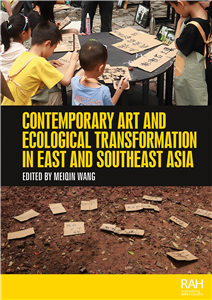
        Contemporary art and ecological transformation in East and Southeast Asia

        by Meiqin Wang

        This anthology, presenting new research from fourteen scholars, delves into the interplay between contemporary art and ecological concerns in East and Southeast Asia. Focused on the concept of artistic remediation, the book unravels the diverse capacities of art to combat systemic anthropogenic destruction to the environment and ecology. At its core, the book articulates the ongoing ecological transformation in art and art history that embraces a paradigm shift in human-nature relationships, emphasizing interconnectedness of all life forms of the Earth. Bridging art studies, activism, and environmental studies, the book examines how artistic practices in the region have engaged with ecocritical reflection, biodiversity advocacy, sustainable practices, and environmental justice, among others. Providing a platform for critical and timely analysis of artistic interventions in the face of existential crises, the book acknowledges diverse voices of scholars who have situated their scholarship in the cultural and artistic specificities of various societies, locales, and communities in the region.

      • Trusted Partner
        Humanities & Social Sciences
        July 2025

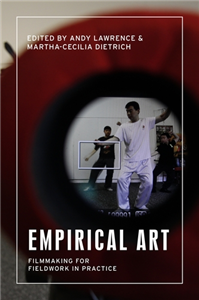
        Empirical art

        Filmmaking for fieldwork in practice

        by Andy Lawrence, Martha-Cecilia Dietrich

        Empirical art: Filmmaking for fieldwork in practice is an insightful exploration of what the craft of filmmaking brings to social science research. Providing creative avenues on how to narrate encounters, relationships, and experiences during fieldwork, this comprehensive volume offers a rich tapestry of theoretical explorations and explorative methodologies. Skilfully connecting the worlds of ethnography, art and cinema, the contributors in this book act as a compass for filmmakers and researchers venturing to use a camera and microphone to relate and narrate their research collaborations and fieldsites. Drawing from the authors' extensive experience in disciplines like social anthropology, environmental humanities, and political science, "Empirical Art" breaks down the intricate process of crafting ethnographic films that departs from the researcher's subjectivity. Covering aspects of filmmaking from conceptualisation to production and distribution, readers are equipped with a treasure trove of collaborative techniques, innovative approaches, and ethical considerations necessary to generate and examine storytelling practices in contemporary fields of study. The authors discuss the significance of the multiple roles that technologies of filmmaking play in reflecting on cultural practices, social dynamics, and (beyond) human storytelling and their transformative potentials. Whether a seasoned filmmaker, an aspiring ethnographer, or an academic seeking new dimensions for their research, Empirical Art serves as a guide to integrating visual storytelling, cinema craft and empirical research.

      • Trusted Partner
        Fiction
        July 2023

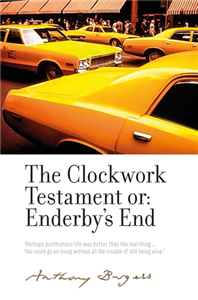
        The Clockwork Testament or: Enderby's End

        By Anthony Burgess

        by Ákos Farkas, Anthony Burgess

        First published in 1974, this novel is a semi-autobiographical reflection on the author's experience of having been the subject of Stanley Kubrick's film adaptation of A Clockwork Orange in 1971. This is the end of Enderby, Anthony Burgess's finest comic creation. Dyspeptic and obese, this is the account of his last day as a visiting professor in New York, and his last day on Earth. The Irwell Edition of The Clockwork Testament will provide new information about the genesis of the novel, gleaned from a series of drafts and typescripts recently discovered in the archive of the International Anthony Burgess Foundation (IABF) in Manchester, as well as printing a deleted chapter for the first time in English.

      • Trusted Partner
        The Arts
        June 2025

        Death in modern theatre

        Stages of mortality

        by Adrian Curtin

        Death in modern theatre offers a unique account of modern Western theatre, focusing on the ways in which dramatists and theatre-makers have explored historically informed ideas about death and dying in their work. It investigates the opportunities theatre affords to reflect on the end of life in a compelling and socially meaningful fashion. In a series of interrelated, mostly chronological, micronarratives beginning in the late nineteenth century and ending in the early twenty-first century, this book considers how and why death and dying are represented at certain historical moments using dramaturgy and aesthetics that challenge audiences' conceptions, sensibilities, and sense-making faculties. It includes a mix of well-known and lesser-known plays from an international range of dramatists and theatre-makers, and offers original interpretations through close reading and performance analysis.

      • Trusted Partner
      • Trusted Partner
        The Arts
        June 2026

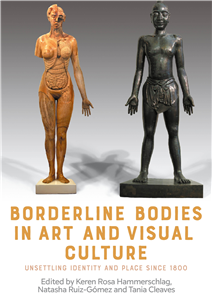
        Borderline bodies in art and visual culture

        Unsettling identity and place since 1800

        by Keren Hammerschlag, Natasha Ruiz-Gómez, Tania Anne Cleaves

        Borderline bodies offers original interpretations of visual representations of human bodies as bounded and unbounded, fortified and permeable, mobile and static-subject to borders and able to traverse and challenge them. It also takes as its focus images and objects that might be considered 'borderline' because they sit at the intersection of disciplines or sit outside accepted notions of what constitutes serious 'art.' By mapping the ways human bodies traverse borders and straddle-even dismantle-categories, this volume's essays approach afresh the relationship of bodies to traditional modes of representation, especially in art and medicine, and encourage us to think anew about how we understand the relationship between human corporeality, identity and place. Critical transdisciplinary and transnational analyses of objects and images from a range of geographies shed new light on the themes of: bodies and identity; typologies of the body; racialised bodies; 'normal' and 'abnormal' bodies; encounters between bodies; bodies in transition; bodies and mobility; and the bounded and unbounded human body. The outcome is a fresh approach to depictions of the human body produced for the purposes of artistic and medical education, aesthetic edification, and scientific and professional advancement, which disrupts assumptions about the normative human body perpetuated through Western image-making traditions.

      • Trusted Partner
        The Arts
        February 2026

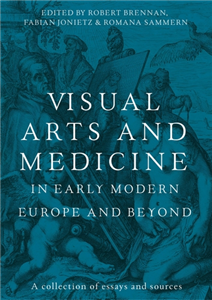
        Visual arts and medicine in early modern Europe and beyond

        A collection of essays and sources

        by Robert Brennan, Fabian Jonietz, Romana Sammern

        This book opens up new perspectives on the relationship between art, medicine, and science in late-medieval and early modern Europe. Looking beyond the traditional nexus of art, anatomy, and optics, the volume sheds light on a broader array of connections between artists and physicians: collaborations between painters and doctors on colour charts, handwork skills common to sculptors and surgeons, the transmission of art theory through medical texts long before the emergence of art writing itself as an independent genre, and the kinship of medical diagnosis with early modes of connoisseurship. Reconfiguring the histories of art, medicine, and science, the book also traverses conventional boundaries between physical and mental health, religious and medical modes of healing, menial and exalted forms of knowledge and labour, as well as vernacular and scientific understandings of human difference, including gender, race, and neurodiversity.

      • Trusted Partner
        June 1987

        Über Dichtung und Theater

        Deutsch von Enrique Beck

        by Federico García Lorca, Enrique Beck

        Federico García Lorca, geboren 1898 in Fuente Vaqueros , Granada, beginnt nach dem Studium eine Ausbildung als Musiker. 1918 veröffentlicht er sein erstes Buch Impresiones y Paisajes (Impressionen und Landschaften), 1920 folgt die Uraufführung seines ersten Theaterstücks El maleficio de la mariposa (Die Verwünschung des Schmetterlings). 1929 reist der Dichter nach New York. Es entsteht der weltberühmte Lyrikband Dichter in New York. 1930 begibt er sich nach Kuba. Ab 1931 arbeitet er für die regierenden Republikaner in Spanien. Von 1933 bis 1934 bereist er Südamerika. 1936 beginnt der Spanische Bürgerkrieg. Federico García Lorca stellt zur gleichen Zeit sein Hauptwerk Das Haus von Bernarda Alba fertig. Als er sich zu seinen Eltern nach Granada ins Einflussgebiet der Falange begibt, wird er verhaftet und am 19. August 1936 an der Friedhofsmauer von Fuente Grande erschossen. Er gilt heute als einer der wichtigsten Dramatiker und Lyriker des 20. Jahrhunderts, zu einem seiner berühmtesten Werke zählen die Zigeunerromanzen.

      • Trusted Partner
      • Trusted Partner
      • Trusted Partner
      • Trusted Partner
      • Trusted Partner
      • Trusted Partner

      Subscribe to our

      newsletter