
Your Search Results


-
Promoted Content

 Humanities & Social SciencesMarch 2017
Britain in China
by Robert Bickers
This is a study of Britain's presence in China both at its peak, and during its inter-war dissolution in the face of assertive Chinese nationalism and declining British diplomatic support. Using archival materials from China and records in Britain and the United States, the author paints a portrait of the traders, missionaries, businessmen, diplomats and settlers who constituted "Britain-in-China", challenging our understanding of British imperialism there. Bickers argues that the British presence in China was dominated by urban settlers whose primary allegiance lay not with any grand imperial design, but with their own communities and precarious livelihoods. This brought them into conflict not only with the Chinese population, but with the British imperial government. The book also analyzes the formation and maintenance of settler identities, and then investigates how the British state and its allies brought an end to the reign of freelance, settler imperialism on the China coast. At the same time, other British sectors, missionary and business, renegotiated their own relationship with their Chinese markets and the Chinese state and distanced themselves from the settler British.
-
Promoted Content

 March 2015
Die Sirenen von Belfast
Roman
by Adrian McKinty, Peter Torberg
Der prüfende Blick unter den Wagen gehört zu Sean Duffys Morgenritual. Im Nordirlandkonflikt stehen Autobombenanschläge auf der Tagesordnung, und als katholischer Bulle ist er die perfekte Zielscheibe der IRA. Als er und sein Kollege McCrabban auf einem verlassenen Firmengelände in Belfast einen tiefgekühlten Torso finden, ist für ihre Vorgesetzten die Sache klar: Der Konflikt hat ein weiteres Todesopfer gefordert. Wie immer glaubt Duffy nicht an einfache Lösungen und gräbt tiefer. Eine heiße Spur führt ihn in die USA, doch als sich in Nordirland die Lage zuspitzt, wird Duffy plötzlich das wahre Ausmaß des Falles klar … Ein Torso in einem Koffer, ein tätowierter Hautfetzen und eine teuflisch schöne Witwe – Detective Sergeant Sean Duffy ist zurück mit einem Fall, der ihn tief in die Wirren des Nordirlandkonflikts zieht. Er stößt auf skrupellose Geldgeschäfte und familiäre Abgründe. Bald schon wird er selbst Opfer seiner Ermittlungen.
-
 Trusted Partner
 Teaching, Language & ReferenceMay 2025
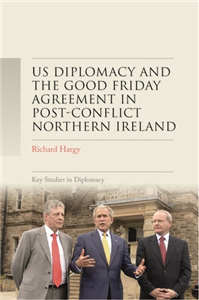
US diplomacy and the Good Friday Agreement in post-conflict Northern Ireland
by Richard Hargy
Richard Haass and Mitchell Reiss, as autonomous diplomats in the George W. Bush State Department, were able to alter US intervention in Northern Ireland and play critical roles in the post-1998 peace process. Their contributions have not been fully appreciated or understood. The restoration of Northern Ireland's power-sharing government in 2007 was made possible by State Department-led intervention in the peace process. There are few references to Northern Ireland in work examining the foreign policy legacy of the George W. Bush presidency. Moreover, the ability to control US foreign policy towards the region brought one of George W. Bush's Northern Ireland special envoys into direct diplomatic conflict with the most senior actors inside the British government. This book will uncover the extent of this fall-out and provide original accounts on how diplomatic relations between these old allies became so fraught.
-
Trusted Partner
 Humanities & Social SciencesNovember 2024
Belfast punk and the Troubles: An oral history
by Fearghus Roulston
-
Trusted Partner
 Humanities & Social SciencesJanuary 2017
Theories of International Relations and Northern Ireland
by Timothy J. White
-
Trusted Partner
 Humanities & Social SciencesDecember 2019
Northern Ireland and the politics of boredom
by George Legg
-
Trusted Partner
-
Trusted Partner
Humanities & Social SciencesJuly 2025
What went wrong with Britain?
by Steven Kettell, Peter Kerr, Daniela Tepe
-
Trusted Partner
-
Trusted Partner
 Humanities & Social SciencesMarch 2017
Sunningdale, the Ulster Workers' Council strike and the struggle for democracy in Northern Ireland
by David McCann, Cillian McGrattan
-
Trusted Partner
 Humanities & Social SciencesSeptember 2021
Britain and Africa in the twenty-first century
by Danielle Beswick, Jonathan Fisher, Stephen R. Hurt
-
Trusted Partner
 MedicineMarch 2026
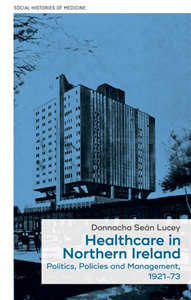
Healthcare in Northern Ireland
Politics, Policies and Management, 1921-72
by Donnacha Lucey
-
Trusted Partner
 Humanities & Social SciencesSeptember 2008
Northern Ireland after the troubles
A society in transition
by Colin Coulter, Michael Murray
In the last generation, Northern Ireland has undergone a tortuous yet remarkable process of social and political change. This collection of essays aims to capture the complex and shifting realities of a society in the process of transition from war to peace. The book brings together commentators from a range of academic backgrounds and political perspectives. As well as focusing upon those political divisions and disputes that are most readily associated with Northern Ireland, it provides a rather broader focus than is conventionally found in books on the region. It examines the cultural identities and cultural practices that are essential to the formation and understanding of Northern Irish society but are neglected in academic analyses of the six counties. While the contributors often approach issues from rather different angles, they share a common conviction of the need to challenge the self-serving simplifications and choreographed optimism that frequently define both official discourse and media commentary on Northern Ireland. Taken together, the essays offer a comprehensive and critical account of a troubled society in the throes of change. ;
-
Trusted Partner
Humanities & Social SciencesSeptember 2023
The break-up of Greater Britain
by Stuart Ward, Christian Pedersen
-
Trusted Partner
 Humanities & Social SciencesSeptember 2020
Refugees and the violence of welfare bureaucracies in Northern Europe
by Dalia Abdelhady, Nina Gren, Martin Joormann
-
Trusted Partner
 Humanities & Social SciencesNovember 2010
Devolution and the governance of Northern Ireland
by Colin Knox
This book offers the first account of what the First Minister, Peter Robinson, describes as the most settled period of devolution in Northern Ireland for almost forty years. It traces the tortuous path to devolved government, the political instability which constantly threatened the institutions, and since May 2007 the bedding down of devolution and its impact so far on the people of Northern Ireland. The book parallels accounts of devolved government in Scotland and Wales. For years Northern Ireland has been the subject of academic enquiry relating to political, constitutional and security issues. Now as a post-conflict society political parties which for years engaged in the politics of antagonism must now redirect their efforts to delivering public policies that will improve the quality of people's daily lives. This has not come easily to them. This book is therefore the first study which looks at devolved power sharing governance arrangements in Northern Ireland and a sequel to Derek Birrell's book Direct Rule and the Governance of Northern Ireland. Manchester: Manchester University Press (2009) The book contains chapters on the key governance institutions: the civil service, local government, non-departmental public bodies, and the vibrant third sector in Northern Ireland. It examines in some detail the major review of public administration ongoing since 2002 and the more recent public services modernising agenda. Importantly, given the sectarian divisions which have segregated every aspect of life in Northern Ireland, the book asks the key question whether it is possible to reconcile the two communities or are they destined to live 'separate but equal' lives. Finally, the book considers topical issues which are at the early stages of implementation: community planning and central-local relations. This book will be of interest to students of devolution across the UK and beyond. It will also be relevant for those researchers working in the area of post-conflict societies. ;
-
Trusted Partner
-
Trusted Partner
 20th century history: c 1900 to c 2000October 2013
Northern Ireland in the Second World War
Politics, economic mobilisation and society, 1939–45
by Philip Ollerenshaw
This original and distinctive book surveys the political, economic and social history of Northern Ireland in the Second World War. Since its creation in 1920, Northern Ireland has been a deeply divided society and the book explores these divisions before and during the war. It examines rearmament, the relatively slow wartime mobilisation, the 1941 Blitz, labour and industrial relations, politics and social policy. Northern Ireland was the only part of the UK with a devolved government and no military conscription during the war. The absence of military conscription made the process of mobilisation, and the experience of men and women, very different from that in Britain. The book's conclusion considers how the government faced the domestic and international challenges of the postwar world. This study draws on a wide range of primary sources and will appeal to those interested in modern Irish and British history and in the Second World War.
-
Trusted Partner
 Humanities & Social SciencesJune 2021
Making and remaking saints in nineteenth-century Britain
by Gareth Atkins
-
Trusted Partner


