Your Search Results

      • El Emporio

        Como grupo editorial, estamos orgullosos de decir que somos creadores de best-sellers, que pasan de ser éxitos locales a éxitos nacionales. Apostamos tanto por autores reconocidos como por autores noveles y nos interesamos en ampliar y renovar nuestro catálogo de manera constante. Como actores activos de la cultura, nuestro horizonte es ofrecer libros que participen de la construcción colectiva de contenidos de calidad.

        View Rights Portal
      • Otter-Barry Books Ltd.

        Otter-Barry Books is an exciting publisher of culturally diverse and inclusive high quality illustrated books for children.    Our list includes great read-aloud picture books, non-fiction titles, poetry and graphic novels with fantastic art by some of the top authors and illustrators working today, including Steve Antony, Barroux, Jackie Morris, Joseph Coelho, Yu Rong, Roger McGough,  Petr Horacek, Elizabeth Laird and Mehrdokht Amini.

        View Rights Portal
      • Trusted Partner
        Humanities & Social Sciences
        March 2017

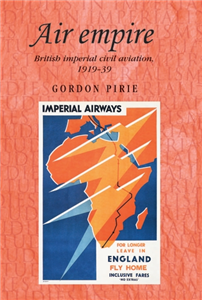
        Air empire

        British imperial civil aviation, 1919–39

        by Gordon Pirie, Andrew Thompson, John M. MacKenzie

        Air empire is a fresh study of civil aviation as a tool of late British imperialism. The first pioneering flights across the British empire in 1919-20 were flag-waving adventures that recreated an era of plucky British maritime exploration and conquest. Britain's development of international air routes and services was approved, organised and celebrated largely in London; there was some resistance in and beyond the subordinate colonies and dominions. Negotiating the financing and geopolitics of regular commercial air service delayed its inception until the 1930s. Technological, managerial and logistical problems also meant that Britain was slow into the air and slow in the air. Propaganda concealed underperformance and criticism. The study uses archival sources, biographies, industry magazines and newspapers to chronicle the disputed progress toward air empire. The rhetoric behind imperial air service offers a glimpse of late imperial hopes, fears, attitudes and style. Empire air service had emotional appeal and symbolic value, but disappointed in practice.

      • Trusted Partner
        July 2025

        Intimate afterlives of empire

        Memory and decolonisation in autobiography

        by Astrid Rasch

        Through close readings of almost twenty autobiographies written after the break-up of the British Empire, the book examines how individuals engage with the changing narrative landscape brought about by decolonisation. It considers the autobiographies less for what they may teach us about the moment remembered and more as windows on the act of remembering. This adds a crucial dimension to our understanding of the legacies of colonialism and how the ongoing process of decolonisation is reflected on the level of the individual. It argues that autobiographers are at once influenced by and seek to influence the cultural memory of empire and its legacies, and the authors' own position in both. Situated at the intersection of imperial/decolonisation history, memory studies, and life writing studies, the book uncovers this intimate afterlife of empire.

      • Trusted Partner
        Humanities & Social Sciences
        February 2017

        Wales and the British overseas empire

        Interactions and influences, 1650–1830

        by H.V. Bowen

        This unique collection of essays is the first book to explore the many relationships that developed between Wales and the British overseas empire between 1650 and 1830. Written by leading specialists in the field, the essays explore economic, social, cultural, political, and religious interactions between Wales and the empire. The geographical coverage is very broad, with examinations of the contributions made by Wales to expansion in the Atlantic world, Caribbean, and South Asia. The book explores Welsh influences on the emergence of 'British' imperialism, as well as the impact that the empire had upon the development of Wales itself. The book will be of interest to academic historians, postgraduate students, and undergraduates. It will be indispensable to those interested in the history of Wales, Britain, and the empire, as well as those who wish to compare Welsh imperial experiences with those of the English, Irish, and Scots.

      • Trusted Partner
        Humanities & Social Sciences
        March 2017

        Child, nation, race and empire

        Child rescue discourse, England, Canada and Australia, 1850–1915

        by Margot Hillel, Shurlee Swain, Andrew Thompson, John M. MacKenzie

        Child, nation, race and empire is an innovative, inter-disciplinary, cross cultural study that contributes to understandings of both contemporary child welfare practices and the complex dynamics of empire. It analyses the construction and transmission of nineteenth-century British child rescue ideology. Locating the origins of contemporary practice in the publications of the prominent English Child rescuers, Dr Barnardo, Thomas Bowman Stephenson, Benjamin Waugh, Edward de Montjoie Rudolf and their colonial disciples and literature written for children, it shows how the vulnerable body of the child at risk came to be reconstituted as central to the survival of nation, race and empire. Yet, as the shocking testimony before the many official enquiries into the past treatment of children in out-of-home 'care' held in Britain, Ireland, Australia and Canada make clear, there was no guarantee that the rescued child would be protected from further harm.

      • Trusted Partner
        Humanities & Social Sciences
        April 2023

        New Zealand's empire

        by Katie Pickles, Catharine Coleborne

        This edited collection investigates New Zealand's history as an imperial power, and its evolving place within the British Empire. It revises and expands the history of empire within, to and from New Zealand by looking at the country's spheres of internal imperialism, its relationship with Australia, its Pacific empire and its outreach to Antarctica. The book critically revises our understanding of the range of ways that New Zealand has played a role as an imperial power, including the cultural histories of New Zealand inside the British Empire, engagements with imperial practices and notions of imperialism, the special significance of New Zealand in the Pacific region, and the circulation of ideas of empire both through and inside New Zealand over time. The essays in this volume span social, cultural, political and economic history, and in testing the concept of New Zealand's empire, the contributors take new directions in both historiographical and empirical research.

      • Trusted Partner
        Humanities & Social Sciences
        February 2017

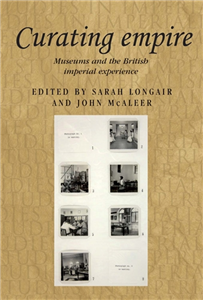
        Curating empire

        Museums and the British imperial experience

        by Sarah Longair, John McAleer

        Curating empire explores the diverse roles played by museums and their curators in moulding and representing the British imperial experience. This collection demonstrates how individuals, their curatorial practices, and intellectual and political agendas influenced the development of a variety of museums across the globe. Taken together, these contributions suggest that museums are not just sites for accessing history but need to be considered as historical sites of significance in themselves. Individual essays examine the work of curators in museums in Britain and the colonies, the historical display and interpretation of empire in Britain, and the establishment of 'museum networks' in the British imperial context. Curating empire sheds new light on the relationship between museums, as repositories for objects and cultural institutions for conveying knowledge, and the politics of culture and the formation of identities throughout the British Empire.

      • Trusted Partner
        Humanities & Social Sciences
        March 2017

        The French empire at War, 1940–1945

        by Martin Thomas

        The French empire at war draws on original research in France and Britain to investigate the history of the divided French empire - the Vichy and the Free French empires - during the Second World War. What emerges is a fascinating story. While it is clear that both the Vichy and Free French colonial authorities were only rarely masters of their own destiny during the war, preservation of limited imperial control served them both in different ways. The Vichy government exploited the empire in an effort to withstand German-Italian pressure for concessions in metropolitan France and it was key to its claim to be more than the mouthpiece of a defeated nation. For Free France too, the empire acquired a political and symbolic importance which far outweighed its material significance to the Gaullist war effort. As the war progressed, the Vichy empire lost ground to that of the Free French, something which has often been attributed to the attraction of the Gaullist mystique and the spirit of resistance in the colonies. In this radical new interpretation, Thomas argues that it was neither of these. The course of the war itself, and the initiatives of the major combatant powers, played the greatest part in the rise of the Gaullist empire and the demise of Vichy colonial control.

      • Trusted Partner
        Humanities & Social Sciences
        October 2025

        Entertaining the empire

        London music hall and the export of Britishness

        by Andrew Horrall

        The stage entertainments known as music hall emerged in mid-Victorian London just as the British began colonising large parts of the world.Settlers recreated this metropolitan popular culture throughout the empire and in places under foreign control. They erected music halls resembling those at home, imported songs and sketches, performed inamateur shows and watched touring professionals. London originals were rewritten as commentaries on local conditions. This activity transformed music hall into a marker of an exclusionary British identity overseas and made colonies look and sound more like Britain. The result was that settlers separated by vast distances were linked by a shared popular culture. The touring circuits and cultural affinities the Victorians created endure to this day.

      • Trusted Partner
        Humanities & Social Sciences
        June 2025

        Revolution in China and Russia

        Reorganizing empires into nation states

        by Luyang Zhou

        Most scholars believe that China's nationality policy, like that of other socialist states, imitated the Soviet nationality model, a system which has been termed an "affirmative action empire." This book offers two contributions to the literature which run counter to this convention. First, it argues that the People's Republic of China (PRC) and the Soviet Union (USSR) were different; while the PRC was aimed to build an ideal-typical nation-state, the USSR was an open union of nation-states that was only temporarily confined to a physical territory. Second, while scholars who have noted this difference attribute it to contextual factors, such as ethnic structure, geopolitical status, and Russia's intervention into the Chinese Revolution, this book contends that context shaped the Sino-Soviet difference, yet it did not determine it. Rather, there was significant leeway between the implications of the contextual factors, and what the policy-designers ultimately established. This book probes who held agency, and how these individuals bridged this gap.

      • Trusted Partner
        Humanities & Social Sciences
        March 2017

        The empire in one city?

        Liverpool's inconvenient imperial past

        by Sheryllynne Haggerty, Andrew Thompson, Anthony Webster, John M. MacKenzie, Nicholas J. White

        From the late eighteenth century to the early twentieth century, Liverpool was frequently referred to as the 'second city of the empire'. Yet, the role of Liverpool within the British imperial system and the impact on the city of its colonial connections remain underplayed in recent writing on both Liverpool and the empire. However, 'inconvenient' this may prove, this specially-commissioned collection of essays demonstrates that the imperial dimension deserves more prevalence in both academic and popular representations of Liverpool's past. Indeed, if Liverpool does represent the 'World in One City' - the slogan for Liverpool's status as European Capital of Culture in 2008 - it could be argued that this is largely down to Merseyside's long-term interactions with the colonial world, and the legacies of that imperial history. In the context of Capital of Culture year and growing interest in the relationship between British provincial cities and the British empire, this book will find a wide audience amongst academics, students and history enthusiasts generally.

      • Trusted Partner
        Humanities & Social Sciences
        February 2017

        Country houses and the British Empire, 1700–1930

        by Stephanie Barczewski

        Country houses and the British empire, 1700-1930 assesses the economic and cultural links between country houses and the Empire between the eighteenth and twentieth centuries. Using sources from over fifty British and Irish archives, it enables readers to better understand the impact of the empire upon the British metropolis by showing both the geographical variations and its different cultural manifestations. Barczewski offers a rare scholarly analysis of the history of country houses that goes beyond an architectural or biographical study, and recognises their importance as the physical embodiments of imperial wealth and reflectors of imperial cultural influences. In so doing, she restores them to their true place of centrality in British culture over the last three centuries, and provides fresh insights into the role of the Empire in the British metropolis.

      • Trusted Partner
        Humanities & Social Sciences
        September 2024

        Settlers at the end of empire

        Race and the politics of migration in South Africa, Rhodesia and the United Kingdom

        by Jean Smith

        Settlers at the end of empire traces the development of racialised migration regimes in South Africa, Rhodesia (present-day Zimbabwe) and the United Kingdom from the Second World War to the end of apartheid in 1994. While South Africa and Rhodesia, like other settler colonies, had a long history of restricting the entry of migrants of colour, in the 1960s under existential threat and after abandoning formal ties with the Commonwealth they began to actively recruit white migrants, the majority of whom were British. At the same time, with the 1962 Commonwealth Immigrants Act, the British government began to implement restrictions aimed at slowing the migration of British subjects of colour. In all three nations, these policies were aimed at the preservation of nations imagined as white, revealing the persistence of the racial ideologies of empire across the era of decolonisation.

      • Trusted Partner
        Humanities & Social Sciences
        December 2024

        British culture after empire

        Race, decolonisation and migration since 1945

        by Josh Doble, Liam Liburd, Emma Parker

        British culture after Empire is the first collection of its kind to explore the intertwined social, cultural and political aftermath of empire in Britain from 1945 up to and beyond the Brexit referendum of 2016, combining approaches from the fields of history, English and cultural studies. Against those who would deny, downplay or attempt to forget Britain's imperial legacy, the various contributions expose and explore how the British Empire and the consequences of its end continue to shape Britain at the local, national and international level. As an important and urgent intervention in a field of increasing relevance within and beyond the academy, the book offers fresh perspectives on the colonial hangovers in post-colonial Britain from up-and-coming as well as established scholars.

      • Trusted Partner
        Humanities & Social Sciences
        March 2017

        Jute and empire

        by Andrew Thompson, John M. MacKenzie, Gordon Stewart

        Dundee had an interesting role to play in the jute trade, but the main player in the story of jute was Calcutta. This book follows the relationship of jute to empire, and discusses the rivalry between the Scottish and Indian cities from the 1840s to the 1950s and reveals the architecture of jute's place in the British Empire. The book adopts significant fresh approaches to imperial history, and explores the economic and cultural landscapes of the British Empire. Jute had been grown, spun and woven in Bengal for centuries before it made its appearance as a factory-manufactured product in world markets in the late 1830s. The book discusses the profits made in Calcutta during the rise of jute between the 1880s and 1920s; the profits reached extraordinary levels during and after World War I. The Calcutta jute industry entered a crisis period even before it was pummelled by the depression of the 1930s. The looming crisis stemmed from the potential of the Calcutta mills to outproduce world demand many times over. The St Andrew's Day rituals in Calcutta, begun three years before the founding of the Indian Jute Mills Association. The ceremonial occasion helps the reader to understand what the jute wallahs meant when they said they were in Calcutta for 'the greater glory of Scotland'. The book sheds some light on the contentious issues surrounding the problematic, if ever-intriguing, phenomenon of British Empire. The jute wallahs were inextricably bound up in the cultural self-images generated by British imperial ideology.

      • Trusted Partner
        Humanities & Social Sciences
        March 2017

        Exhibiting the Empire

        Cultures of display and the British Empire

        by John McAleer, John M. MacKenzie

        Exhibiting the empire considers how a whole range of cultural products - from paintings, prints, photographs, panoramas and 'popular' texts to ephemera, newspapers and the press, theatre and music, exhibitions, institutions and architecture - were used to record, celebrate and question the development of the British Empire. It represents a significant and original contribution to our understanding of the relationship between culture and empire. Written by leading scholars from a range of disciplinary backgrounds, individual chapters bring fresh perspectives to the interpretation of media, material culture and display, and their interaction with history. Taken together, this collection suggests that the history of empire needs to be, in part at least, a history of display and of reception. This book will be essential reading for scholars and students interested in British history, the history of empire, art history and the history of museums and collecting.

      • Trusted Partner
        Humanities & Social Sciences
        June 2016

        Curating empire

        Museums and the British imperial experience

        by Sarah Longair, Andrew Thompson, John McAleer, John Mackenzie

        Curating empire explores the diverse roles played by museums and their curators in moulding and representing the British imperial experience. This collection demonstrates how individuals, their curatorial practices, and intellectual and political agendas influenced the development of a variety of museums across the globe. Taken together, these contributions suggest that museums are not just sites for accessing history but need to be considered as historical sites of significance in themselves. Individual essays examine the work of curators in museums in Britain and the colonies, the historical display and interpretation of empire in Britain, and the establishment of 'museum networks' in the British imperial context. Curating empire sheds new light on the relationship between museums, as repositories for objects and cultural institutions for conveying knowledge, and the politics of culture and the formation of identities throughout the British Empire. ;

      • Trusted Partner
        Humanities & Social Sciences
        November 2009

        Air empire

        British imperial civil aviation, 1919–39

        by Gordon Pirie, Andrew Thompson, John Mackenzie

        Air empire is a fresh study of civil aviation as a tool of late British imperialism. The first pioneering flights across the British empire in 1919-20 were flag-waving adventures that recreated an era of plucky British maritime exploration and conquest. Britain's development of international air routes and services was approved, organised and celebrated largely in London; there was some resistance in and beyond the subordinate colonies and dominions. Negotiating the financing and geopolitics of regular commercial air service delayed its inception until the 1930s. Technological, managerial and logistical problems also meant that Britain was slow into the air and slow in the air. Propaganda concealed underperformance and criticism. The study uses archival sources, biographies, industry magazines and newspapers to chronicle the disputed progress toward air empire. The rhetoric behind imperial air service offers a glimpse of late imperial hopes, fears, attitudes and style. Empire air service had emotional appeal and symbolic value, but disappointed in practice. ;

      • Trusted Partner
        Humanities & Social Sciences
        December 2008

        Silk and empire

        by Brenda King, Andrew Thompson, John Mackenzie

        In this book, Brenda M. King challenges the notion that Britain always exploited its empire. Creativity, innovation and entrepreneurship were all part of the Anglo-Indian silk trade and were nurtured in the era of empire through mutually beneficial collaboration. The trade operated within and without the empire, according to its own dictates and prospered in the face of increasing competition from China and Japan. King presents a new picture of the trade, where the strong links between Indian designs, the English silk industry and prominent members of the English the arts and crafts movement led to the production of beautiful and luxurious textiles. Lavishly illustrated, this book will be of interest to those interested in the relationship between the British Empire and the Indian subcontinent, as well as by historians of textiles and fashion. ;

      Subscribe to our

      newsletter